


Community
Council chiefs quizzed over leisure and library cuts


COUNCIL chiefs warned of “no fat left to cut” with leisure centres and libraries across Wales facing the threat of closure due to “unprecedented” financial constraints.
The Senedd culture committee took evidence from councils on October 24 as part of an inquiry on the impact of cuts on the arts, culture and sport.
Emily Owen, deputy leader of Conwy Council, said: “Everything’s on the table that isn’t statutory at the moment, we’re in that much of a difficult financial situation.”
The Welsh Local Government Association (WLGA), the national voice of Wales’ 22 councils, warned spending on culture, recreation and libraries has fallen by up to 43% over a decade.
Cllr Owen said: “Last year, our economy and culture service had a 20% cut and the year before it had an 11% cut. That’s a serious amount of money that has gone from services.”

With the WGLA warning of a £432m funding gap across Welsh councils, Cllr Owen told the committee the council is trying to avoid closing leisure centres.
“We strongly believe that once they’re gone, they’re gone,” she said.
The Labour councillor cautioned cuts have had a considerable direct impact on participation of the most vulnerable people amid a mental health epidemic.
“It’s really not good,” she said. “If we’re having to remove facilities and access for people to be able to manage their mental health and wellbeing … we are having a really big impact.”
She pointed to plans to turn Venue Cymru in Llandudno into a culture hub, hosting library services, tourist information and welfare benefits advice.
Huw Thomas, leader of Cardiff Council, warned the scale of the budget gap leaves councils little latitude to continue to fund loss-making facilities they are not legally required to provide.
Cllr Thomas, who is culture, arts and leisure spokesperson for the WLGA, told the committee Cardiff is facing a £60m gap in the coming year.

He said: “We’re at the toughest point of budget setting I think we’ve experienced even in 14-15 years of austerity.”
Setting out the scale of the deficit, the Labour councillor told committee members the city’s combined annual budget for parks and libraries totals about £12m.
He said the council felt obliged to move away from a £1m-a-year subsidy for St David’s Hall.
Cllr Thomas cautioned it is increasingly difficult to find savings after 14 years of austerity, adding that councils are overwhelmingly prioritising services in areas of higher poverty.
He made a case for additional funding for Cardiff as the capital, raising the example of other cities in the UK receiving help with policing costs for major events.
Sarah Ecob, head of culture at Conwy Council, said: “We’re fighting really hard to keep our buildings and our services open in a backdrop of extremely severe financial difficulties.”
She expressed concerns about a lack of longer-term investment in facilities, warning: “We still have leisure centres that are desperately, desperately in need of major capital funding.”
Amanda Davies, managing director of Byw’n Iach which runs 12 centres across Gwynedd, cautioned: “There’s no fat left to cut. We’re running on a basis of individual staff running some facilities – you can’t cut back further … it’s not possible.”
Ms Davies raised concerns about a crisis in terms of ageing leisure facilities across Wales, with increasing costs and some centres set to close for maintenance.
Asked about cultural venues, Roland Evans, assistant head of economy at Gwynedd Council, said numbers are yet to return to pre-pandemic levels.
He warned that without the shared prosperity fund (SPF), which replaced EU structural funds, the council would be facing a “cliff edge” with little arts and museums activity.
Ms Ecob echoed this, saying: “The SPF has absolutely rescued us this year.”
She warned core staff are “very much under threat” when the funding comes to an end, which would have knock-on impacts in terms of applying for grants.
Mr Thomas agreed about the importance of the SPF as he similarly raised concerns about uncertainty surrounding funding beyond March 2025.


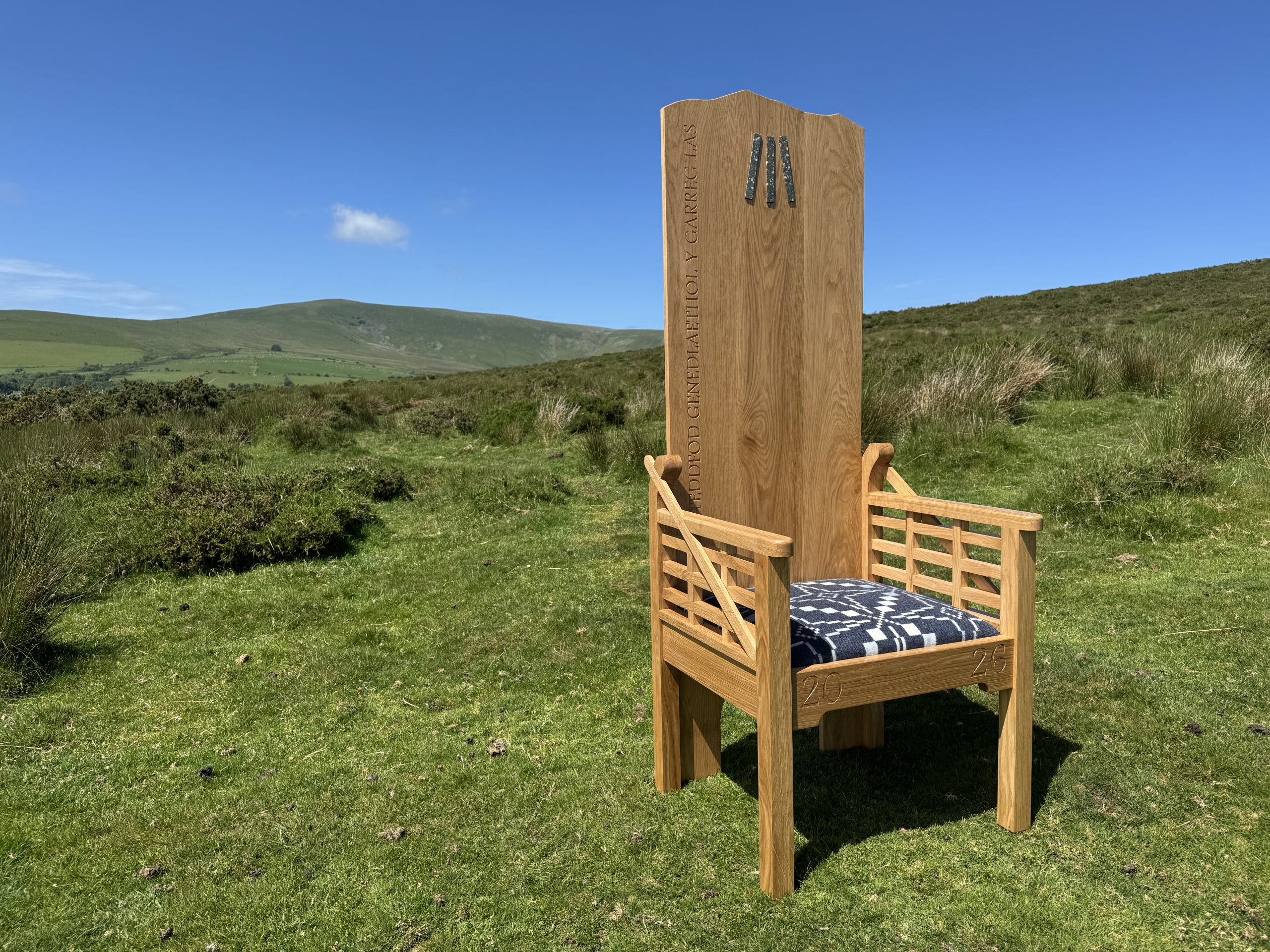
Prestigious prizes celebrate Pembrokeshire’s bluestone heritage as National Eisteddfod marks 850 years
THE Crown and Chair for this year’s National Eisteddfod have been officially unveiled at a special ceremony in St Davids, launching celebrations to mark the festival’s 850th anniversary.
The two prestigious prizes, which will be awarded during Eisteddfod y Garreg Las in August, draw heavily on the landscape, culture and history of west Wales, with Preseli bluestone featuring prominently in both designs.
The Crown, awarded for a free-verse poem or collection of poems on the theme Adnabod (Knowing), was created by husband-and-wife jewellers Elen and Dylan Bowen of Bowen Jewellery, based in Newcastle Emlyn.

Inspired by the traditional farming proverb, “Gold beneath the bracken, silver beneath the gorse, hunger beneath the heather,” the design reflects the varied landscapes of the Eisteddfod catchment area, from the Pembrokeshire coast to the Preseli Hills.
The Crown incorporates pieces of Preseli bluestone in its central emblem, known as the Nod Cyfrin, while a gold line running across the front represents the ancient Golden Road through the Preseli Mountains. Specially woven fabric created in Llandovery forms part of the design, using colours inspired by the local landscape.
Elen Bowen said the couple wanted the Crown to capture the character of the area.
“We have tried to reflect the rolling landscape of the Preseli Hills, where individual stones stand proudly on the skyline. The bluestone sits at the heart of the design and helps tell the story of this remarkable part of Wales,” she said.
This is the first time the couple have designed an Eisteddfod Crown.
Chair rooted in local history
The Eisteddfod Chair, awarded for a poem in strict metre on the theme Llinell | Llinellau (Line | Lines), has been designed and crafted by Tomos Lewis, a Design and Technology teacher at Ysgol Caer Elen in Haverfordwest and owner of woodcraft business Dail Pren.
Commissioned by the Pembrokeshire Coast National Park Authority, the Chair combines locally sourced oak, Preseli bluestone and fabric produced at Melin Tregwynt.
Its design incorporates references to the historic chair of Lord Rhys at Cardigan Castle, the Preseli Mountains, the Rebecca Riots and the shared heritage of Pembrokeshire, Ceredigion and Carmarthenshire.

Tomos said the Chair was intended to reflect both the landscape and the communities that make up the Eisteddfod catchment area.
“The back of the Chair brings together three pieces of wood to represent the three counties, while other elements draw inspiration from the area’s history, agriculture and landmarks,” he said.
The oak used in its construction came from a tree grown within the Pembrokeshire Coast National Park and will be finished with beeswax.
Symbol of Welsh culture
Accepting the Crown and Chair on behalf of the local organising committee, executive committee chairman John Davies described the occasion as a proud moment.
“We are launching celebrations marking 850 years since the first Eisteddfod and it is a tremendous honour to receive these beautiful symbols of Welsh culture and creativity,” he said.
“Bluestone lies at the heart of both the Crown and Chair, just as this area has inspired everyone involved in bringing this year’s festival together.”
The Crown and Chair will be displayed at Cardigan Castle until the end of July before being moved to the Eisteddfod Maes.
Eisteddfod y Garreg Las will be held at Llantwd from August 1 to August 8. The Crowning Ceremony will take place on Monday, August 3, at 4:00pm, while the Chairing Ceremony will be held on Friday, August 7, at 4:00pm.
Photo caption:
Preseli pride: The Crown and Chair for Eisteddfod y Garreg Las draw inspiration from Pembrokeshire’s bluestone heritage and local landscape (Pic: National Eisteddfod).


A 32-YEAR-OLD man found dead near Carmarthen Train Station died after taking shelter on a bitterly cold night, an inquest has heard.
Edward Mark Owen, originally from Birmingham but living in Ystradgynlais, was discovered in a field beside the railway line on the approach to Carmarthen station on Saturday, January 10.
A Transport for Wales train driver had spotted what appeared to be a body lying face down near the track shortly after 8:30am.
Police and railway staff attended and found Mr Owen lying face down and topless in the field. His coat, T-shirt, phone and cigarettes were found nearby.
Police initially treated the death as unexplained.
Movements traced
The inquest heard that officers later traced Mr Owen’s movements from his home in Ystradgynlais to Carmarthen.
He had nowhere to stay in the town and had taken shelter under a bridge near the railway station during a particularly cold night.
The coroner said Mr Owen had “sadly succumbed to the effects of hypothermia”.
The fact that he had removed his T-shirt and coat was said to be consistent with a confused state brought on by hypothermia.
A conclusion of misadventure was recorded.
The coroner found that Mr Owen died sometime on January 10, 2026.
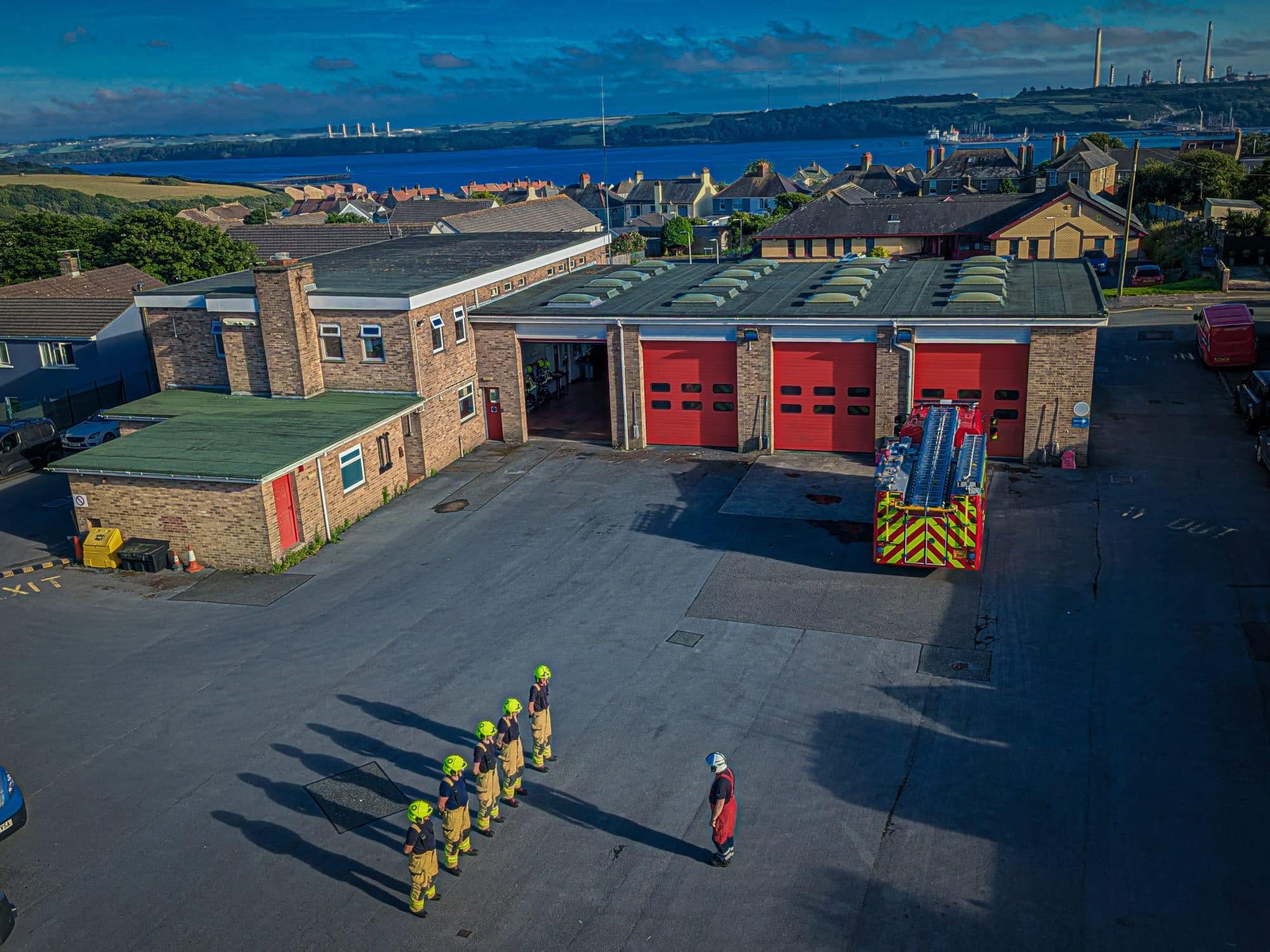
ON-CALL firefighters at Milford Haven Fire Station have been put through their paces as part of their weekly drill night.
The crew’s development firefighters were pictured carrying out a “drill by numbers” squad exercise ahead of upcoming assessments.
New firefighters spend their first 24 months in a development period, which is split into four stages and focuses on different operational skills and competencies.
At the end of each stage, firefighters attend a divisional training centre where their progress is assessed against the standards required by Mid and West Wales Fire and Rescue Service.
Over the next two weeks, members of the Milford Haven crew will take part in a Stage 2 interim assessment and a Stage 4 final assessment.
One firefighter is hoping to complete the final stage and qualify as a fully competent firefighter.
The station said Wednesday nights remain an important part of training for the on-call crew, helping firefighters maintain the skills needed to respond to emergencies across the Milford Haven area.



News13 hours ago
Brexit at 10: How Britain was sold a dream that cost us dearly
A decade after the referendum, the promised benefits remain hard to find while the economic costs are increasingly difficult to...


Crime15 hours ago
Worcestershire man jailed after violent attack on woman in Tenby
Defendant was already serving a suspended sentence when serious assault took place A WORCESTERSHIRE man has been jailed for more...


Climate16 hours ago
Offshore wind ‘could bring new generation of jobs to Milford Haven’
Pembrokeshire ports and Celtic Sea projects placed at centre of Wales’ green energy ambitions MILFORD HAVEN and Pembroke Dock could...

Community2 days ago
Police officer hailed hero after midnight sea rescue in Milford Haven
PC swam 100 metres offshore to save distressed woman heard calling for help in darkness A DYFED-POWYS POLICE officer has...


Local Government2 days ago
Security privately arranged by Mayor at Beating of the Bounds
HAVERFORDWEST TOWN COUNCIL has confirmed that security personnel seen at this year’s Beating of the Bounds were privately arranged and...


Business3 days ago
Celtic Freeport five-year plan puts Milford Haven at centre of green energy future
Strategy promises investment, skilled jobs and new supply chains, but major barriers remain over grid connections, planning and delivery THE...


Education3 days ago
Closure of Ysgol Clydau approved after emotional council debate
COUNCILLORS WARNED RURAL COMMUNITIES WILL REMEMBER DECISION PEMBROKESHIRE councillors have voted to close Ysgol Clydau following an emotional debate over...


Education3 days ago
Manorbier school closure process to continue after narrow council vote
Questions remain over insurance, rebuilding costs and possible legal action by Diocese PEMBROKESHIRE councillors have voted to press ahead with...

Community3 days ago
The father, son and daughter lifeguard trio saving lives in Pembrokeshire
A FATHER, son and daughter are preparing to help keep beachgoers safe on the Pembrokeshire coast this summer as part...


Charity3 days ago
Children turn to Childline as loneliness cases rise
CHILDREN and young people struggling with loneliness are increasingly turning to Childline for support, new figures show. The NSPCC-run service...
-

 Community4 days ago
Pembrokeshire Chess Club crowned Welsh champions
-
Local Government2 days ago
Security privately arranged by Mayor at Beating of the Bounds
-

 Crime7 days ago
Pembroke Dock teenager sentenced over train strangulation attack
-

 Education6 days ago
Diocese threatens legal action as Manorbier school closure battle intensifies
-

 Crime7 days ago
Man accused of six rapes including alleged Haverfordwest offence
-

 Crime1 day ago
Man wanted by court after failing to attend hearing over alleged shop thefts
-

 Local Government6 days ago
Taxi suspended after county-wide licensing checks
-
 Crime1 day ago
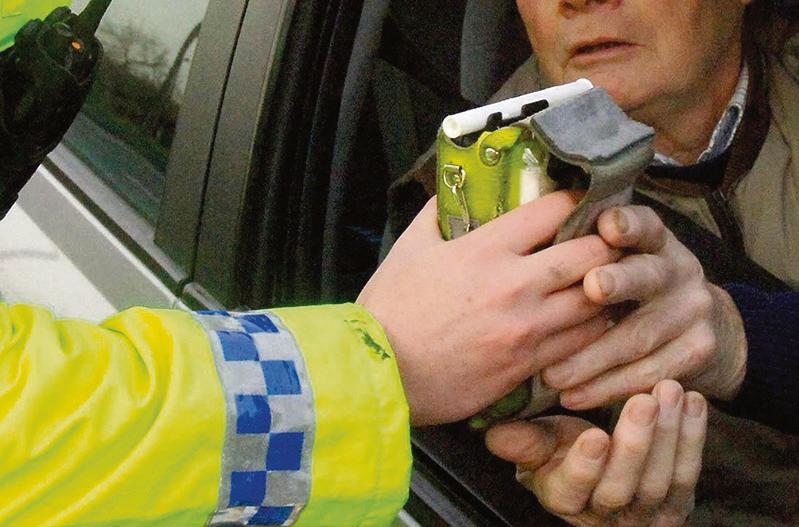
Man banned from roads after drink-driving offence