


Entertainment
Is attending the theatre still popular in Wales despite technological advancements?


The digital age is radically changing entertainment. As time passes, more shows are being released for online platforms, rather than having drawn-out residencies at theatres. This allows producers to showcase their work to billions of people worldwide, without having to put on a show, night after night.
A single show can be recorded at a prestigious venue, and then released in a format that allows the user to experience the performance at home. With that being said, trends like this don’t mean that theatre is dying out. In fact, it’s now more prevalent than ever.
Theatres are embracing technological advancements
Theatre is, in a way, more popular than ever right now. Various theatres are embracing the digital era by uploading their shows in a digital format, or by posting snippets of them on social media to try and encourage people to buy tickets.
By providing people with a snapshot of the experience they could be having, theatres can reach more fans, while encouraging attendance at venues across the country. The movement as a whole is comparable to that of the live casino sector. Live online casino games can be played across a range of devices, with the opportunity to connect with a live dealer in the same way you would if you attended a game at an establishment. This hasn’t taken away from traditional casinos, as it’s made such games more accessible for all.
The theatre sector is working in the same way, as people who don’t have an interest in theatre may be a bit reluctant to pay a lot of money for a show. This is especially the case if they have no idea what the story is about, or the theme of it. People can delve into stories and performances by uploading key moments of shows to social media. This can translate to more tickets being bought, helping to ensure that the art of theatre survives the digital transformation.


Source: Pexels
Theatres across Wales are thriving
Theatres across Wales, including the Wales Millennium Centre and the Venue Cymru are thriving right now. The Donald Gordon Theatre, which can be found at the Wales Millennium Centre, is the second biggest in Europe. It also hosts several opera performances, including drama and music celebrations. You also have the Aberystwyth Arts Centre, which is the biggest centre in Wales for art.
As bigger theatres find ways to navigate the digital era, smaller venues stand to benefit. Simple advancements like screens, effects and the opportunity to use digital tickets on a mobile device help to make the process of attending a show more convenient. Effects can also be programmed, using tech as a way to take the manual process of managing a show, out of the equation. This makes it easier to put on different shows, as the effort to manage each one is significantly reduced.
Another important element is that even though live-streaming theatre shows are helping to bolster the sector, the acoustics and atmosphere you get to experience when attending a show at the theatre cannot be compared. The thrill of hearing an opera singer live evokes emotion on a whole new level. Even though tech is paving the way for the theatre sector, and is helping to bring more people to shows, the shows themselves still have a lot to offer.

Regardless of how many shows might be uploaded to social media, YouTube or released on DVD, live shows will always have a place because they help to show a side that can only be experienced if you’re there in person. The way the performers connect with the audience cannot be translated the same through a digital format, so although live shows and digital releases benefit each other, live shows will always have something to offer music fans in Wales. With people travelling from across the country just to attend the live shows held here, it’s evident that the theatre scene is now thriving more than ever.



HAVERFORDWEST town centre is expected to be busy today as Haverfoodfest 2026 returns for a full day of food, drink, music and family entertainment.
The popular food and drink festival is taking place today, Saturday, May 2, from 10:00am until 4:00pm, with free entry.
This year’s event is being promoted as “the big one”, with artisan produce, street food stalls, busker stops and live entertainment planned across the centre of town.
Organisers say high-quality food and drink stallholders from Wales will be based around Quay Street, Castle Square, the Old Bridge and Riverside, with tasters and special offers available throughout the day.
Among the stalls listed for this year’s festival are local and Welsh food producers, hot food traders, sweet treats, drinks, cheese, chocolate, vegan food, crêpes, barbecue and other artisan produce.

The event is also set to include music, choirs, buskers, free face painting and family activities, helping to bring a festival atmosphere to the county town.
Haverfoodfest has become one of Haverfordwest’s best-known town centre events, drawing visitors into local streets and supporting existing shops, cafés, pubs and businesses.
The festival website says: “Haverfoodfest is back on May 2nd 2026 with high-quality food and drink stallholders from Wales on Quay Street, Castle Square, The Old Bridge and Riverside with lots of tasters and offers of great food and drink.”
Visitors are being encouraged to head into town during the day, enjoy the stalls and entertainment, and support local traders.
More information is available at www.haverfoodfest.co.uk.


Bill Hamblett’s father helped write the 1956 film script — and his childhood brought him into the orbit of Gregory Peck
THE MAN helping bring a giant lantern parade to life at Fishguard and Goodwick’s Ar Ymyl y Tir/On Land’s Edge Moby Dick-themed festival in September has a remarkable personal connection to the great white whale itself.
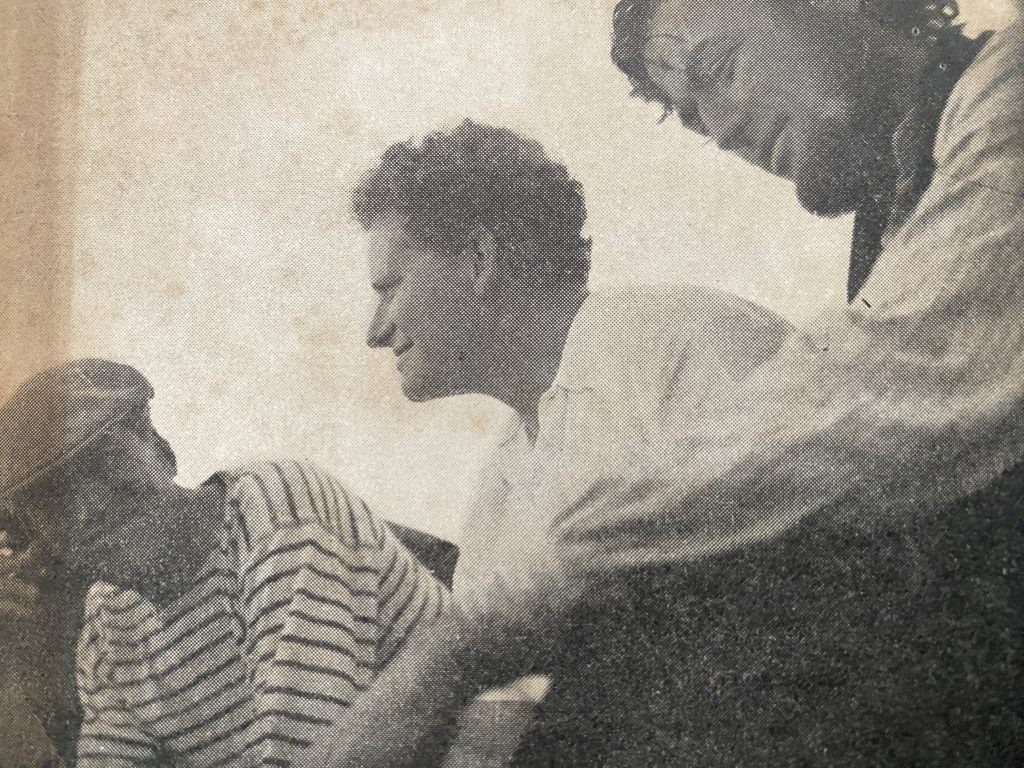
Bill Hamblett, director of Cardigan’s Small World Theatre, was a near-neighbour of Hollywood star Gregory Peck during his childhood in California. Even more unusually, Bill’s father, Charles Hamblett, was one of the screenwriters who helped shape John Huston’s classic 1956 film Moby Dick.
“Basically, dad was one of the guys employed to turn Herman Melville’s prose into screen dialogue,” said Bill, who has run Small World Theatre with his wife Ann since 2008.
“He’d decided to go from being a journalist and poet in the UK to trying to crack Hollywood.”
Bill remembers growing up in Santa Monica during the late 1950s and being aware of famous names passing through his family’s world — even if he didn’t fully understand their importance at the time.

“As a kid in Santa Monica I remember being dropped round at Gregory Peck’s house,” he said.
“And I’m pretty certain that John Huston’s daughter, Anjelica, came round to ours for my sister’s birthday party.
“But I’m afraid I don’t have strong memories of Gregory Peck – I wasn’t a particularly starstruck little boy!”

The experiences Charles Hamblett gained during the 1954 Moby Dick shoot off Fishguard later inspired him to write the surreal fantasy novel The Crazy Kill. In the book, Peck becomes ‘Gregory Pinch’ and Huston is reimagined as ‘John Simpson’, in a story that draws on real events but twists them into fiction.

“The Crazy Kill is essentially a pastiche of Moby Dick written in the slang of the 1950s,” Bill explained.
He added that his father’s life was filled with unusual encounters and unexpected chapters.
“You could say dad had a varied and interesting career – he used to hang out with Dylan Thomas, Brendan Behan and all those guys,” he said.

“He also dropped acid as part of the CIA’s secret experiments and later wrote an article about the experience.”
Charles Hamblett later teamed up with journalist and poet Jane Deverson to publish the influential 1964 book Generation X, exploring the emerging mod and beat youth culture.
For Bill, his father’s work remains a striking behind-the-scenes snapshot of the era — and a rare insight into how a major Hollywood production came to west Wales.
“The Crazy Kill’s insight into Huston and Peck is absolutely spot-on and a remarkable snapshot of how Hollywood came to west Wales to make a film about a whale in the middle of the ocean,” he said.
“Huston got that film completed through sheer grit, guts and tenacity and looking back it was a remarkable cinematic achievement – they lost three of those bloody model whales during the filming!”
Bill says it feels strange that, decades later, the story of Moby Dick has returned to his life through the festival.
“And, as a three-year-old child, I was on the periphery of it all,” he said.
“Now that I’m 73, Moby Dick is once again coming back into my life. I mean, you couldn’t make it up, could you?”
For more information about the Ar Ymyl y Tir/On Land’s Edge festival, visit onlandsedge.co.uk.
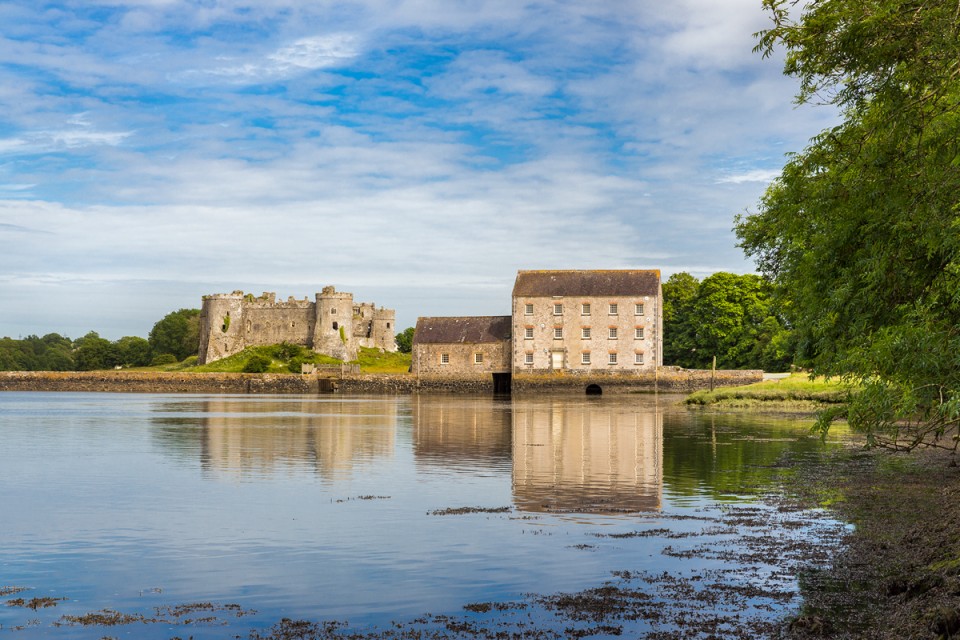
CAREW TIDAL MILL will offer free admission after 3:00pm on Saturday, May 9, and Sunday, May 10, to mark National Mills Weekend.
The special offer gives visitors the chance to step inside one of Pembrokeshire’s most distinctive historic buildings and discover more about Wales’ only intact tidal mill.
For anyone who has enjoyed a walk around the Millpond but never been inside, the weekend provides an ideal opportunity to explore a rare piece of industrial heritage.
National Mills Weekend is the UK’s annual celebration of milling heritage, coordinated by the Society for the Protection of Ancient Buildings. Each May, hundreds of windmills and watermills across the country open their doors to the public, helping to raise awareness of the importance of conserving these historic landmarks.
Grade II* listed Carew Tidal Mill is one of only five restored tidal mills in the UK and is regarded as a nationally significant survivor of early renewable industrial technology.
Although milling at the site ended in 1937, the original machinery remains in place, giving visitors a fascinating glimpse into the past.
Visitors can explore the Mill’s history through interactive displays, exhibitions and audio commentary, learning how water power was harnessed for centuries as a source of sustainable energy.
Daisy Hughes, manager of Carew Castle and Tidal Mill, said: “Carew Tidal Mill is a remarkable example of Wales’ industrial heritage and an important reminder of how natural resources were once used to power local communities.
“National Mills Weekend is a wonderful opportunity to welcome visitors inside and share the story of this unique building.”
Free entry to Carew Tidal Mill will be available from 3:00pm to 4:30pm on both days. Last admission is at 4:30pm and the Mill closes at 5:00pm.
Free admission applies to the Mill only and does not include entry to Carew Castle.
Visitors are advised that access to the Tidal Mill is via steps.

More information is available at www.carewcastle.com.


News8 hours ago
West Wales coracle fishermen raise alarm over suspected sewage pollution
A CENTURIES-old fishing tradition on the River Towy could be under threat after coracle fishermen reported suspected sewage pollution entering...


Community2 days ago
Scooter rally brings colour and nostalgia to Tenby
TENBY is buzzing with the sights and sounds of classic scooters this Bank Holiday weekend as the Welsh National Scooter...


Entertainment2 days ago
Haverfoodfest returns to Haverfordwest town centre today
HAVERFORDWEST town centre is expected to be busy today as Haverfoodfest 2026 returns for a full day of food, drink,...

Crime3 days ago
70-year-old denies assault and restraining order breach
A PENSIONER from Pembroke Dock has denied breaching a restraining order and assaulting another man. Henry Howlett, 70, of Market...


News3 days ago
Conservatives target two seats in new Ceredigion Penfro constituency
Paul Davies and Sam Kurtz say health, farming and transport are key as they seek return to the Senedd CONSERVATIVE...


Community4 days ago
Milford Haven Beer Fest returns to waterfront this May
EVENT WILL FEATURE 34 DRINKS, LIVE MUSIC AND STREET FOOD MILFORD HAVEN is preparing to raise a glass as Beer...


Community5 days ago
Cancer patients targeted with parking fines outside Haverfordwest support centre
Adam’s Bucketful of Hope says vulnerable users, elderly volunteers and charity drivers have paid more than £1,000 after Ateb introduced...


Charity5 days ago
Row erupts at Spitfire museum after Reform poster displayed at charity premises
A HAVERFORDWEST museum has become caught up in a political row after Reform UK campaign material was photographed inside the...


Crime5 days ago
Pembrokeshire man charged with making hundreds of indecent images of children
A PEMBROKESHIRE man has appeared before magistrates charged with making hundreds of indecent images of children. David Lewis, 42, is...


Crime5 days ago
Man appears in court charged over death of Blood Bike Wales volunteer
FAMILY WATCHED FROM PUBLIC GALLERY AS CASE SENT TO CROWN COURT A PEMBROKESHIRE man has appeared before magistrates charged with...
-

 Local Government5 days ago
Fishguard children’s home application is a ‘legal test’, not planning merits decision
-

 Community4 days ago
Dogs removed after welfare concerns at Milford Haven property
-

 Crime6 days ago
Drink-driver hit bicycle and failed to stop
-

 News7 days ago
SPECIAL FEATURE: Did Chernobyl affect children in Wales?
-
 Crime5 days ago
Pembrokeshire hairdresser avoids prison after pub assault
-
Crime5 days ago
Pembrokeshire man charged with making hundreds of indecent images of children
-

 Business4 days ago
Handcrafted garden furniture built to last across Pembrokeshire
-
 Sport7 days ago
Neyland make early statement as cricket season begins