

Politics
Extra £1.5bn for public services as Welsh Government unveils spending plans

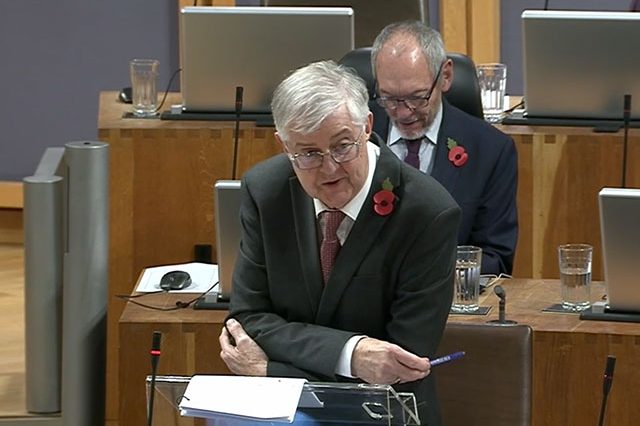
THE WELSH Government has unveiled its spending plans for next year with an additional £1.5bn allocated to public services, including an extra £610m for health and social care.
Mark Drakeford announced all government departments will receive increases in day-to-day revenue and longer-term capital funding, marking a departure from last year’s cuts.
Wales’ finance secretary described the £26bn draft budget as offering an opportunity to rebuild and reinvigorate public services after 14 difficult years.
He said: “This is a budget for a brighter future, delivering an extra £1.5bn for our public services and priorities, helping to put Wales firmly back on the path of growth….
“This is in stark contrast to the last couple of years when we have been forced to make some very difficult and painful decisions.”

The ex-First Minister added: “This is a good budget for Wales. But it will take time to reverse the damage inflicted on Wales over 14 years of neglect from previous UK administrations.”
The draft budget includes an extra £610m for health and social services, £186m to improve rail services, including the core valleys lines, and £81m to build more social housing for rent.
Councils will receive a 4.3% increase in the local government settlement.
The increases by department are as follows:
- Health: 3.8% revenue, 30% capital
- Housing and local government: 5.4% revenue, 11.2% capital
- Education: 4.9% revenue, 8.1% capital
- Transport: 12% revenue, 10.7% capital
- Climate change and rural affairs: 6.6% revenue, 31% capital
- Economy, energy and planning: 4.3% revenue, 59.1% capital
- Social justice: 4.7% revenue, 23% capital
- Central services and administration: 7.4% revenue, 47% capital
Welsh rates of income tax will remain unchanged, with taxpayers continuing to pay the same rates as in England and Northern Ireland.
However, the Welsh Government announced that higher residential rates of land transaction tax – Wales’ equivalent of stamp duty – will increase by 1%, raising an extra £7m.
The standard rate of landfill disposal tax will also rise to reduce waste and boost recycling.

The big question is how the Welsh Government will pass its budget, with parliamentary arithmetic in the Senedd on a knife-edge and Labour one seat short of a majority.

Eluned Morgan, who has warned Wales could lose out on £1bn if opposition parties do not support the spending plans, will need to cut a deal with at least one opposition member.
Previous budgets have been passed with the help of Plaid Cymru, Liberal Democrat and independent Senedd Members, with a deal with the Conservatives seeming unlikely.
Plaid Cymru backed the Welsh Government’s budget in recent years in return for 46 commitments but the cooperation deal between the two collapsed in October 2023.
The First Minister could also reach out to Jane Dodds, the Lib Dems’ leader in Wales and the party’s sole Senedd Member, or Rhys ab Owen, who sits as an independent.

Senedd Members need to agree a motion on Welsh rates of income tax (Writ), which are forecast to raise about £3.3bn in 2025/26, before the budget can be passed.
Writ defaults to zero if a motion cannot be passed, meaning basic, higher and additional rates would decrease by 10p in the £1 for Welsh taxpayers.
If the annual budget motion is not agreed by the start of the financial year in April, the budget of the Welsh Government would revert to 75% of the previous year’s.
This would also affect directly funded bodies such as the Senedd, Public Services Ombudsman, Wales Audit Office and the Electoral Commission.
If a motion is still not agreed by the end of July, the budget rises to 95%.
Mark Drakeford will lead a debate on the draft budget in the debating chamber or Siambr, which will be broadcast live on Senedd.TV from about 2.50pm today.
He will also appear before the Welsh Parliament’s finance committee on Thursday morning to face questions about the spending plans for the 12 months from April.
Senedd Members will then scrutinise the draft budget through December and January.
Committees will take evidence from witnesses including the Office for Budget Responsibility, Institute for Fiscal Studies, Wales Fiscal Analysis, Bevan Foundation and Citizens’ Advice.
Based on this evidence, committees will publish scrutiny reports by February 3.
A further debate on the draft budget will be held the following day, with the final budget set to be published on February 25 and a crunch vote to follow on March 4.
Navigating this year’s budget process will be a key test for Wales’ new First Minister, with the next Senedd election looming in less than 18 months in May 2026.


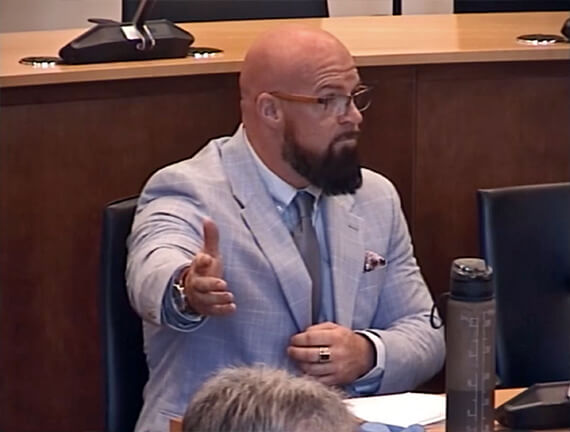
Lee Bridges says senior vacancy should prompt a review of management costs as frontline services face financial pressure
A MILFORD HAVEN town councillor has questioned whether Pembrokeshire County Council needs to appoint a new deputy chief executive at a time when local services are under growing financial pressure.
Councillor Lee Bridges spoke out after the authority advertised for a Deputy Chief Executive and Director of Place, with a salary of between £132,063 and £145,050.
The successful candidate would also receive a £9,576 annual lease car allowance and a relocation package, taking the potential overall package above £154,000.
Cllr Bridges stressed that his concerns related to the position itself and were not intended as criticism of the person currently holding, or previously holding, the role.
He said: “At a time when local authorities across Wales are facing significant financial pressures and frontline services are under increasing strain, I do question whether this role is really necessary.
“The council already has a chief executive, directors responsible for each service area, together with multiple layers of senior managers, middle managers and team leaders.
“When opportunities arise through senior vacancies, they should also be seen as opportunities to review and streamline management structures rather than simply replacing like-for-like.”
The senior post carries responsibility for areas including regeneration, economic development, planning, transport, environmental services, climate change and major capital projects.
The successful applicant would also support major investment opportunities linked to the Celtic Freeport.
Cllr Bridges said strong leadership remained important, but argued that the cost of senior management needed to be balanced against the pressure on council services.
He said: “Every pound spent on senior management is a pound that cannot be invested in frontline services that residents rely upon every day.
“Over recent years, we have repeatedly heard that difficult financial decisions have had to be made, with services being reduced or placed under increasing pressure because budgets are stretched.

“If that is genuinely the case, then it seems entirely reasonable that senior management structures should be reviewed with the same level of scrutiny as every other area of council spending.”
He said the vacancy should have prompted the authority to consider whether the responsibilities could be divided among existing senior officers.
Cllr Bridges added: “I would have welcomed a strategic review of whether this post is genuinely essential, or whether its responsibilities could be absorbed within the existing leadership team.
“Any savings could then be redirected towards protecting services for Pembrokeshire residents, whether that is highways, social care, education, environmental services or other frontline functions.”
He said his comments were intended to encourage debate about council priorities rather than criticise individuals.
“This is not about personalities,” he said. “It is about ensuring that, when opportunities arise through natural vacancies, the council asks whether there is a better way of structuring itself for the future.
“At a time when every public pound counts, I think residents would expect those questions to be asked before another senior appointment is made.”

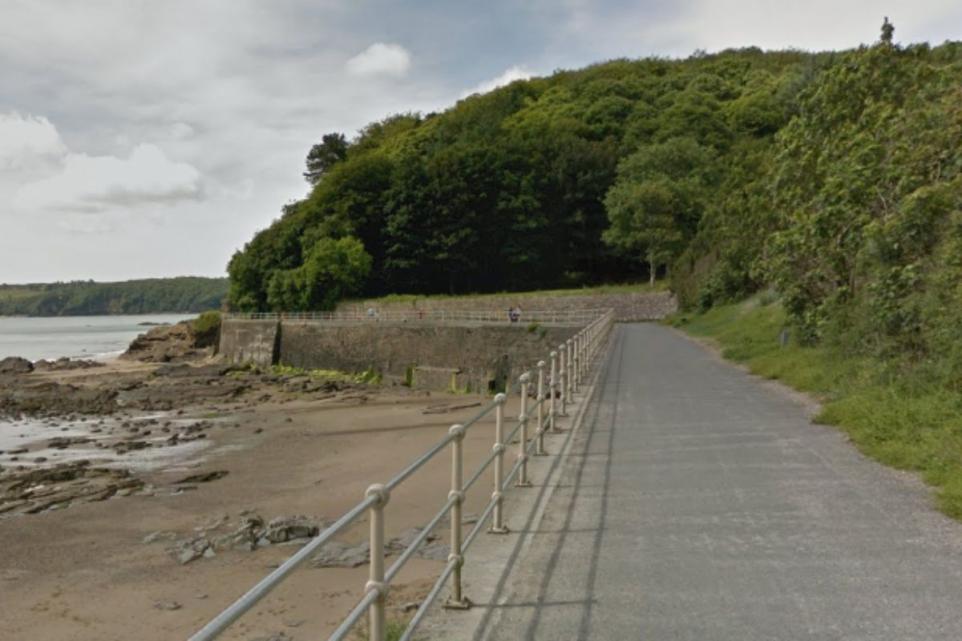
A SECTION of a south Pembrokeshire seaside coastal path, closed once again after a landslide at the weekend, has now reopened.
After a landslide on July 12, Dyfed-Powys Police reported delays on the footpath between Coppet Hall and Wiseman’s Bridge, advising people to use alternative routes where possible or allow extra time for their journey.
The section of the south Pembrokeshire beach-side coastal path has been closed several times since late 2023 after it experienced ‘substantial rock falls’.
The footpath was last closed in January 2025, following a number of landslips in the space of one week.
The path, known as the Tramway, which connects Wiseman’s Bridge to Coppet Hall in Saundersfoot is a popular and accessible stretch of the Wales Coast Path.
Following Sunday’s rock fall, Pembrokeshire County Council has said: “The footpath between Coppet Hall and Wiseman’s Bridge has re-opened following a rock fall at the weekend.
“The rock fall has been assessed as localised and from a low level. The path has therefore re-opened and work to remove the fallen material will be carried out in due course.”
The path was previously closed after it experienced ‘substantial rock falls’ in late 2023 and early 2024, with substantial investment made by the council to reopen the route.
In January 2025 a further fall happened towards the western end of the Wisemans Bridge to Coppet Hall cycleway, between the Coppet Hall and Wisemans Bridge tunnels, affecting access between Wisemans Bridge and Coppet Hall beach.
Costs of the works for the multiple incidents had, back in March 2025, amounted to nearly £700,000.
During 2024’s works, local councillor Chris Williams hit out at “selfish” path users putting others at risk by repeatedly cutting open safety barriers and fencing while the repair works were being undertaken.
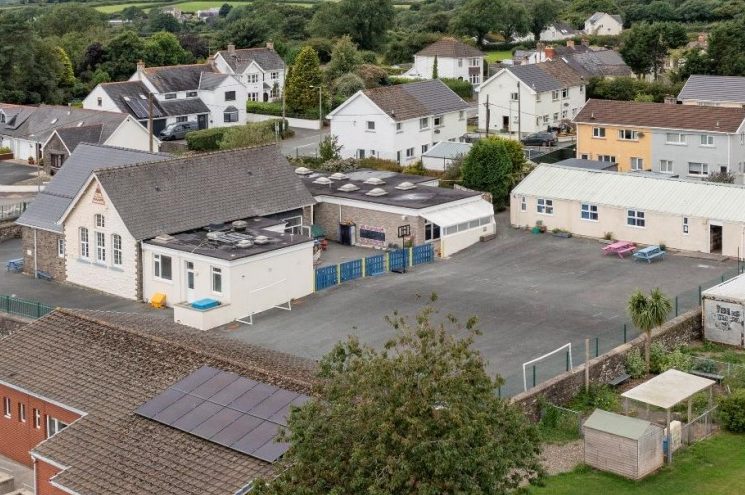
A CALL to replace a Pembrokeshire village school classroom that had reached the end of its life with a modern facility has been given the go-ahead by county planners.
In an application to Pembrokeshire County Council, the local authority itself, through agent Williams-Architects Ltd, sought permission for the erection of a new modular classroom building at the site of Llandissilio’s Ysgol Brynconin Welsh Medium 3-11 school, along with the demolition of the existing modular classroom building.
A supporting statement said: “In addition to the main school building, some classroom and library facilities are located in a prefabricated hut within the school grounds constructed under the historical HORSA programme.

“Despite various upgrades over its lifespan including insulation and new windows, the building is no longer fit for purpose, and a replacement is required to ensure the school can continue to provide its pupils with modern, suitably equipped and compliant facilities that enable high quality education.”
HORSA buildings were originally designed as temporary structures, typically constructed using prefabricated concrete, timber, and steel to facilitate rapid assembly.
Although intended for short-term use, many HORSA buildings have remained in operation for decades. Over time, these structures have surpassed their intended lifespan, leading to significant structural issues, such as weakened frames, deteriorating roofs and external facades.
The statement added: “The primary use of the replacement building will remain as currently; it will include a single classroom alongside a multifunctional space which will be used as a library, staff and group room as required. It will also include an additional toilet, new accessible toilet, a cleaners’ store and formal classroom storage.

“The intention of the proposed building is to replace an existing classroom facility which is no longer fit for purpose, and whilst a simple replacement will significantly improve the day-to-day experience of the staff and pupils who currently use this building.”
An officer report recommending approval said that, while the proposed replacement building would not result in any greater impact on the visual amenity in terms of its design, scale and overall appearance, the proposal includes the demolition of an existing building which could have an impact on the local amenity during the demolition process.
It said that, since local concerns were raised, a Demolition and Construction statement has set out the proposed demolition methodology and construction process, including details of the sequence of works, hours, and anticipated timeframe, and it is considered that the proposed demolition and construction “will have no significant detrimental impact upon the locality amenity”.
The application was conditionally approved.
Back in July 2025, members of the council’s Cabinet backed approval for a new modular building at Ysgol Brynconin, members hearing that “the external structure has rapidly declined, with the render board failing and allowing water ingress into the areas of external wall insulation”.


Local Government5 hours ago
Catapult attacks suspected after wildlife deaths at Pembroke Mill Pond
Wildlife Crime Officers are investigating after the town council said around five animals showed signs of deliberate injury WILDLIFE found...


Crime7 hours ago
Narberth retailer speaks of shoplifting toll after ‘collectable bear’ stolen
Independent shop owner said rising costs meant businesses could not afford to absorb losses caused by theft A NARBERTH retailer...


Crime8 hours ago
Teen accused of attempting to murder teacher says she lied about stabbing
Defendant accepts teacher was terrified and that a knife wound to the head could kill, but denies deliberately attacking her...


Local Government2 days ago
Calls grow for independent investigation into Manorbier school closure
Councillor alleges misleading figures, inadequate insurance and poor treatment of staff CALLS for an independent investigation into the controversial closure...


Community2 days ago
Neyland Carnival hailed a huge success after streets fill with colour and crowds
NEYLAND CARNIVAL organisers have thanked the community, volunteers and local businesses who helped make this year’s event a memorable success....


Community2 days ago
Tenby Summer Spectacular: Anger grows over ‘disaster waiting to happen’ warning
A growing backlash has followed police calls for the event’s licence to be revoked, with supporters questioning why authorities failed...


Charity3 days ago
RSPB secures ‘missing link’ to reconnect wildlife habitats in Carmarthenshire
RSPB CYMRU has purchased a 96-hectare upland site in Carmarthenshire, describing it as a vital step towards reconnecting one of...


Crime4 days ago
Ann Widdecombe: Welsh politicians pay tribute as murder probe launched
Prime Minister Sir Keir Starmer has praised the former minister’s “conviction and dedication”, while political figures in Wales remembered her...


News4 days ago
Solardo pulls out of Haverfordwest show as organisers offer full refunds
Headline act confirms non-appearance as Park House Series announces major event changes DANCE music duo Solardo will no longer perform...


Local Government4 days ago
Conservatives win Pembroke Dock seat as Reform stalls and Dowson polls just 11
Jamie Street takes Market ward with a 43-vote majority as Reform finishes fourth despite its major Senedd breakthrough two months...
-

 Farming5 days ago
Working Carmarthenshire farm opens gates to visitors with new holiday cottages
-

 Entertainment6 days ago
Swing and big band classics heading to Torch Theatre
-

 Sport5 days ago
Rising rally star claims maiden Mini Rally Challenge victory
-

 Farming5 days ago
Outer Hebrides stickmaker to make final Royal Welsh Show appearance
-

 Crime5 days ago
Greenacres confirms seized dogs are safe as investigation continues
-

 Sport5 days ago
Bluebirds give new home strip first run-out
-
Crime5 days ago
Teacher stabbing trial: The first week of evidence
-

 Crime6 days ago
Welsh-born woman Ruth Ellis granted pardon 71 years after execution