

Health
Doctor sounds alarm about scurvy cases among children


A DOCTOR warned of re-emerging cases of scurvy, a disease caused by vitamin C deficiency, among children and young people in Wales.
Dana Beasley, Wales deputy officer at the Royal College of Paediatrics and Child Health, raised concerns about a lack of vitamin C from fruit and vegetables in children’s diets.
She told the Senedd’s health committee: “I never thought I would see this in my lifetime as a paediatrician in a developed country, I’ve seen children with vitamin C deficiency: scurvy.
“This is something out of books from pirate stories long, long ago. We have seen children in Wales with vitamin C deficiency, it’s tragic.
“Vitamin C deficiency is rare but I’ve seen it, there’s been several cases but vitamin D deficiency is more frequent.

“It’s heartbreaking to see because our children are not well – we’re already robbing them of a healthy adult life before they even start school.”
In September, a medical journal warned scurvy – a disease which, if untreated, can lead to potentially fatal bleeding – is re-emerging due to the cost of living and poor diets.
Giving evidence to a health committee inquiry on obesity, Dr Beasley pointed to 2021 research which found Welsh children are among the least fit in the world.
Wales received an “F” in the study of 60 countries and the paediatrician warned “so many children” are deficient in vitamin D due to malnutrition and a lack of outdoor activity.
She said: “Children over five and young people should move for an hour a day every day but research has shown that probably 20% of boys maybe do that and 14% of girls.
“That’s shocking, absolutely shocking.”
Dr Beasley told Senedd members: “Cwm Taf’s got the biggest obesity rates [but] hasn’t got any sustained level two or three obesity services. Hywel Dda, that’s got the biggest rate of overweight children with about 28%, hasn’t got any services at all. That’s not right.”

Rocio Cifuentes, the children’s commissioner for Wales, pointed to a Food Foundation report showing 1,000 calories of healthy food costs £8.80 compared with £4.30 for unhealthy food

She said: “Healthy food currently is more expensive and that is a reality that parents who are struggling will have to grapple with and will have to make unhealthier choices.
“They will be forced to – their financial circumstances will dictate that.”
Ms Cifuentes warned of a “huge society-wide challenge” on screen time, emphasising that parents need to lead by example.
She told the committee: “Overall, there’s huge evidence that screen time is increasing for children and young people, and that it’s having a really detrimental impact on their physical health, mental health, education and social skills.”
More than a quarter of children aged four or five in Wales are overweight or obese, according to latest statistics for 2022/23.
The children’s commissioner warned of a “deprivation gap”, with children from the poorest postcode areas significantly more likely to be overweight or obese.
Ms Cifuentes called for a duty to have “due regard” to the UN convention on the rights of the child to be applied to councils as well as Welsh ministers.
She said this would ensure children’s rights form part of councils’ thinking when, for example, taking decisions to close swimming pools or parks.
During an earlier evidence session on February 13, Jonathan Bone, of Nesta Cymru, outlined the innovation charity’s blueprint which aims to halve obesity.
He urged the Welsh Government to go beyond plans to restrict “buy one get one free”-style deals by banning all price promotions on less healthy products in bigger retailers.
He told the committee: “The modelling suggested that this would lead to a 29% relative reduction in obesity rates, which is 40 times more impactful than the volume price promotions policy currently being drafted.”
Dr Bone called for mandatory targets for larger retailers to improve the average healthiness of food sold, suggesting this could lead to a 25% fall in obesity rates.
He said: “Over the past 30 years, the majority of government strategies have focused on policies that require individual action and over this time obesity rates have doubled – so these kinds of approaches clearly aren’t working.”



Additional GP and health checks welcomed as BMA warns more than half of Welsh doctors cannot routinely meet demand
THERE are signs of improvement at one of Pembrokeshire’s most heavily pressured GP practices, but fresh figures suggest the problems facing Argyle Medical Group are far from resolved.
Henry Tufnell MP has welcomed the introduction of a new appointment system at the Argyle Street surgery in Pembroke Dock, together with what he described as the arrival of an additional doctor and the rollout of free health screening for patients aged over 65.
The Mid and South Pembrokeshire MP said he had received positive feedback about the practice’s new booking arrangements, following months of concern over difficulties securing appointments.
Argyle Medical Group introduced its Anima online triage system on June 10. It replaced the previous online system and was intended to reduce the familiar 8am rush for appointments.
Patients submit details of their medical problem online, after which the request is assessed and directed to the most appropriate clinician or service. Those unable to use the internet can still contact the surgery by telephone and reception staff can complete the request on their behalf.
The practice says it aims to assess requests on the same day, although some routine matters may take longer.
However, the system does not remove the underlying issue of limited capacity.
Argyle has warned that Anima may close to further medical submissions when the number of requests reaches the maximum level the practice believes it can safely manage.
Patients may then have to try again on the following working day, although those with urgent concerns are advised to contact the surgery, NHS 111 or emergency services as appropriate.
The pressure is also being increased by the continuing closure of St Oswald’s Surgery in Pembroke, which is part of Argyle Medical Group.
The branch remains closed for maintenance work and is currently not expected to reopen until September 2026.
Argyle Medical Group serves more than 22,000 patients across the Pembroke and Pembroke Dock area. Previous figures raised in the Senedd indicated that the practice had nine registered GPs, giving it one of the highest patient-to-doctor ratios in Wales.

Mr Tufnell’s announcement that another doctor has joined the practice will therefore be welcomed, although it is not yet clear whether the appointment is permanent or full-time.
The developments come as new research from BMA Cymru Wales paints a bleak picture of general practice across the country.
A survey of 221 Welsh GPs found that 54 per cent believed patient access was routinely inadequate when compared with demand.
A further 63 per cent said excessive workloads were routinely or constantly affecting patient care, while 70 per cent said the pressure was having a similar effect on their own wellbeing.
Practices are also making difficult financial decisions to remain viable. The survey found that 43 per cent had frozen recruitment, 31 per cent had delayed investment in buildings, technology or facilities, and 23 per cent had reduced services such as minor surgery and shared-care arrangements.
Dr Gareth Oelmann, chair of the BMA’s Welsh GP committee, said demand was far outstripping the capacity available within surgeries.
He called for sustained investment to allow practices to recruit more doctors, improve services and plan for the future.
Welsh Conservatives have blamed what they described as years of political mismanagement for the situation.
Natasha Asghar MS, the party’s Shadow Minister for Health and Social Care, said: “These findings are deeply worrying but, sadly, they won’t come as a surprise to patients who are struggling to get a GP appointment.
“When GP practices cannot recruit staff, are forced to freeze investment and are even cutting services just to keep their doors open, it is patients who pay the price through longer waits and poorer access to care.
“If we are serious about shifting more healthcare into the community and reducing pressure on hospitals, then general practice must be properly resourced.”
For Argyle patients, the new booking system and reported recruitment of another doctor represent positive steps.
The more important test will be whether patients experience sustained improvements, whether the system regularly reaches its daily limit, and whether the practice can recruit and retain enough clinicians to meet the needs of its large patient population.

WALES has recorded the highest rate of self-medication for anxiety and stress of any UK region, according to a new healthcare survey.
The STADA Health Report 2026 found that 31 per cent of adults surveyed in Wales said they self-medicated to manage anxiety or stress.
That was almost six percentage points above the UK average of 25.2 per cent.
The report also found comparatively low levels of trust in artificial intelligence for healthcare, alongside concerns about access to services, ageing and the amount of health information people are expected to navigate.
Just 38.5 per cent of Welsh respondents said they would trust AI to make a health diagnosis, the lowest rate recorded among the UK regions surveyed and well below the national average of 52.3 per cent.
Fewer than half, 42.4 per cent, said they would consider having a health consultation using AI, compared with 49.5 per cent across the UK.
Satisfaction with the public healthcare system was also lower in Wales. Some 57.9 per cent of Welsh respondents said they were satisfied, compared with a UK average of 65.1 per cent.
The findings form part of an international study commissioned by pharmaceutical manufacturer STADA Thornton & Ross and carried out by market research company Human8 Consulting.
A total of 2,001 adults were surveyed in the UK during February and March 2026, as part of a wider study involving 19,514 respondents across 20 countries. The company has not stated in the press material how many of the UK participants were based in Wales.
Concerns about ageing and access to care
More than two-thirds of Welsh respondents, 66.8 per cent, said they feared becoming dependent on care as they grew older.
That compared with a UK average of 54.3 per cent.
More than half of those surveyed in Wales, 55.4 per cent, also said they felt overwhelmed by the amount of health information available, against 47.7 per cent nationally.

The report’s authors said the findings suggested that some people were increasingly relying on self-management when they felt unable to access timely professional support.
However, the term “self-medication” can cover a range of behaviours, including the use of non-prescription medicines, supplements or other substances without direct advice from a healthcare professional.
Craig Shaw, general manager for STADA UK, said: “When one in three adults say they are self-medicating for anxiety or stress, it suggests many people are looking for practical ways to manage their wellbeing, but may not always feel they have access to the support they need at the right time.
“While trust in AI health tools is lower in Wales than elsewhere in the UK, the data also reinforces the enduring importance of trusted, face-to-face healthcare.
“Community pharmacists are uniquely placed to provide accessible advice, reassurance and guidance, helping people make informed decisions about managing their health and knowing when additional support is needed.”
STADA Thornton & Ross manufactures healthcare products including Covonia, Cetraben, Hedrin, Savlon and Zoflora, as well as generic and specialist medicines.
Anyone experiencing anxiety or stress is advised to speak to a GP, pharmacist or another qualified healthcare professional before taking medication that has not been prescribed for them.

Freedom of Information figures show more than 1,600 patients remained on the health board’s hip replacement waiting list in May
PATIENTS awaiting elective hip replacement surgery under Hywel Dda University Health Board waited an average of 450 days during the 2025/26 financial year, according to newly released figures.
The average wait was equivalent to just over 64 weeks, significantly longer than the treatment times set out under Welsh NHS targets.
The figures were obtained through a Freedom of Information request submitted to the health board by private healthcare marketplace My Medical Gateway.
In Wales, the stated aim is for 95% of patients to begin treatment within 26 weeks of referral, with no patient waiting longer than 36 weeks.
Hywel Dda confirmed that 1,608 patients were on its waiting list for hip replacement surgery as of May 28, 2026.
The health board also said 16 patients had been removed from the waiting list during the 2025/26 financial year after choosing to undergo treatment privately.
Hip replacement surgery is most commonly offered to people experiencing severe pain, stiffness and reduced mobility, often after other treatments such as physiotherapy, pain relief, injections and lifestyle changes have failed to provide sufficient relief.
Sara Gezdari, Head of Investor Relations at My Medical Gateway, said prolonged waits could have a serious effect on patients’ physical and emotional wellbeing.
She said: “Many people join NHS waiting lists after already spending months or years attempting to manage their condition through physiotherapy, pain relief medication, injections and lifestyle modifications.
“By the time surgery is recommended, they are often already struggling. The true impact of waiting is measured not in weeks but in declining quality of life.”
She said patients waiting for surgery could experience increasing pain, disrupted sleep, reduced mobility, loss of independence, social isolation and worsening mental health.
Long waits could also have financial consequences, particularly for people whose employment relies on physical mobility.

Ms Gezdari added: “Many patients continue working despite severe symptoms. As pain worsens, productivity often falls. Some reduce their hours. Others leave work entirely.
“The consequences can be particularly significant for self-employed individuals who depend upon physical mobility to earn a living.”
My Medical Gateway said private hip replacement surgery in the UK typically costs between £12,549 and £14,950.
The company, which connects UK patients with private hospitals in the European Union, said the average price offered by many European providers was approximately £9,088.
However, travelling abroad for medical treatment can involve additional considerations, including travel costs, insurance, post-operative care and arrangements if complications arise.
The Freedom of Information response was returned by Hywel Dda University Health Board on June 8, 2026.


Local Government9 hours ago
Catapult attacks suspected after wildlife deaths at Pembroke Mill Pond
Wildlife Crime Officers are investigating after the town council said around five animals showed signs of deliberate injury WILDLIFE found...


Crime12 hours ago
Narberth retailer speaks of shoplifting toll after ‘collectable bear’ stolen
Independent shop owner said rising costs meant businesses could not afford to absorb losses caused by theft A NARBERTH retailer...


Crime12 hours ago
Teen accused of attempting to murder teacher says she lied about stabbing
Defendant accepts teacher was terrified and that a knife wound to the head could kill, but denies deliberately attacking her...


Local Government2 days ago
Calls grow for independent investigation into Manorbier school closure
Councillor alleges misleading figures, inadequate insurance and poor treatment of staff CALLS for an independent investigation into the controversial closure...


Community2 days ago
Neyland Carnival hailed a huge success after streets fill with colour and crowds
NEYLAND CARNIVAL organisers have thanked the community, volunteers and local businesses who helped make this year’s event a memorable success....


Community2 days ago
Tenby Summer Spectacular: Anger grows over ‘disaster waiting to happen’ warning
A growing backlash has followed police calls for the event’s licence to be revoked, with supporters questioning why authorities failed...


Charity3 days ago
RSPB secures ‘missing link’ to reconnect wildlife habitats in Carmarthenshire
RSPB CYMRU has purchased a 96-hectare upland site in Carmarthenshire, describing it as a vital step towards reconnecting one of...


Crime4 days ago
Ann Widdecombe: Welsh politicians pay tribute as murder probe launched
Prime Minister Sir Keir Starmer has praised the former minister’s “conviction and dedication”, while political figures in Wales remembered her...


News5 days ago
Solardo pulls out of Haverfordwest show as organisers offer full refunds
Headline act confirms non-appearance as Park House Series announces major event changes DANCE music duo Solardo will no longer perform...


Local Government5 days ago
Conservatives win Pembroke Dock seat as Reform stalls and Dowson polls just 11
Jamie Street takes Market ward with a 43-vote majority as Reform finishes fourth despite its major Senedd breakthrough two months...
-
 Farming5 days ago
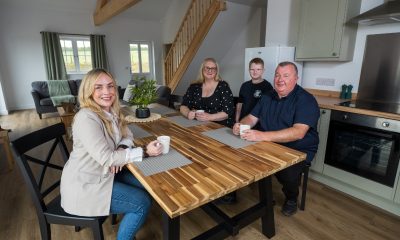
Working Carmarthenshire farm opens gates to visitors with new holiday cottages
-

 Entertainment7 days ago
Swing and big band classics heading to Torch Theatre
-

 Sport6 days ago
Rising rally star claims maiden Mini Rally Challenge victory
-

 Farming6 days ago
Outer Hebrides stickmaker to make final Royal Welsh Show appearance
-

 Crime5 days ago
Greenacres confirms seized dogs are safe as investigation continues
-

 Health5 days ago
Hospital ward closed after highly contagious scabies outbreak
-

 Sport6 days ago
Bluebirds give new home strip first run-out
-
Crime5 days ago
Teacher stabbing trial: The first week of evidence