


News
Pembrokeshire defies Welsh tourism tax amid anti-English tensions


AS COUNCIL TAX premiums and tourist levies stir tensions, local businesses and residents weigh the cost of protecting Welsh identity against the economic lifeline of English tourism.
In St Davids, the recent spring sunshine bathes flint cottages and surfing shops in golden light. But beneath the postcard-perfect surface, a quiet rebellion is taking shape.
This year, Pembrokeshire County Council became the first local authority in Wales to push back against the Welsh Government’s controversial tourist taxation strategy. After reducing the second home tax premium from 300 per cent to 150 per cent in October, the council announced in April that it will not implement the proposed visitor levy during its current term, which ends in 2027.
The move has been praised by some as a lifeline for struggling businesses. Others fear it signals a retreat from urgently needed reforms to address the housing crisis and preserve Welsh-speaking communities.
Christopher Taylor, 85, has run the St Davids Bookshop since 1974 and previously served as mayor of the city. He says the area has long relied on English second-home owners and tourists. “Second homeowners who have been regular customers over decades are selling up,” he told The Telegraph. “Tourists and second homeowners support jobs here, and we really can’t risk seeming unwelcoming.”


St Davids, Britain’s smallest city, is one of the jewels of Pembrokeshire’s coastline and a magnet for both walkers and surfers. But signs of change are everywhere. Lockboxes for holiday lets now pepper the streets—dubbed “tosau” or “pimples” by some Welsh speakers.
Grant Pratt, 38, who manages the surf shop Unsunghero, is frank in his assessment: “It’s small-minded,” he says of locals who complain about incomers. “Incoming English families have reversed the fate of the struggling local primary school. Who wouldn’t prefer to live somewhere bustling rather than full of moaning elderly Welsh folk?”
Tourism remains central to the local economy. In 2023, it generated £604 million in Pembrokeshire and supported more than 9,200 full-time equivalent jobs. Yet the tone of some public discourse, particularly online, has left business owners wary of being associated with anti-English sentiment.
One shopkeeper, who asked not to be named, said she feared a return to the “dark days” of the 1980s, when arson attacks by the nationalist group Meibion Glyndŵr targeted English-owned holiday homes.

At the luxury art-themed hotel Twr y Felin, General Manager Emma Bowen said that 85 per cent of their clientele are English tourists aged between 50 and 70.

While she supports the concept of a tourist tax, she insists it must be clear how the funds will be used. “Good examples are Germany, France, and Switzerland, where tourist taxes subsidise attractions and public transport for tourists,” she said.
In nearby Tenby, the impact of policy is also being felt. Lucas and Melanie Boissevain, who own the award-winning Penally Abbey Hotel, warn that mounting costs could become unsustainable. “We’ve had Covid, unfair competition from unregulated Airbnbs, rising staffing, power and food bills – all with little government help,” said Lucas. “Now come the levies that will add £6,500 a year to our operating costs.”

According to Lucas, Wales has lost 50 per cent of its serviced accommodation providers over the past 15 years. “This has been made up with a growth in Airbnb-style unserviced beds, but who wants to have a lockbox tourist economy, without breakfasts and the human touch?”
Despite government aims to channel second home tax revenue into affordable housing, some critics argue that the funds haven’t been used effectively. Without clear reinvestment and consultation, opposition to the levies may continue to grow.
More broadly, the proposed tourism tax across Wales has drawn both fierce criticism and cautious support. Industry groups and operators argue that it risks deterring visitors, threatening jobs, and weakening local economies—especially in areas like Pembrokeshire that are heavily reliant on tourism. Some families may opt to holiday elsewhere, fearing added costs, while others may cut back on spending in local shops, cafes, and attractions. A Welsh Government consultation found that 74 per cent of people who were likely to holiday in Wales believed the tax could put them off visiting.
Opposition politicians, particularly Conservatives, have branded the levy a “toxic tourism tax” that could damage a fragile sector. But supporters—including figures in Plaid Cymru and Labour—say the proposed fee, at just £1.25 per adult per night, is modest and commonplace across Europe. They argue it would raise much-needed funds for local infrastructure, including toilets, car parks, and footpath maintenance, and help ease the pressures of overtourism.
Following public feedback, the Welsh Government confirmed children will be exempt and has promised a full review of the tax’s impact within four years. There will also be further consultation with businesses and communities.
Across the UK, similar measures are being considered. From April 2024, three quarters of councils in England and Wales will introduce 100 per cent premiums on second homes, and some are extending these to Airbnb properties. Manchester introduced a tourist tax last year. Others, like Bournemouth, paused plans after backlash from the hospitality sector.
Pembrokeshire’s stance has made it a test case. With visitor numbers still recovering post-pandemic and an economy reliant on tourism, many locals are asking whether pushing away the English is a price they can afford to pay.
As one visiting mother from Bath remarked while enjoying tea at Penally Abbey: “It’s lovely here, isn’t it? Who really needs to get on a plane?”
That sense of quiet appreciation may be Pembrokeshire’s greatest asset. But it remains to be seen whether it can coexist with the cultural pressures that have driven the Welsh Government’s policies—and the resistance now rising against them.
- This article was based on a national newspaper report in The Telegraph which can be read here.



VISITORS to Welsh beaches have been warned not to touch unusual blue sea creatures which have washed ashore along parts of the coastline.
Hundreds of velella velella, commonly known as by-the-wind sailors, have been reported on beaches in Anglesey, Gwynedd and Tenby.
The small, bright blue marine creatures are free-floating hydrozoans and are related to Portuguese man o’ war, sea anemones and corals.
They get their name from a small sail-like structure on their body, which catches the wind and carries them across the surface of the sea.
One was spotted on Tenby South Beach on Tuesday (Jun 16), where beachgoer Maxine Allinson described it as “fantastic” and “like a crystal”.
Marine experts say the creatures are often seen after changes in currents or stormy weather, which can push large numbers ashore at the same time.
Although they are much smaller and less dangerous than Portuguese man o’ war, they do have stinging cells.
Their sting is usually mild, but people are being advised not to pick them up, especially as contact with the face, lips or sensitive skin could cause pain or tingling.
Experts also warn that the stinging cells can remain active even after the creatures appear to be dead on the beach.
The advice is to admire them from a safe distance and leave them where they are.
Caption: Maxine Allinson spotted a velella velella on Tenby South beach Tuesday
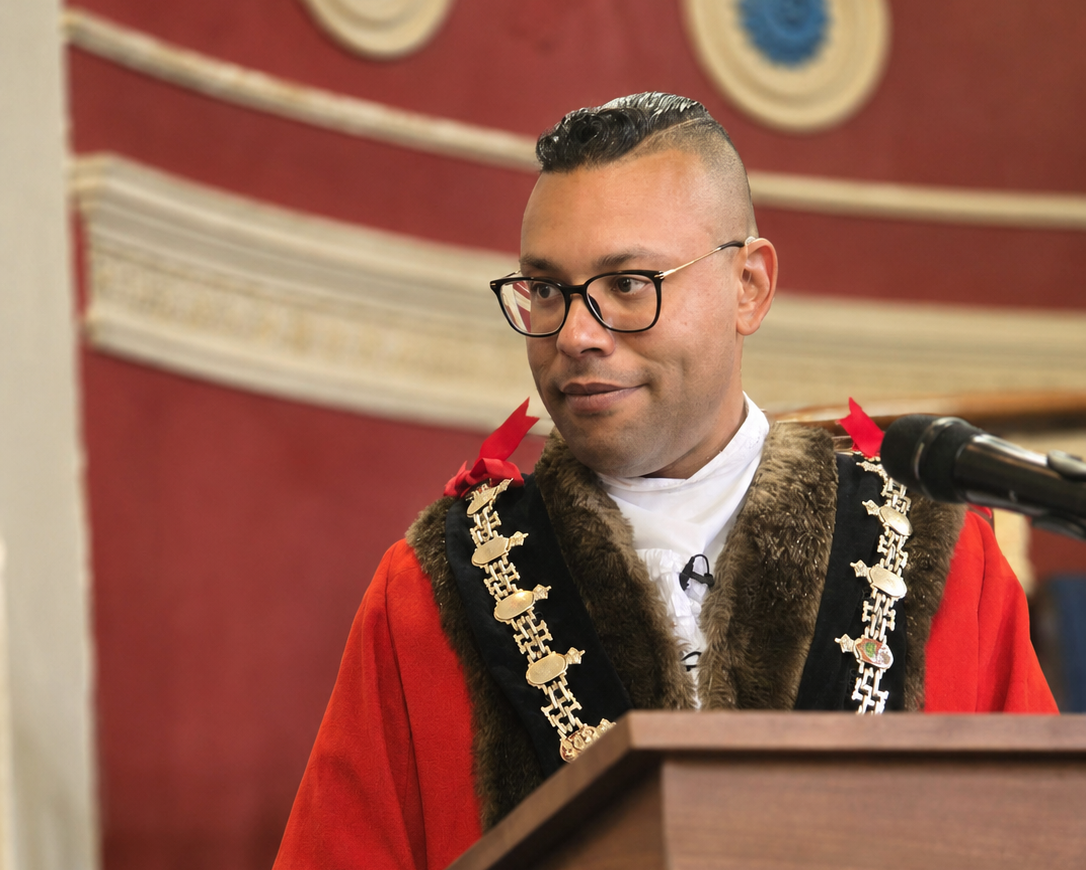
HAVERFORDWEST residents will have the chance to raise ideas, concerns and local issues directly with the town’s mayor this week.
Cllr Randell Izaiah Thomas-Turner will hold a Talk to Your Mayor session on Thursday, from 12:00pm until 2:00pm.
The initiative is aimed at giving residents an opportunity to speak directly with the mayor about matters affecting the town and wider community.
Cllr Thomas-Turner said communication and engagement were “vital”, adding that the session was about listening to local people, working together, and ensuring every voice had the opportunity to be heard.
Anyone wishing to book an appointment is asked to contact the Haverfordwest Town Council town clerk.
The mayor said: “Together, we can continue building a stronger and more connected community. Together we can make Haverfordwest the best in the west.”


THE SENEDD has rejected a Reform UK motion calling for an end to all Welsh Government international spending, after a heated debate which saw several Members walk out of the chamber.
The motion, tabled by Reform MS Llŷr Powell, was defeated by 48 votes to 37 on Wednesday (Jun 17).

An amended motion, backing Wales’ reputation as an “internationalist, tolerant and outward-looking nation”, was then passed by the same margin.
The debate followed warnings from Hub Cymru Africa and other campaigners that ending international spending would damage Wales’ global reputation and undermine projects linking Welsh communities with partners overseas.
Reform argued that Welsh Government money should be focused on domestic pressures, including the NHS, schools, transport and the cost of living.
Welsh Conservative leader Darren Millar backed the Reform motion, saying foreign relations and international development were matters for the UK Government rather than Cardiff Bay.
But Plaid Cymru and Welsh Government speakers rejected that argument, saying Wales’ international work supported trade, public services, education, health partnerships and the country’s reputation abroad.

The debate became heated after comments by Reform MS Joe Martin, who criticised overseas schemes including beekeeping and tree-planting projects in Uganda.
Several MSs left the Siambr during his contribution, with the Llywydd later urging Members to reflect on the tone of the debate.
Hub Cymru Africa had said before the vote that Wales’ international solidarity budget represented a tiny fraction of overall spending and helped deliver work in public health, climate action, women’s empowerment and sustainable development.
The organisation said the vote was an opportunity for the Senedd to reaffirm Wales’ place in the world.



News8 hours ago
Long Course Weekend set to bring thousands to Pembrokeshire
Three days of swimming, cycling and running will once again transform Tenby into one of the UK’s biggest endurance sporting...


Community15 hours ago
The gentle giant behind the tattoos
Pembrokeshire security worker Josh Davies praised for professionalism, kindness and proving first impressions can be wrong JOSH Davies is hard...


Charity2 days ago
Toy Story fans fill charity toy box at Haverfordwest cinema
Donations pour in for SNAP Specialist Play as families embrace Toy Story 5 launch A TOY STORY-themed charity appeal at...


Community2 days ago
Lord Rhys emerges from the mist in St Davids
Giant puppet begins historic journey marking 850 years since the first Eisteddfod MIST swirled around St Davids Cathedral on Friday...


News3 days ago
Tragic tribute paid to Haverfordwest man after A4075 collision
FAMILY REMEMBERS “KIND AND LOVING” CALLUM HANSON THE FAMILY of a 22-year-old man from Haverfordwest who died following a road...

News4 days ago
Motorcyclist, 22, dies in A4075 crash in Pembrokeshire
A 22-year-old woman remains in hospital after two-vehicle collision A MOTORCYCLIST has died following a serious two-vehicle crash on the...

Community4 days ago
Why police will be visiting every home in Pembrokeshire
New operation aims to knock on more than 257,000 doors across Dyfed-Powys over the next three years DYFED-POWYS POLICE has...


Crime4 days ago
Prisons at breaking point: MPs warn Wales is paying the price of a failing system
Frozen healthcare budgets, overcrowded jails, homelessness on release and mounting pressure on staff are undermining rehabilitation across Wales, according to...


News4 days ago
Brexit at 10: How Britain was sold a dream that cost us dearly
A decade after the referendum, the promised benefits remain hard to find while the economic costs are increasingly difficult to...


Crime5 days ago
Worcestershire man jailed after violent attack on woman in Tenby
Defendant was already serving a suspended sentence when serious assault took place A WORCESTERSHIRE man has been jailed for more...
-

 Crime4 days ago
Milford Haven man jailed for breaching domestic violence protection order
-

 Local Government6 days ago
Security privately arranged by Mayor at Beating of the Bounds
-

 News4 days ago
Crash on Freeman’s Way causes school-run chaos across Haverfordwest
-

 Crime5 days ago
Man wanted by court after failing to attend hearing over alleged shop thefts
-

 Crime5 days ago
Man jailed after admitting strangulation and assaults
-
 Crime5 days ago
Man banned from roads after drink-driving offence
-

 Crime5 days ago
Drug trafficker must repay £33,000 after court rules he made nearly £500,000
-
 Crime5 days ago
Man sentenced over stalking campaign and lock knife offence