


Revealing the cells behind the biological clocks of intertidal animals

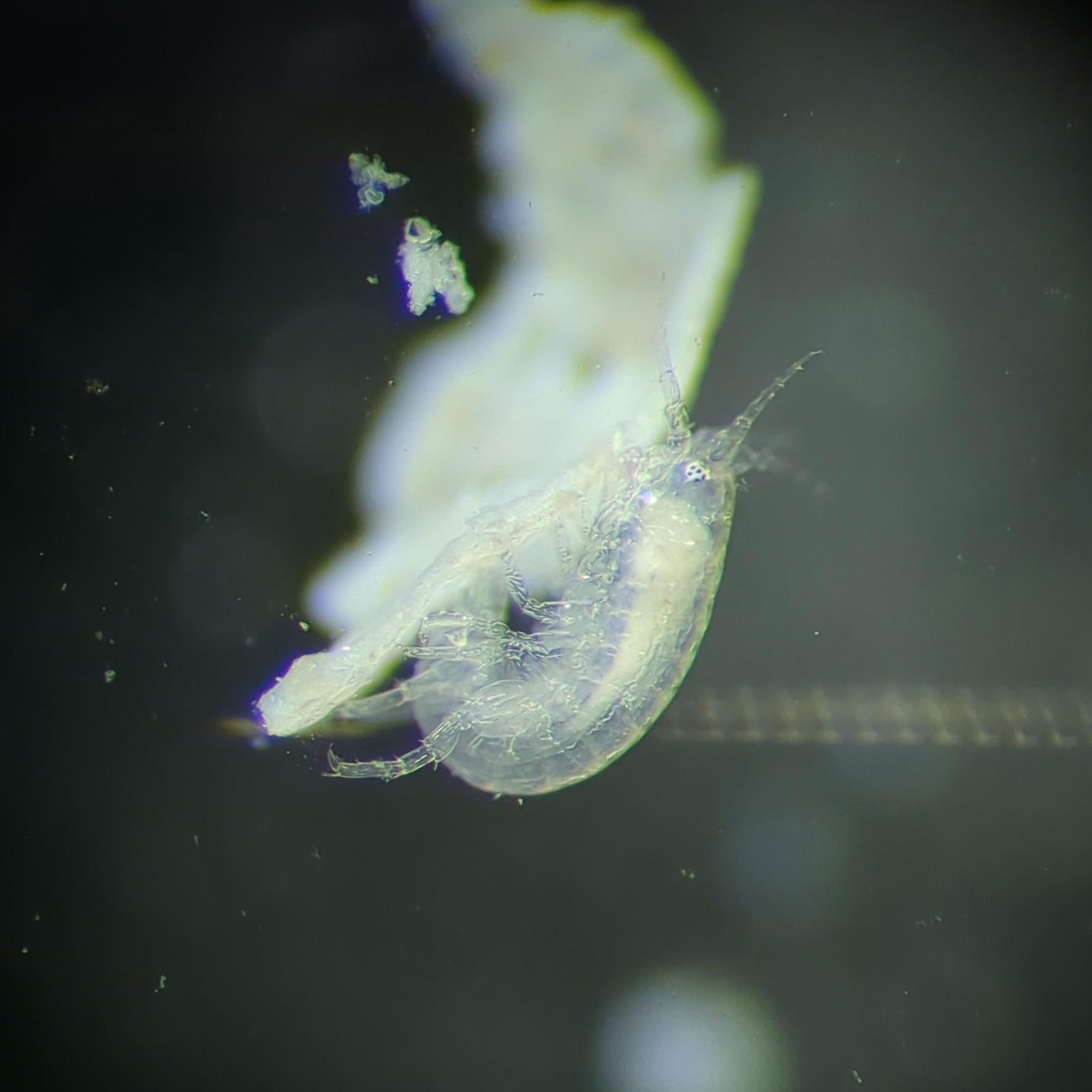
SCIENTISTS in Wales have identified the cells behind the bioclocks keeping time with tides in tiny marine organisms.
The biological clock of land animals is regulated by a circadian rhythm, with biological processes such as sleeping and waking, digestion and hormone release responding to the 24-hour cycle of light and darkness.
Intertidal organisms, on the other hand, regulate their biological processes to a 12.4 hour circatidal clock, which follows the ebb and flow of the tide, in addition to having 24 hour clocks. This allows them to survive in a temporally complex environment which is exposed at low tide and underwater at high tide.

In a paper published today (Thursday 8 May 2025) in Current Biology, researchers at the Medical Research Council Laboratory of Molecular Biology in Cambridge and Aberystwyth University reveal that they have identified the clock cells and genes they think are responsible for this tidal timekeeping.
The discovery marks a significant step forward in scientists’ understanding of how these natural biological clocks are orchestrated at the molecular and cellular level within the brains of intertidal organisms, and could provide insight to the evolution of biological clocks.

The researchers studied two species of crustaceans which inhabit the space between the high and low tide-lines -Eurydice pulchra, the speckled sea louse which is a marine relative of the woodlouse, and the amphipod Parhyale hawaiensis.
By manipulating the light regime that the animals were exposed to, and the maintenance or removal of tidal cues, the researchers were able to disentangle the cells responsible for the circadian and circatidal clocks in the organisms’ brains.
This allowed them to discover that the crustaceans have distinct circadian and circatidal cell groups, which adjust independently to light and to mechanical stimuli (tides).
Dr David Wilcockson, a marine biologist based at Aberystwyth University’s Department of Life Sciences, is a co-author of the paper. He said:

“For more than six decades marine biologists and chronobiologists have known about tidal clocks that regulate the life of coastal animals by studying rhythmic behaviours of numerous marine species. However, significant progress in understanding how these clocks work has been hampered because we have never found the cells that coordinate 12.4 hour behavioural rhythms.
“This discovery is significant because we can now tinker with the clockwork of these cells to better understand the mechanisms that have evolved to keep animals to tidal time. Many of these animals evolved many millions of years before land animals, making the clocks of marine species especially fascinating.”
Chee Ying Sia, a PhD student and joint first-author of the study from the Medical Research Council Laboratory of Molecular Biology in Cambridge, which led the research, said:

“It was exhilarating to identify, for the first time, a small cluster of cells capable of tracking the tidal time in the brains of intertidal crustaceans. These cells might just be the gateway to revealing the mechanisms of tidal timekeeping. The molecular rhythms that we see in these marine animals also hint at clock mechanisms that are different from what we have learned from circadian clocks of terrestrial model organisms.”
The research was funded by the UKRI Medical Research Council and Boehringer Ingelheim Fonds, and was led by Dr Michael Hastings (Cambridge).


Former UK ambassador questioned over alleged links to Jeffrey Epstein as political pressure mounts
FORMER Labour cabinet minister Lord Peter Mandelson has been arrested after police searched two of his homes as part of an investigation into alleged misconduct in public office.
The 72-year-old, who previously served as the UK’s ambassador to the United States, is accused of leaking sensitive government information to convicted sex offender Jeffrey Epstein. Officers were seen at one of his properties earlier this month, and he was later taken from his London home in an unmarked police vehicle.
His arrest comes only days after Prince Andrew was detained on suspicion of similar offences, with police also carrying out extensive searches of his residences, including Royal Lodge, over an eleven-hour period. Investigators are now expected to examine electronic devices seized during the operations, including phones and computers.
The Metropolitan Police previously confirmed that warrants were executed at addresses in Camden and Wiltshire in connection with an ongoing investigation involving a 72-year-old man suspected of misconduct in public office.
Deputy Assistant Commissioner Hayley Sewart said officers from the Met’s Central Specialist Crime team were leading the inquiry.
The allegations relate to documents reportedly contained within files linked to Epstein, which appear to suggest Mandelson shared confidential or market-sensitive government information during his time in office. The extent of his association with Epstein has become a major political controversy, raising questions about vetting and judgement at the highest levels of government.
The situation has also created significant political pressure on the Prime Minister, who had appointed Mandelson to the ambassadorial role last year. Downing Street has since been forced to release thousands of emails and messages relating to the appointment, with officials continuing to review the correspondence.
Several MPs have publicly criticised the decision to appoint Mandelson, with some calling for senior figures within government to take responsibility for what they describe as a serious lapse in judgement.
Police have not yet confirmed whether any charges will follow.

A PEMBROKESHIRE charity has launched an ambitious bid to restore Foley House, one of Haverfordwest’s most significant historic buildings, through the creation of a new community cooperative called The Bucketful Centre.
Adam’s Bucketful of Hope, with support from PLANED Community Development, has established the cooperative to take forward plans to refurbish and repurpose the landmark building.
Foley House was built during Britain’s naval heyday and designed by renowned architect John Nash for the brother of Captain Foley, who served alongside Lord Nelson at the Battle of the Nile. Nash later went on to design the Brighton Pavilion and parts of Buckingham Palace. At the same time he was working on Foley House, Nash was also designing Priory House in Cardigan, located on the former hospital site at the entrance to the town.
Haverfordwest was once known as “the Bath of the West” and boasted many grand homes, but Foley House has fallen into significant disrepair over recent decades.
The four-storey building is currently owned by Pembrokeshire County Council and is now in the process of being leased to The Bucketful Centre cooperative. Once renovated, it will become the new base for Adam’s Bucketful of Hope, operating as a cancer support centre with expanded services for patients, carers and people living with life-limiting conditions.
Founder and CEO of Adam’s Bucketful of Hope, Chris Evans-Thomas, said demand for the charity’s services had risen sharply since the Covid pandemic.
He said Foley House offers the space, parking and future disabled access needed to deliver improved support for patients, particularly as some hospital services are being reduced or lost.
The campaign will be formally launched at a public presentation at the Merlin Theatre, Pembrokeshire College, on Wednesday, March 4, 2026, at 6:30pm.
The event will be led by PLANED’s Community Assets Coordinator Cris Tomos, who has extensive experience in saving historic buildings, alongside well-known historian Mark Muller.
Further information about the project is available at www.bucketfulcentre.co.uk or by contacting Chris Evans-Thomas on 01437 779400.


RYANAIR has announced its Summer 2026 schedule from Cardiff Airport, offering five routes including popular holiday destinations Alicante, Faro, Malaga and Tenerife, as well as the city break favourite Dublin.
The low-cost airline said it will increase frequencies on four routes — Alicante, Dublin, Faro and Malaga — giving Welsh passengers more travel options and improved connectivity throughout the summer season.
Flights are now available to book via the Ryanair app, with fares starting from £29.99.
Ryanair’s Director of Communications, Jade Kirwan said: “Ryanair is pleased to launch our Summer 2026 schedule at Cardiff, offering five routes with extra frequencies on four of these routes, including holiday hotspots like Alicante, Faro and Malaga, as well as the top city break destination Dublin. This provides Welsh customers with even more low-fare choice and regular connections for their Summer 2026 getaways.”
Cardiff Airport Chief Executive Jon Bridge welcomed the announcement, highlighting the importance of the Dublin route in particular.
He said: “It’s great to see Ryanair strengthening its commitment to Cardiff Airport, with the Dublin service now operating daily throughout the summer and increasing to twice daily on selected days in October 2026. This is a hugely popular route, particularly for business travellers, providing a vital gateway between Ireland and Wales and strengthening economic ties between our Celtic nations.
“Alongside Dublin, we’re delighted to see Ryanair offering a strong portfolio of summer destinations from Cardiff, including Alicante, Faro, Malaga and Tenerife. These routes provide fantastic choice for Welsh travellers seeking a well-earned break, while also supporting tourism and connectivity.”
The airport said the expansion reflects continued demand for convenient low-cost travel from Wales.



Charity9 hours ago
Charity launches bid to save Foley House with new community cooperative
A PEMBROKESHIRE charity has launched an ambitious bid to restore Foley House, one of Haverfordwest’s most significant historic buildings, through...


Crime11 hours ago
Man who threatened to kill Herald editor given suspended prison sentence
A PEMBROKESHIRE man who sent a message threatening to kill Pembrokeshire Herald editor Tom Sinclair has been given a suspended...


Health14 hours ago
Senedd debate called on NHS crisis as Welsh Conservatives demand emergency action
Row intensifies over waiting times, A&E pressures and hospital service changes THE WELSH CONSERVATIVES have brought forward a Senedd debate...


Crime1 day ago
BBC documentary reveals local man murdered mother then lived with her body
A NEW BBC documentary examining one of Pembrokeshire’s most disturbing crimes will be broadcast this week — and includes contributions...


Sport2 days ago
Late heartbreak as Scotland snatch victory in Cardiff thriller
Wales 23 – 26 Scotland WALES suffered agonising late heartbreak at the Principality Stadium on Saturday (Feb 21) as Scotland...


Local Government2 days ago
First Minister left red-faced as Labour candidate pulls out during Hakin campaign visit
Candidate says withdrawal follows ‘abuse’ towards candidate’s son and backlash over Withybush Hospital downgrade plan THE FIRST MINISTER was left...


Business3 days ago
Pembrokeshire businesses ‘squeezed to breaking point’ amid economic pressures
MS highlights concerns from local firms as Wales employment figures lag behind UK BUSINESSES in Pembrokeshire are feeling increasingly squeezed...


News3 days ago
Council tax to rise again as Pembrokeshire sets new budget
Schools and social care receive extra funding in 2026–27 spending plans PEMBROKESHIRE COUNTY COUNCIL has approved its budget for the...


Health3 days ago
Stroke patients to be transferred to Carmarthen under new health plan
Withybush to provide initial treatment before specialist care elsewhere PEMBROKESHIRE patients who suffer a stroke are set to be transferred...


Health4 days ago
Health board confirms major hospital changes across west Wales
Emergency surgery centralised as Withybush role shifts toward planned care MAJOR changes to hospital services across west Wales have been...
-

 Health4 days ago
Withybush loses emergency surgery in shock health board decision
-
Health4 days ago
Health board confirms major hospital changes across west Wales
-

 Health3 days ago
Concerns grow over Bronglais stroke plans as politicians demand clarity
-

 Health4 days ago
Health board: Changes will bring “resilience and sustainability” to West Wales services
-
 Local Government2 days ago
Candidate who withdrew from Hakin race will still appear on ballot paper
-

 Business6 days ago
MS’s host business advice surgery following demand from Business Rates Online Forum
-

 Crime6 days ago
Man charged with GBH with intent following incident involving ‘Pembrokeshire Patriot’
-
Crime6 days ago
Teen given community order after assaulting police officer at hospital