


Health
Welsh residents urged to wear sunglasses year-round, not just when it’s Sunny


WELSH residents could be putting their vision at risk by only wearing sunglasses when the sun is shining – with only 20% of people in Wales admitting to putting on their sunnies year-round.
Alarmingly, 50% of Welsh adults only reach for their sunglasses when it’s sunny, while just 36% wear them when the skies are overcast. This is despite the fact that UV rays can penetrate cloud cover and reflect off surfaces like water, sand and snow.
The research, commissioned by Specsavers, which polled 2,000 UK adults, also revealed that nearly 13% in Wales mistakenly believe that darker lenses offer better protection from UV rays. As a result, 23% have purchased sunglasses under this misconception, unaware that UV defence has nothing to do with the tint of the lens.
Ayad Shafiq, Cataract Clinical Lead at Newmedica, said: “Protecting your eyes from UV rays is essential to reduce the long-term risk of serious conditions such as cataracts, macular degeneration, and even skin cancer around the eyelids. Wearing UV-blocking sunglasses and wide-brimmed hats can significantly lower this risk. However, it’s important to note that individuals with existing cataracts or macular degeneration often require enhanced lighting to see clearly, so their need for light must be balanced carefully with UV protection. Consulting an eye care professional can help tailor the right approach for each individual.”
The research also uncovered a range of myths and misunderstandings around eye health. Almost a quarter of Welsh respondents (23%) wrongly believe sunglasses block all types of light damage, while 20% assume sunglasses never expire – both of which are false. Furthermore, 12% of people admit they rarely wear sunglasses even when it is sunny. Among this group, 32% say it’s simply not a habit they’ve picked up, and 26% find them inconvenient due to wearing prescription glasses.

When it comes to choosing new shades, most people in Wales spend just over 30 minutes researching the right pair, with 13% admitting they don’t wear sunglasses often enough to justify putting much effort into the decision. Of those, 46% want a pair that suits their face shape and feel more confident when they like how they look in sunglasses, and 29% say it’s essential their shades match their personal style.
Despite the confusion, many people are aware of the potential long-term damage UV rays can cause – with retinal damage (41%), photokeratitis (35%) and cataracts (26%) rated most highly. However, more than a third (35%) don’t associate cataracts with UV exposure, believing the condition is purely age-related. In fact, 27% say they’ve never seen any public health messaging linking the two.
According to the research, 41% admit they don’t know much about cataracts, even though 55% are worried about developing the condition.
To book an eye test, or to find the right pair of UV protection sunglasses for you, visit Specsavers.co.uk.


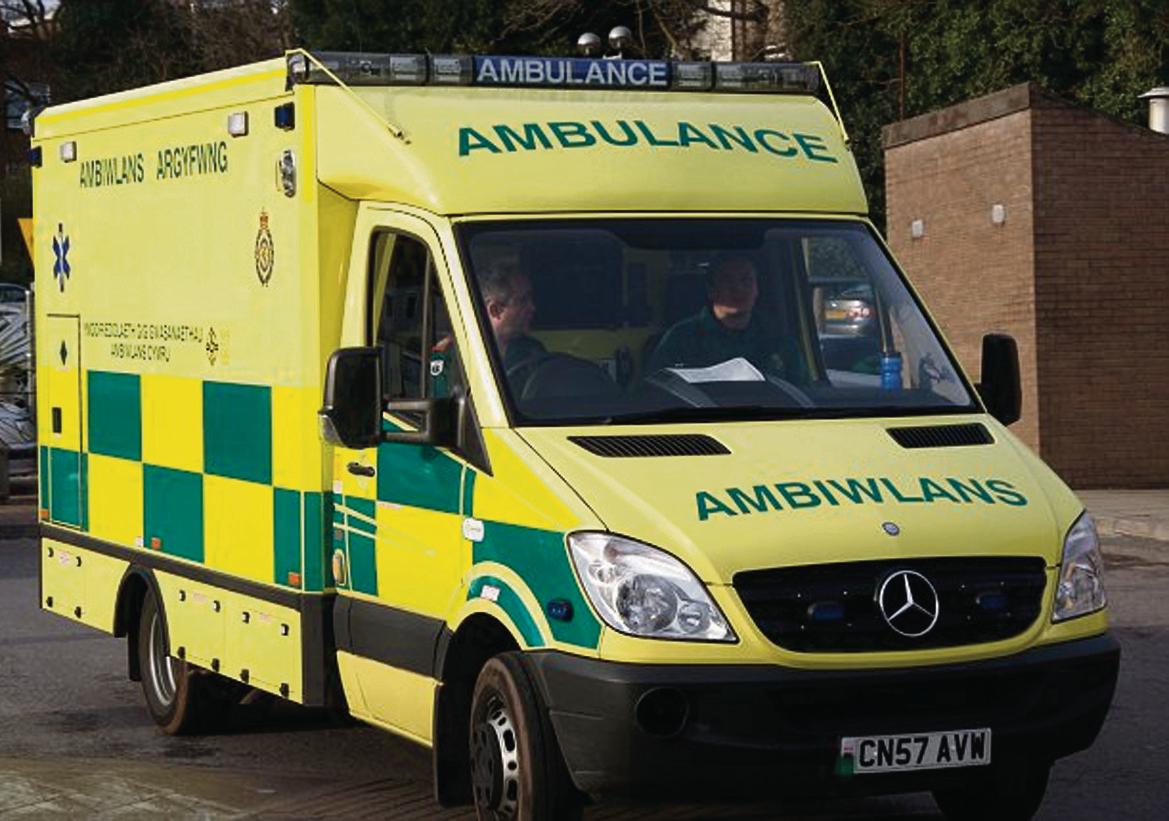
‘No jobs in 2026–27’ as graduates told service has ‘more paramedics than required’
AN INTERNAL email sent to student paramedics has confirmed that no newly qualified paramedics will be recruited in Wales during the 2026–27 financial year, escalating concerns over workforce planning in the NHS.
The message, seen by The Herald, was sent to final-year students following a board meeting of the Welsh Ambulance Services NHS Trust on March 26.
It confirms that the trust “does not require any NQPs” this year, stating the decision is based on affordability and workforce restructuring.
The development follows reporting by BBC Wales that students had already been advised to seek work overseas.
‘Simply not affordable’
In the email, the ambulance service states:
“Employing NQPs in 2026 is simply not affordable… No extra funding has been made available by Welsh Government or our commissioners.”

It adds that a review of workforce needs concluded:
“We currently have more paramedics than required and enough lead practitioners to fill any short to medium term vacancies.”
Students say they have also been told the service is aiming to reduce paramedic numbers, despite ongoing delays in ambulance response times across Wales.
Graduates left without roles
Around 70 students are expected to graduate this year from Swansea University and Wrexham University.
Training is heavily subsidised by Healthcare Education and Improvement Wales, with costs estimated by students at around £50,000 per person.
Despite this investment, graduates have now been told to consider employment outside Wales—or even overseas—to begin their careers.
Patient care concerns raised
Students have warned the decision could impact patient care if fewer fully qualified paramedics are deployed on the frontline.
They say being redirected into lower-grade roles means their full clinical training will not be used.

One student told The Herald: “We are ready to go straight into frontline care. Instead, we’re being told to look abroad. It doesn’t make sense.”
Government under pressure
A Welsh Government response seen by The Herald acknowledges the issue and says ministers are working with the ambulance service and universities to support affected graduates.
However, the internal email suggests the decision is already firm for the coming financial year.
The Herald has approached the Welsh Government and the Welsh Ambulance Service for further comment.
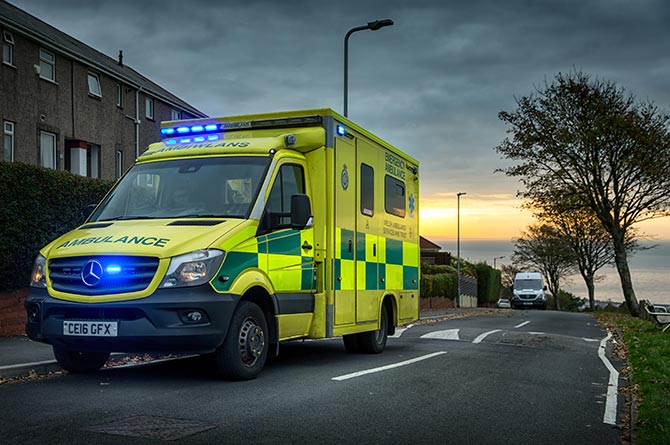
Students urged to seek work overseas despite millions spent on training
NEWLY qualified paramedics in Wales are being advised to apply for jobs overseas after a recruitment freeze left graduates with no roles in the Welsh NHS.
The Welsh Ambulance Services NHS Trust has confirmed it will not be hiring newly qualified paramedics this year, citing financial and operational pressures.
The development, first reported by BBC Wales, has sparked anger among students and political figures, with some branding the situation “short-sighted” and a waste of public money.
Students left in limbo
Final-year paramedic students say they have been encouraged to look for work in countries including Canada, Australia and New Zealand.
Around 70 students are expected to graduate this summer from courses at Swansea University and Wrexham University, having completed degree-level training heavily subsidised by Healthcare Education and Improvement Wales.
Some students have undertaken placements more than 100 miles from home, expecting to move into frontline NHS roles after graduation.
Traditionally, graduates would enter the service as Newly Qualified Paramedics on Band 5 salaries, progressing to Band 6 after a period of mentorship.
However, opportunities have been shrinking. In 2025, only around a third of graduates secured paramedic posts, with others offered lower-paid technician roles instead.
‘Deeply disappointing’ decision
A spokesperson for the ambulance service said the organisation was facing a “difficult financial and operational landscape”.

They added: “Regrettably, as things stand, we are not in a position to employ newly qualified paramedics this year.”
Graduates are now being encouraged to consider roles as emergency medical technicians or to seek work elsewhere in the UK—or abroad.
Despite bursary conditions that would normally tie students to Wales, HEIW has confirmed the current cohort are now free to pursue employment outside the country.
Political backlash grows
The decision has prompted sharp criticism from across the political spectrum.
Jane Dodds described the situation as “a staggering waste of both talent and taxpayers’ money”, warning it made little sense while ambulance response times remain under pressure.
Plaid Cymru figures estimate that training costs of up to £150,000 per student could mean nearly £10 million of public investment failing to benefit Welsh patients.
Welsh Conservatives said the situation reflected a failure of workforce planning, while Welsh Labour insisted it remained committed to ensuring the NHS has the staff it needs.
Government response
A Welsh Government spokesperson said ministers were working closely with the ambulance service, HEIW and universities to address the issue and support affected graduates.
But for many students, the immediate reality is stark—after years of training for frontline roles in Wales, their careers may now begin thousands of miles away.

PATIENTS across Wales are being warned to expect higher charges and longer waits for appointments as sweeping changes to NHS dentistry come into force today (Tuesday, Apr 1).
The reforms — described by the British Dental Association (BDA) as “untested” — are expected to reshape how dental care is delivered, but critics fear they could deepen the already serious access crisis.
Dentists say the changes will mean many patients are seen less often, while some treatments will become more expensive at a time when households are already under pressure from rising living costs.
Under the new system, routine check-ups for new patients will rise from £20 to £27.21 — an increase of more than a third — while urgent appointments will increase from £30 to £37.50.
At the same time, recall periods for patients considered to be in good oral health could stretch to 18 or even 24 months, raising concerns that problems may go undetected for longer.
The BDA has warned that the reforms could accelerate the loss of NHS dental services, with some practices already handing back their contracts. In certain areas, more than ten per cent of NHS dental capacity has reportedly been returned by practices unwilling or unable to continue under current conditions.
That loss of capacity is likely to put further strain on remaining services, making it even harder for patients to secure appointments.
Russell Gidney, Chair of the BDA’s Welsh General Dental Practice Committee, said: “From today, many patients across Wales will have to get used to more costly, less frequent dental care.
“But the risk all now face is that utterly untested reforms will push more practices out of the NHS, taking the access crisis from bad to worse.”

The changes come at a politically sensitive time, with the Senedd election scheduled for Thursday (May 7), and mounting pressure on ministers to address long-standing problems in NHS dentistry.
Access to NHS dental care has been a growing concern in recent years, with many patients across west Wales struggling to find a dentist taking on new NHS patients.
The BDA says the reforms have been introduced without sufficient consultation and has called for a pause on full implementation until 2027, alongside a wider rescue package to stabilise the service.

It is also urging the next Welsh Government to commit to increased funding, better protection for vulnerable patients, and a reset in relations with the profession.
The Herald understands that concerns are also being raised locally about whether practices in Pembrokeshire and Carmarthenshire will be able to maintain NHS provision under the new system.
With demand already outstripping supply, there are fears that more patients could be forced to turn to private care — or go without treatment altogether.



News10 hours ago
Health minister refuses to act on Withybush despite 15,000-signature petition
Senedd pressure grows as Welsh Government declines to intervene over surgery fears THE WELSH GOVERNMENT has refused to step in...


Business1 day ago
Fishguard to Wexford rail tunnel plan backed by Elon Musk firm
Six-hour London to Dublin service proposed in £32bn project ahead of Senedd election PLANS for a rail tunnel linking west...


Charity2 days ago
Milford Haven charity honoured with King’s Award for voluntary service
A PEMBROKESHIRE charity supporting vulnerable young people has received one of the highest honours in the UK for voluntary work....


News2 days ago
Plaid Cymru launches bid to lead next Welsh Government
Party positions itself as ‘government-in-waiting’ ahead of May election PLAID CYMRU has formally launched its campaign for the 2026 Senedd...


Crime2 days ago
Police appeal after attempted child abduction in Haverfordwest
DYFED-POWYS POLICE has launched an appeal for witnesses following a reported attempted abduction of a 12-year-old girl in Haverfordwest. The...


Crime3 days ago
Gunshot fired by police during incident in Milford Haven
A POLICE officer discharged a firearm during an incident in Milford Haven on Saturday evening (March 28), prompting an investigation...


Community4 days ago
Three Amigos Easter Run roars through Pembrokeshire
MOTORCYCLE enthusiasts turned out in force today (Saturday, March 28) as the popular Three Amigos Easter Run returned to the...


Education6 days ago
Ysgol Henry Tudor reassures parents over Sikh ceremonial kirpan
School says religious item worn by pupil is secured, symbolic and non-functional YSGOL HENRY TUDOR has moved to reassure parents...

Crime6 days ago
Teen jailed after starting fire while others slept
Fire set in shared home left sleeping residents at risk and caused £130,000 damage A TEENAGER who started a fire...

Health7 days ago
GP crisis driving NHS pressure in Wales, Senedd report warns
Falling GP numbers and funding gaps blamed for worsening hospital delays THE NHS crisis highlighted earlier this week is being...
-

 Community6 days ago
Hero female officer keeps job after sexual touching finding
-
Education6 days ago
Ysgol Henry Tudor reassures parents over Sikh ceremonial kirpan
-

 Business6 days ago
Popular Italian restaurant hit with £278,000 tax bill plus £186,000 fine
-
 Climate6 days ago
Port Talbot confirmed as ‘cornerstone’ for wind — questions remain for Milford Haven
-

 Crime5 days ago
Taylor wins appeal as Crown Court quashes ‘no insurance’ conviction
-
Health7 days ago
GP crisis driving NHS pressure in Wales, Senedd report warns
-

 Business7 days ago
Haverfordwest Cartlett chocolate factory call refused
-

 Crime5 days ago
Appeal dismissed in blood sample case after court rejects PTSD defence