


News
New transport plan to tackle youth job access crisis announced


Skates says public transport overhaul will connect people to work, drive growth
AMBITIOUS new plans to overhaul public transport across North Wales will help young people who are being “cut out of the jobs market” due to poor connectivity.
That’s the pledge from Ken Skates MS, Cabinet Secretary for North Wales and Transport, who will outline the details of the Network North Wales programme during a business leaders’ breakfast in Wrexham later this month.
Mr Skates, who is also the Senedd Member for Clwyd South, will address the Wrexham Business Professionals at the city’s Maesgwyn Hall on Friday (June 27), where he will set out the Welsh Government’s vision for a fully integrated and reliable transport system across the region.
According to Mr Skates, a lack of accessible and dependable public transport is preventing many young people from taking up jobs.
“There are still a huge number of job offers being turned down because people simply can’t get there,” he said. “That has to change. Public transport isn’t just about moving people from A to B — it’s about tackling inequality and unlocking economic growth.”

One stark example was raised at the group’s meeting last July, when Rachel Clacher, co-founder of communications giant Moneypenny, described how a young woman from Gwersyllt faced a four-hour daily commute for an eight-mile journey to Wrexham Industrial Estate — all due to infrequent and poorly connected buses.
Mr Skates said the new transport initiative will directly address such barriers.
“We’re introducing new legislation to regulate the bus network and designing services to better connect communities with employment centres like Wrexham Industrial Estate and Deeside Industrial Park,” he said.
Network North Wales will form part of the Flintshire and Wrexham Investment Zone, with bespoke improvements planned in close collaboration with Transport for Wales, Wrexham Council and Flintshire Council.

Other immediate improvements include:
- A 50% increase in rail services across North Wales starting in May 2026.
- Doubling services between Wrexham and Chester from next May.
- Work beginning on a direct Wrexham–Liverpool line, aiming for four metro-style trains per hour within a decade.
- Upgraded train stations and more frequent services between Wrexham and Bidston.
- A £1 bus fare cap for 16 to 21-year-olds across Wales starting in September.
Mr Skates said: “Public transport should be seen as the third public service. It must serve everyone — not just the few. The changes we’re making will better connect people to jobs, training, and opportunities.”
He also praised the work of Wrexham Business Professionals for championing the local economy: “There’s something magical happening in Wrexham right now, but this group has been a solid supporter of the community for years.”

Ian Edwards, a senior member of the group, welcomed the reforms.
“We all know the current system doesn’t work — you can’t have just one bus an hour to serve a major industrial estate,” he said. “We need something that’s frequent, reliable, and fit for purpose.”
Fellow member Louise Harper added: “The June 27 meeting will be an opportunity for business leaders to hear how this major investment in transport can benefit both companies and workers. We’d encourage everyone to attend.”
Guest speakers at the event will include Laura Hall, managing director of Holt-based Maverick Diagnostics, and Amanda Davies from Wrexham Council, who is leading the city’s bid to become UK City of Culture 2029.
Photo caption:
Transport overhaul: Ken Skates MS, Cabinet Secretary for North Wales and Transport (Pic: Mandy Jones)

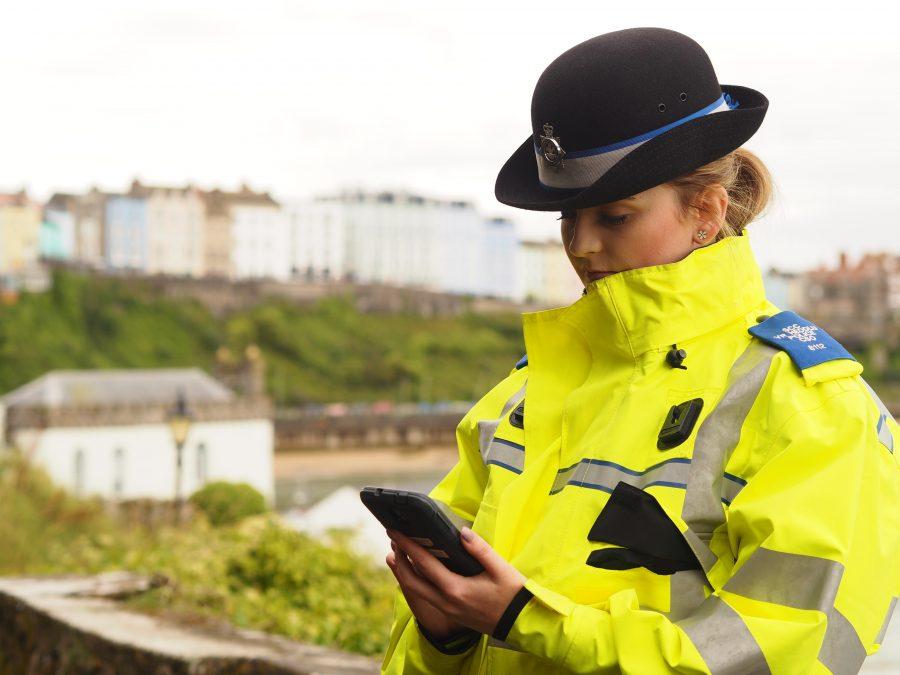
DYFED-POWYS POLICE has announced a significant expansion of its Neighbourhood Policing and Prevention Teams (NPPT), with more officers being deployed to frontline roles where demand is greatest.
From Monday (Mar 16), teams across the force area have been strengthened, with a renewed focus on tackling antisocial behaviour and preventing crime at its source.
The force says the move is aimed at reducing repeat demand by addressing the root causes of offending, rather than simply responding to incidents.
To achieve this, a number of officers have been redeployed from central departments back into frontline policing, while new posts are also being created to bolster capacity.
Temporary Chief Superintendent Steve Davies, head of uniform policing, said: “These changes are about increasing frontline visibility and ensuring we have the right resources in the right places.

“They form part of a wider programme of improvements across the force to enhance effectiveness and efficiency, while also supporting the wellbeing of our officers and staff.
“This is positive news for our communities, who will benefit from stronger neighbourhood teams focused on local priorities and proactive policing.”
The expansion has been made possible through Home Office funding under the Neighbourhood Guarantee scheme, which is designed to strengthen community safety and crime prevention.
Dyfed-Powys Police has been allocated £1.4 million for 2025/26, enabling the recruitment of police staff and freeing up officers previously in support roles to return to operational duties.

As a result, four sergeants and 29 police officers have now been reassigned to neighbourhood teams across the force.
Each NPPT area will also have a named officer, with full team details available via the ‘Your Area’ section of the Dyfed-Powys Police website.
The force has also secured early access to 2026/27 Neighbourhood Guarantee funding, which will see a further 12 officers recruited between April and the autumn—adding to overall officer numbers in the region.

Police and Crime Commissioner Dafydd Llywelyn said: “Neighbourhood policing is about more than numbers—it’s about relationships.
“Greater visibility helps build trust, strengthens community ties, and reassures the public that policing is present, responsive, and committed to keeping people safe.
“I remain committed to improving police visibility across our communities, and these additional officers will help turn that ambition into reality.”


Defendant admitted using Xbox without informing police as required under court order
ANTHONY COOMBES, aged 26, of Sand Banks, Broad Haven, appeared before Llanelli Magistrates’ Court on Thursday (Mar 20) charged with breaching a sexual harm prevention order.
The court heard that between February 26 and March 19, 2026, at Haverfordwest, Coombes repeatedly breached the order by using an Xbox device without informing police within three days, as required.
The offences relate to a sexual harm prevention order imposed at Swansea Crown Court on October 20, 2021.
Coombes indicated guilty pleas to the offences at the first hearing.
Magistrates committed the case to Swansea Crown Court for sentence.
He was remanded in custody ahead of the next hearing, which is due to take place at 9:00am on Friday, April 3, at Swansea Crown Court.
The court refused bail on the grounds that he was likely to offend, citing the nature and seriousness of the offences and his previous record and character.
A pre-sentence report was ordered.

Police say death not suspicious as 46-year-old arrested over alleged Class A drug supply
A MAN has died following a medical emergency at a property in Haverfordwest, police have confirmed.
Emergency services were called at 3:18pm on Wednesday (March 18) after a report of a medical incident.
A man was pronounced dead at the scene.
Dyfed-Powys Police said the man’s next of kin have been informed and are being supported by officers.
The death is not being treated as suspicious at this time.
However, police confirmed that a man, aged 46, was arrested on suspicion of being concerned in the supply of Class A drugs.
He has since been released under investigation while enquiries continue.
No further details about the deceased have been formally released.



Crime4 hours ago
Publican jailed for six years for supplying cocaine and cannabis
Milford Haven man sentenced at Swansea Crown Court following drug dealing operation A MILFORD HAVEN publican has been jailed for...


Local Government6 hours ago
Poverty summit highlights support efforts across Pembrokeshire
A SUMMIT bringing together key organisations from across Pembrokeshire has highlighted both the scale of local poverty and the work...


Education1 day ago
Milford Haven school plans unveiled but funding not yet secured
PLANS for a new £100 million school in Milford Haven have been unveiled, but the project has not yet secured...


News1 day ago
Council unveils plans for new state-of-the-art secondary school in Milford Haven
PEMBROKESHIRE COUNTY COUNCIL has revealed plans for a new state-of-the-art school in Milford Haven, promising modern, inspiring learning spaces for...


Health1 day ago
NHS waiting list falls — but cancer delays and diagnostic backlog worsen
Record progress claimed by Welsh Government as critics warn key targets are still being missed THE NHS in Wales has...


Crime2 days ago
Rapist jailed after ‘abhorrent’ attacks on woman and children
Haverfordwest man told police “women won’t have sex without force” A HAVERFORDWEST man who raped a woman and a young...


News2 days ago
Reform secures first Pembrokeshire councillor in Hakin by-election win
Late Reform candidate takes seat as independent surge and Labour withdrawal shape contest REFORM UK candidate Scott Thorley has won...


News3 days ago
Scott Thorley elected as Pembrokeshire’s first Reform councillor
REFORM UK candidate Scott Thorley has won the Hakin by-election after securing 179 votes. The full result is as follows:...


News3 days ago
Police confirm man has died after being recovered from River Cleddau
Major emergency response in town centre after concerns raised for man in water A MAN has died after being recovered...


Community3 days ago
Davies and Kurtz urge groups to seek employability funding
Community organisations in Pembrokeshire encouraged to apply for new grants supporting skills and job access LOCAL Senedd Members Samuel Kurtz...
-

 News6 days ago
Rayner and Lammy visit Wales to discuss justice and community safety
-

 News5 days ago
Fishguard linked to allegations in Many Tears Animal Rescue investigation
-

 News3 days ago
Emergency services flood Haverfordwest after reports of person in river
-

 Local Government6 days ago
Investigation confirmed after inspectors visit Many Tears Animal Rescue
-

 Crime2 days ago
Mother given community order after admitting child cruelty offence
-

 Business7 days ago
Legal action backed in case over development at Dinas Cross
-

 Business7 days ago
Tesco B&Q Haverfordwest click and collect pod approved
-

 Community6 days ago
Town hall takeover plan questioned as cost figures conflict