


News
Is financial ignorance bliss for councillors?

 THE COUNCIL’S budget is essentially the same as our household budget: we get a salary and/or pension/benefits out of which we pay our expenses, and with a bit of luck, have some disposable income for non-essential ‘luxuries’ such as holidays, and if we are really fortunate, are able to set aside some savings. The Council gets its income from a variety of sources: Rate Support Grant (our income taxes), Non Domestic or Business Rates (paid by local businesses), Council tax paid by us, and direct charges from “customers” of Council services, for example Car Parking and some Adult Services, e.g. Day Centres and Meals on Wheels. The Council can also receive direct grants for providing specified services. It can increase its income yields by putting up the Council Tax and direct charges. From this collective income, the Council budgets and prioritises how much it can spend on providing our services. Much in the same way that we may be fortunate enough to build up a savings pot, the Council can build up reserves, which are required to even out peaks and troughs of expenditure over a number of years, or to put by for specific purposes or projects. Like us, the Council can also borrow money to fund projects that have a ‘life’ over a number of years. However, unlike us, it is not allowed to finance expenditure in the current year from borrowing.
Leaving it to officers
It is impossible for Councillors to authorise every payment the Council makes. For day to day operational purposes, the Cabinet therefore authorises or delegates spending powers to unelected officers to incur expenditure during the year on services within the Council, approved Budget allocations. The Cabinet has delegated wider powers to the Director of Finance for the allocation and use of reserves, both Capital and Revenue. Every three months, throughout the year, officers are required to report the financial position to Cabinet and Scrutiny Committees, plus a final outturn monitoring report at the 12 months stage. In theory, these reports enable financial performance to be monitored, by elected Councillors, against the approved annual budget. Any corrective action considered necessary as proposed by officers should be considered and agreed by Cabinet. However, these reports are focussed at Net expenditure level, which masks the true level of services provided and expenditure incurred at Gross Expenditure level. Any specific remedial action necessary is therefore not fully reported for approval. While the position on spending against the Council’s approved budget must be reported to Cabinet and Scrutiny Committees on a three monthly basis, the position on reserves is only reported to Cabinet/Council at Annual Budget time, and annually to the Corporate Governance Committee as Draft Accounts pre-audit, and then as the Final Audited Accounts.
Revealing Reserves
On September 29, the Council’s Corporate Governance Committee received a report on the Audited 2013/14 Accounts, which included, a table of Usable Reserves on page 64. Page 63 provides description of the individual reserves for those interested. This is the only comprehensive presentation where all reserves are reported on one page. Categories of reserves are subject to different controls. The Council is required to carry annual Working Balances, and the Auditor comments on the adequacy of these reserves, provided specifically in order to meet urgent, unforeseen contingencies or circumstances. The Education Reserves are primarily under the control of individual schools. The Children and Families Overview and Scrutiny Committee November 10, received a comprehensive report providing information on the amount of balances held by schools over the last three years with a commentary on future prospects. The Table shows that the Council had a total Earmarked Capital and Revenue reserve balance of about £50m under its direct control at 1 April 2013, rising to £56million at 31 March 2014, allocated for the purposes shown. To set these amounts in some sort of context: the Council sought to raise £40.5m from Council Tax in 2014/15 (an increase of £1.5million over 2013/14) and £13.4million from its Discretionary Direct Fees and charges, (an increase of £1.6million over 2013/14). Of particular note and significance, is the trail of money movements between The Pay and Grading Reserve and 21st Century Schools Reserve during 2013/14: all happening without councillors being informed but within the delegated authority of the Director of Finance.

Moving money
Some years ago, in common with other Councils, grants were made by the Welsh Government, staged over a number of years, to fund the likely cost of the Equal Pay/Pay and Grading reviews. In total, by March 31, 2012, our Council had received around £11.5m by grant, which was not hypothecated, and therefore did not have to be used for the purpose for which it was given. During 2012/13, £4.5million was charged against this provision in settlement of Pay Awards, leaving a balance of £7.0million – £5.6m of which was allocated to the Pay and Grading Earmarked Reserve on March 31, 2013 (let’s leave the unallocated amount of £1.4m ‘floating’ for the moment, I have yet to follow this through, suffice it to say that there is another ‘hidden’ category of reserve or Provision). The £5.6million can be picked up on the accompanying table, where the line shows a further contribution of £0.5m coming from revenue accounts, providing a total available Pay and grading reserve of £6.1m. From this sum, a contribution of £2.335million to revenue accounts was made in 2013/14 to meet the cost of further settlement of awards, leaving a balance of £3.765million at 31 3 2014 available for Pay and Grading. In total, an amount of £7.3million has been paid in pay settlements out of the total grant of £11.5million, leaving a balance of Pay and Grading Grant money of £4.2million. We have been told by officers and councillors that the Council could not afford to pay out more. While it may be true that the Pay and Grading Review was conducted fairly, an Appeals process was instigated at the behest of indignant Councillors. I understand that Appeals are still being considered and settled. I am not aware that the financial position on Pay and Grading has ever been explicitly reported or that appropriate questions have been asked by Councillors. I am sure that if I have got this wrong, the Council would be only too pleased to clarify the position.
21st Century Schools
The table reveals that £2.861million was allocated out of the Pay and Grading Reserve into the 21st Century Schools Reserve, leaving £0.9million available on March 31, 2014 to settle Future Pay and Grading appeal awards. The 21st Century Schools programme represents a significant investment by the Council and has been agreed as a priority. Turning to the 21st Century Schools Reserve, an initial £8.514million reallocation of balances out of other earmarked reserves in order to prime the 21st Century Reserve was approved by Council in February 2011, as part of the 2011/12 Budget. Starting with the £8.514million pump priming, further contributions from revenue service accounts of £4.526million in 2011/12, £0.174m in 2012/13 and £3,519m in 2013/14, which, with the addition of the transfer during 2013/14 of £2.861million from the Pay and Grading reserve, leaves the 21st Century Schools balance on March 31, 2014 standing at £19.594million. With services being under such financial pressure, the intention is to fund the Council’s share of this significant programme from Capital Receipts (proceeds from the sale of Assets) and Borrowing.

No questions asked
The Council, when setting its budget, rarely, if ever, considers the allocation and level of reserves. With an apparent ability to increase reserves by a total of £6.0million during £2013/14, at a time when targeted budget cuts of £1.6million were also achieved, it is perhaps time that councillors took an interest in the allocation and level of reserves. Perhaps more to the point is the question of how service budgets, under pressure, can make contributions into earmarked reserves. By amending the Council’s Constitution it is possible for the Council to redefine the terms of delegations given to Directors and the Director of Finance, and regain a measure of financial control for themselves. There may well be good arguments for doing this, in the light of the severe financial constraints the Council faces, for the sake of openness and transparency and democracy.


Police attend after dangerous incident involving football on railway line
TRAINS were delayed at Haverfordwest railway station on Tuesday (Apr 1) after a group of youths were seen playing with a football near live tracks, prompting a police response.
Footage captured by a bystander shows several young people on the platform throwing and kicking a ball across the station. In one clip, a youth is seen kicking a football from Platform 2 towards Platform 1, but the ball overshoots and lands beyond a fence into the station car park.
More concerning footage shows the ball rolling onto the railway line, with one youth climbing down onto the tracks to retrieve it—an act that poses serious risk of injury or death due to live rails and the potential for oncoming trains.
The incident caused disruption to services, with two trains delayed by 25 minutes while the situation was dealt with.
Police attended the scene, although it is not yet clear whether any arrests were made. Officers have been approached for comment.

Railway safety rules strictly prohibit access to the tracks except by authorised personnel, and incidents such as this are treated seriously due to the potentially fatal consequences.
The Herald understands that such behaviour can also lead to significant disruption across the rail network, affecting passengers and services well beyond the immediate area.
Anyone with further information about the incident is urged to contact police.

Local firms highlighted as supermarket giant backs £27bn Welsh food sector
HAVERFORDWEST food producers were among those selected to take centre stage at a national showcase celebrating the very best of Welsh food and drink.
Supermarket giant Tesco hosted the St David’s Day event in partnership with the Welsh Government’s Food & Drink Wales initiative, bringing together leading suppliers from across the country.
Two Pembrokeshire-based businesses — Blas y Tir, part of Pembrokeshire Creameries, and Puffin Produce, both based in Haverfordwest — were among those chosen to represent Welsh produce on a national stage.The event, held to mark St David’s Day, showcased a wide range of products including dairy, baked goods, meats, curries and spirits, highlighting the breadth and quality of food produced across Wales.

Organisers said the showcase underlined the importance of supporting local suppliers, many of which are family-run businesses rooted in their communities and reliant on local agriculture.
The Welsh food and drink supply chain is estimated to be worth £27 billion, with companies like those in Pembrokeshire playing a key role in sustaining rural jobs and supporting farmers.
Visitors to the event were given the opportunity to meet producers and sample products, while a surprise performance from Welsh singers added a cultural element to the day’s celebrations.
Enfys Fox, relationship manager for local sourcing at Tesco Wales, said: “St David’s Day is a time to celebrate everything that makes Wales special, and our suppliers are at the very heart of that story.
“This event was a fantastic opportunity to showcase the incredible range, quality and heritage of Welsh produce available in our stores.
“We are incredibly proud to collaborate with the Welsh Government and work with so many dedicated Welsh suppliers, many of them family businesses with deep roots in their communities. By supporting them, we’re not only bringing great products to our customers, but also investing in local jobs and the wider Welsh economy.”

The Herald understands that products from Pembrokeshire suppliers featured at the event are widely stocked in Tesco stores across Wales, giving local shoppers direct access to locally sourced goods.
While the showcase celebrated success, it also highlighted the growing importance of ensuring Welsh producers continue to secure fair opportunities within major retail supply chains.
The event formed part of Tesco’s wider commitment to strengthening partnerships with Welsh suppliers and promoting locally sourced food throughout the year.


‘No jobs in 2026–27’ as graduates told service has ‘more paramedics than required’
AN INTERNAL email sent to student paramedics has confirmed that no newly qualified paramedics will be recruited in Wales during the 2026–27 financial year, escalating concerns over workforce planning in the NHS.
The message, seen by The Herald, was sent to final-year students following a board meeting of the Welsh Ambulance Services NHS Trust on March 26.
It confirms that the trust “does not require any NQPs” this year, stating the decision is based on affordability and workforce restructuring.
The development follows reporting by BBC Wales that students had already been advised to seek work overseas.
‘Simply not affordable’
In the email, the ambulance service states:
“Employing NQPs in 2026 is simply not affordable… No extra funding has been made available by Welsh Government or our commissioners.”

It adds that a review of workforce needs concluded:
“We currently have more paramedics than required and enough lead practitioners to fill any short to medium term vacancies.”
Students say they have also been told the service is aiming to reduce paramedic numbers, despite ongoing delays in ambulance response times across Wales.
Graduates left without roles
Around 70 students are expected to graduate this year from Swansea University and Wrexham University.
Training is heavily subsidised by Healthcare Education and Improvement Wales, with costs estimated by students at around £50,000 per person.
Despite this investment, graduates have now been told to consider employment outside Wales—or even overseas—to begin their careers.
Patient care concerns raised
Students have warned the decision could impact patient care if fewer fully qualified paramedics are deployed on the frontline.
They say being redirected into lower-grade roles means their full clinical training will not be used.
One student told The Herald: “We are ready to go straight into frontline care. Instead, we’re being told to look abroad. It doesn’t make sense.”
Government under pressure
A Welsh Government response seen by The Herald acknowledges the issue and says ministers are working with the ambulance service and universities to support affected graduates.
However, the internal email suggests the decision is already firm for the coming financial year.
The Herald has approached the Welsh Government and the Welsh Ambulance Service for further comment.



News8 hours ago
Health minister refuses to act on Withybush despite 15,000-signature petition
Senedd pressure grows as Welsh Government declines to intervene over surgery fears THE WELSH GOVERNMENT has refused to step in...

Business22 hours ago
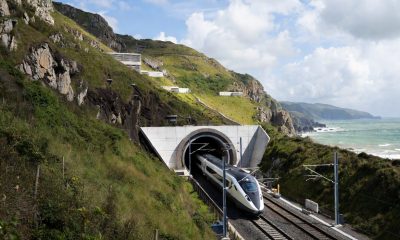
Fishguard to Wexford rail tunnel plan backed by Elon Musk firm
Six-hour London to Dublin service proposed in £32bn project ahead of Senedd election PLANS for a rail tunnel linking west...


Charity1 day ago
Milford Haven charity honoured with King’s Award for voluntary service
A PEMBROKESHIRE charity supporting vulnerable young people has received one of the highest honours in the UK for voluntary work....


News2 days ago
Plaid Cymru launches bid to lead next Welsh Government
Party positions itself as ‘government-in-waiting’ ahead of May election PLAID CYMRU has formally launched its campaign for the 2026 Senedd...


Crime2 days ago
Police appeal after attempted child abduction in Haverfordwest
DYFED-POWYS POLICE has launched an appeal for witnesses following a reported attempted abduction of a 12-year-old girl in Haverfordwest. The...


Crime3 days ago
Gunshot fired by police during incident in Milford Haven
A POLICE officer discharged a firearm during an incident in Milford Haven on Saturday evening (March 28), prompting an investigation...


Community4 days ago
Three Amigos Easter Run roars through Pembrokeshire
MOTORCYCLE enthusiasts turned out in force today (Saturday, March 28) as the popular Three Amigos Easter Run returned to the...


Education6 days ago
Ysgol Henry Tudor reassures parents over Sikh ceremonial kirpan
School says religious item worn by pupil is secured, symbolic and non-functional YSGOL HENRY TUDOR has moved to reassure parents...


Crime6 days ago
Teen jailed after starting fire while others slept
Fire set in shared home left sleeping residents at risk and caused £130,000 damage A TEENAGER who started a fire...


Health6 days ago
GP crisis driving NHS pressure in Wales, Senedd report warns
Falling GP numbers and funding gaps blamed for worsening hospital delays THE NHS crisis highlighted earlier this week is being...
-

 Community6 days ago
Hero female officer keeps job after sexual touching finding
-
Education6 days ago
Ysgol Henry Tudor reassures parents over Sikh ceremonial kirpan
-

 Business6 days ago
Popular Italian restaurant hit with £278,000 tax bill plus £186,000 fine
-

 Climate6 days ago
Port Talbot confirmed as ‘cornerstone’ for wind — questions remain for Milford Haven
-
Health6 days ago
GP crisis driving NHS pressure in Wales, Senedd report warns
-

 Crime5 days ago
Taylor wins appeal as Crown Court quashes ‘no insurance’ conviction
-

 Crime5 days ago
Appeal dismissed in blood sample case after court rejects PTSD defence
-
Crime6 days ago
Teen jailed after starting fire while others slept