


Health
Learning tools launched to help NHS Wales staff understand AI


HEALTH Education and Improvement Wales (HEIW) has unveiled new learning resources to help NHS staff across Wales gain confidence in using Artificial Intelligence (AI) in everyday practice.
AI is already changing the way the health service operates, from reducing paperwork and assisting with patient triage to spotting early signs of deterioration in hospital patients. But experts say that to be safe and effective, healthcare workers must understand how AI works, where it can help, and where it poses risks.
Bite-sized online training
HEIW has created a free online course, Foundations of AI in Healthcare, which is available on the national learning platform Y Ty Dysgu. The short course, which takes less than half an hour to complete, introduces basic AI concepts, provides real-life NHS examples, and highlights important issues such as bias, transparency and the need to keep “a human in the loop”.
Since launching in April, more than 600 NHS Wales professionals have completed the module, giving staff an accessible way to start building digital confidence.
AI mentor set for autumn launch
The next step will be the roll-out of HALI – the Healthcare AI Learning Interface – later this year. HALI is an interactive chatbot that acts as a personalised mentor, offering examples of how AI might apply to a worker’s own role.

A nurse might see how AI can support rota planning, while an optometrist could explore how AI assists in retinal screening. Each interaction will also remind users of the limitations and risks of the technology, encouraging safe and critical use.
HALI has recently been through internal testing and will be made available to all NHS Wales staff this autumn. Its introduction will be supported by an awareness campaign, Using AI to Learn AI, across Y Ty Dysgu and social media channels.
Building a digitally fluent workforce
HEIW says these tools are part of its wider digital ambition to prepare a workforce that is “confident, informed and innovative” in its use of technology. The organisation also plans to collect anonymised learning data to identify skills gaps and guide future training programmes, potentially leading to specialist communities of practice and pilot projects where AI could be applied safely in front-line care.
Dr Alex Aubrey, HEIW’s clinical lead for artificial intelligence, said the aim was to ensure staff at every level felt prepared for the changes AI will bring. He explained: “These tools are part of HEIW’s wider digital ambition to build a workforce that is confident, informed and innovative in its use of AI.”

National strategy
The work also fits into the Welsh Government’s broader strategy for the ethical use of AI in health and care. Earlier this year ministers set out their vision for AI to be adopted responsibly, with transparency and fairness at its core, and with reassurances that technology is designed to support – not replace – jobs in the NHS.
Cardiff University has also announced plans to integrate AI training into medical education, underlining how important digital literacy is becoming across the health professions.
With AI now firmly part of the future of healthcare, HEIW says its focus is to give staff the skills and confidence to make sure Wales reaps the benefits while avoiding the pitfalls.



Candidates say residents must be heard after emergency services decision
PLAID CYMRU candidates for the Ceredigion Penfro constituency will host a public meeting in Pembrokeshire to discuss concerns over the future of services at Withybush Hospital.
The event will take place at 6:30pm on Monday (Mar 31) at Letterston Village Hall, giving residents the opportunity to share their experiences and concerns following Hywel Dda University Health Board’s decision last month to remove emergency general surgery from the hospital.
Campaigners say the move will force many patients requiring urgent treatment to travel further for care, raising fears about the potential impact on patient safety in rural west Wales.
Elin Jones, Plaid Cymru lead candidate for Ceredigion Penfro, said: “Withybush is such an important hospital for the community and residents of Pembrokeshire. The decision to remove its emergency general surgery will severely weaken the life-saving capacity of this hospital.
“Plaid Cymru has long championed small rural hospitals such as Bronglais and Withybush. We need to ensure these hospitals remain strong local services within our communities. Withybush should have the basic life-saving and everyday treatment services it needs to function as a full general hospital.”
Kerry Ferguson, Plaid Cymru candidate for Pembrokeshire within the Ceredigion Penfro constituency, said the recent success of a public petition had demonstrated the strength of local feeling.
“It’s great to see that the online petition calling for Welsh Government intervention to restore emergency surgery and essential services at Withybush has reached its target, meaning it will now be debated in the Senedd,” she said.
“We are extremely disappointed by the Health Board’s decision to remove emergency general surgery at Withybush. Increased journey times for anyone in need of urgent medical treatment will put lives at risk. We need government intervention now to overturn this decision.”
Residents across Pembrokeshire have continued to raise concerns about the future of services at the hospital, which has long been a focal point in debates about healthcare provision in rural west Wales.

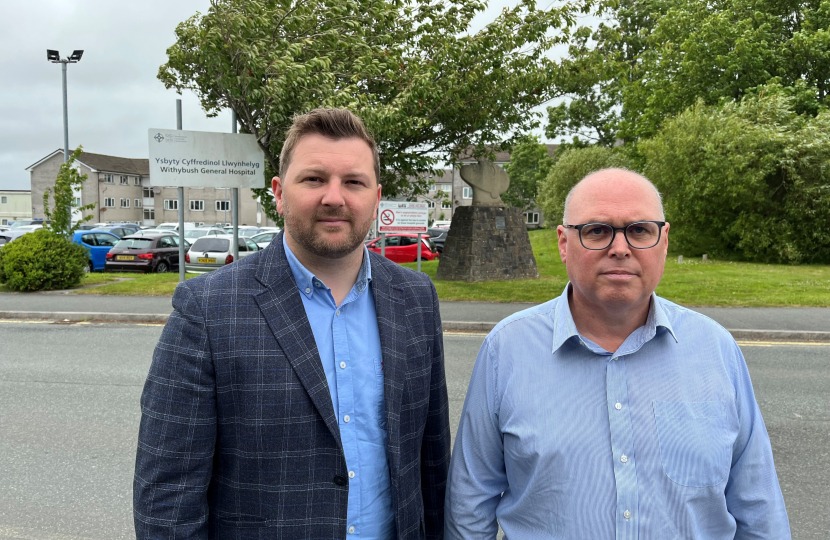
PEMBROKESHIRE’S two Members of the Senedd have written jointly to the Welsh Government’s Counsel General seeking legal advice on possible ways to challenge decisions made by Hywel Dda University Health Board affecting healthcare services in the county.
Paul Davies MS and Samuel Kurtz MS have asked the Counsel General, Julie James MS, to outline what legal mechanisms may exist to scrutinise or challenge the health board’s decision-making process, particularly in relation to changes impacting services at Withybush Hospital.

Their move comes amid growing concern from residents, clinicians and community groups about the impact of service changes on patient safety and access to care, especially in a rural county where travel times to alternative hospitals can be significant.
Public concern has also been reflected in a petition calling for intervention over the future of services at Withybush Hospital. The petition has now attracted more than 11,000 signatures and continues to gain support.
Having passed the required threshold, the petition can now be considered for debate in Senedd Cymru.

The two MSs say the level of public backing highlights the strength of feeling locally and the need for greater scrutiny of decisions being taken about healthcare provision.
Paul Davies MS said: “Residents across Pembrokeshire are deeply concerned about the cumulative impact that changes to healthcare services could have on patient safety and access to care in a rural area. The fact that more than 11,000 people have signed the petition highlights just how strongly people feel about this issue.”
Samuel Kurtz MS added: “People deserve confidence that decisions affecting vital healthcare services have been taken properly and with full consideration of the impact on local communities. We have therefore written to the Counsel General to seek advice on what legal avenues may exist to challenge these decisions and what powers the Welsh Government has to intervene where serious concerns have been raised.”
The MSs have also asked the Welsh Government to clarify what role it can play in reviewing or intervening where there are significant concerns about the governance and decision-making processes of a health board.


THE WELSH AMBULANCE SERVICE is preparing to host its bi-monthly Board meeting – and the public are invited.
Join the meeting on Thursday 26 March via Microsoft Teams to hear senior leaders cover a full agenda, including approval of the Integrated Medium-Term Plan for 2026-29, which outlines what the organisation will prioritise and deliver, how it will use its resources and how it will continue to improve care for the people of Wales over the next three years.
Board members will approve the initial revenue budget for the year ahead and receive an update on current financial performance.
The Board will also hear from Mr Clarke from Cwmbran, who describes an experience of trying to access help via 999 for his late father who was terminally ill.
There will also be an opportunity to pose a question to the Board.
Chair Colin Dennis said: “Board meetings give you the opportunity to really get to know our ambulance service, with a clear view of how important decisions are shaped and the processes behind them.
“They also create a forum to hear directly about ongoing work, explore how we can strengthen support for the Trust’s staff and patients, and connect with the people responsible for shaping those decisions.”
Click here to watch the Board meeting on Thursday 26 March 2026 from 9.30am.
This link will be active from 10 minutes before the meeting starts.
To pre-submit a question, please email [email protected] by no later than Wednesday 25 March 2026.An agenda will be available on the Trust’s website in the days prior to the meeting.



News22 minutes ago
Emergency services flood Haverfordwest after reports of body in river
Town centre sealed off as multi-agency response continues A MAJOR emergency response is underway in the centre of Haverfordwest after...

News31 minutes ago
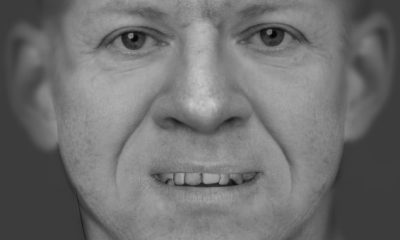
Detectives receive surge of new information in bid to identify man found at Powys reservoir
Public response follows release of facial image as officers pursue fresh lines of enquiry DETECTIVES investigating the identity of a...


Education1 day ago
New facilities open at Portfield School as redevelopment reaches key milestone
THE FIRST phase of a major redevelopment programme at Portfield School in Haverfordwest has been completed, marking a significant step...


News1 day ago
£377m spent saving blast furnaces months after Port Talbot closure
Government intervention keeps UK’s last primary steelmaking furnaces running THE UK GOVERNMENT spent £377 million to prevent the closure of...


Sport2 days ago
France crowned Six Nations champions after extraordinary final-day drama
Ramos penalty in Paris seals title as Ireland fall just short and Wales end losing run FRANCE were crowned 2026...


News2 days ago
Fishguard linked to allegations in Many Tears Animal Rescue investigation
Claims about puppies arriving through Pembrokeshire port emerge as licensing probe continues FISHGUARD has been named in allegations linked to...


Local Government3 days ago
Investigation confirmed after inspectors visit Many Tears Animal Rescue
Licensing authority declines to comment as police confirm attendance at Carmarthenshire rescue centre AN INVESTIGATION is underway following a visit...


Business4 days ago
Work set to begin on £50m hydrogen plant in Milford Haven
A MAJOR new hydrogen production facility worth around £50 million is expected to begin construction in Milford Haven later this...


Education5 days ago
Manorbier school closure approved while insurance claim still unresolved
Council confirms negotiations with insurer ongoing following 2022 fire PEMBROKESHIRE COUNTY COUNCIL has confirmed that negotiations with its insurer over...


Crime6 days ago
‘Knife attack’ at Spittal property leaves man in hospital
POLICE have arrested a woman following what is being described as a ‘knife attack’ at a property in Spittal on...
-

 Health4 days ago
Welsh Ambulance Service to host bi-monthly Board meeting
-

 News3 days ago
Rayner and Lammy visit Wales to discuss justice and community safety
-

 Local Government6 days ago
Register now to vote in May’s Senedd election
-
News2 days ago
Fishguard linked to allegations in Many Tears Animal Rescue investigation
-

 Crime7 days ago
E-bike rider who sped through pedestrian alley sentenced by court
-
News22 minutes ago
Emergency services flood Haverfordwest after reports of body in river
-

 Community6 days ago
Modern-day maritime hero backs exhibition marking 200 years since launch of HMS Erebus
-

 Crime7 days ago
Driver caught with three illegal drugs in system on way to MOT test