


News
Tenby RNLI lifeguards save two teenagers from drowning

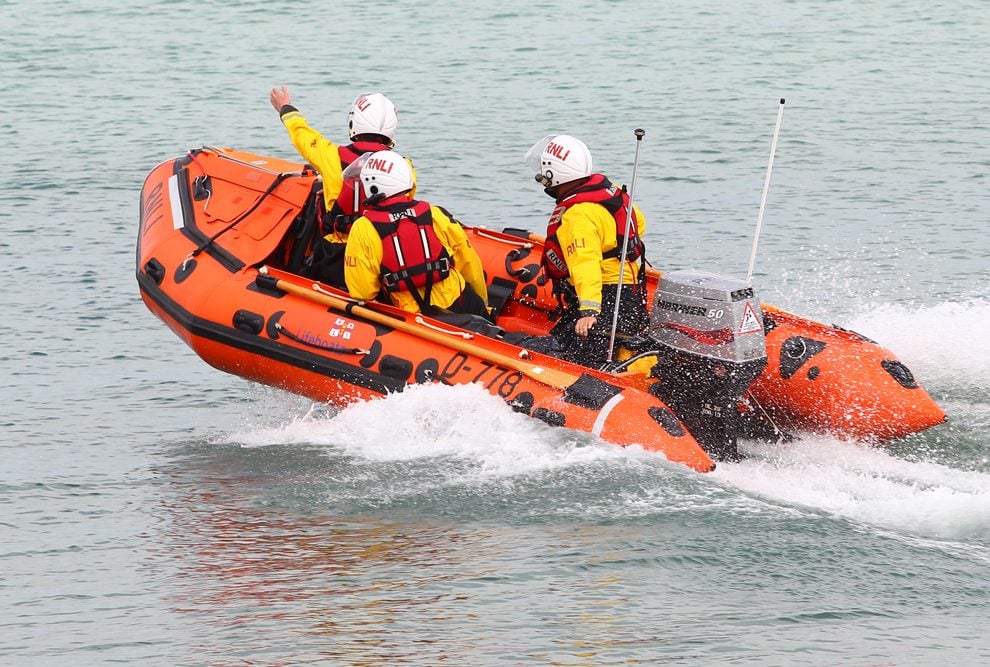
RNLI lifeguards patrolling at Tenby Castle Beach have saved two teenagers after they were caught in a rip current and swept out to sea.
THE LIFESAVING charity are reminding the public of the importance of visiting a lifeguarded beach over the final week of the summer holidays.
On Tuesday (Aug 26), stormy conditions hit the coast of west Wales following Hurricane Erin. RNLI lifeguards across Pembrokeshire were forced to red flag a number of beaches as they were deemed as unsafe, due to the combination of big surf and wind which heightens the risk of rip currents.

Four teenagers walked down towards the water on the Paragon (a stretch of beach that connects Castel Beach and South Beach). A patrolling RNLI lifeguard (LG) walked the 200m to reach the group and advised them against entering the water in that location, due to the big surf and strong rip currents. The lifeguard team had set up a red and yellow flagged swim zone on Castle Beach.
Shortly after returning to their post, the LG spotted that two of the group had entered the water and appeared to be struggling. Two LGs quickly equipped themselves with a rescue tube and a rescue board and made best speed to the casualties.
On approach, one of the teenagers could be heard shouting; ‘Help me please, I don’t want to die!’ The second had been dragged 150m out to sea and looked unresponsive, having been submerged for more than two minutes.

Carl Amos, RNLI Lifeguard Supervisor and one of the team who entered the water said: ‘We knew we needed to get to the unresponsive casualty as soon as possible. I swam out with fins and a rescue tube, whilst my colleague Liam Nash paddled out on a rescue board. The sets were rolling in heavily which made it tough to reach the casualties. I clipped the first casualty into the rescue tube and Liam got the unresponsive casualty onto his board.’
Both casualties were returned to shore where LG Daisy Da Gama Howells was waiting to assess their condition and administer any casualty care first aid. The second casualty was struggling to breathe so was administered oxygen.
The lifeguards decided that the best way to extract the casualty from the beach was to strap him to a rescue board and carry him to the nearby Tenby RNLI Inshore Lifeboat Station to meet the ambulance. The paramedics confirmed that both casualties had water on the lungs and took them to hospital for further assessment.
During this incident, LG Ffion Mabey was patrolling the red and yellow swim zone, keeping the beach safe for the 50+ people who were enjoying the surf.

Carl continued: ‘This incident is an example of why we give preventative advice and encourage people to swim between the red and yellow flags. The conditions on Tuesday were challenging due to the big waves and strong currents.
‘I’m really proud of my team’s response, everyone put their training to use and effectively rescued two people in serious trouble in the water. We provided casualty care first aid and handed them over to the care of the paramedics. This was all whilst the beach remained operational with a busy swim zone to watch over.
‘We’re reminding the public to choose a lifeguarded beach if they’re planning on going in the water in the final week of the summer holidays.

‘Had we not been there to help on Tuesday, the outcome could’ve been very different for the casualties.’
Tirion Dowsett, RNLI Water Safety Delivery Support said: ‘It’s vitally important that the public are aware of the dangers that the sea can pose. On this occasion, the sea was rougher than usual which increases the likelihood and strength of rip currents.
‘If you find yourself caught in a rip current, remember not to fight against it or you’ll get exhausted. If you can stand, wade don’t swim, or swim parallel to the shore until you’re free of the current, then head for the beach.
‘If you find yourself unable to return to shore, remember to Float to Live. Preserve your energy by floating and then when you’re able, wave and shout for help.
‘If you see anyone in difficulty along the coast, call 999 or 112 and ask for the Coastguard. RNLI lifeguards patrol from 10am-6pm and volunteer RNLI lifeboat crew are on call 24/7 to come to your aid.’
RNLI Float to Live advice:
- Tilt your head back, submerging your ears
- Relax and control your breathing
- Move your hands and legs around to help you stay afloat
- Your legs may sink, that’s ok – we all float differently
- Practice swimming at a supervised location like a swimming pool.
RNLI advice if caught in a rip current:
- Don’t try to swim against it or you’ll get exhausted
- If you can stand, wade back to shore rather than swim
- If you can, swim parallel to the shore until free of the rip and then head for shore
- Always raise your hand and shout for help
- If your struggling, conserve your energy and Float to Live.

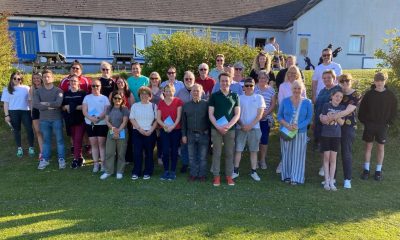








Major emergency response in town centre after concerns raised for man in water
A MAN has died after being recovered from the River Cleddau in Haverfordwest today (Tuesday, Mar 17), Dyfed-Powys Police have confirmed.
Emergency services were called at approximately 10:50am following reports concerning the safety of a man seen in the water near the town library.
A major multi-agency response was launched, involving multiple police units, several fire engines, a specialist water rescue team, and an ambulance.
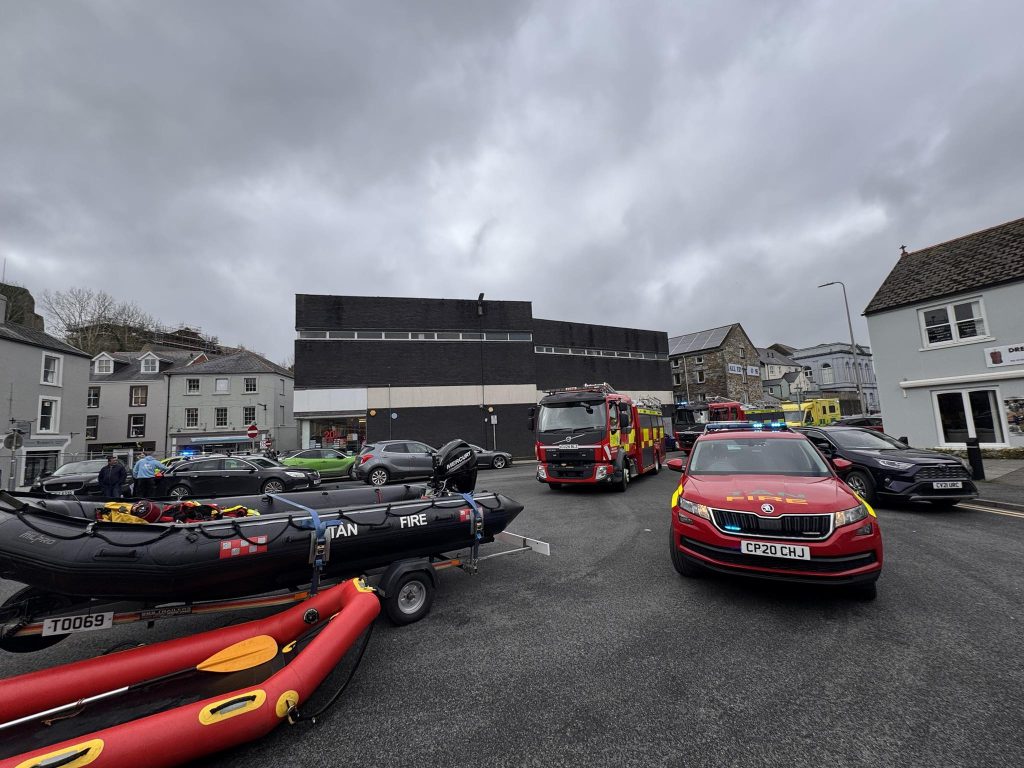
The town centre was temporarily sealed off while crews dealt with the incident, with access restricted across the Old Bridge and nearby pedestrian crossings.
The Herald understands that members of the public raised the alarm after spotting the man in the river.

Following the recovery operation, the man was taken to hospital by ambulance.
Police have since confirmed that he has died.
His next of kin have been informed.
The death is not being treated as suspicious, and HM Coroner has been notified.
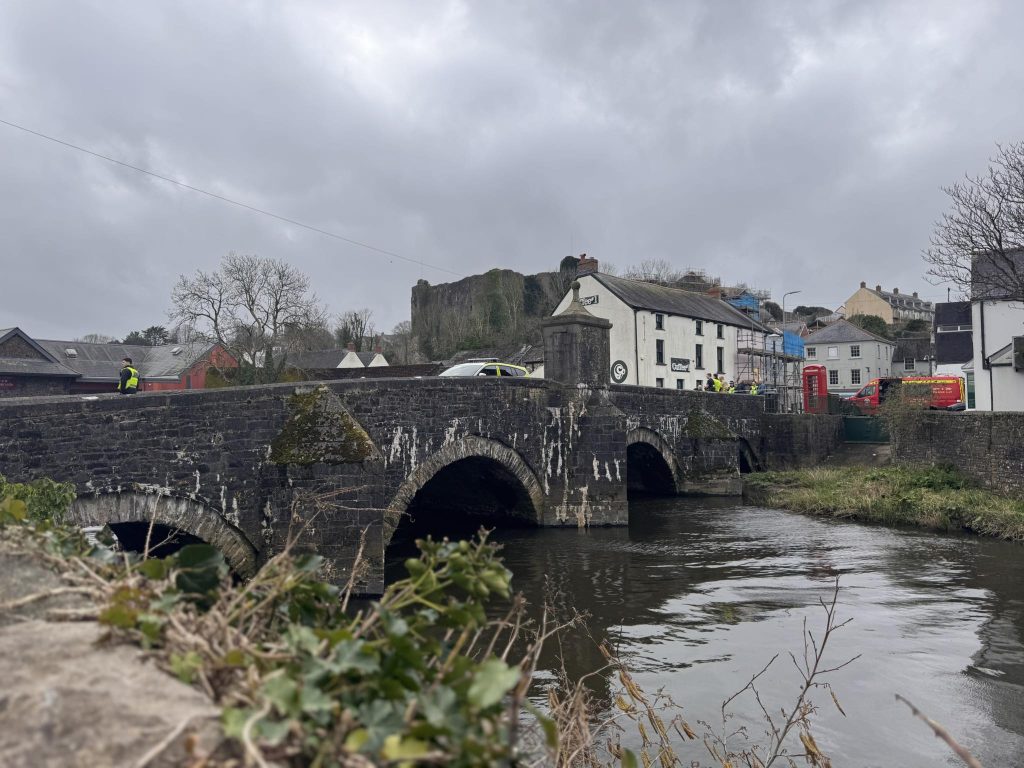

Community organisations in Pembrokeshire encouraged to apply for new grants supporting skills and job access
LOCAL Senedd Members Samuel Kurtz and Paul Davies are urging charities and community groups across Pembrokeshire to apply for a new round of funding aimed at helping people gain skills and access employment.
The latest round of the National Grid Electricity Distribution (NGED) Community Matters Fund has opened, offering grants to grassroots organisations supporting people who are struggling to find work or return to employment.
Delivered in partnership with Localgiving, the spring funding round will distribute £250,000 to projects designed to build skills, confidence and experience in an evolving jobs market.
Funding can support initiatives such as CV workshops, interview coaching, work placements and training opportunities. Projects helping people develop practical skills in sectors including construction, engineering, digital industries and clean energy are also eligible.
The fund is targeted at those facing barriers to employment, including young people not in education, employment or training, individuals with health conditions or disabilities, armed forces veterans, people from ethnic minority backgrounds, and those returning to work after time away due to caring responsibilities or illness.
Registered charities and non-profit companies limited by guarantee can apply for grants of up to £5,000. Constituted community groups without a charity number can apply for up to £2,000.
The funding is available to eligible organisations across the Midlands, South West England and South Wales.
Samuel Kurtz said: “This fund offers a valuable opportunity for local groups to secure support to help people gain confidence, training and work experience. I would encourage any eligible organisation in Pembrokeshire to consider applying.”
Paul Davies added: “Helping people into work and supporting them to develop new skills is vital for both individuals and our local economy. Pembrokeshire has many excellent community groups delivering this kind of support, and I hope they will take full advantage of this funding to expand their work.”

The application window opened on Monday (Mar 16) and closes at 5:00pm on Thursday (Apr 23). Successful applicants will be notified in May, with funding distributed later that month.
Further information is available via the National Grid Electricity Distribution Community Matters Fund website.

Discovery of Roman fort sparks fresh theory linking west Wales to Ireland’s patron saint
PEMBROKESHIRE could be at the centre of one of history’s greatest mysteries, following the discovery of a previously unknown Roman fort that is now fuelling new speculation about the origins of St Patrick.
The saint, who lived during the 5th century, famously wrote that he was taken as a teenager from a place called “Bannavem Taburniae” — a location that has never been identified.
Now, new evidence suggests west Wales may have been far more connected and strategically important in Roman times than previously believed.
A discovery that changes the picture
The recent discovery of a large Roman fort in Pembrokeshire has challenged long-held assumptions that the region was a quiet and lightly occupied corner of Roman Britain.
Instead, archaeologists now believe west Wales may have been home to organised military activity, supported by road networks and coastal links.
This emerging picture places Pembrokeshire firmly within the Roman world — not on its fringes.

The mystery of Bannavem Taburniae
St Patrick’s own writings provide the only clue to his origins.
He describes being captured by Irish raiders and taken across the sea from Bannavem Taburniae, believed to have been a coastal or near-coastal settlement in Roman Britain.
Its exact location remains unknown.
However, historians broadly agree it would have been:
a settlement within the Roman world, accessible from the sea, and located on the western side of Britain.
Pembrokeshire fits that description.

Geography strengthens the case
Few places in Britain are closer to Ireland than Pembrokeshire.
The crossing from the west Wales coast is relatively short and would have been well within the capabilities of Irish raiders during the 5th century.
Communities along this coastline were accessible, connected and exposed.
If raiders were targeting coastal settlements, west Wales would have been among the most likely places.
Earlier than St Davids—but part of the same world
St Davids itself had not yet been founded during St Patrick’s lifetime, but west Wales was already part of a growing network of early Christian communities along the Irish Sea.
The movement of people, goods and ideas between Wales and Ireland was well established.
The later emergence of St Davids as a major religious centre reinforces the importance of Pembrokeshire within that shared cultural and spiritual landscape.
Not proof—but a powerful possibility
There is no direct evidence linking the newly discovered Roman fort—or any site in Pembrokeshire—to Bannavem Taburniae.
No historian has yet identified the county as St Patrick’s birthplace.
However, the discovery changes the context.
It shows that west Wales was not isolated, but part of a structured and connected Roman landscape that closely matches the type of settlement described in St Patrick’s account.
A theory worth exploring
For centuries, historians have focused on northern England and Scotland when searching for Patrick’s origins.
But the combination of proximity to Ireland, new archaeological discoveries and strong maritime links is beginning to shift attention west.
Pembrokeshire may not yet provide the answer.
But it is now firmly in the frame.
A local link to a global story
Ireland will always be at the heart of St Patrick’s legacy.
But his story began somewhere else.
And there is a growing case that it may have begun on the Pembrokeshire coast.



News1 hour ago
Police confirm man has died after being recovered from River Cleddau
Major emergency response in town centre after concerns raised for man in water A MAN has died after being recovered...


Community1 hour ago
Davies and Kurtz urge groups to seek employability funding
Community organisations in Pembrokeshire encouraged to apply for new grants supporting skills and job access LOCAL Senedd Members Samuel Kurtz...

News3 hours ago
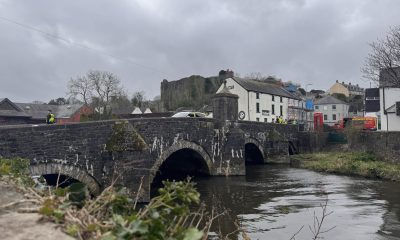
Emergency services flood Haverfordwest after reports of person in river
Town centre sealed off as multi-agency response continues A MAJOR emergency response is underway in the centre of Haverfordwest after...


News4 hours ago
Detectives receive surge of new information in bid to identify man found at Powys reservoir
Public response follows release of facial image as officers pursue fresh lines of enquiry DETECTIVES investigating the identity of a...


Education1 day ago
New facilities open at Portfield School as redevelopment reaches key milestone
THE FIRST phase of a major redevelopment programme at Portfield School in Haverfordwest has been completed, marking a significant step...


News1 day ago
£377m spent saving blast furnaces months after Port Talbot closure
Government intervention keeps UK’s last primary steelmaking furnaces running THE UK GOVERNMENT spent £377 million to prevent the closure of...


Sport2 days ago
France crowned Six Nations champions after extraordinary final-day drama
Ramos penalty in Paris seals title as Ireland fall just short and Wales end losing run FRANCE were crowned 2026...

News2 days ago
Fishguard linked to allegations in Many Tears Animal Rescue investigation
Claims about puppies arriving through Pembrokeshire port emerge as licensing probe continues FISHGUARD has been named in allegations linked to...


Local Government3 days ago
Investigation confirmed after inspectors visit Many Tears Animal Rescue
Licensing authority declines to comment as police confirm attendance at Carmarthenshire rescue centre AN INVESTIGATION is underway following a visit...

Business4 days ago
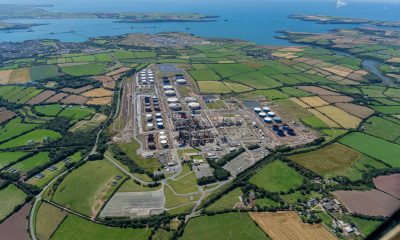
Work set to begin on £50m hydrogen plant in Milford Haven
A MAJOR new hydrogen production facility worth around £50 million is expected to begin construction in Milford Haven later this...
-

 Health4 days ago
Welsh Ambulance Service to host bi-monthly Board meeting
-

 News3 days ago
Rayner and Lammy visit Wales to discuss justice and community safety
-

 Local Government6 days ago
Register now to vote in May’s Senedd election
-
News2 days ago
Fishguard linked to allegations in Many Tears Animal Rescue investigation
-
News3 hours ago
Emergency services flood Haverfordwest after reports of person in river
-

 Community6 days ago
Modern-day maritime hero backs exhibition marking 200 years since launch of HMS Erebus
-

 Crime6 days ago
‘Knife attack’ at Spittal property leaves man in hospital
-

 News5 days ago
Calls grow for water industry overhaul after Welsh Water faces £44.7m fine