


News
Rebecca Evans confirms Office for AI projects and £26m UKRI investment

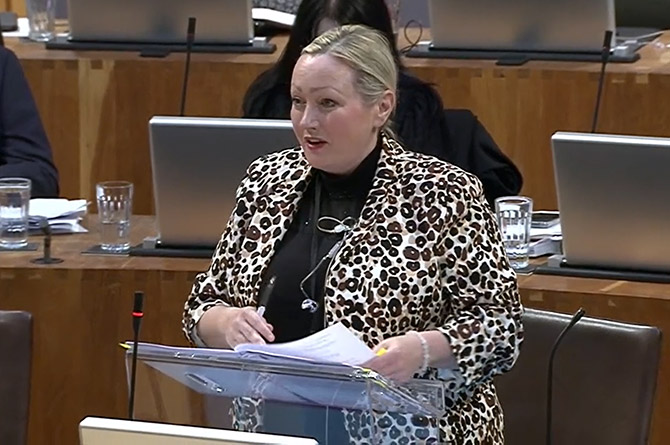
THE WELSH GOVERNMENT has announced new funding and reforms to accelerate the use of artificial intelligence (AI) and digital technology in public services.
Rebecca Evans MS, Cabinet Secretary for Economy, Energy and Planning, said the Office for Artificial Intelligence would drive innovation and improve delivery of services across Wales.
A Strategic AI Advisory Group – meeting for the second time later this month – will set skills and investment priorities. Alongside this, funding has been allocated to projects testing practical uses of AI in areas including:
- evaluating “AI scribe” tools in social care assessments
- developing a chatbot assistant for the StatsWales service
- training public sector workers in AI skills
- producing guidance for councils on AI deployment
- piloting a shared platform to trial new AI tools
The government will also continue work with the UK on the AI-enabled “Humphrey” toolset.
One project, funded through the Cabinet Secretary for Social Justice, will see a Welsh credit union collaborate with tech partners to streamline office systems and improve lending services. Findings will be shared across the credit union sector.

The Welsh Government has secured £440,000 from the UK Digital Inclusion Innovation Fund to support a “minimum digital living standard” – defining the devices, connectivity and skills people need to participate fully in society. Pilot projects are already working with social housing residents, Gypsy, Roma and Traveller communities, and older people.
Meanwhile, UK Research and Innovation (UKRI) has confirmed a £26 million investment over five years in the Administrative Data Research Wales Partnership, backing secure and ethical use of data to support research.
To consolidate resources, the Cabinet Secretary confirmed that the Centre for Digital Public Services (CDPS) will be merged into the Welsh Government by April 2026, aligning it with the Office for AI.
Ms Evans said the move would “streamline and strengthen the Welsh Government’s digital and AI capabilities, reduce duplication, and bring greater integration between policy and delivery.”



Discovery of Roman fort sparks fresh theory linking west Wales to Ireland’s patron saint
PEMBROKESHIRE could be at the centre of one of history’s greatest mysteries, following the discovery of a previously unknown Roman fort that is now fuelling new speculation about the origins of St Patrick.
The saint, who lived during the 5th century, famously wrote that he was taken as a teenager from a place called “Bannavem Taburniae” — a location that has never been identified.
Now, new evidence suggests west Wales may have been far more connected and strategically important in Roman times than previously believed.
A discovery that changes the picture
The recent discovery of a large Roman fort in Pembrokeshire has challenged long-held assumptions that the region was a quiet and lightly occupied corner of Roman Britain.
Instead, archaeologists now believe west Wales may have been home to organised military activity, supported by road networks and coastal links.

This emerging picture places Pembrokeshire firmly within the Roman world — not on its fringes.

The mystery of Bannavem Taburniae
St Patrick’s own writings provide the only clue to his origins.
He describes being captured by Irish raiders and taken across the sea from Bannavem Taburniae, believed to have been a coastal or near-coastal settlement in Roman Britain.
Its exact location remains unknown.

However, historians broadly agree it would have been:
a settlement within the Roman world, accessible from the sea, and located on the western side of Britain.
Pembrokeshire fits that description.
Geography strengthens the case
Few places in Britain are closer to Ireland than Pembrokeshire.

The crossing from the west Wales coast is relatively short and would have been well within the capabilities of Irish raiders during the 5th century.
Communities along this coastline were accessible, connected and exposed.
If raiders were targeting coastal settlements, west Wales would have been among the most likely places.
Earlier than St Davids—but part of the same world
St Davids itself had not yet been founded during St Patrick’s lifetime, but west Wales was already part of a growing network of early Christian communities along the Irish Sea.
The movement of people, goods and ideas between Wales and Ireland was well established.
The later emergence of St Davids as a major religious centre reinforces the importance of Pembrokeshire within that shared cultural and spiritual landscape.
Not proof—but a powerful possibility
There is no direct evidence linking the newly discovered Roman fort—or any site in Pembrokeshire—to Bannavem Taburniae.
No historian has yet identified the county as St Patrick’s birthplace.
However, the discovery changes the context.
It shows that west Wales was not isolated, but part of a structured and connected Roman landscape that closely matches the type of settlement described in St Patrick’s account.
A theory worth exploring
For centuries, historians have focused on northern England and Scotland when searching for Patrick’s origins.
But the combination of proximity to Ireland, new archaeological discoveries and strong maritime links is beginning to shift attention west.
Pembrokeshire may not yet provide the answer.
But it is now firmly in the frame.
A local link to a global story
Ireland will always be at the heart of St Patrick’s legacy.
But his story began somewhere else.
And there is a growing case that it may have begun on the Pembrokeshire coast.

Public urged to take care along the coast
PEMBROKESHIRE residents and visitors are being urged to take extra care when using the Coast Path and local beaches following a series of recent landslips.
Authorities say a wet winter, following last year’s prolonged dry spell, has increased the risk of further cliff falls and ground instability in the coming weeks.
People heading to the coast are being advised to keep well away from cliff edges and to avoid sitting directly beneath cliff faces while on beaches.
Cliffs along the Pembrokeshire coastline are naturally formed and are constantly changing due to erosion and weathering. Periods of heavy or sustained rainfall can seep into cracks in the rock, weakening the structure and making landslips more likely.
While these processes are a normal part of coastal evolution, they mean cliff faces can collapse suddenly and without warning.
The Cabinet Member for Residents’ Services, Cllr Rhys Sinnett said: “We have seen a number of landslips and cliff falls around the county this winter and want people to ensure they are aware of their surroundings while out and about.
“If you are visiting the coast, please follow HM Coastguard guidance—stay well back from cliff edges and bases, observe warning signs, and keep to signposted coastal paths.”
James Parkin, Director of Nature and Tourism at the Pembrokeshire Coast National Park Authority, added: “After months of prolonged rainfall, we are seeing increased instability along several sections of the coast.
“We advise everyone to remain vigilant, be mindful of their surroundings, and take extra care when accessing the Coast Path and beaches.
“We are working with partner agencies to monitor conditions and will continue to issue advice through our website and social media channels where necessary.”
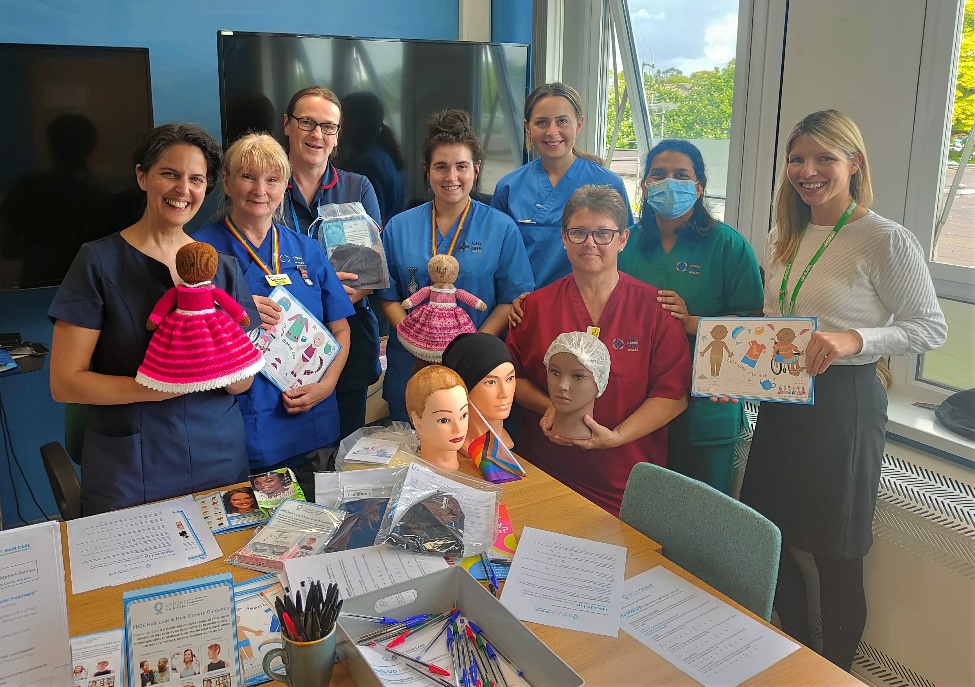
HYWEL DDA Health Charities, the official charity of Hywel Dda University Health Board, is proud to announce a funding award to support Phase 2 of the Heads Up initiative, a unique service that provides expert, person-centred, holistic hair loss care for people affected by cancer treatment.
This funding will enable the continuation of the Heads Up service until 31 December 2027, following its successful launch in January 2024. The funding has been generously match-funded by two partner organisations: the Withybush Hospital Cancer Day Unit Appeal and Cancer Hair Care.
Hywel Dda University Health Board is the first Health Board in Wales to provide a comprehensive support service for chemotherapy-related hair loss. The service, which is delivered by Cancer Hair Care, connects healthcare professionals and haircare experts from local communities to empower patients to manage their hair loss journey with independence, dignity and choice.
Gina Beard, Lead Cancer Nurse, said: “We are incredibly grateful to our local communities for their generous donations, which have made this funding possible. Hair loss can be one of the most distressing side effects of cancer treatment, and this service helps patients feel heard, supported and equipped with practical tools and advice. Thanks to this funding, we can continue to offer inclusive, compassionate care that makes a real difference to people’s lives.”
The Heads Up initiative has already delivered thousands of touchpoints with patients, healthcare professionals and hairdressers across the Hywel Dda area. It offers tailored support for every stage of the hair loss journey, including headwear options, brow and lash care, and guidance on new hair growth. The service also provides training for nurses and local hairdressers, helping to build a community of informed professionals who can offer evidence-based support.
Nicola Llewelyn, Head of Hywel Dda Health Charities, said: “We are so thankful to everyone who has donated to Hywel Dda Health Charities. Your support enables us to fund projects like Heads Up that go beyond standard NHS provision and truly enhance patient care.”
Trish George, Treasurer of Withybush Hospital Cancer Day Unit Appeal, said: “Having funded the original pilot and Phase 1 of the Heads Up project in Pembrokeshire and witnessed its success, we are delighted to be able to fund the costs of delivering this exciting and beneficial project to many more Pembrokeshire residents over the next two years.”
Founder of Cancer Hair Care Jasmin Julia Gupta said: “So many of the service users have sent such heartfelt messages of thanks for the creative, compassionate and expert services they have received. We are delighted and privileged to continue this much needed service. It’s really a team effort and I would like to take this opportunity to thank all the patients, nursing and healthcare staff, funders and the dedicated hairdressers, who have supported this project in hospitals and within the community.
“We are looking for more hairdressers to join the project and would like to encourage hairdressers to contact Cancer Hair Care directly to show their interest via our website at www.cancerhaircare.co.uk or via email at [email protected].”
For more information about Hywel Dda Health Charities and how to support projects like Heads Up, please visit: https://hywelddahealthcharities.nhs.wales/
Pictured: NHS staff receive training in supporting patients with hair loss



News2 hours ago
Emergency services flood Haverfordwest after reports of person in river
Town centre sealed off as multi-agency response continues A MAJOR emergency response is underway in the centre of Haverfordwest after...

News2 hours ago
Detectives receive surge of new information in bid to identify man found at Powys reservoir
Public response follows release of facial image as officers pursue fresh lines of enquiry DETECTIVES investigating the identity of a...

Education1 day ago
New facilities open at Portfield School as redevelopment reaches key milestone
THE FIRST phase of a major redevelopment programme at Portfield School in Haverfordwest has been completed, marking a significant step...


News1 day ago
£377m spent saving blast furnaces months after Port Talbot closure
Government intervention keeps UK’s last primary steelmaking furnaces running THE UK GOVERNMENT spent £377 million to prevent the closure of...


Sport2 days ago
France crowned Six Nations champions after extraordinary final-day drama
Ramos penalty in Paris seals title as Ireland fall just short and Wales end losing run FRANCE were crowned 2026...


News2 days ago
Fishguard linked to allegations in Many Tears Animal Rescue investigation
Claims about puppies arriving through Pembrokeshire port emerge as licensing probe continues FISHGUARD has been named in allegations linked to...

Local Government3 days ago
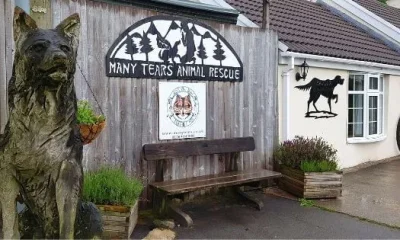
Investigation confirmed after inspectors visit Many Tears Animal Rescue
Licensing authority declines to comment as police confirm attendance at Carmarthenshire rescue centre AN INVESTIGATION is underway following a visit...


Business4 days ago
Work set to begin on £50m hydrogen plant in Milford Haven
A MAJOR new hydrogen production facility worth around £50 million is expected to begin construction in Milford Haven later this...


Education5 days ago
Manorbier school closure approved while insurance claim still unresolved
Council confirms negotiations with insurer ongoing following 2022 fire PEMBROKESHIRE COUNTY COUNCIL has confirmed that negotiations with its insurer over...


Crime6 days ago
‘Knife attack’ at Spittal property leaves man in hospital
POLICE have arrested a woman following what is being described as a ‘knife attack’ at a property in Spittal on...
-

 Health4 days ago
Welsh Ambulance Service to host bi-monthly Board meeting
-

 News3 days ago
Rayner and Lammy visit Wales to discuss justice and community safety
-

 Local Government6 days ago
Register now to vote in May’s Senedd election
-
News2 days ago
Fishguard linked to allegations in Many Tears Animal Rescue investigation
-
News2 hours ago
Emergency services flood Haverfordwest after reports of person in river
-

 Community6 days ago
Modern-day maritime hero backs exhibition marking 200 years since launch of HMS Erebus
-
Crime6 days ago
‘Knife attack’ at Spittal property leaves man in hospital
-

 News5 days ago
Calls grow for water industry overhaul after Welsh Water faces £44.7m fine