


Local Government
Should Pembrokeshire follow Cardiff in banning junk food ads?


CARDIFF COUNCIL has moved to restrict junk food advertising on all council-owned assets – raising the question of whether Pembrokeshire should do the same.
The updated policy, approved by Cardiff’s Cabinet this week, sets out new rules designed to support public health, sustainability, and community wellbeing. It places a particular focus on the promotion of healthier food and drink options.
As part of the changes, adverts for products high in fat, salt, and sugar (HFSS) will no longer be permitted across council platforms. The rules also prohibit advertising for payday loans, tobacco products including e-cigarettes, and vehicles powered by fossil fuels. Alcohol and religious advertising will be tightly controlled.
Under the new approach:
- HFSS advertising is restricted on all Council assets.
- Brand adverts are allowed only if no junk food is directly featured.
- Any advertising proposals linked to HFSS products must receive prior Council approval.
- Food and drink companies are encouraged to promote healthier options.
Cardiff says the changes align with the Welsh Government’s Healthy Weight: Healthy Wales strategy and anticipate future national regulations.

Cllr Dan De’Ath, Cabinet Member for Climate Change, Strategic Planning & Transport, said: “This is about putting the health and wellbeing of Cardiff’s people first. Products such as foods high in fat, salt, and sugar can still be advertised elsewhere in the city, but stopping publicly owned assets being used to promote them is a positive step towards creating a stronger, fairer, and greener city for everyone.”
The policy will be reviewed every three years, with current advertising contracts allowed to run their course.
The move has sparked debate about whether other councils should follow suit. With rising obesity rates and concerns about children’s diets, should Pembrokeshire County Council consider introducing similar restrictions?

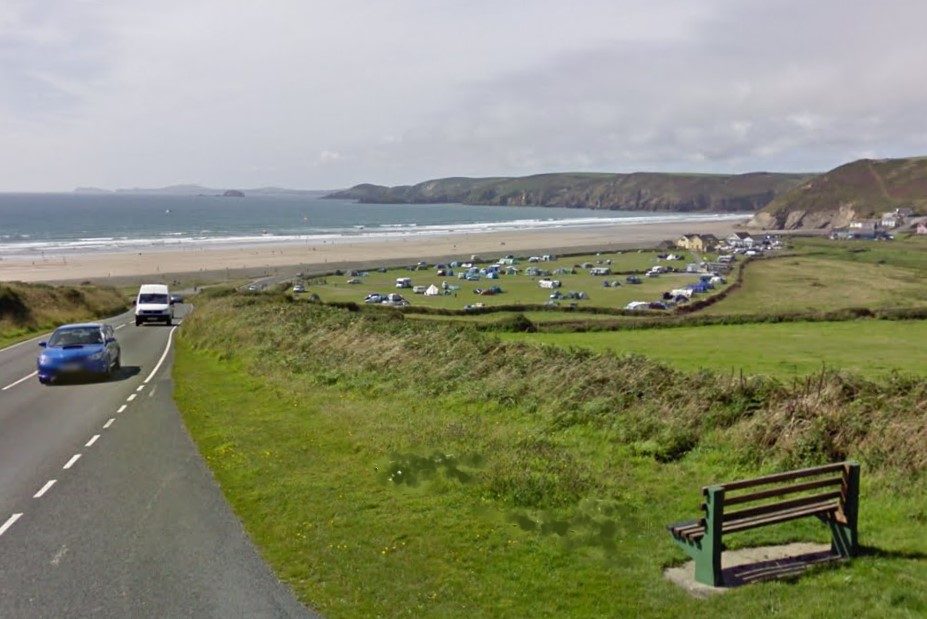
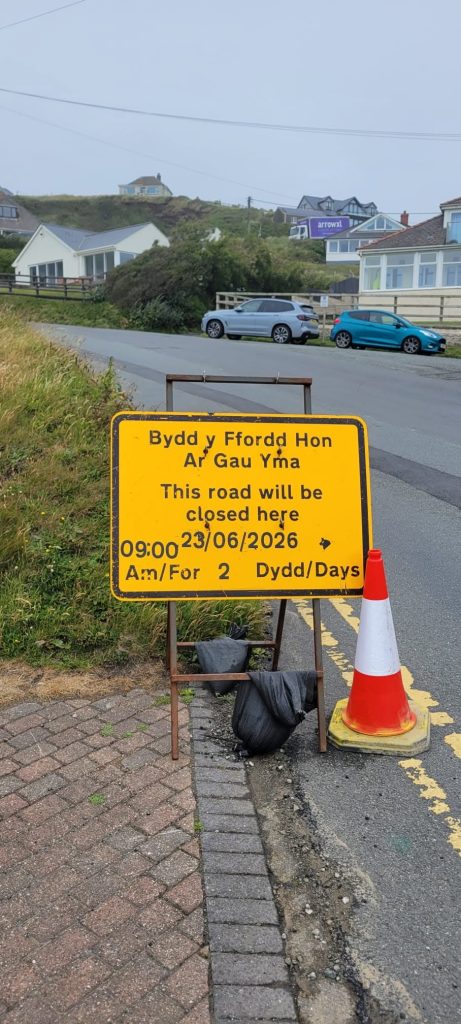
MOTORISTS are being warned to expect major disruption when resurfacing work closes Newgale hill later this month.
Pembrokeshire County Council is due to carry out work on Monday, June 23, from 9:00am to 3:30pm, and Tuesday, June 24, from 9:00am to 4:00pm.
The closure will affect the A487 from above the Newgale shop to Penycwm.
County councillor Mark Carter said he fully supported the resurfacing work, but had “severe concerns” about the diversion arrangements.
Traffic is expected to be sent along the partially single-track route from Penycwm to Victoria, Roch, via Eweston and Roch Bridge.
Cllr Carter said the route is used during winter storms when waves overtop at Newgale, but warned traffic is usually much lighter at that time of year.
He said: “I believe there will be severe delays and confrontation on this route when traffic meets head-on.”
He added that he had suggested alternatives, including carrying out the work at a quieter time of year, night working, a convoy system, or using a different route to create more of a one-way flow.
However, he said he had been told the closure would go ahead as planned.

Cllr Carter said PCC had indicated staff would be on the diversion route to assist traffic, but he had not yet received an answer about arrangements for service buses.
He advised residents to avoid the diversion where possible and allow extra time by travelling further around Newgale.
Key post vacant since February as walker raises safety concerns over paths near Llanteg and Amroth
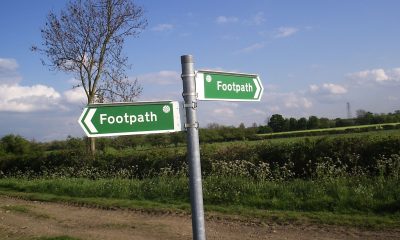
PEMBROKESHIRE COUNTY COUNCIL has admitted that 74 public rights of way enquiries remain unresolved, as concerns grow over staffing shortages and alleged obstructions on countryside paths.
The admission follows a formal complaint from visitor Daniel Murphy, who contacted the council after walking a number of public footpaths in the Llanteg and Amroth area while holidaying in Pembrokeshire.

Mr Murphy said he had been using the paths to avoid busy roads while carrying his 11-week-old daughter, but claimed he encountered a series of problems including blocked or difficult access points, damaged gates, overgrowth, missing or concealed signage, dumped materials and intimidating conditions for walkers.
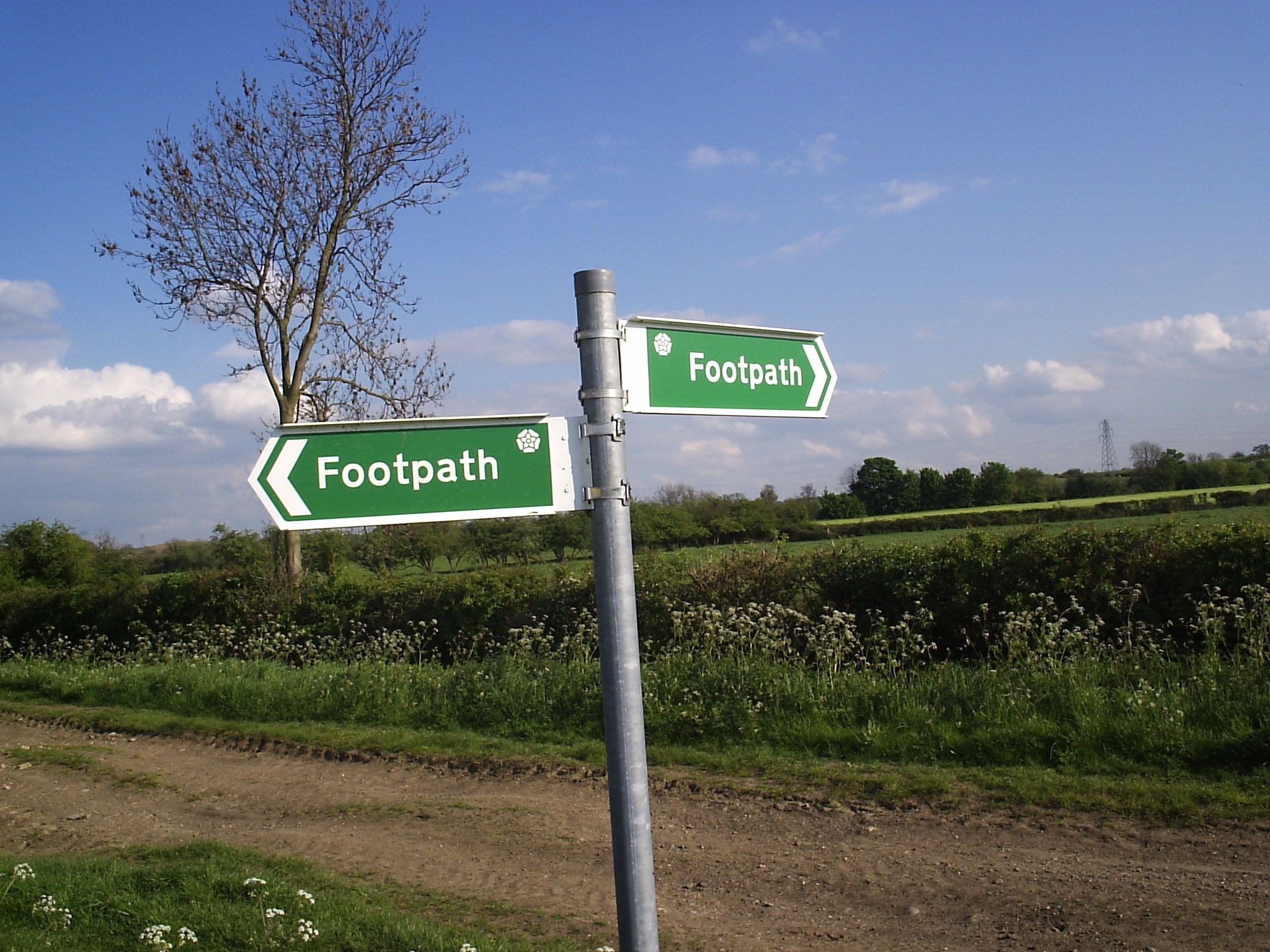
The complaint relates to paths identified on the Definitive Map as SP10/11, SP10/13, SP10/14, SP10/15 and SP10/20 on Map 87.
In correspondence seen by The Herald, Mr Murphy said he had first contacted the council on April 3, but had not received a substantive response. He later escalated the matter as a formal complaint.
Among the issues he raised were claims that fencing had been placed across a path, that a kissing gate had been modified with a timber plank, that a gate mechanism had been damaged, and that old roofing sheets had been dumped near one of the routes, raising concerns over potentially hazardous material.
He also reported severe overgrowth at gates and stiles, and claimed one section of path was affected by an aggressive loose dog.
Council response
Pembrokeshire County Council confirmed to The Herald that it had received the formal complaint.
A council spokesperson said an inspection of the footpaths associated with the complaint would be carried out by officers by the end of this week.
The council also confirmed that its Definitive Map Officer post has been vacant since February 1, 2026, while recruitment options are being considered.
Asked whether public rights of way legal enforcement was currently suspended or delayed because of staffing shortages, the council said there were “limited staff resources” available to deal with Public Rights of Way legal matters.
It said cases were being triaged and staff resources were being prioritised towards urgent and critical matters.

The council confirmed that, at present, 74 enquiries remain outstanding in the Pembrokeshire County Council area.
It said that when public rights of way are alleged to be obstructed, an automated holding response is currently issued. The enquiry is then triaged, with priority cases identified and progressed as capacity permits.
The council also said the report of potentially hazardous materials being deposited on or beside the routes would be investigated as part of the planned inspection.
‘Committed to statutory duties’
A council spokesperson said: “The Council would like to reassure the public that it remains fully committed to meeting its statutory duties in relation to public rights of way and to ensuring that routes are accessible and open for all users.
“We recognise the importance of this service; however, there is currently a national shortage of specialist expertise in public rights of way roles.
“Recruitment to the Council’s vacant Definitive Map Officer post has therefore proved challenging. In light of this, we are actively exploring alternative options to ensure that our responsibilities continue to be delivered effectively.
“We are hopeful that the recruitment position will be resolved within the next few months and will continue to keep the situation under close review in the meantime.”
The Herald understands that the routes concerned sit within the wider Llanteg and Amroth footpath network, an area used by both residents and visitors.
The council’s inspection is expected to determine whether the reported obstructions, damaged access points and possible hazardous materials require further action.

CLLR THOMAS TUDOR has welcomed progress on the new Glan-yr-Afon Riverside Public Transport Interchange in Haverfordwest, saying the development will help support the future regeneration of the county town.
Cllr Tudor, who represents the Castle Ward, visited the site with Pembrokeshire County Council officers and said he was optimistic about the role the interchange could play in making Haverfordwest a more attractive place to live, work, visit and invest in.
He said: “As county councillor for the Castle Ward, it was very pleasing to visit the Glan-yr-Afon Riverside Public Transport Interchange and see the progress being made.
“I believe the interchange will help Haverfordwest become a more multi-functional town centre, supporting residents, businesses, visitors and public transport users.
“It has the potential to contribute to a thriving commercial and residential location, with a stronger sense of place and a more vibrant community. I am very optimistic about the future development of Haverfordwest as the county town of Pembrokeshire.”
The new development includes parking over three floors, bus bays, disabled and parent-and-child spaces, EV charging points, motorcycle bays, cycle hoops, a taxi rank with EV infrastructure, public toilets, a Changing Places facility, indoor waiting areas, customer information screens, lifts, stairwells, and secure office space for council staff and police use.
Caption:
Cllr Thomas Tudor at the Glan-yr-Afon Riverside Public Transport Interchange in Haverfordwest.


Local Government2 hours ago
Council admits 74 rights of way complaints remain unresolved
Key post vacant since February as walker raises safety concerns over paths near Llanteg and Amroth PEMBROKESHIRE COUNTY COUNCIL has...


Education1 day ago
Diocese threatens legal action as Manorbier school closure battle intensifies
Church says council could face judicial review over fire-hit school A BITTER row over the future of Manorbier Church in...


Health1 day ago
Baby loss charity calls for urgent action after latest Wales figures published
Sands says Welsh Government must set clearer targets to reduce stillbirths and neonatal deaths A BABY loss charity has called...

Health1 day ago
Cancer delays worsening as west Wales hospitals struggle to recruit specialists
Health board admits standards are difficult to meet as doctors warn of “extremely dangerous” shortages PATIENTS in west Wales are...


News1 day ago
Rhun ap Iorwerth highlights first 25 days in office as First Minister
Plaid Cymru leader says government is moving quickly on NHS, farming and economic priorities FIRST MINISTER Rhun ap Iorwerth has...


Crime2 days ago
Man accused of six rapes including alleged Haverfordwest offence
A MAN has been sent to Crown Court accused of six rapes, including an alleged offence at a Haverfordwest campsite....


News2 days ago
Childcare row erupts as Plaid faces questions over costs and delivery
Opposition parties clash over flagship pledge as Senedd debate exposes growing divisions PLAID CYMRU’S flagship promise to create what it...


Crime3 days ago
Farmers fined in bovine TB scandal face fresh court action
Hartt family members listed at Haverfordwest Magistrates’ Court over unpaid penalties linked to major cattle prosecution TWO PEMBROKESHIRE farmers convicted...


Crime3 days ago
Pembrokeshire child killer stabbed to death in prison cell, murder trial hears
Kyle Bevan, jailed for the murder of Haverfordwest toddler Lola James, was allegedly stabbed 25 times and left ‘as if...


News3 days ago
Pendine cliff fall victim recovering after major emergency response
A 22-YEAR-OLD man who suffered serious injuries after falling from cliffs overlooking Pendine Beach is recovering well following emergency surgery....
-

 Crime5 days ago
Sex offender in senior role at Tenby family hotel
-

 Crime4 days ago
Haverfordwest pair accused of £80,000 rogue trading frauds
-

 Community5 days ago
Forgotten wartime archive found in Pembroke Dock attic after 80 years
-

 Crime4 days ago
Families condemn failed appeal by paddleboard boss jailed over Haverfordwest tragedy
-
 Crime4 days ago
Knife blankets call as school staff face rising violence fears
-
Education1 day ago
Diocese threatens legal action as Manorbier school closure battle intensifies
-
Crime2 days ago
Man accused of six rapes including alleged Haverfordwest offence
-

 Local Government6 days ago
Ombudsman confirms Woodham complaint still live after Cllr Dennison’s suspension