


News
What UK recognition of Palestine means for hostages in Gaza

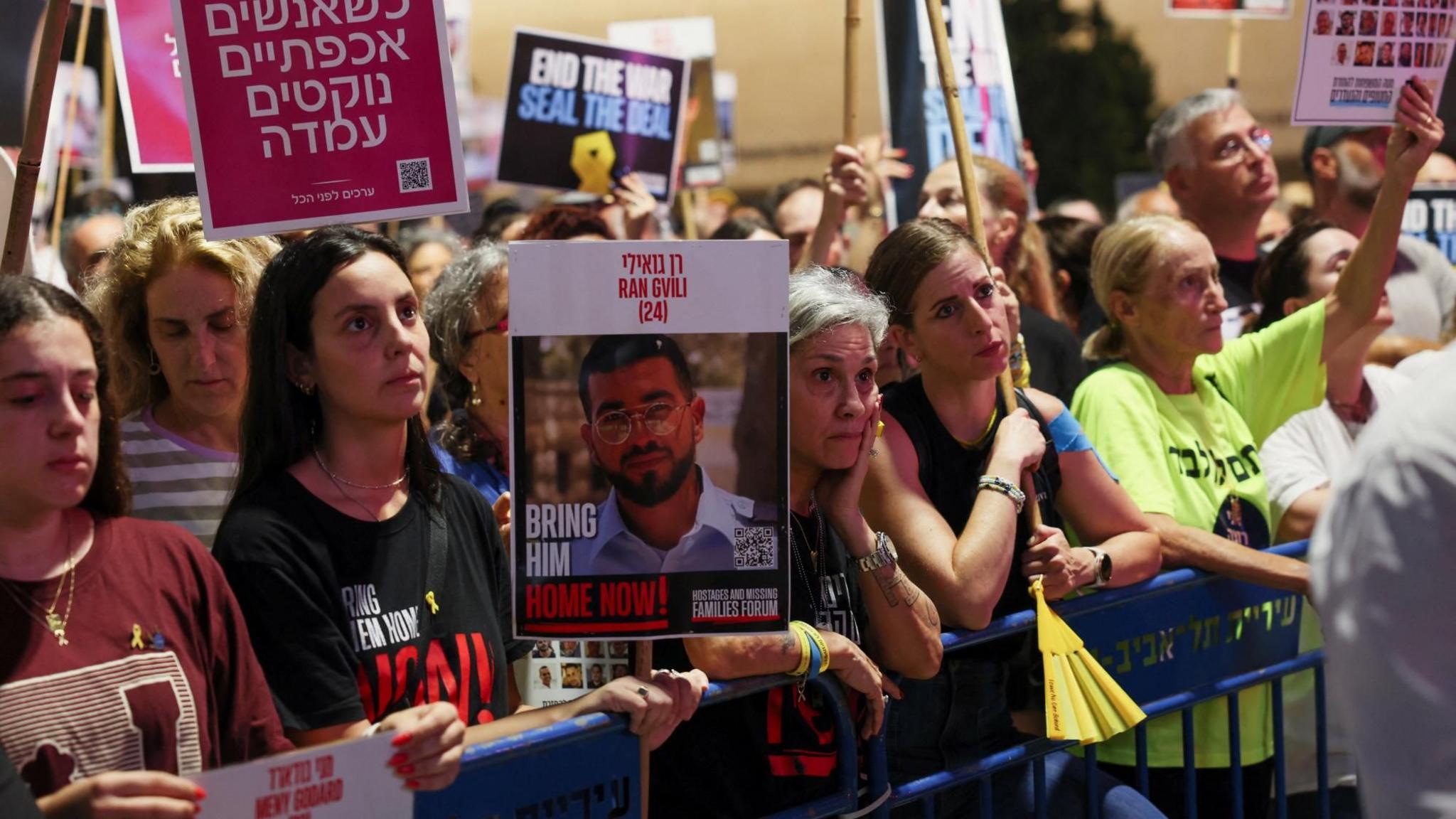
THE UK GOVERNMENT’S decision to formally recognise the state of Palestine was hailed in Westminster as a move of principle — grounded in fairness, justice and a commitment to a two-state future. But for families of hostages still held in Gaza, the announcement has raised urgent questions: will it help bring their loved ones home, or could it make things harder?
Who are the hostages?
Since the Hamas attacks of 7 October 2023, dozens of people have been held in Gaza. Some were civilians, others soldiers. Over the months, some have been freed through negotiated exchanges, others confirmed dead, while many remain unaccounted for. For their families, the wait is one of painful uncertainty.
Families’ concerns
Relatives of hostages fear that recognising Palestine before their release risks complicating negotiations.
In an open letter to the UK government, families wrote: “Your regrettable announcement of the UK’s intention to recognise a Palestinian state … has dramatically complicated efforts to bring home our loved ones. Hamas has already celebrated the UK’s decision as a victory … We write to you with a simple plea — do not take this step until our loved ones are home and in our arms.”
Lawyers acting on behalf of British families of hostages, Adam Rose and Adam Wagner KC, warned: “The families are therefore deeply concerned that the UK’s approach risks disincentivising Hamas from releasing the hostages. This risks doing exactly what the prime minister’s statement says the UK will not do: reward Hamas for its heinous and illegal acts.”

Voices of survivors
Some of the sharpest criticism has come from those who know captivity first-hand. Emily Damari, a British-Israeli who spent 471 days as a hostage in Gaza, said: “This move does not advance peace — it risks rewarding terror. It sends a dangerous message: that violence earns legitimacy.”
Her words echo the fears of many relatives that recognition, while symbolic, could be seized upon by Hamas as a political win, pushing hostage release further down the agenda.
The UK government’s position
Ministers insist recognition is not a concession to Hamas. The Foreign Office says freeing hostages remains a top priority and that recognition is a diplomatic position, not a bargaining chip.
“The UK is not giving up leverage,” one official said. “We will continue to work with allies to secure the release of those still held in Gaza.”
Help or hindrance?
Possible positives:
- Adds moral weight to calls for peace and justice, increasing international pressure for hostage release.
- Signals a desire for a lasting solution, not just short-term deals.
- Could empower moderates in both Israel and Palestine who want an end to violence.
Possible risks:
- Hamas could claim recognition as a political victory, slowing talks.
- Negotiations might become more complex if recognition shifts the balance at the table.
- Families fear the plight of hostages may slip down the agenda.
Reactions in Wales and the UK
Across the UK — including in Wales — vigils and campaigns continue for the safe return of hostages. Recognition may intensify public calls for the government to prove it is doing more than issuing statements: families and campaigners want to see evidence of action, diplomatic pressure, and humanitarian engagement.

Bottom line
Recognition of Palestine marks a significant shift in British foreign policy. Many see it as long overdue. But for the hostages in Gaza and their families, symbolism alone offers little comfort. As their open letter put it: “Do not take this step until our loved ones are home and in our arms.”
The test will be whether the UK and its allies can use this diplomatic step to press more effectively for releases, protect civilians, and build towards meaningful negotiations.
Reality check
Families’ anxieties are understandable — every new diplomatic development feels like it could change the fate of those in captivity. Hamas has already sought to frame recognition as a political gain, so the fear is not misplaced.
But experts point out that hostage negotiations rarely hinge on symbolic recognition. The real leverage lies with mediators such as Egypt, Qatar, the US and Israel, alongside military pressure on Hamas. Recognition may colour the political climate, but it is unlikely by itself to decide whether hostages are freed.
In other words, the families’ worries reflect the depth of their pain rather than a proven shift in negotiating power. The decisive factors will remain the back-channel talks, regional diplomacy, and the will of Hamas itself — not the UK’s recognition statement alone.


A PEMBROKESHIRE-made feature film is to receive its big-screen premiere next month in the very harbour where much of it was shot.
Near and Distant Things, written and directed by Saundersfoot filmmaker Emily Batty, will be shown outdoors at Saundersfoot Harbour on Saturday, July 18, as part of the Torch Theatre’s Sunset Cinema series.
The drama, filmed in summer 2025, tells the story of a grieving fisherman trying to support his daughter after she returns home, while experiencing dreamlike visions of his late wife.
The film makes strong use of the Saundersfoot landscape, with scenes filmed at the harbour, The Royal Oak pub, Monkstone Point and other familiar local locations.
Emily, 22, who grew up in Saundersfoot and recently graduated from the University of Oxford with a geography degree, has described the project as “a love letter to home”.
She said: “Watching a film set in Saundersfoot, with recognisable faces and locations on screen, in the heart of the harbour itself where we filmed many scenes, feels incredibly full-circle.
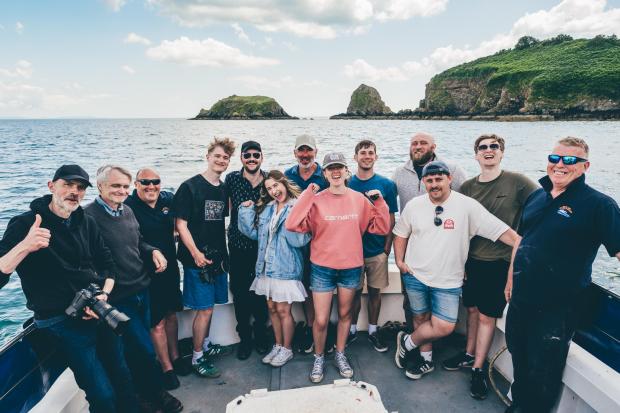
“I can’t wait to share that experience with people.”
The film was made with the support of a small team and a largely local cast and crew.
Emily said the production had only been possible because of the “incredible amount of local support” received during filming.
She also praised composer and sound designer Zach Worthington, whose work helped shape the atmosphere of the film.
She said: “The score and soundtrack feel so entangled with the landscape of home.
“It’s a little bit folk, a little bit Celtic, and rather emotional.”

Emily, who has written and directed the film under the name Emily Florence, said some of the ideas behind the film had been with her for several years.
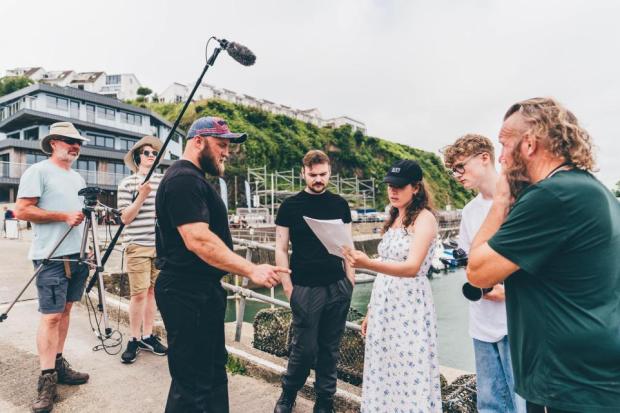
She said: “Some of the images within the film have been in my head since I was 18.”
She added that Pembrokeshire remains a major source of inspiration for her future work.
“I have a couple of screenplays in the works – I never stop writing – and I’m looking to get agented,” she said.
“I’m excited to continue to tell stories, in whatever capacity that may be.
“I can say that Pembrokeshire is still my muse, and I don’t think I’m done telling stories about home.”
The outdoor screening will take place on the harbour decking, with gates opening at 6:00pm and the film beginning at 7:00pm.
The film is rated PG, but includes themes of bereavement, mental health, domestic abuse and references to suicide which some viewers may find upsetting.
Emily said she hoped the premiere would be a moment of shared pride for the village.
She said: “So many people helped bring this film to life.
“There’s something very special about sharing a story set in Saundersfoot, surrounded by the landscape that inspired it.”
Tickets are available through the Torch Theatre website, with advance booking recommended.

LEASEHOLDERS in Wales could be protected from unfair building safety costs under new Welsh Government proposals.
A consultation has been launched on the first steps to implement the Building Safety (Wales) Act 2026, which was passed unanimously by the Senedd.
The proposals are aimed at residents living in multi-occupied buildings and focus on who should pay when safety defects need to be put right.
The consultation covers three main areas: limiting the costs that can be passed on to leaseholders for remediation work, creating a tribunal-based system for remediation orders and remediation contribution orders, and setting out how the height of regulated buildings should be calculated.
The Welsh Government says the aim is to ensure residents are not left paying for building safety failures they did not cause.
Cabinet Minister for Local Government, Housing and Planning, Siân Gwenllian said: “No leaseholder in Wales should pay for building safety failures they did not cause, and those failures should be rectified as soon as possible.
“This consultation is a crucial step in making sure the Building Safety (Wales) Act 2026 delivers real protection for the people it was designed to serve.
“As we mark the ninth anniversary of the Grenfell Tower tragedy, we have a duty to turn this legislation into lasting change — and this Welsh Government is determined to work with partners to make that happen as quickly as possible.”
The consultation is open to residents, leaseholders, building owners and other interested parties.
It closes on September 7, 2026.

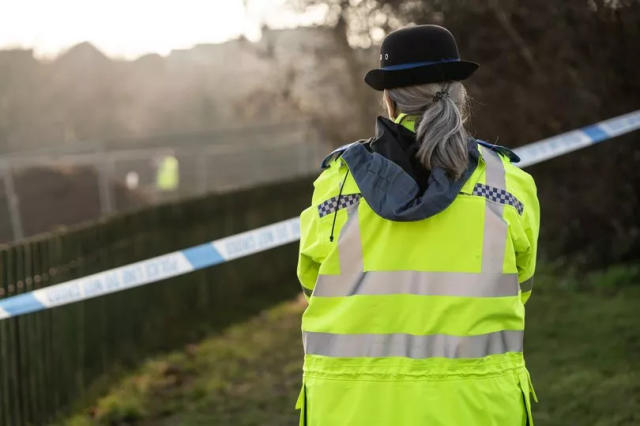
A 32-YEAR-OLD man found dead near Carmarthen Train Station died after taking shelter on a bitterly cold night, an inquest has heard.
Edward Mark Owen, originally from Birmingham but living in Ystradgynlais, was discovered in a field beside the railway line on the approach to Carmarthen station on Saturday, January 10.
A Transport for Wales train driver had spotted what appeared to be a body lying face down near the track shortly after 8:30am.
Police and railway staff attended and found Mr Owen lying face down and topless in the field. His coat, T-shirt, phone and cigarettes were found nearby.
Police initially treated the death as unexplained.
Movements traced
The inquest heard that officers later traced Mr Owen’s movements from his home in Ystradgynlais to Carmarthen.
He had nowhere to stay in the town and had taken shelter under a bridge near the railway station during a particularly cold night.
The coroner said Mr Owen had “sadly succumbed to the effects of hypothermia”.
The fact that he had removed his T-shirt and coat was said to be consistent with a confused state brought on by hypothermia.
A conclusion of misadventure was recorded.
The coroner found that Mr Owen died sometime on January 10, 2026.



News2 hours ago
Brexit at 10: How Britain was sold a dream that cost us dearly
A decade after the referendum, the promised benefits remain hard to find while the economic costs are increasingly difficult to...

Crime4 hours ago
Worcestershire man jailed after violent attack on woman in Tenby
Defendant was already serving a suspended sentence when serious assault took place A WORCESTERSHIRE man has been jailed for more...


Climate6 hours ago
Offshore wind ‘could bring new generation of jobs to Milford Haven’
Pembrokeshire ports and Celtic Sea projects placed at centre of Wales’ green energy ambitions MILFORD HAVEN and Pembroke Dock could...

Community1 day ago
Police officer hailed hero after midnight sea rescue in Milford Haven
PC swam 100 metres offshore to save distressed woman heard calling for help in darkness A DYFED-POWYS POLICE officer has...


Local Government1 day ago
Security privately arranged by Mayor at Beating of the Bounds
HAVERFORDWEST TOWN COUNCIL has confirmed that security personnel seen at this year’s Beating of the Bounds were privately arranged and...


Business2 days ago
Celtic Freeport five-year plan puts Milford Haven at centre of green energy future
Strategy promises investment, skilled jobs and new supply chains, but major barriers remain over grid connections, planning and delivery THE...


Education2 days ago
Closure of Ysgol Clydau approved after emotional council debate
COUNCILLORS WARNED RURAL COMMUNITIES WILL REMEMBER DECISION PEMBROKESHIRE councillors have voted to close Ysgol Clydau following an emotional debate over...


Education2 days ago
Manorbier school closure process to continue after narrow council vote
Questions remain over insurance, rebuilding costs and possible legal action by Diocese PEMBROKESHIRE councillors have voted to press ahead with...

Community3 days ago
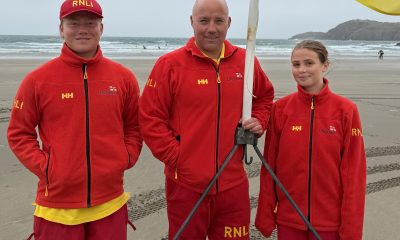
The father, son and daughter lifeguard trio saving lives in Pembrokeshire
A FATHER, son and daughter are preparing to help keep beachgoers safe on the Pembrokeshire coast this summer as part...

Community3 days ago
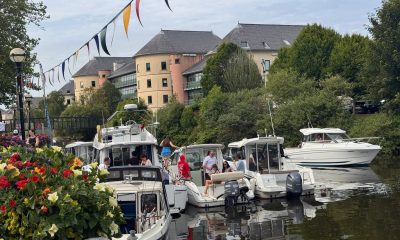
Beating of the Bounds brings music, boats and tradition to Haverfordwest
CENTURIES-OLD CEREMONY DRAWS FAMILIES TO THE RIVERSIDE HAVERFORDWEST’S historic Beating of the Bounds returned on Sunday (Jun 14), with boats,...
-

 Community3 days ago
Pembrokeshire Chess Club crowned Welsh champions
-
Local Government1 day ago
Security privately arranged by Mayor at Beating of the Bounds
-

 Crime6 days ago
Pembroke Dock teenager sentenced over train strangulation attack
-

 Education5 days ago
Diocese threatens legal action as Manorbier school closure battle intensifies
-

 Crime6 days ago
Man accused of six rapes including alleged Haverfordwest offence
-

 Crime1 day ago
Man wanted by court after failing to attend hearing over alleged shop thefts
-

 Local Government5 days ago
Taxi suspended after county-wide licensing checks
-
 Crime6 days ago
Brothers found guilty of causing death of Welsh dad in ‘reckless’ race