


News
TfW to take rail replacement in-house but critics warn of risks to passengers and taxpayers


Concerns raised over higher costs, loss of market efficiency, and lack of technology investment
TRANSPORT for Wales (TfW) is planning to bring its rail replacement and crew taxi operations in-house by 2026 — a move being hailed by the Welsh Government as a step toward greater control, but which industry sources fear could lead to higher costs and poorer service for passengers.
The plans follow the appointment of Helen Witherspoon in 2024 to oversee the transition. Witherspoon, who reports to Planning and Performance Director Colin Lea, previously worked for Transport UK (formerly Abellio). If completed, TfW would become the first train operator in the UK to internalise both rail replacement and crew taxi operations.

Loss of buying power
Until now, these services have been managed by external providers such as Arriva Road Transport Services (ARTS) and Transport UK, which operate across multiple train operators, airlines and public sector frameworks. Their scale and purchasing power allow them to negotiate competitive rates and ensure vehicle availability at short notice.
By contrast, TfW’s transport needs are confined to Wales and fluctuate significantly. Without national scale or commercial leverage, analysts warn it will be forced to pay above-market rates for vehicles and drivers — ultimately increasing costs borne by the taxpayer.

Technology and transparency concerns
Private sector operators have developed advanced systems to track vehicles in real time and integrate passenger communications. These platforms help operators manage large-scale disruptions, provide visibility to passengers, and ensure safety and punctuality.
Critics say that if TfW brings these services in-house, it will need major investment to replicate this technology. Without it, there is a risk of reduced visibility and efficiency, particularly in the crew taxi network which positions drivers and conductors across the network. Any disruption to this system could affect daily train performance.
Figures show that TfW already has one of the highest train cancellation rates in the UK — 7.6% of services cancelled so far this year — leading to concerns that further instability could hit public confidence.
Operational risk
Independent transport providers operate 24-hour control centres, maintain extensive supply chains, and can respond quickly to weather events, strikes or major incidents. TfW, by contrast, would need to build these capabilities from scratch — a costly and complex process.

There is also a fear that direct public ownership could lead to political pressure to reduce expenditure or limit replacement activity. Passenger groups have already criticised the growing use of “Do Not Travel” notices, sometimes issued at short notice to avoid the need for replacement services. With operations directly under government control, critics fear these warnings could become more common.
“A step backward for passengers”
While public ownership should, in theory, bring greater accountability, experts say the opposite may happen if costs rise and service standards fall.
Private firms such as CMAC, ARTS and Transport UK have spent decades refining efficient, flexible and resilient models for rail replacement. TfW’s in-house experiment, they warn, risks undoing that progress — creating higher operating costs, less flexibility, and a poorer experience for passengers at the very moment when Wales’ rail network is already under pressure.


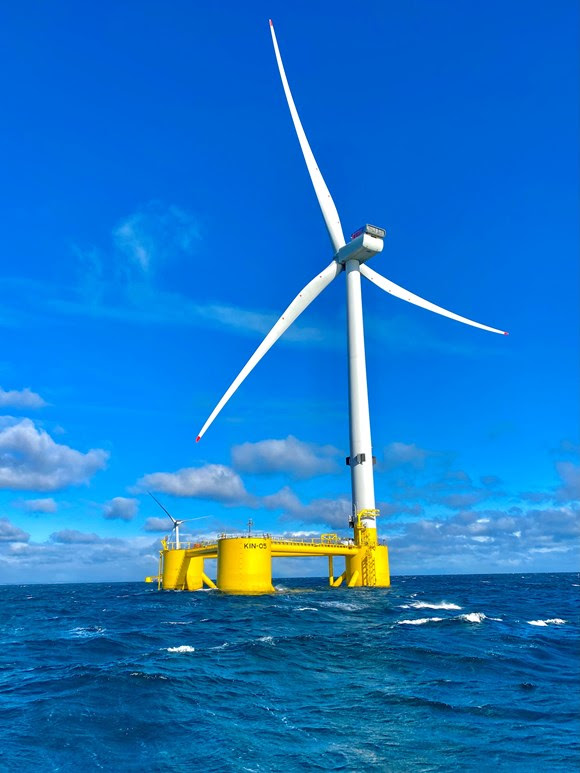
Sector partnership targets 100% renewable electricity by 2035
A NEW deal has been launched to help Wales meet its renewable energy targets while ensuring greater benefits for local communities.
The Renewable Energy Sector Deal will see the Welsh Government and industry work in strategic partnership to unlock the full economic potential of Wales’ renewable energy future.
The announcement coincides with the publication of the latest Energy Generation and Energy Use in Wales report, which shows renewable electricity generation in 2024 was equivalent to 54% of Wales’ electricity consumption.
The Welsh Government has set a target for renewable electricity to meet 70% of demand by 2030 and 100% by 2035. It also aims to deliver at least 1.5 gigawatts of locally owned renewable energy capacity by 2035.
The Sector Deal is intended to accelerate deployment across onshore and offshore wind, solar, marine and hydro projects. It will also focus on strengthening supply chains, developing skills, and ensuring communities across Wales benefit directly from renewable energy developments.
Cabinet Secretary for Economy, Energy and Planning, Rebecca Evans, is launching the deal during a visit to the Morlais tidal energy project on Anglesey.
The Morlais scheme, owned and managed by social enterprise Menter Môn, is set to become the largest consented tidal energy project in Europe. The Welsh Government holds an £8 million equity stake in the project.
Rebecca Evans said: “Our ambition is to become a world leader in renewable energy, creating jobs and green growth to make families in Wales more prosperous and help with the cost of living.
“The current conflict in the Middle East has further highlighted the importance of energy independence. Our Renewable Energy Sector Deal will provide a strong foundation for future delivery, benefiting our economy, environment and energy security.

“The Morlais project shows how sustained partnership can unlock Wales’ natural energy resources and turn them into lasting economic opportunities for local communities and businesses.
“The latest energy report shows we are making progress towards our targets. Combined with the record 20 major renewable projects, totalling 1,400MW, backed in the most recent UK Government Contracts for Difference auction, it is clear we are building a more resilient, renewable-powered future.”
Dafydd Gruffydd, Managing Director of Menter Môn, added: “The Renewable Energy Sector Deal is an important step in accelerating growth in Wales and across the UK.

“It recognises the role marine energy schemes like Morlais can play in strengthening energy security, creating high-quality jobs and delivering long-term economic benefits for communities such as Anglesey.”
The Sector Deal was co-produced by a task and finish group made up of developers and community organisations.

Town centre sealed off as multi-agency response continues
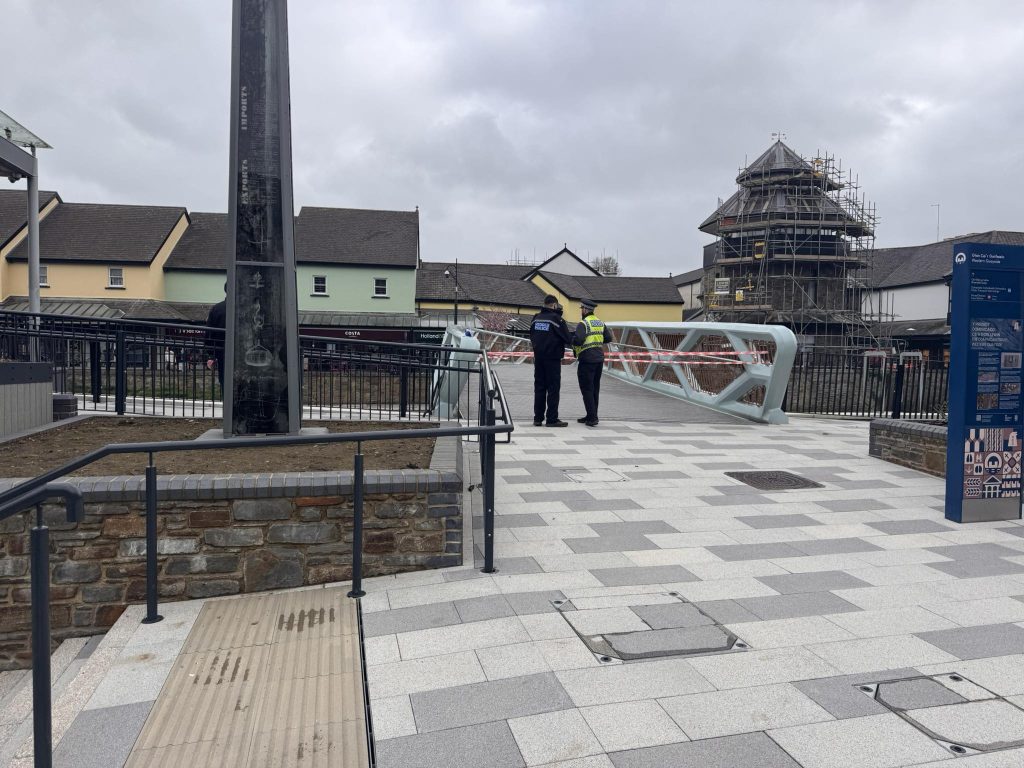
A MAJOR emergency response is underway in the centre of Haverfordwest after reports of a body in the River Cleddau.
Multiple police units, fire crews and ambulance teams were called to the scene shortly before 11:00am on Tuesday (Mar 17), with large parts of the town centre sealed off.
The Herald understands that access across both the Old Bridge and the nearby pedestrian bridge has been restricted while emergency services deal with the incident.
A witness at the scene told The Herald that he was among several members of the public who contacted emergency services after spotting a body in the water.
He said that a significant response followed, including several police vehicles, multiple fire engines, and a specialist water rescue unit.
A rigid inflatable boat (RIB) was also deployed on the river as part of the operation.
An ambulance is also in attendance.
Emergency services remain at the scene and the situation is ongoing.
There has been no official confirmation from Dyfed-Powys Police at this stage regarding the nature of the incident.
MORE TO FOLLOW

Public response follows release of facial image as officers pursue fresh lines of enquiry
DETECTIVES investigating the identity of a man found in a Powys reservoir have received a significant influx of new information following the release of a digitised facial image.
Dyfed-Powys Police worked with Face Lab at Liverpool John Moores University to create a realistic reconstruction of the man’s face, in the hope that someone might recognise him and help unlock the case.
Since the image was released last week, officers from Powys CID and the force’s Major Crime Team have received between 50 and 70 reports via phone, email, and a dedicated investigation website. Further information continues to come in daily.
Each report is now being assessed and prioritised as part of ongoing enquiries.
Detective Inspector Anthea Ponting, who is leading the investigation, said: “We have received a significant number of reports through our force control centre and the major incident public portal, all of which are being individually assessed.

“The information ranges from specific names of individuals, which we will check, to more general reports that may take longer to explore.
“Regardless of the level of detail, every report will be reviewed to determine what reasonable lines of enquiry can be progressed.
“We are grateful to everyone who has come forward so far, and I would encourage anyone who believes they may be able to help, but has not yet contacted us, to get in touch.”
Officers have established that the man was aged between 30 and 60, approximately 6ft (1.83m) tall, and weighed between 202lbs and 220lbs (91.5kg to 99.5kg). He is believed to have been of white European descent.

He was found wearing an extra-large Zone 3 Agile wetsuit. Despite extensive searches of the reservoir and surrounding area, no personal belongings were recovered.
Investigators believe the man had been in the water for around 12 weeks before his body was discovered in October 2024.
Reflecting on the investigation so far, DI Ponting said: “We have carried out extensive enquiries over the past 16 months. This began with checks across neighbouring police forces for missing or wanted individuals, before extending enquiries to all UK forces.

“We have searched the Police National Database, issued international alerts through Interpol, and examined DNA, fingerprint, and dental records for potential matches. We have also made repeated public appeals.
“While these efforts have generated lines of enquiry, none have yet led to the identification of the man.
“Although this case has attracted considerable public interest, our priority remains identifying him so we can return him to any family or loved ones who may be missing him.”
Police are continuing to appeal for information.
Anyone who visited Claerwen Reservoir between July and October 18, 2024, and saw anything suspicious, or who recognises the description, is urged to contact Dyfed-Powys Police.



News16 minutes ago
Emergency services flood Haverfordwest after reports of body in river
Town centre sealed off as multi-agency response continues A MAJOR emergency response is underway in the centre of Haverfordwest after...


News25 minutes ago
Detectives receive surge of new information in bid to identify man found at Powys reservoir
Public response follows release of facial image as officers pursue fresh lines of enquiry DETECTIVES investigating the identity of a...


Education1 day ago
New facilities open at Portfield School as redevelopment reaches key milestone
THE FIRST phase of a major redevelopment programme at Portfield School in Haverfordwest has been completed, marking a significant step...


News1 day ago
£377m spent saving blast furnaces months after Port Talbot closure
Government intervention keeps UK’s last primary steelmaking furnaces running THE UK GOVERNMENT spent £377 million to prevent the closure of...


Sport2 days ago
France crowned Six Nations champions after extraordinary final-day drama
Ramos penalty in Paris seals title as Ireland fall just short and Wales end losing run FRANCE were crowned 2026...


News2 days ago
Fishguard linked to allegations in Many Tears Animal Rescue investigation
Claims about puppies arriving through Pembrokeshire port emerge as licensing probe continues FISHGUARD has been named in allegations linked to...


Local Government3 days ago
Investigation confirmed after inspectors visit Many Tears Animal Rescue
Licensing authority declines to comment as police confirm attendance at Carmarthenshire rescue centre AN INVESTIGATION is underway following a visit...


Business4 days ago
Work set to begin on £50m hydrogen plant in Milford Haven
A MAJOR new hydrogen production facility worth around £50 million is expected to begin construction in Milford Haven later this...


Education5 days ago
Manorbier school closure approved while insurance claim still unresolved
Council confirms negotiations with insurer ongoing following 2022 fire PEMBROKESHIRE COUNTY COUNCIL has confirmed that negotiations with its insurer over...


Crime6 days ago
‘Knife attack’ at Spittal property leaves man in hospital
POLICE have arrested a woman following what is being described as a ‘knife attack’ at a property in Spittal on...
-

 Health4 days ago
Welsh Ambulance Service to host bi-monthly Board meeting
-

 News3 days ago
Rayner and Lammy visit Wales to discuss justice and community safety
-

 Local Government6 days ago
Register now to vote in May’s Senedd election
-
News2 days ago
Fishguard linked to allegations in Many Tears Animal Rescue investigation
-

 Crime7 days ago
E-bike rider who sped through pedestrian alley sentenced by court
-
News16 minutes ago
Emergency services flood Haverfordwest after reports of body in river
-

 Community6 days ago
Modern-day maritime hero backs exhibition marking 200 years since launch of HMS Erebus
-

 Crime7 days ago
Driver caught with three illegal drugs in system on way to MOT test