


Business
Fishguard green energy storage scheme approval expected


PLANS for a north Pembrokeshire ‘battery box’ unit to provide electricity storage during off-peak times are expected to be approved despite local objections.
In an application recommended for approval at the November meeting of Pembrokeshire County Council’s planning committee, AMP Clean Energy seeks permission for a micro energy storage project on land at Fishguard Leisure Centre Car Park, near Ysgol Bro Gwaun.
This scheme is one of a number of similar applications by AMP, either registered or approved under delegated planning powers by officers.
AMP Clean Energy was recently granted permission for micro energy storage projects on land between King Street and Meyrick Street, Pembroke Dock, land in between Castle Quarry and Haven Court, Pembroke, at the Bridge Innovation Centre, Pembroke Dock, and land to the south of Withybush Road, Withybush Industrial Estate, Haverfordwest.
However, a scheme for a ‘battery box’ project on a verge near Monkton Swifts Football Club, Monkton, Pembroke was recently refused.

A supporting statement accompanying each application says: “AMP Clean Energy is developing Battery Boxes across the UK to provide a low carbon, flexible and de-centralised store of electricity that benefits local communities, businesses, and homes.”
It says the battery boxes import electricity from the local electricity network when demand for electricity is low or when there are high levels of renewable energy available, exporting it back during periods of high demand to help address grid reliability issues prompted by an increase of intermittent (wind and solar) generation.
AMP Clean Energy says each box, which takes up roughly two car parking spaces, stores 800kWh of electricity, giving the potential to power 200 homes for four hours where there is a supply disruption.
The Fishguard scheme, which has seen objection from the town council and members of the public, is before committee rather than being delegated at the request of the local member.
Fishguard and Goodwick Town Council has objected to the proposal on the grounds including visual impact, and the location being near the school.
Four members of the public have raised concerns including visual impacts on neighbouring properties, safety concerns, access concerns during construction, and safeguarding implications for school pupils.
An officer report says: “Although the proposed development is positioned near neighbouring properties, a school and a leisure centre on a parcel of land within an open space, it will be well screened by a Paladin Fence and a soft landscaping scheme to limit the visual impact the development may have on the immediate surroundings.

“It is noted that the proposed unit will be sited close to an existing substation as the proposed Battery Box has a standard requirement of being within 50m of an existing substation to allow for a viable electrical connection.”


A CALL to convert a former Pembrokeshire farmhouse and guesthouse into housing units has been given the go-ahead by county planners.
In an application to Pembrokeshire County Council, Dan Hildebrand, through agent GMW Design, sought approval for the subdivision of Torbant Farmhouse, Croesgoch, near Haverfordwest, to form four residential units.
A supporting statement through Johnston Planning on behalf of the applicant and agent said: “The property has historically been run as a successful guesthouse for a number of years but has recently come under new ownership. The new owner wishes to maximise the potential of the existing residential floor space through the subdivision of this generous property into four units.”
It added: “Whilst the intention is to utilise the subdivided property for residential purposes due regard is given to the 2022 changes to the use class order which in effect created new residential classes for new development in an effort to control unrestricted holiday uses in sensitive locations.
“As such a ‘free use’ is sought within use classes C3 (use as a sole/main residence), C5 (use as otherwise as a sole/main residence) and C6 (use as a commercial short term let).
“These proposed uses, which are considered to be reasonable and to be fully compliant with current planning policy (especially when one has regard to the existing use) will provide the owner with flexibility in terms of proposed occupation. Ensuring full and meaningful use of the property in the future.”
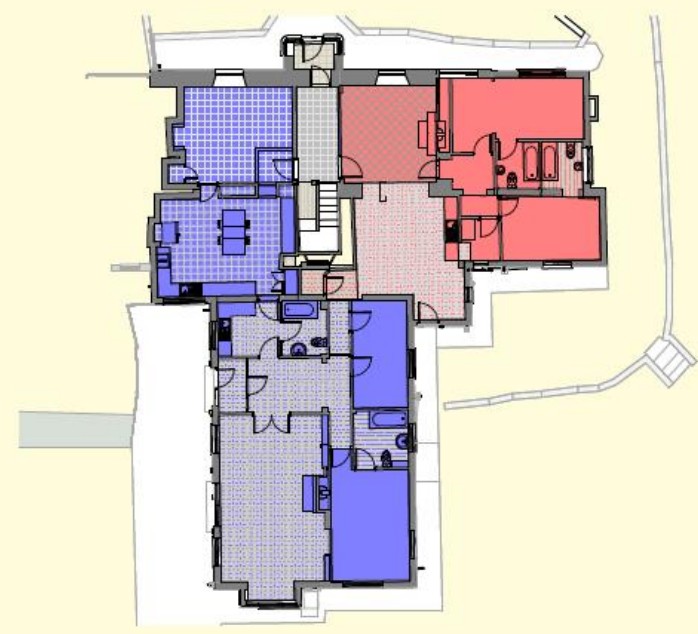
It said the property was once part of Torbant Farm, now been broken up into a number of separate properties, including Torbant Caravan Park immediately to the north.
It added the works to the property “are minimal and will have a negligible impact externally,” adding: “Internally whilst the layout will alter marginally no structural works to the property are proposed.
“In character terms therefore, there will be no discernible physical impact either to the dwelling itself or to the wider locality.”
Six objections to the scheme were received, raising concerns including harm to visual and residential amenity, ecological impact, infrastructure constraints, and claimed inaccuracies in the submitted application, as well as the application overstating available parking space “which would encroach onto shared access areas, causing obstruction and conflict between users”.
An officer report recommending approval said the scheme was amended to move car parking provision within land under the applicant’s control.
It concluded the scheme represented “an efficient use of the existing building stock,” and it “would not result in any external alterations to the host building and would not give rise to unacceptable harm to the character or appearance of the building or its wider rural setting nor the residential amenities of neighbouring occupiers”.

The application was conditionally approved by county planners.
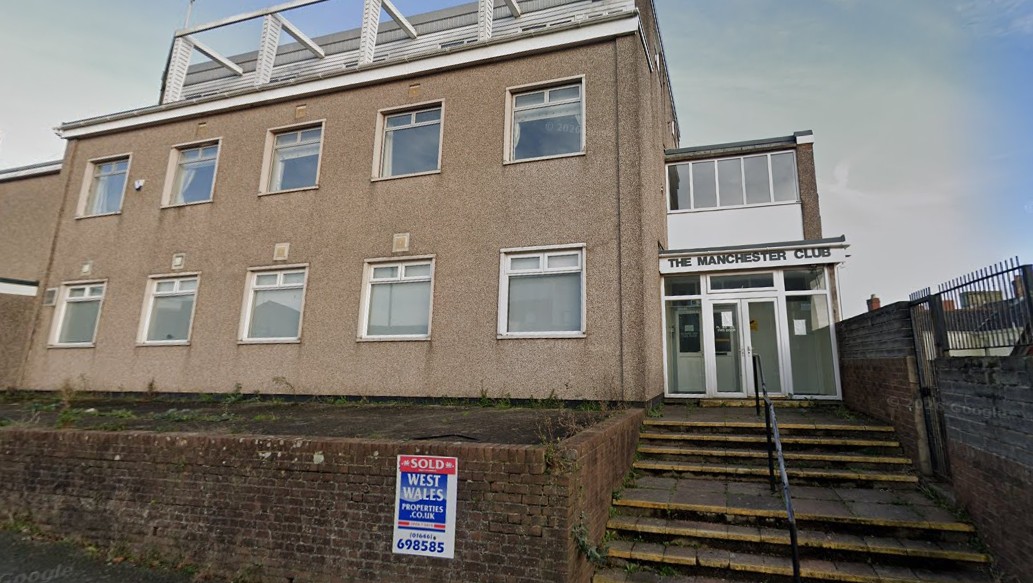
PLANS to convert a former Pembrokeshire town centre social club into council owned social housing have been given the go-ahead.
In an application to Pembrokeshire County Council, the authority itself, through agent KEW Planning, sought a change of use of the former Manchester Club social club, Fulke Street, Milford Haven to seven social rented residential units.
The Manchester Club public house/social club closed in March 2024 due to the cost of operations rising to be more than the monetary value that the club delivered, remaining vacant since this time, and was marketed for sale before an offer from the council was accepted.
The council scheme will provide five one-bed flats, one two-bed, and one studio flat; an amended scheme from discarded initial options which included one for 12 apartments and two studio flats. The scheme revised to restrict proposed alterations to the existing building to a minimum.
The proposal includes the demolition of the single storey garage to the front, and a single-storey extension at the rear, which will allow a communal amenity area.

A supporting statement said: “The vision for this project is to provide social housing to address housing stock shortages and to give a new life to a vacant building in a central location of the town. The property will be rented to mixed aged tenants, with PCC as the corporate landlord.”
An officer report recommending approval said the site had been marketed since 2024 at £170,000, with a £150,000 offer made but was unable to be proceeded with, the price later reduced to £150,000, three offers later received including £140,000 from the council, which was accepted in April 2025.
“For the two years that this property has been marketed the market response to the property has been limited with no viable interest in retaining the building for its existing community facility use,” the report said.
It concluded: “The loss of the former community facility has been robustly justified in accordance [with planning policy], and the scheme would deliver social and economic benefits through the provision of additional housing and the re-use of a vacant building.
“The proposal would enhance the visual appearance of the site, provide an acceptable standard of residential amenity for future occupiers without undue harm to neighbouring properties, and would not give rise to unacceptable impacts in respect of highway safety, drainage, biodiversity or the historic environment.”
The application was conditionally approved.


WALES’ unemployment rate is broadly in line with the UK average, according to the latest labour market figures.
The Welsh Government said figures from the Annual Population Survey showed unemployment among people aged 16 and over in Wales at 4.5%, compared with 4.4% across the UK.
Ministers said Wales’ employment rate was also “relatively close” to its all-time high, but acknowledged that official labour market data should be treated with caution because of continuing concerns over reliability.
The figures come as the newly elected Welsh Government seeks to put productivity at the centre of its economic agenda.
A Welsh Government spokesperson said: “As a newly elected Government we are committed to driving investment, innovation and higher productivity across Wales.
“We have announced a National Productivity Goal to close the gap with the rest of the UK and help unlock the full potential of the Welsh economy.
“By focusing on productivity, we will deliver more jobs, higher pay, stronger businesses and thriving communities.”
The Government says the new goal will help shape the work of its planned Welsh innovation and development agency, including how it supports businesses, develops skills and invests in the wider economy.
However, ministers also said Wales’ labour market appears to be following similar trends to the UK as a whole.
They pointed to ongoing work by the Office for National Statistics to improve the quality of Labour Force Survey data, saying the figures should be read alongside other labour market indicators to get a clearer picture.
The Cabinet Minister for Enterprise, Connectivity and Energy, Adam Price, is seeking a meeting with the ONS to discuss the reliability of labour market data for Wales.



News13 hours ago
Motorcyclist, 22, dies in A4075 crash in Pembrokeshire
A 22-year-old woman remains in hospital after two-vehicle collision A MOTORCYCLIST has died following a serious two-vehicle crash on the...


Community14 hours ago
Why police will be visiting every home in Pembrokeshire
New operation aims to knock on more than 257,000 doors across Dyfed-Powys over the next three years DYFED-POWYS POLICE has...


Crime17 hours ago
Prisons at breaking point: MPs warn Wales is paying the price of a failing system
Frozen healthcare budgets, overcrowded jails, homelessness on release and mounting pressure on staff are undermining rehabilitation across Wales, according to...


News1 day ago
Brexit at 10: How Britain was sold a dream that cost us dearly
A decade after the referendum, the promised benefits remain hard to find while the economic costs are increasingly difficult to...


Crime1 day ago
Worcestershire man jailed after violent attack on woman in Tenby
Defendant was already serving a suspended sentence when serious assault took place A WORCESTERSHIRE man has been jailed for more...


Climate1 day ago
Offshore wind ‘could bring new generation of jobs to Milford Haven’
Pembrokeshire ports and Celtic Sea projects placed at centre of Wales’ green energy ambitions MILFORD HAVEN and Pembroke Dock could...


Community2 days ago
Police officer hailed hero after midnight sea rescue in Milford Haven
PC swam 100 metres offshore to save distressed woman heard calling for help in darkness A DYFED-POWYS POLICE officer has...


Local Government3 days ago
Security privately arranged by Mayor at Beating of the Bounds
HAVERFORDWEST TOWN COUNCIL has confirmed that security personnel seen at this year’s Beating of the Bounds were privately arranged and...


Business4 days ago
Celtic Freeport five-year plan puts Milford Haven at centre of green energy future
Strategy promises investment, skilled jobs and new supply chains, but major barriers remain over grid connections, planning and delivery THE...


Education4 days ago
Closure of Ysgol Clydau approved after emotional council debate
COUNCILLORS WARNED RURAL COMMUNITIES WILL REMEMBER DECISION PEMBROKESHIRE councillors have voted to close Ysgol Clydau following an emotional debate over...
-

 Community4 days ago
Pembrokeshire Chess Club crowned Welsh champions
-
Local Government3 days ago
Security privately arranged by Mayor at Beating of the Bounds
-

 Crime18 hours ago
Milford Haven man jailed for breaching domestic violence protection order
-

 Education6 days ago
Diocese threatens legal action as Manorbier school closure battle intensifies
-

 News13 hours ago
Crash on Freeman’s Way causes school-run chaos across Haverfordwest
-

 Crime2 days ago
Man wanted by court after failing to attend hearing over alleged shop thefts
-

 Local Government7 days ago
Taxi suspended after county-wide licensing checks
-

 Crime2 days ago
Man jailed after admitting strangulation and assaults