


Ministry of Defence
Nato allies show interest in Welsh-built Ajax armoured vehicle


THE UK GOVERNMENT says it is confident that Nato allies are interested in purchasing the Ajax armoured vehicle — a Welsh-built defence project once delayed by safety and management issues.
The Ajax, constructed at General Dynamics’ plant in Merthyr Tydfil, has now reached a key milestone, with the first vehicles ready for active deployment by the British Army.
Originally due to enter service in 2019, the £6.3bn programme was suspended in 2021 after soldiers reported vibration and noise problems during testing, with some suffering hearing loss. A Commons Defence Committee review later described the project’s history as “deplorable”, identifying “systemic, cultural and institutional problems” within the Ministry of Defence.
Defence Minister Luke Pollard said the problems had now been resolved and described the Ajax as “safe, capable and lethal”.
He told BBC Wales: “It has had problems in the past, but it was right that the company fixed them, working with the Army and the Ministry of Defence. We now have an incredible next-generation vehicle that is safe for our forces and lethal against our adversaries.”

The Ajax programme includes six variants of reconnaissance and recovery vehicles, with all 589 units expected to be delivered by 2029.
General Dynamics employs more than 700 staff at its Merthyr Tydfil factory and supports hundreds more through its supply chain, including a communications facility at Oakdale in Caerphilly.
Mr Pollard said: “The workforce here should be incredibly proud of what they’ve produced — a capable, lethal platform that will make a big difference to our armed forces. Because of that capability, I’m confident our allies are now looking at it seriously.”
Apprentice Charlie Penfold said working on the project gave him a sense of pride: “It’s incredibly prestigious to work with the military. When you tell people you build armoured vehicles, there’s always a wow factor.”
Design engineer Dinda Khairani said the company played a key role in local skills development: “General Dynamics supports apprentices and graduates to visit schools and promote engineering. It’s great to see the industry growing in south Wales.”
Earlier this year, the UK Government pledged to raise defence spending from 2.3% to 2.5% of national income by 2027, as part of plans to boost Britain’s war-fighting readiness.

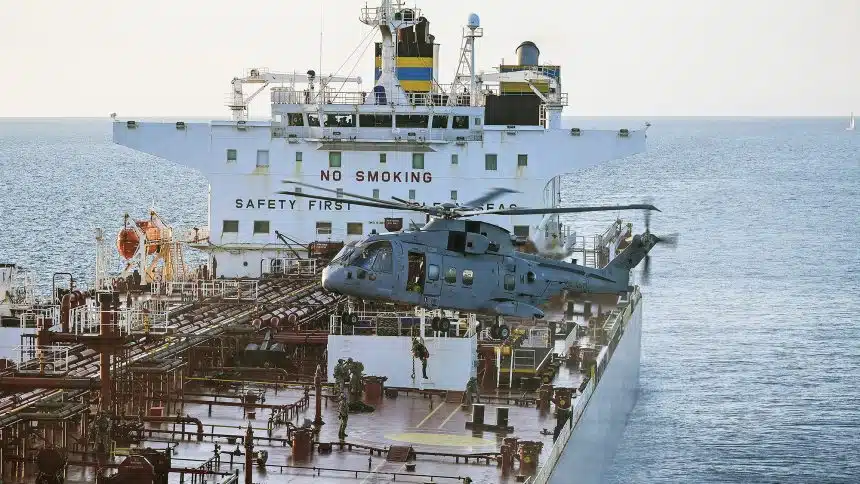
Sanctioned vessel boarded in first UK-led operation of its kind as Britain targets Moscow’s oil revenues
ROYAL MARINE COMMANDOS have boarded and seized a sanctioned Russian-linked oil tanker in the English Channel in a major UK-led military operation targeting Moscow’s so-called “shadow fleet”.
The vessel, named Smyrtos, was intercepted in the early hours of Sunday morning (Jun 14) as it attempted to pass through the Channel.
The six-hour operation involved Royal Marines, officers from the National Crime Agency, HMS Sutherland, HMS Ledbury, RAF P-8 maritime surveillance aircraft, and helicopters including Chinooks, Merlin Mk4s and Wildcats.
The tanker, which has been linked to Russia’s efforts to evade international oil sanctions, is now being held and monitored off the south coast of England while investigations continue.
The Prime Minister, Sir Keir Starmer, said he had directed British forces to intercept the vessel, describing the operation as another blow to Russia’s war economy.
He said: “This successful operation delivers yet another blow to Russia and reminds those fuelling Putin’s war in Ukraine that we will not let them hide.”
The Ministry of Defence said it was the first UK-led operation of its kind against a Russian shadow fleet vessel.

The Smyrtos was reportedly sailing under a Cameroonian flag, although shipping reports say questions had already been raised over its registry status.
The tanker had travelled from Ust-Luga in Russia and was understood to be heading towards Port Said in Egypt. Some reports said it was carrying hundreds of thousands of barrels of Russian crude oil.
The “shadow fleet” is the name given to a network of ageing and often obscurely owned tankers used to move Russian oil around the world despite sanctions imposed after the invasion of Ukraine.
Western governments say the fleet helps generate billions of pounds for Vladimir Putin’s war machine.
Defence Secretary Dan Jarvis praised those involved in the operation, saying missions of this kind required “skill, professionalism and courage”.


Ukraine’s President Volodymyr Zelenskyy thanked the UK for taking action, and called for European countries to go further by passing laws allowing not only detention of suspect vessels but the confiscation of their cargoes.
The operation was carried out in coordination with French authorities and marks a significant escalation in Britain’s enforcement of sanctions at sea.
Officials said the vessel would be monitored for environmental and safety concerns while the investigation continues.
Photo caption: Royal Marines board the tanker Smyrtos during the UK-led operation in the English Channel (Pic: Ministry of Defence / UK Defence Journal).
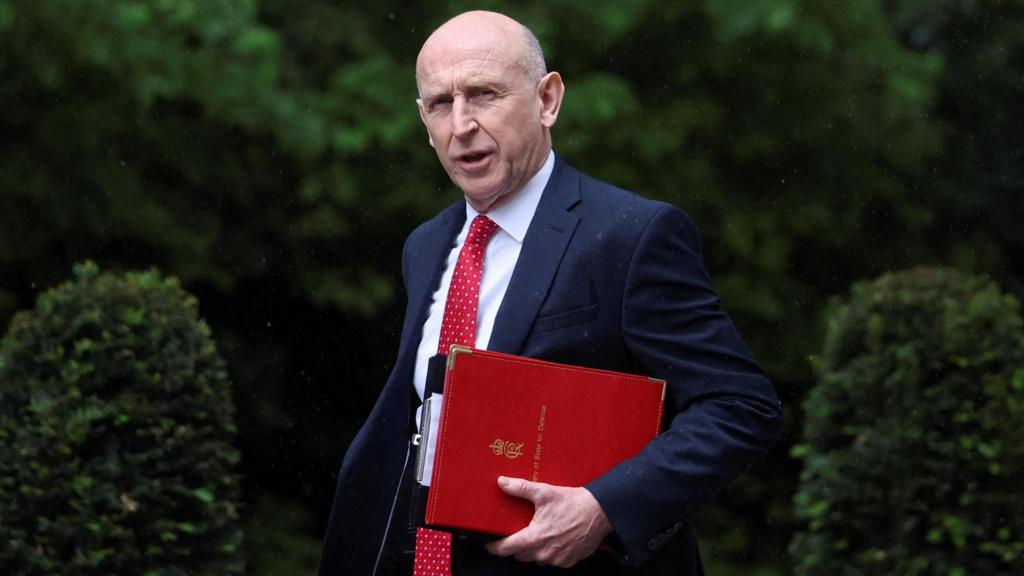
DEFENCE SECRETARY John Healey has resigned in a major blow to Sir Keir Starmer, warning that the Government’s defence spending plans risk leaving Britain less safe at a time of growing international danger.
In a sharply worded resignation letter to the Prime Minister, Mr Healey said he could no longer support the Government’s Defence Investment Plan, arguing that the financial settlement failed to provide the Armed Forces with the resources needed to meet the threats facing the UK.
His departure is one of the most serious resignations of Sir Keir’s premiership and comes ahead of the expected publication of the long-delayed defence plan, which is intended to set out how Britain will rebuild military capability, improve readiness and respond to growing threats from Russia, instability in the Middle East, and wider global insecurity.
The row centres on the pace and scale of defence spending. Sir Keir has pledged to increase defence spending to 2.5% of GDP by 2027 and 3% by 2034, but Mr Healey had pushed for a faster rise, arguing that the pressure on the Armed Forces is immediate and cannot be pushed into the next decade.
The former Defence Secretary is understood to have wanted a stronger commitment to reach 3% by 2030, amid warnings that the Army, Navy and RAF face major gaps in equipment, personnel and readiness.
In his letter, Mr Healey criticised both Number 10 and the Treasury, saying the Prime Minister had been unable, and the Treasury unwilling, to provide the funding needed. He warned that the proposed settlement would force unacceptable choices, including risks to operational readiness and the safety of service personnel.
A resignation with real force
Cabinet resignations are not unusual in Westminster, but this one is different.
Mr Healey was not regarded as a loose cannon or serial rebel. He was seen as a loyal, experienced and serious figure, closely associated with Labour’s attempt to present itself as a responsible party of government on defence and national security.
That is why his resignation is so damaging.
He is not leaving over a personal scandal, a reshuffle grievance, or a minor policy disagreement. He is leaving while accusing the Government of failing to fund the defence of the country properly.
For any Prime Minister, that is a dangerous charge. For Sir Keir Starmer, who has repeatedly sought to present Labour as strong on national security, it is politically explosive.
The timing is also significant. Britain is preparing for a NATO summit next month, Ukraine remains at war with Russia, tensions in the Middle East remain high, and European countries are under growing pressure to take more responsibility for their own defence as US priorities shift.

Mr Healey’s resignation turns what had been a technical dispute between departments into a full political crisis.
The Treasury problem
At the heart of the row is a familiar Whitehall battle: the Ministry of Defence says the threats are growing and the money must follow; the Treasury says the public finances are already under severe pressure.
Rachel Reeves faces demands from every direction. The NHS, schools, local government, welfare, transport and energy all want more money. Defence is now making the same argument, but with one added warning: delay could have consequences not only for public services, but for national security.
That makes the politics difficult. Spending more on defence means either higher taxes, more borrowing, or cuts elsewhere.
But Mr Healey’s argument is that Britain no longer has the luxury of treating defence as something that can be fixed later. His central message is that the threat is now, but the money is being pushed too far into the future.
That “backloading” of funds is likely to become one of the key phrases in the argument. In simple terms, it means promising more money later while leaving the Armed Forces short in the immediate years ahead.
Why the military will be watching closely
The resignation also raises deeper questions about military confidence in the Government’s plans.
Reports that senior military figures have raised concerns about the funding settlement will add to the pressure on Downing Street. If service chiefs believe the money does not match the commitments being made, the issue becomes more than a political row. It becomes a question of whether ministers are asking the Armed Forces to do more than they are properly equipped to deliver.
The UK already has major defence pressures. The Army has shrunk significantly over recent decades. The Royal Navy faces demands across the Atlantic, the High North, the Gulf and Indo-Pacific. The RAF must maintain air defence, support NATO and contribute to operations overseas. Meanwhile, stockpiles, drones, air defence systems, cyber capability and industrial production have all become more urgent because of the war in Ukraine.
Ukraine has shown that modern war burns through equipment, ammunition and technology at a frightening rate. It has also shown that countries which enter a crisis with hollowed-out forces quickly discover that rebuilding military strength cannot be done overnight.
That is the deeper warning behind Mr Healey’s resignation.
Political reaction
The Conservatives are expected to seize on the resignation as proof that Labour cannot be trusted on defence. They will argue that if the Defence Secretary himself believes the Government is underfunding the military, the Prime Minister has a serious credibility problem.
Reform UK is also likely to attack Sir Keir from the right, claiming the Government is failing to protect the country while spending money on other priorities.
The Liberal Democrats may press for clarity on whether the Government’s commitments to NATO, Ukraine and UK defence can still be met.
Within Labour, the reaction may be more complicated. Some MPs will sympathise with Mr Healey’s warning, particularly those concerned about Russia and NATO. Others will worry that increasing defence spending faster could mean less money for public services and social programmes.
That internal tension could become difficult for Sir Keir. Labour came to power promising stability, competence and discipline. A Defence Secretary resigning over national security funding cuts directly against that image.
What Downing Street will say
The Prime Minister is likely to insist that the Government remains committed to the strongest possible defence of the UK and to meeting its spending targets.
Downing Street will argue that defence spending is rising, that the Government has already made major commitments, and that any plan must be financially credible.
It will also stress continued support for Ukraine and Britain’s role in NATO.
But that may not be enough to kill the story.
The problem for Sir Keir is that Mr Healey’s resignation letter gives the opposition a simple line of attack: if the Government’s own Defence Secretary says the plan is not good enough, why should the public believe it is?
What happens next
Sir Keir will now need to appoint a new Defence Secretary quickly. The replacement will face an immediate and difficult task: defend a Defence Investment Plan that helped drive out their predecessor.
That is not an easy starting point.
The new minister will have to reassure the Armed Forces, the defence industry, NATO allies and MPs that Britain’s defence plans remain credible.
They will also have to answer a blunt question: has the Government matched its military promises with the money required to deliver them?
This resignation will not disappear quickly. It goes to the centre of one of the biggest questions facing the UK: whether the country is prepared for the world it now lives in, rather than the safer world it wishes still existed.
For Sir Keir Starmer, the danger is clear. A Prime Minister can survive many rows over spending. But when a Defence Secretary resigns saying the country is being left less safe, the argument becomes far more serious.

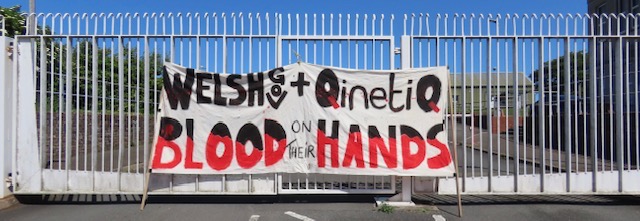
ANTI-ARMS campaigners have accused the UK and Welsh Governments of turning west Wales into a centre for military drone development following protests in Cardigan and Aberporth.
West Wales Against Arms said its members took part in the Red Line for Palestine action in Cardigan on Saturday (May 23), before staging a vigil outside MOD Aberporth on Sunday (May 24).
The group says the demonstrations were aimed at drawing attention to the role of defence companies QinetiQ and Tekever in the growing use of unmanned aerial vehicle technology in west Wales.

The protest comes after the announcement of a £50m Wales Defence Growth Deal, which ministers say will support high-skilled jobs and strengthen Wales’ role in autonomous technology.
Campaigners, however, argue that public money should be spent on health, housing and public services rather than expanding military testing and drone development.
A spokesperson for West Wales Against Arms said: “From Cardigan’s march on Saturday to Aberporth’s vigil on Sunday, the message was the same. We see what is happening. We see who is enabling it. And we refuse to be quiet.
“This is not what we want for West Wales or for any part of the UK. It will leave less investment into health and housing and keep Wales complicit in the arms trade and the genocide in Palestine and the ongoing war in the Middle East.”
MOD Aberporth, near Cardigan Bay, has long been used for the testing of weapons systems and unmanned aerial systems.
QinetiQ operates at the site, while Tekever owns West Wales Airport. The two companies have previously announced plans to work together on developing uncrewed systems capability in the UK.
The UK Government has said the Wales Defence Growth Deal will help Welsh communities benefit from high-skilled roles, support small and medium-sized businesses, and improve access to defence contracts.
But campaigners say the deal raises serious ethical questions about the direction of public investment in Wales, particularly while the conflict in Gaza continues.
West Wales Against Arms has also published a pamphlet, Exposing the War Machine in Aberporth, setting out its claims about the defence industry in the area.




Community7 hours ago
Police officer hailed hero after midnight sea rescue in Milford Haven
PC swam 100 metres offshore to save distressed woman heard calling for help in darkness A DYFED-POWYS POLICE officer has...


Local Government13 hours ago
Security privately arranged by Mayor at Beating of the Bounds
HAVERFORDWEST TOWN COUNCIL has confirmed that security personnel seen at this year’s Beating of the Bounds were privately arranged and...


Business2 days ago
Celtic Freeport five-year plan puts Milford Haven at centre of green energy future
Strategy promises investment, skilled jobs and new supply chains, but major barriers remain over grid connections, planning and delivery THE...


Education2 days ago
Closure of Ysgol Clydau approved after emotional council debate
COUNCILLORS WARNED RURAL COMMUNITIES WILL REMEMBER DECISION PEMBROKESHIRE councillors have voted to close Ysgol Clydau following an emotional debate over...


Education2 days ago
Manorbier school closure process to continue after narrow council vote
Questions remain over insurance, rebuilding costs and possible legal action by Diocese PEMBROKESHIRE councillors have voted to press ahead with...


Community2 days ago
The father, son and daughter lifeguard trio saving lives in Pembrokeshire
A FATHER, son and daughter are preparing to help keep beachgoers safe on the Pembrokeshire coast this summer as part...


Community2 days ago
Beating of the Bounds brings music, boats and tradition to Haverfordwest
CENTURIES-OLD CEREMONY DRAWS FAMILIES TO THE RIVERSIDE HAVERFORDWEST’S historic Beating of the Bounds returned on Sunday (Jun 14), with boats,...


Community3 days ago
Milford Haven School pupil praised after stepping in during real-life emergency
A YEAR 11 pupil at Milford Haven School has been praised after putting his first aid training into action to...


Community3 days ago
River festival brings crowds to Haverfordwest
A CELEBRATION of the River Cleddau brought crowds into Haverfordwest on Saturday (June 13) as the town’s River Festival returned...


Charity3 days ago
Voices at the Castle hailed as unforgettable night after weather setback
Russell Watson headlines spectacular charity concert at Pembroke Castle A SPECTACULAR evening of live music at Pembroke Castle has been...
-

 Community2 days ago
Pembrokeshire Chess Club crowned Welsh champions
-

 Crime6 days ago
Pembroke Dock teenager sentenced over train strangulation attack
-

 Education4 days ago
Diocese threatens legal action as Manorbier school closure battle intensifies
-

 Crime6 days ago
Man accused of six rapes including alleged Haverfordwest offence
-
Local Government13 hours ago
Security privately arranged by Mayor at Beating of the Bounds
-

 Local Government5 days ago
Taxi suspended after county-wide licensing checks
-

 Crime6 days ago
Brothers found guilty of causing death of Welsh dad in ‘reckless’ race
-

 Crime5 days ago
Currys worker denies stealing £2,500 of store stock