


Local Government
Pembrokeshire Council faces backlash over £3.5m housing ‘buying spree’


Critics say policy inflates numbers while new-build programme stalls
PEMBROKESHIRE COUNTY COUNCIL is under growing pressure over its multi-million-pound programme of buying back former council houses, with critics warning that the strategy gives the illusion of progress while long-promised new-builds remain stuck on the drawing board.
The latest criticism comes from Milford Haven councillor Mike Stoddart, who has accused the authority of “standing still” by funnelling Housing Revenue Account (HRA) cash into purchasing properties that were once part of the council’s own stock.
Stoddart said the council’s approach “doesn’t increase the housing stock – it merely moves people from the private sector into the public sector”.
He added: “It would be much better if the money was spent on building anew.”
A temporary fix that became permanent
The buy-back scheme began in 2017 when the council adopted a new inflation-linked rent regime that delivered sizeable HRA surpluses. At the time, officers described buying ex-council homes on the open market as a “stop-gap” measure until the new-build programme ramped up.

But that programme has repeatedly faltered. Major schemes in Johnston and Tiers Cross have been hit by cost overruns of around 66%. In Milford Haven, new flats on Charles Street are costing close to £300,000 each for a one- or two-bed unit, before adding land costs, architects’ fees and planning expenses.

Stoddart said the pattern amounted to a “disaster”, arguing that buying existing homes had become the authority’s default option. “It gives the impression of making progress while actually standing still,” he said.
Brownfield sites left idle
In Stoddart’s own ward, three former school sites have stood empty since 2018. Their redevelopment is not expected to begin until 2027 or 2028. Meanwhile, the council’s purchasing programme has accelerated.
A Cabinet report for late 2025 shows more than £3.5 million spent on acquisitions in just the first half of the year.
The most striking deal was a bulk purchase of five homes in Harcourt Close, Hook, for £1.851 million — almost £400,000 each. Stoddart said the developer would think “all his birthdays have come at once”, with the council avoiding estate agents’ fees, reducing legal costs and allowing the seller to immediately stop paying interest to the bank.
Thirteen high-value purchases
All properties were bought for over £100,000 and moved into the council’s HRA stock:
| Address | Location | Price | Completion |
|---|---|---|---|
| 32 Southdown Close | Pembroke | £115,000 | 29/07/2025 |
| 8 Hyfrydle | Letterston | £115,000 | 01/08/2025 |
| 6 Precelly Place | Milford Haven | £120,000 | 22/09/2025 |
| 50 Heywood Court | Tenby | £125,000 | 02/10/2025 |
| 33 Croft Avenue | Hakin, Milford Haven | £130,000 | 20/10/2025 |
| 7 Hyfrydle | Letterston | £135,000 | 05/09/2025 |
| 18 St Clements Park | Freystrop | £140,000 | 14/07/2025 |
| 55 College Park | Neyland | £140,000 | 28/10/2025 |
| 26 Baring Gould Way | Haverfordwest | £146,000 | 15/08/2025 |
| 25 Station Road | Letterston | £170,000 | 10/10/2025 |
| 16 Woodlands Crescent | Milford Haven | £283,000 | 31/10/2025 |
| 26 & 27 Harcourt Close | Hook | £744,000 | 22/10/2025 |
| 23, 24 & 25 Harcourt Close | Hook | £1,107,000 | 30/07/2025 |
All purchases were made from HRA reserves with no borrowing, a point the council highlights as prudent financial management.

Fears over market distortion
Stoddart also warned that the authority’s deep pockets may be pricing out young families by outbidding first-time buyers for entry-level homes. “If classical economic theory is to be believed, it’s forcing up the price,” he said.
House prices in Pembrokeshire have risen around 15% in the past year, according to recent ONS data. Local estate agents, speaking anonymously, told this newspaper that council intervention “definitely nudges prices upward” in hotspots like Hook, Neyland and Milford Haven.
Council defends strategy
A council spokesperson said the approach was necessary to deliver homes “immediately” amid chronic shortages.
“Acquiring existing properties allows us to respond quickly to housing need,” they said. “New-builds remain a priority, but delays in planning, construction and funding mean we must use all available tools to meet demand. All purchases represent value for money and are compliant with our HRA strategy.”
Housing charity Shelter Cymru took a different view, arguing that “recycling stock is not a substitute for expansion”. The charity says Pembrokeshire needs around 500 new affordable homes a year to meet demand.
‘Residents deserve homes, not headaches’
Social housing waiting lists in Pembrokeshire now exceed 2,000 applicants. With another Cabinet briefing due later this month, Stoddart says he will push for a fundamental rethink.
“It’s time to stop standing still,” he told this newspaper. “Our residents deserve homes, not headaches.”

Local Government
Seven standing for Pembroke Dock Market ward seat made vacant following death of veteran Councillor Brian Hall


SEVEN candidates are to stand for a Pembrokeshire council seat made vacant following the death of veteran councillor Brian Hall, including a former councillor who was once barred from holding any form of public office for three years.
Before he passed away in April, Councillor Brian Hall had held the Pembroke Dock Market ward seat since 1996, and had many council roles over the years including the planning committee, on the Cabinet from its inception in 2002 until March 2007 and between 2012 and 2022, and had chaired several Overview and Scrutiny Committees including Environment, Services and Corporate.

Following Cllr Hall’s death, the-then leader of the council Cllr Jon Harvey said: “Brian was a council stalwart and had been working for, and demanding better, for his constituents for nearly 30 years.
“His enthusiasm for his home patch was unmatched and there was little of Pembroke Dock’s history that he could not tell you about. The loss of Brian from the chamber will be felt by all members of council across the board.”
Presiding Member of Pembrokeshire County Council, Cllr Simon Hancock said: “Brian was a larger-than-life character who was passionately devoted to Pembroke Dock and his constituents. He never let an opportunity pass without mentioning and advancing the interests of his hometown. We extend sincere condolences to his family.”
Since that seat became vacant, seven hopefuls have now put their names forward to represent the Market ward, with an election being held on July 9.
Those standing are: Hayley Wood (independent), Lee Herring (Welsh Liberal Democrats), Jamie Street (Welsh Conservative), Claire Francis-Boswell (independent), Chloe Louise Richards (Plaid Cymru), Ryan Morgan (Reform UK), and Paul Haywood Dowson (independent), but listed as a member of Restore Britain since March of this year.
Back in 2022, the-then Cllr Dowson, representing Pembroke Dock Central as a UKIP councillor, was barred from holding any form of public office for the next three years after being found guilty of bullying, providing fabricated evidence to the Ombudsman and of misleading the public at a case tribunal convened by the president of the adjudication panel for Wales.
Mr Dowson more recently stood as an independent candidate in this year’s Senedd elections for the new Ceredigion Penfro constituency, gaining 88 votes out of a total of 89,402 votes cast.
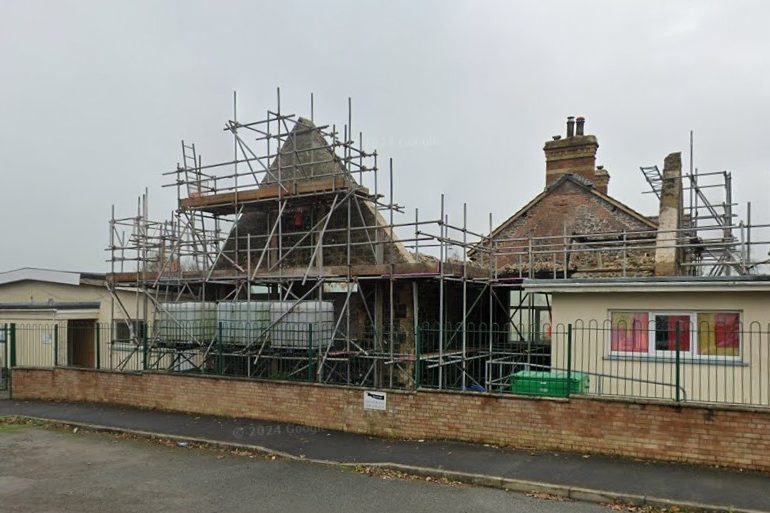
THE FINAL decision to close fire-ravaged Manorbier school has been given the go-ahead, despite a heartfelt last-minute plea by local councillor Phil Kidney to keep it open.
Back in March, Pembrokeshire County Council members backed a recommendation that the Director of Education at Pembrokeshire County Council be authorised to publish a statutory notice to discontinue Manorbier Church in Wales voluntary controlled school.
Manorbier Church in Wales VC School and its adjoining schoolhouse was severely damaged by a fire in October 2022, which broke out in the school roof space.
After that, a ‘school from school’ was set up in Jameston Village Hall.
It had been hoped the school would be rebuilt, but last year councillors backed a report of the School Modernisation Working Group which, amongst other recommendations, included a statutory consultation on proposals to discontinue Manorbier Church in Wales Voluntary Controlled School.
The decision attracted strong local opposition, with more than 1,500 people signing a petition on the council’s own website calling for the school to be rebuilt.
The formal consultation for the discontinuation of Manorbier closed last December.
However, many of the council’s figures, especially on the level of surplus places at the school, have been strongly disputed.
At a special extraordinary council meeting held on June 15, members were asked to consider a report on a summary of 62 objections received in respect of the proposal to discontinue Manorbier VC school, which included options to end that discontinuation or to launch a fresh consultation.
However, it was recommended, in a report present by deputy leader Cllr Paul Miller, who now also has responsibility for education, for the discontinuation be proceeded with.
At the meeting, local councillor Phil Kidney, who has been a staunch supporter of the keeping the school open, thanked the campaigners who fought for it and the dedication of the staff, including headteacher Sharon Davies.
Cllr Kidney said: “The way this authority has treated her and the staff is quite frankly amazing; we have all let these good people down.


“We’ve all let these people down, the way this council has handled this situation is appalling; from day one not one of the executives came up to see these children, no-one came out; if that was Haverfordwest or Tenby they’d be all over the place.”
He said the wording of the consultation had seen more mentions of St Florence [ the alternative school for pupils in the event of a discontinuation] than Manorbier, describing it as “like a brochure for St Florence”.
He also warned the Diocese of St Davids, which had always pressed for the school to be rebuilt, would not allow the council to “walk away from our liabilities lightly”.
“We’ve been promised by two leaders and the chief executive: ‘Don’t worry we’ll rebuild,’ sometimes you’ve got to be big enough an honour your promises; do the right thing today, vote for Manorbier and keep it open.”
Members later heard the diocese had, in a letter received by councillors, made “damning accusations the council is being biased against voluntary controlled schools,” with Cllr Jamie Adams saying the council administration should be “ashamed of this debacle”.
Cllr Miller said his only consideration was “the future welfare of the children,” adding: “I do not think 20 children educated in a welfare centre in Jameston is the best for them.”
He said that no pupils would have to travel more than 2.1 miles for their education as a result of a closure, Cllr Kidney disputing that figure more like 3.5 miles.
Cllr Miller said the wording in from the letter from the diocese “which had a dog in the fight” was a one-sided legal argument, adding the council had actually opened VC schools.
Cllr Aled Thomas, chair of the working group which had presented the proposals in the first place, said: “The whole thing is an omnishambles, a total mess of how it’s been handled, but we are where we are.
“The important thing to remember is the future for these children, there will be kids in that school that have never been taught in a classroom setting. Tough decisions are never going to be easy; not a single one of us got elected wanting to be in this position.
“I’m no friend of the administration but we need to look at it holistically.”
Members, by 30 votes to 23, with four abstentions, supported the final steps to close the school.
Posting after the decision, the Friends of Manorbier School said: “Today is a difficult day, as the final decision to close Manorbier Primary School has now been made.
“There were some heartfelt comments and statements during the council meeting. The children, staff, parents and wider community have been waiting far too long for a decision. While this outcome was not unexpected, it is still hard to hear those final words spoken aloud.”
It added: “There are still questions that need to be asked, but the fight to keep the school open has come to an end. Our focus must now be on supporting the children and their families as they prepare for the transition ahead. The staff, too, finally have an answer.”

Council says poor and inaccessible housing can contribute to ill health and pressure on local services
PEMBROKESHIRE COUNTY COUNCIL has admitted there is not enough suitable accessible housing in the county to meet demand, with more than 400 people currently waiting for accessible social housing.
The council confirmed that 403 people are on the Pembrokeshire Accessible Housing Register, which forms part of the Choice Homes @ Pembrokeshire housing register.
Of those waiting, 81% are in the gold band, while 62% require one-bedroom accessible accommodation.
A further 111 cases are currently awaiting occupational therapy assessment through to approval of assessed works for disabled facilities or discretionary disabled assistance grants.
The figures were released following questions from The Pembrokeshire Herald after a report by the Royal College of Occupational Therapists warned that poor and unsuitable housing is damaging people’s health and placing avoidable pressure on health and social care services.
Pembrokeshire County Council said it recognised that unsuitable housing was a local challenge, often linked to ageing housing stock across all types of accommodation.
A spokesperson said: “Within Pembrokeshire, we recognise that there are challenges around unsuitable housing, often linked with an ageing housing stock across all tenures of accommodation.
“We recognise that poor and inaccessible housing can be a contributing factor to ill health and increased demand on housing, health and social care services.
“As a council where a need is identified, we work across service areas to ensure that people are able to live safely and independently within appropriate accommodation.”
Hospital discharge delays
The council also confirmed that housing-related issues can affect hospital discharge planning locally.
It said there had been an increase in housing-related delays in recent years, caused by a range of factors, including the need for suitable accommodation after changes in a person’s health or ability to function.
This can lead to a need for home adaptations or alternative accessible accommodation.

However, the authority said housing-related factors generally represented a relatively small proportion of overall discharge delays in the area.
The council said: “There are concerns related to housing-related delays which impact hospital discharge planning locally.
“There has been an increase in housing related delays due to a range of factors, including the need for suitable accommodation following changes in an individual’s health or functioning.
“This may be for any tenure of accommodation, which subsequently can lead to a need for home adaptations, or alternative accessible accommodation sourced.
“Despite this upward trend in recent years, housing-related factors generally represent a relatively small proportion of overall discharge delays in the area.”
Insufficient suitable homes
Asked whether enough suitable housing exists locally for older residents and people with disabilities or long-term health conditions, the council accepted there was a shortfall.
The spokesperson said: “Given the numbers we have on our Accessible Housing Register as well as the ageing population in the county, we acknowledge that there is insufficient suitable accessible housing to currently meet demand.
“This is recognised in the Local Housing Market Assessment 2023 and Pembrokeshire Housing Strategy 2024-2027.”
The council said its Occupational Therapy Service works closely with housing providers across Pembrokeshire to assess needs and support appropriate housing solutions.
This includes adaptations to existing properties and the development of adapted homes.
The council said its Housing Service was also working closely with Adult Social Care and health partners to address the challenges.
Adapting homes
For social housing tenants who need adaptations, the council said needs are assessed through the Occupational Therapy Service.
Depending on the outcome of that assessment and the extent of the works required, adaptations are either carried out by the social landlord or, in some circumstances, alternative more suitable accommodation is sought.
For new social housing, the council said Lifetime Homes standards form part of the Welsh Government’s Housing Quality Standards for new build properties.
Housing and social care services also work together to inform the type and design of properties being developed, with the aim of ensuring the needs of people with disabilities and long-term health conditions are considered.
The council said this work is targeted according to the needs identified from the Accessible Housing Register.
It added that the approach focuses on early identification, regular discussion and joint problem-solving to help support timely and appropriate hospital discharges, as well as planning for current and future need through new build and acquisition programmes.
Wider Welsh concern
The council’s comments come after the Royal College of Occupational Therapists published its Building Health into Homes report, which argues that unsuitable housing is worsening physical and mental health, increasing hospital readmissions and adding pressure to health and social care services.
The report says there is little point discharging people from hospital if they are returning to homes that fail to meet their needs or worsen their condition.
In response to the report, the Welsh Government told The Herald: “Poor or unsuitable housing directly impacts people’s health and places additional pressure on NHS services.
“Delayed discharges linked to unsuitable housing are a serious concern and we are taking steps to improve patient flow and reduce delays, strengthening joint working between health, social care and housing services so people can leave hospital safely.
“This Welsh Government has been clear that housing is a public health issue, which is why we are aligning action across government, including through dedicated ministerial oversight, to create a healthier population.
“We are also strengthening adaptation services to support independent living and prevent avoidable admissions and are establishing a new national development body to speed up delivery of accessible social homes.”
Hywel Dda University Health Board also said health was shaped by wider living conditions beyond the NHS.
James Severs, Executive Director of Allied Health Professions and Health Science at Hywel Dda University Health Board, said: “Most of what determines our health and well-being sits beyond the NHS. While healthcare is vital, it is the conditions in which people live, learn, work and age that have the greatest impact on health outcomes.
“As a Health Board, we recognise that the NHS contributes only a proportion of overall population health, with wider factors such as housing, education, employment and the environment playing a much larger role.
“This is why our strategy for ‘A Healthier Mid and West Wales’ is focused on moving beyond an illness-centred model of care to one that prioritises prevention, early intervention and support in communities.
“We are committed to working in partnership with local authorities, the third sector and our communities to address these wider determinants of health, reduce inequalities and enable people to live healthier lives, well lived.”



Business20 hours ago
Celtic Freeport five-year plan puts Milford Haven at centre of green energy future
Strategy promises investment, skilled jobs and new supply chains, but major barriers remain over grid connections, planning and delivery THE...


Education22 hours ago
Closure of Ysgol Clydau approved after emotional council debate
COUNCILLORS WARNED RURAL COMMUNITIES WILL REMEMBER DECISION PEMBROKESHIRE councillors have voted to close Ysgol Clydau following an emotional debate over...


Education22 hours ago
Manorbier school closure process to continue after narrow council vote
Questions remain over insurance, rebuilding costs and possible legal action by Diocese PEMBROKESHIRE councillors have voted to press ahead with...


Community1 day ago
The father, son and daughter lifeguard trio saving lives in Pembrokeshire
A FATHER, son and daughter are preparing to help keep beachgoers safe on the Pembrokeshire coast this summer as part...
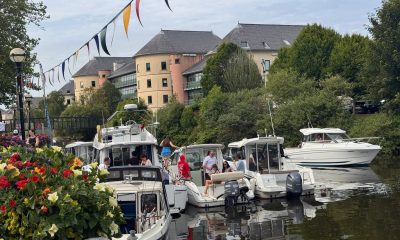

Community1 day ago
Beating of the Bounds brings music, boats and tradition to Haverfordwest
CENTURIES-OLD CEREMONY DRAWS FAMILIES TO THE RIVERSIDE HAVERFORDWEST’S historic Beating of the Bounds returned on Sunday (Jun 14), with boats,...


Community2 days ago
Milford Haven School pupil praised after stepping in during real-life emergency
A YEAR 11 pupil at Milford Haven School has been praised after putting his first aid training into action to...


Community2 days ago
River festival brings crowds to Haverfordwest
A CELEBRATION of the River Cleddau brought crowds into Haverfordwest on Saturday (June 13) as the town’s River Festival returned...


Charity2 days ago
Voices at the Castle hailed as unforgettable night after weather setback
Russell Watson headlines spectacular charity concert at Pembroke Castle A SPECTACULAR evening of live music at Pembroke Castle has been...
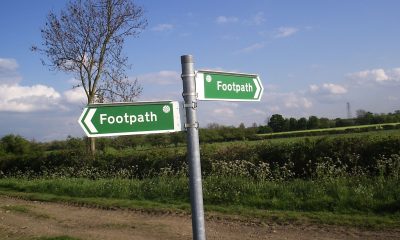

Local Government3 days ago
Council admits 74 rights of way complaints remain unresolved
Key post vacant since February as walker raises safety concerns over paths near Llanteg and Amroth PEMBROKESHIRE COUNTY COUNCIL has...


Education4 days ago
Diocese threatens legal action as Manorbier school closure battle intensifies
Church says council could face judicial review over fire-hit school A BITTER row over the future of Manorbier Church in...
-

 Community2 days ago
Pembrokeshire Chess Club crowned Welsh champions
-
Education4 days ago
Diocese threatens legal action as Manorbier school closure battle intensifies
-

 Crime7 days ago
Haverfordwest pair accused of £80,000 rogue trading frauds
-

 Crime5 days ago
Man accused of six rapes including alleged Haverfordwest offence
-

 Crime5 days ago
Pembroke Dock teenager sentenced over train strangulation attack
-
 Crime7 days ago
Knife blankets call as school staff face rising violence fears
-

 Local Government4 days ago
Taxi suspended after county-wide licensing checks
-

 Crime5 days ago
Brothers found guilty of causing death of Welsh dad in ‘reckless’ race