


News
Jury retires tomorrow in harrowing Baby C rape trial


Final legal points to be addressed in the morning before deliberations begin
THE JURY in the harrowing three-week trial concerning seven-week-old Baby C, who was allegedly raped by his mother’s partner, is expected to retire on Tuesday to consider its verdict.
Jurors heard highly charged closing speeches on the final day of evidence from barristers representing Christopher Phillips, who is accused of raping the infant, and the counsel acting for the baby’s mother.
Prosecuting, Tom Crowther KC described Phillips as “a malignant narcissist” and argued that Baby C’s mother had been manipulated by her new partner after being “dumped” by the baby’s biological father just four days before the birth.
“What the mother saw was the development of a healthy relationship,” he said. “She didn’t see a risk from Christopher Phillips. She may simply have been keen to find someone kind, to replace the baby’s father who left her four days before the birth.”
Crowther outlined the catalogue of injuries sustained by Baby C before his emergency admission to West Wales General Hospital on January 24, 2021. They included a broken wrist, a broken ankle, a bleed on the brain, a swollen testicle and bruising to the chest. None of these injuries had been detected by GPs or hospital clinicians during repeated examinations.

“If the doctor didn’t see the broken bones, how could the mother?” Crowther asked the jury. “None of the doctors or medical consultants identified a brain injury, a wrist injury, an ankle injury or suspicious bruising — and these are highly trained safeguarding professionals. How could the mother see that which the doctors couldn’t?”
He said the mother admitted failing her son but insisted she had never claimed to have seen anything that raised a red flag. He added that parental failure, in various forms, was commonplace.
“Yes, she did fail, but parents fail in big and small ways in their children’s lives. When things happen to our children we wrack our brains, knowing we could have done things differently. Most of us move on. She must now look back to that last moment of love and peace with her baby, with a man who did everything to take it from her.”
Crowther also dismissed any suggestion that Phillips’ strong interest in anal sex should have alerted the mother to danger.
“Anal sex for Mr Phillips is an abiding passion, but it is also part of many people’s sexual repertoire,” he said. “The idea that the mother should have linked that to the baby’s bottom bleed makes no sense. She asked her family, she asked her doctors, and she even asked her new partner. Phillips suggested it may have been a haemorrhoid. This nineteen-year-old new mum didn’t know that babies don’t get haemorrhoids.”
For the defence, John Hipkin KC told the jury that despite the horrific nature of the case, “things aren’t as clear cut as they seem”.
“This has been a horrendous case and we acknowledge that Baby C has been catastrophically physically and sexually abused,” he said. “The issue is who did it. Christopher Phillips has denied it throughout, and the question is whether the prosecution has proved he was the perpetrator.

“Anyone hearing this case would feel emotion — revulsion springs to mind. And if it were a popularity contest, Christopher Phillips would be low on your list. But you don’t find him guilty because you don’t like him. You can only convict if you are sure.”
Hipkin urged the jury to view the evidence with “scepticism”.
“There is no evidence linking him physically to any of the injuries,” he said. “He was around Baby C and had access to him — and that is it. He only had access when the mother was in the same room or briefly in another room of the small flat. It is a huge leap for the prosecution to say Phillips was responsible.”
In his summing up, Judge Paul Thomas reminded the jury of the extent of Baby C’s injuries. The head injury was described as being “akin to falling off a building or being in a road accident”, well beyond rough handling. The anal injuries — including a gaping wound — were so severe the baby could only be settled with morphine. A specialist paediatric medic told the court she had administered morphine to such a young baby only “a handful of times” in 25 years. The baby had also suffered blunt force trauma to a testicle.
At around 3.50pm today (Monday), Judge Thomas told the court that the case will resume in the morning. He said two minor legal points remain, each expected to take no more than a minute. Once they are dealt with, the jury will retire to consider its verdict. “It will take as long as it takes,” the judge said.
Phillips, 34, of Kiln Park, Burton, is charged with causing serious physical and sexual harm to Baby C in January 2021. The baby’s mother faces separate charges of allowing serious physical harm and child cruelty for allegedly failing to protect her son.
The jury is expected to begin its deliberations on Tuesday.













NEW roofs, structural upgrades and solar panels have been installed across three residential blocks at Fleming Crescent as part of a major housing improvement scheme.
Pembrokeshire County Council said the project has delivered safer, warmer and more energy-efficient homes for residents, with the full replacement of roofs serving 54 flats.
The works also included structural improvements designed to support the long-term performance of the buildings, alongside the installation of solar panels to help improve energy efficiency, reduce carbon emissions and lower energy costs for tenants.

The council received a funding contribution from the Welsh Government through the Optimised Retrofit Programme, which supports energy-efficiency improvements alongside wider investment works.
The scheme was completed on schedule, with W B Griffiths & Son Ltd appointed as the main contractor.
Cabinet Member for Housing, Cllr Michelle Bateman said: “Delivering a project of this scale on schedule is a significant achievement.
“The new roofs and external upgrades will help reduce future maintenance issues and improve the long-term resilience of the buildings, while the solar panels form an important part of our wider decarbonisation programme.
“By working closely with W B Griffiths & Son Ltd, we have delivered high-quality improvements that will benefit tenants both now and in the future.
“Pembrokeshire County Council continues to invest in housing improvements across the county, ensuring homes remain safe, modern, energy efficient and fit for the future.”
The project has also received national recognition after being shortlisted for a Constructing Excellence in Wales Award.
Neil Griffiths, Managing Director of W B Griffiths & Son Ltd, said: “We are proud to have delivered this important project at Fleming Crescent to a high standard and within the agreed timescales.
“The combination of full roof replacement and solar panel installation will provide long-term value, improve the performance of the buildings and support better outcomes for residents.

“It has been a pleasure to work in partnership with Pembrokeshire County Council on this scheme.”
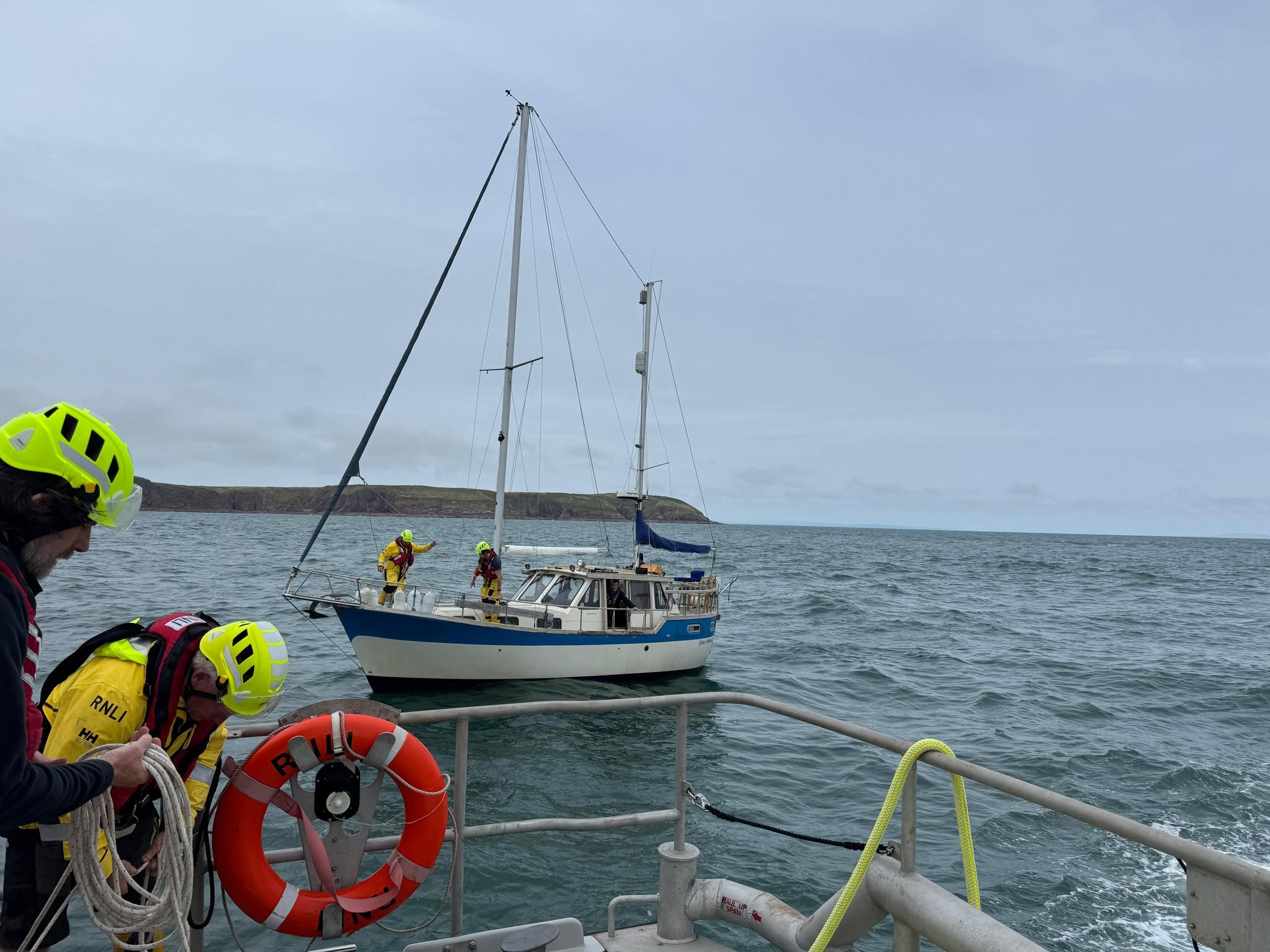
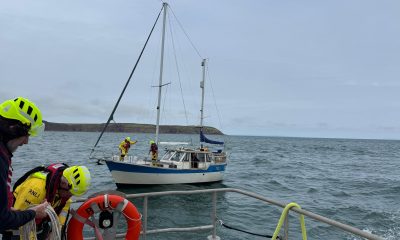
A YACHT was towed back to Tenby after its skipper became unwell off Caldey Island.
Tenby’s all-weather lifeboat was requested to launch at 1:40pm on Monday (Jun 15), after the coastguard received a call from the occupants of a yacht reporting that the skipper had become ill around one mile south of Caldey Island.
The volunteer crew quickly made their way to the vessel, which had three people and a dog on board.
Once alongside, the lifeboat crew discovered that the skipper was suffering badly from seasickness and that the other two people on board were unable to sail the yacht themselves.
After a full assessment by the coxswain, it was decided that the safest course of action was to tow the yacht back to Tenby. The vessel was drifting with the tide towards Caldey Island and was also considered a potential navigational hazard to other boats.
Two lifeboat crew members were placed aboard the yacht to help set up the tow and to monitor the unwell skipper during the journey back.
After a tow of around an hour, the yacht was placed on the lifeboat mooring in the calmer waters of North Bay.
The lifeboat then returned to station, arriving back at 3:15pm.
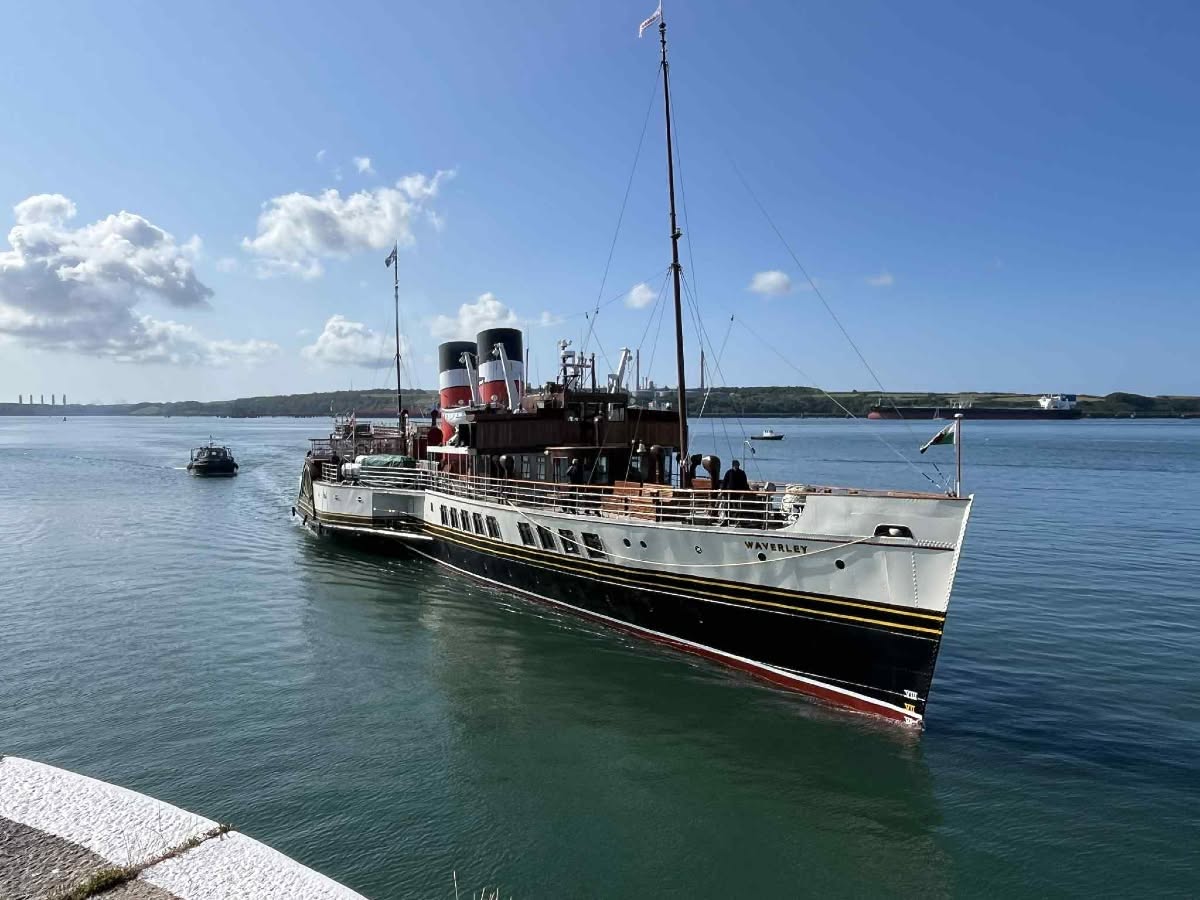
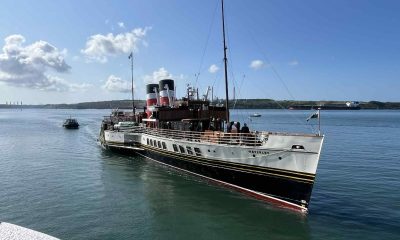
THE WORLD’S last seagoing paddle steamer will return to Pembrokeshire this week as Waverley marks the 79th anniversary of her maiden voyage.
The historic vessel will sail from Milford Haven and Tenby on Tuesday (Jun 16), with trips including a daytime cruise around Skokholm, Skomer, St Brides Bay and Ramsey Island from 11:30am to 4:30pm.
There will also be an evening sailing from Milford Haven at 5:00pm, travelling to St Govan’s Head, Caldey Island and along the Pembrokeshire coast, returning at 9:50pm.
Passengers can also join Waverley at Tenby, with sailings to Milford Haven and an evening cruise around Caldey Island and the coast.
On Wednesday (Jun 17), Waverley will make her only Fishguard visit of 2026, with an evening cruise to St David’s Head, passing Strumble Head Lighthouse, from 6:15pm to 9:15pm.
Tickets are available through Waverley Excursions.


Business22 hours ago
Celtic Freeport five-year plan puts Milford Haven at centre of green energy future
Strategy promises investment, skilled jobs and new supply chains, but major barriers remain over grid connections, planning and delivery THE...

Education24 hours ago
Closure of Ysgol Clydau approved after emotional council debate
COUNCILLORS WARNED RURAL COMMUNITIES WILL REMEMBER DECISION PEMBROKESHIRE councillors have voted to close Ysgol Clydau following an emotional debate over...


Education1 day ago
Manorbier school closure process to continue after narrow council vote
Questions remain over insurance, rebuilding costs and possible legal action by Diocese PEMBROKESHIRE councillors have voted to press ahead with...

Community1 day ago
The father, son and daughter lifeguard trio saving lives in Pembrokeshire
A FATHER, son and daughter are preparing to help keep beachgoers safe on the Pembrokeshire coast this summer as part...

Community2 days ago
Beating of the Bounds brings music, boats and tradition to Haverfordwest
CENTURIES-OLD CEREMONY DRAWS FAMILIES TO THE RIVERSIDE HAVERFORDWEST’S historic Beating of the Bounds returned on Sunday (Jun 14), with boats,...


Community2 days ago
Milford Haven School pupil praised after stepping in during real-life emergency
A YEAR 11 pupil at Milford Haven School has been praised after putting his first aid training into action to...


Community2 days ago
River festival brings crowds to Haverfordwest
A CELEBRATION of the River Cleddau brought crowds into Haverfordwest on Saturday (June 13) as the town’s River Festival returned...


Charity2 days ago
Voices at the Castle hailed as unforgettable night after weather setback
Russell Watson headlines spectacular charity concert at Pembroke Castle A SPECTACULAR evening of live music at Pembroke Castle has been...


Local Government3 days ago
Council admits 74 rights of way complaints remain unresolved
Key post vacant since February as walker raises safety concerns over paths near Llanteg and Amroth PEMBROKESHIRE COUNTY COUNCIL has...

Education4 days ago
Diocese threatens legal action as Manorbier school closure battle intensifies
Church says council could face judicial review over fire-hit school A BITTER row over the future of Manorbier Church in...
-
 Community2 days ago
Pembrokeshire Chess Club crowned Welsh champions
-
Education4 days ago
Diocese threatens legal action as Manorbier school closure battle intensifies
-

 Crime7 days ago
Haverfordwest pair accused of £80,000 rogue trading frauds
-

 Crime5 days ago
Man accused of six rapes including alleged Haverfordwest offence
-

 Crime5 days ago
Pembroke Dock teenager sentenced over train strangulation attack
-
 Crime7 days ago
Knife blankets call as school staff face rising violence fears
-

 Local Government4 days ago
Taxi suspended after county-wide licensing checks
-

 Crime4 days ago
Currys worker denies stealing £2,500 of store stock