

News
Council’s cabinet meets


Council Tax to rise by 4.5%

Rattling through the
agenda: Jamie Adams
moved matters quickly on
THE IPPG CABINET nodded through a financial report on Monday, January 5, which contained details of a 4.5% rise in Council
Tax. The proposed rise for 2015/16 would raise Council Tax for a Band D property to £801.44 per year. A meeting of the Cabinet at County Hall on a Monday morning is, perhaps, not the best way to revitalise yourself after a fairly long Christmas break. A heavy agenda loomed, including receiving a report from the Welsh Social Services Inspectorate (CSSIW) on the Council, an interim financial statement setting out the challenges caused by an ever more constrained budget, car parking changes, a new housing finance settlement, and a new location for the County Library. As agendas go, it was weighty: detailed enquiry – particularly on departmental budgets and cuts to them – could have been expected.
Positive steps in Social Care

No comment on cuts
to its budget: Simon
Hancock
First up was a presentation of the type you might reasonably expect any person to like. Significant progress had been made by the
Council in meeting the requirements of CSSIW in relation to social care. Where concerns lingered, they were few, compared to the overwhelming number of positives to be drawn from the presentation by Lesley Stubbs, Area Manager for CSSIW, and the report accompanying it.
Cabinet members Sue Perkins and Simon Hancock, responsible for the portfolios covered by the report, expressed their pleasure with the report and praised staff for achieving a high standard. Ms Stubbs reported that CSSIW had been greatly assisted in the preparation of the report by the stability among the officer cadre and service heads who managed social care and children’s services.

She was hopeful that the current situation, in which key officers – including the former Head of Children’s Services, Jake Morgan – had left the authority would be addressed, so as to ensure progress achieved could be maintained.
Rents rise, but more money for housing

Concerned: Rob Summons
was unhappy with planning
proposals
In the coming year, the Council will revolutionise the way it manages its social housing. To comply with Welsh Government legislation it will begin the process of raising council rents to harmonise with other authorities across Wales. The Council has been forced into this step by the Welsh Government, which has insisted on mandatory rent rises of inflation plus 1.5% for the next four years, plus a further £2.
The Council has cushioned the blow as best it can by reducing the £2 surcharge to £1.50 for the year 2015/16. The change means that Council tenants paying a weekly rent of £70 will be £4 a week worse off from April 6. Tenants in sheltered properties will be required to contribute to sheltered warden costs. Other service charges linked to communal areas in Councilowned properties will follow in April 2016.
While the authority exits the existing financial arrangements with the Welsh Government for social housing, it will have additional monies made available to it as a result. The additional money will be used by the authority to improve its existing housing stock and develop new social housing schemes in the County. The Council’s aim is to deliver initially ten additional properties for social housing a year in each of the next five years, initially by acquiring properties in strategic locations around the County.
No questions about budget cuts
Agenda Item 5 was the medium term financial plan for the next two years. Describing the financial settlements for the current and preceding year as “the two most difficult financial settlements since the Council’s inception in 1996”, the report made grim reading.
Over £2m to be cut off the education budget, just under that amount off adult social care, almost £1m off social care for children, and hefty cuts from already slashed budgets for highways, culture and leisure, and environmental services. A total of over £12m in cuts coming up in 2015/16 and no end in sight for the foreseeable future.
The details behind the headline figures were equally startling: residential care is to be reviewed with a projected saving of £1/4m and a review of commissioned services for adults with a projected saving of over three times that amount. The figures are challenging, to say the least and it is clear that having trimmed low-hanging fruit from the budgetary vine, more serious root and branch surgery is on the way.

The Cabinet, however, possibly stricken by the bleakness of the financial picture, raised not one question on the figures. Nobody offered even a murmur before the topic was closed and the next agenda item addressed.
Concern over planning reforms
The Council gave a frosty response to the Welsh Government’s consultation on a proposed new planning regime. Expressing concerns that the policy did nothing to address the importance of protecting the Welsh language in areas that might be affected by future housing development, Pembrokeshire County Council echoed views expressed both by Carmarthenshire County Council and Cymdeithas yr Iaith Cymraeg.
The Cabinet collectively endorsed the view that so-called ‘front-loading’ of the planning process would produce problems, especially when combined with what was described as ‘an overly-prescriptive’ initial approach to the planning process. The response reflecting those concerns, and prepared by officers was unanimously endorsed.
Cabinet debates Riverside library

Back in three months: Keith Lewis wants fast library decision
By far the longest discussion of the day was devoted to the relocation of the County Library from its current temporary accommodation to new premises. As revealed in last week’s Pembrokeshire Herald, the current Riverside market site has emerged as a strong favourite for the development. While some concerns were expressed about the current stall holders in the market, those were swept aside as a wave of enthusiasm for the site swept around the Cabinet.
The possibility of regenerating Bridge Street by relocating business sited in the market was nodded about with every sign of approval. The fact that those businesses, each of them with leases and some with the benefi t of goodwill and locationrecognition built up over many years, had not been consulted about the grand scheme was rather brushed under the carpet. This was a chance not only to do something but to be seen to do it. The disclosure in the discussion documents that the vacant offi ces at Cherry Grove, acquired only recently by the authority, needed structural work to the floors was all forgotten about.
The thought that they had brought this on themselves by moving the library with NO clear or properly-costed plans for an alternative location, similarly did not engage their notice. ‘Back in three months with a fi rm proposal’, was the call from Councillor Keith Lewis. Having nodded through everything else, his fellow Cabinet members nodded along with that.
Best of the rest
Having managed the rare feat of keeping the platitudes going for almost an hour and a half, the last few items on the agenda were clattered through at a fearful rate. The opportunity given to the Development Directorate to mismanage yet more public money was dealt with on the nod; library opening hours littledetained the Cabinet, save for Neyland councillor Simon Hancock mentioning Neyland library and Pembroke Dock member Sue Perkins doing likewise for Pembroke Dock’s.
A swift trot through car-parking charges, including a brusque disposal of Pembroke Town Council’s objections to charging for coaches on the Commons Road, and the fi nal item on the agenda arrived. Perhaps chastened by the realisation that there had been decidedly little actual debate, there was a marginally more detailed discussion about the Council’s plan to charge a £10 fee for Blue Badge applications.
The fact that Pembrokeshire Council was one of the last hold-outs to charging has done the Council great credit; the fact that they have been compelled to move to charging by legislative changes further up the political food chain is a matter for regret. In a concession, the Cabinet agreed that it would look at ensuring that those on the lowest incomes would not be adversely affected by the charge.

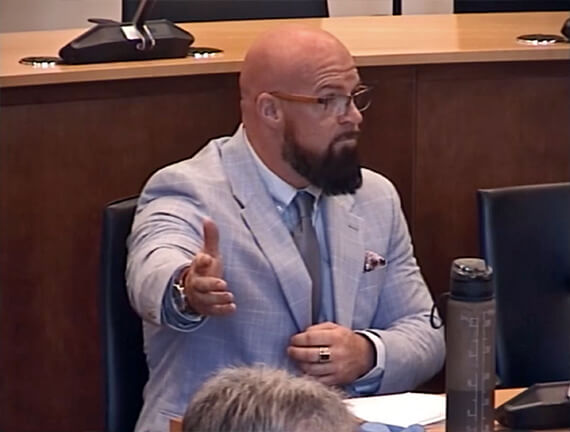
Lee Bridges says senior vacancy should prompt a review of management costs as frontline services face financial pressure
A MILFORD HAVEN town councillor has questioned whether Pembrokeshire County Council needs to appoint a new deputy chief executive at a time when local services are under growing financial pressure.
Councillor Lee Bridges spoke out after the authority advertised for a Deputy Chief Executive and Director of Place, with a salary of between £132,063 and £145,050.
The successful candidate would also receive a £9,576 annual lease car allowance and a relocation package, taking the potential overall package above £154,000.
Cllr Bridges stressed that his concerns related to the position itself and were not intended as criticism of the person currently holding, or previously holding, the role.
He said: “At a time when local authorities across Wales are facing significant financial pressures and frontline services are under increasing strain, I do question whether this role is really necessary.
“The council already has a chief executive, directors responsible for each service area, together with multiple layers of senior managers, middle managers and team leaders.
“When opportunities arise through senior vacancies, they should also be seen as opportunities to review and streamline management structures rather than simply replacing like-for-like.”
The senior post carries responsibility for areas including regeneration, economic development, planning, transport, environmental services, climate change and major capital projects.
The successful applicant would also support major investment opportunities linked to the Celtic Freeport.
Cllr Bridges said strong leadership remained important, but argued that the cost of senior management needed to be balanced against the pressure on council services.
He said: “Every pound spent on senior management is a pound that cannot be invested in frontline services that residents rely upon every day.
“Over recent years, we have repeatedly heard that difficult financial decisions have had to be made, with services being reduced or placed under increasing pressure because budgets are stretched.
“If that is genuinely the case, then it seems entirely reasonable that senior management structures should be reviewed with the same level of scrutiny as every other area of council spending.”
He said the vacancy should have prompted the authority to consider whether the responsibilities could be divided among existing senior officers.
Cllr Bridges added: “I would have welcomed a strategic review of whether this post is genuinely essential, or whether its responsibilities could be absorbed within the existing leadership team.
“Any savings could then be redirected towards protecting services for Pembrokeshire residents, whether that is highways, social care, education, environmental services or other frontline functions.”
He said his comments were intended to encourage debate about council priorities rather than criticise individuals.
“This is not about personalities,” he said. “It is about ensuring that, when opportunities arise through natural vacancies, the council asks whether there is a better way of structuring itself for the future.
“At a time when every public pound counts, I think residents would expect those questions to be asked before another senior appointment is made.”
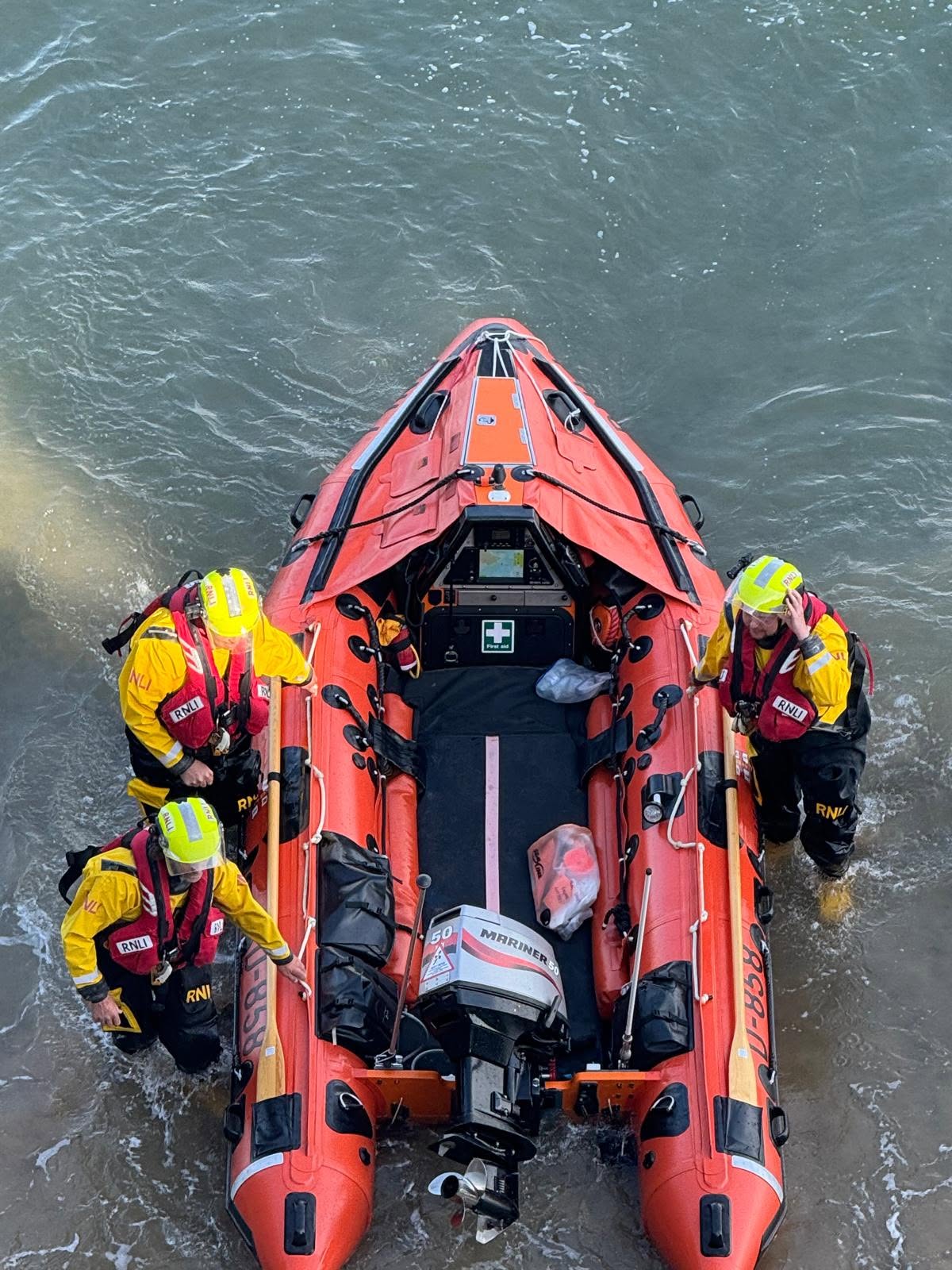
Four adults and two children were taken to safety after the sea rapidly surrounded them below the Imperial Hotel
TENBY’S inshore lifeboat was launched on Tuesday evening after four adults and two children became cut off by the incoming tide.

The alarm was raised at around 5.50pm when the coastguard received several 999 calls reporting that the group was trapped on the beach below the Imperial Hotel, with the water rising quickly around them.
Tenby RNLI’s volunteer crew reached the scene within a minute and found the six casualties with an RNLI beach lifeguard, who had heard they were in difficulty and paddled around to assist them.
All six were taken aboard the lifeboat and brought safely to Castle Beach.
They were reported to be unharmed following the incident and were able to make their own way home.

Broadcaster warns its current funding model is becoming unsustainable as viewers move away from live television and BBC iPlayer
THE NUMBER of television licences in force across the UK has fallen by almost 540,000 in just one year, according to the BBC’s latest annual report.
A total of 23.3 million licences were active at the end of the 2025/26 financial year, compared with 23.8 million 12 months earlier.
The reduction of 539,000 was considerably larger than the fall recorded during the previous year and reflects the growing number of households which say they no longer watch programmes requiring a television licence.
Households need a licence to watch or record television programmes as they are being broadcast on any channel, or to use BBC iPlayer. Those who only use other streaming services to watch programmes on demand do not generally require one.
The number of households declaring that they did not need a licence rose by 62,000 during the year, reaching approximately 3.7 million.
Licence numbers have now fallen by more than 2.5 million since the beginning of the decade, when around 25.9 million were in force.
BBC chief financial officer Berangere Michel said the majority of the decline appeared to be caused by people no longer consuming content covered by the licence.
She warned that the trend was unlikely to reverse and was instead expected to accelerate, strengthening the BBC’s argument that the way it is funded must be reformed.
The corporation’s annual report said its financial outlook had worsened during the second half of 2025, with licence sales falling more quickly than previously forecast.
Inflation, rising production costs and difficult trading conditions across the wider media industry have also increased the gap between the BBC’s income and its expenditure.
Although licence fee income stood at around £3.87 billion in 2025/26, the value of that income has fallen sharply when inflation is taken into account.
In today’s prices, the corporation received approximately £1.34 billion less than the equivalent amount raised in 2016/17, representing a real-terms reduction of around 26 per cent.

The BBC reported an operating loss of £121 million for 2025/26 despite an increase in the price of the television licence during the year.
Director-general Matt Brittin described the situation as a “moment of real jeopardy” for both the BBC and public service broadcasting in the UK.
He said the corporation continued to play an important role in public life, the economy and Britain’s cultural influence, but acknowledged that it would have to change substantially to remain relevant in a rapidly evolving media market.
The report shows that 94 per cent of adults use at least one BBC service each month, but fewer than 80 per cent of households now contribute through the licence fee.
BBC chairman Samir Shah said the difference between the number of people using BBC services and those paying for them demonstrated that the existing system could no longer support the corporation’s public service responsibilities.
The BBC is preparing for negotiations over its next Royal Charter, with the current arrangements due to expire at the end of 2027.
Options being discussed include retaining a reformed licence fee, extending payments to some households using commercial streaming services, or developing a different funding system. The Government has not yet made a final decision.
The future of the licence fee also has implications for broadcasting in Wales. S4C receives its public funding through the television licence, with £97.6 million allocated to the Welsh-language broadcaster during 2025/26.
The BBC has already announced plans to reduce spending across its news, nations and content divisions.
The first phase is expected to save around £160 million, contributing towards a wider target of £500 million by 2028/29. The programme is expected to result in between 1,800 and 2,000 job losses over three years.
BBC executives maintain that substantial reform will be needed alongside those savings if the organisation is to continue providing television, radio, news, online and regional services on their current scale.

Local Government6 hours ago
Catapult attacks suspected after wildlife deaths at Pembroke Mill Pond
Wildlife Crime Officers are investigating after the town council said around five animals showed signs of deliberate injury WILDLIFE found...

Crime9 hours ago
Narberth retailer speaks of shoplifting toll after ‘collectable bear’ stolen
Independent shop owner said rising costs meant businesses could not afford to absorb losses caused by theft A NARBERTH retailer...


Crime9 hours ago
Teen accused of attempting to murder teacher says she lied about stabbing
Defendant accepts teacher was terrified and that a knife wound to the head could kill, but denies deliberately attacking her...


Local Government2 days ago
Calls grow for independent investigation into Manorbier school closure
Councillor alleges misleading figures, inadequate insurance and poor treatment of staff CALLS for an independent investigation into the controversial closure...


Community2 days ago
Neyland Carnival hailed a huge success after streets fill with colour and crowds
NEYLAND CARNIVAL organisers have thanked the community, volunteers and local businesses who helped make this year’s event a memorable success....


Community2 days ago
Tenby Summer Spectacular: Anger grows over ‘disaster waiting to happen’ warning
A growing backlash has followed police calls for the event’s licence to be revoked, with supporters questioning why authorities failed...


Charity3 days ago
RSPB secures ‘missing link’ to reconnect wildlife habitats in Carmarthenshire
RSPB CYMRU has purchased a 96-hectare upland site in Carmarthenshire, describing it as a vital step towards reconnecting one of...


Crime4 days ago
Ann Widdecombe: Welsh politicians pay tribute as murder probe launched
Prime Minister Sir Keir Starmer has praised the former minister’s “conviction and dedication”, while political figures in Wales remembered her...


News4 days ago
Solardo pulls out of Haverfordwest show as organisers offer full refunds
Headline act confirms non-appearance as Park House Series announces major event changes DANCE music duo Solardo will no longer perform...


Local Government5 days ago
Conservatives win Pembroke Dock seat as Reform stalls and Dowson polls just 11
Jamie Street takes Market ward with a 43-vote majority as Reform finishes fourth despite its major Senedd breakthrough two months...
-

 Farming5 days ago
Working Carmarthenshire farm opens gates to visitors with new holiday cottages
-

 Entertainment6 days ago
Swing and big band classics heading to Torch Theatre
-

 Sport5 days ago
Rising rally star claims maiden Mini Rally Challenge victory
-
 Farming5 days ago
Outer Hebrides stickmaker to make final Royal Welsh Show appearance
-

 Crime5 days ago
Greenacres confirms seized dogs are safe as investigation continues
-

 Sport5 days ago
Bluebirds give new home strip first run-out
-
 Health5 days ago
Hospital ward closed after highly contagious scabies outbreak
-
Crime5 days ago
Teacher stabbing trial: The first week of evidence
ieuan
January 22, 2015 at 6:33 pm
Once again Joe Public must bear the brunt, why not get rid of all the ”jobs for the boys” to save money?Of course Jamie owes to many favors so we must pay, just like with BJP!
tomos
January 23, 2015 at 9:42 am
Jamie must be earning 2 or 3 times the average Pembrokeshire householders wage PLUS the farm income, Eton educated multi millionaire David Camerons claim of us all being in it together sounds just as hollow when Jamie says it
They are both tories it’s just that IPiG tries to hide that fact.
Flashbang
January 24, 2015 at 9:02 pm
The Special Responsibility Allowances given out are nothing more than bribes to keep the IPG in power. They should be scrapped as councillors are already paid more than enough to be there.
Iestyn
January 25, 2015 at 4:34 pm
So called Independent councillors are usually just a bunch of narcissists who are devoted to the sound of their own voice not real principles. If you stand under a political banner your fortunes are prey to the popularity of your party nationally so it’s safer to pretend to be Independent. Also you can do just whatever you like without reference to stated policies or principles. Personality cults in politics always sell the electorate short.