

Farming
NFU Cymru president sets out key challenges and priorities for Welsh farming

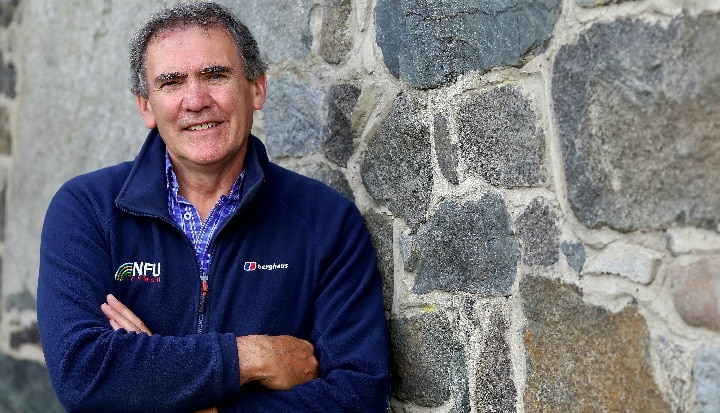
Aled Jones reflected on a turbulent year in farming in his New Year message
NFU CYMRU President Aled Jones has reflected on a turbulent year for Welsh agriculture while warning that the months ahead will be “seismic” for both farming and politics in Wales, as the country prepares to go to the polls in May.
In his Christmas and New Year message, Mr Jones said farming families across Wales had endured more than a year of upheaval following proposed changes to Agricultural Property Relief and inheritance tax.
“Over the past fourteen months, farming families have been thrown into turmoil by proposals that threatened the future of the family farm,” he said. “NFU Cymru has been tireless in challenging these changes, with sustained and high-profile campaigning that culminated in the ‘NO IHT’ mosaic display at the Winter Fair on the eve of this year’s Budget.”
Mr Jones also recalled delivering the Stop the Family Farm Tax petition to Downing Street earlier this year, backed by more than a quarter of a million signatures.
While welcoming the limited concessions announced by the Chancellor in November — including the introduction of spousal transfer of the inheritance tax allowance — he warned the measures fell far short of what was needed.

“This will help only a small number of farmers and does nothing to protect the elderly or the terminally ill from the devastating consequences of these proposals,” he said. “It is for the most vulnerable in our communities that we must continue to fight.”
He urged the UK Government to remove the anti-forestalling clause from the Finance Bill as it progresses through Parliament, describing it as particularly harmful to farmers facing serious illness or uncertainty.
Turning to Welsh Government policy, Mr Jones noted that detailed guidance for the Sustainable Farming Scheme (SFS) — eight years in the making — had now been published, with the scheme set to come into force from January 1, 2026.
He said important improvements had been secured since the scheme’s earliest proposals, following sustained engagement by NFU Cymru.
“Over the past eighteen months, our work through the Roundtable and sub-groups has delivered real change, including the removal of the ten per cent tree cover requirement and a reduction in universal actions from seventeen to twelve,” he said.
Mr Jones also welcomed confirmation that the overall farming budget would be maintained at £340 million, and said the inclusion of a social value payment recognised the wider contribution Welsh farming makes to society.
“While NFU Cymru supports the overall framework of the SFS, there is still much work to do,” he added. “This government — and the next — must commit to evolving the scheme so it supports a productive, progressive and profitable farming sector.”

Looking ahead to the Senedd election, Mr Jones described 2026 as a “seismic year” for Welsh politics, with the Senedd expanding to ninety-six members and new constituencies introduced under a revised voting system.
He pointed to NFU Cymru’s manifesto, Welsh Farming: Growing Forward, which calls for a farm-to-fork food strategy, a ring-fenced multi-year farming budget, a comprehensive bovine TB eradication plan and an independent review of regulation.
Reflecting on the year just passed, Mr Jones acknowledged the strain caused by inheritance tax uncertainty, the rollout of the SFS, ongoing animal disease threats and extreme weather.
He was also critical of the recent four-year review of the Control of Agricultural Pollution Regulations, saying it failed to reflect the “sheer desperation” felt by farmers dealing with complex and impractical rules.
Despite these challenges, he said he remained optimistic.
“Every day I am inspired by the ambition and ‘can do’ attitude of farming families across Wales, and their determination to feed the nation while leaving their farms in a better state for the next generation.”
Mr Jones concluded by calling on politicians of all parties to work with the sector.
“As Wales enters a period of political change, we need policies and regulation that allow farming families to continue producing world-leading, healthy food while delivering for our environment, climate, economy, culture and language.”
“Nadolig Llawen a Blwyddyn Newydd Dda.”

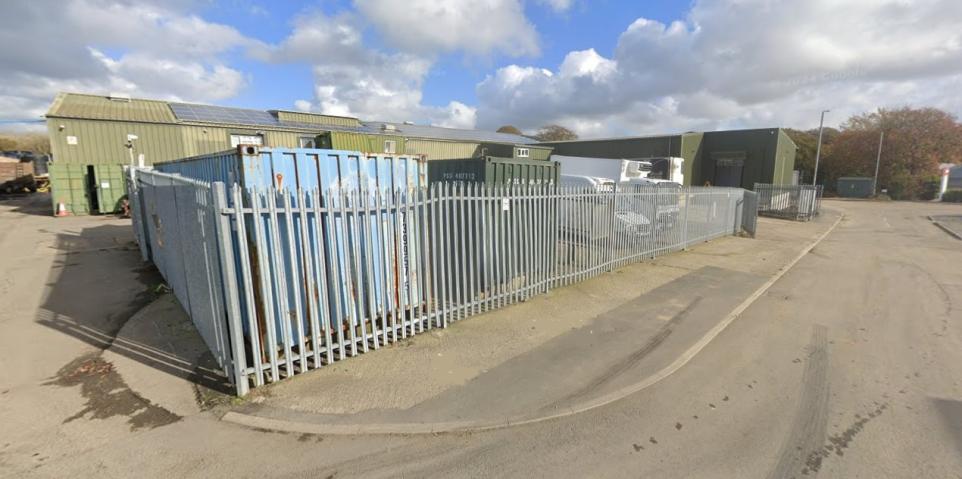
Official data shows major and critical non-compliances at Welsh meat plants, as Animal Aid claims the figures expose serious welfare and hygiene concerns
A PEMBROKESHIRE slaughterhouse was given the Food Standards Agency’s most serious audit rating after inspectors recorded major and critical non-compliances, official data shows.
The latest FSA meat establishment audit data, published as of July 1, 2026, lists Euro Farm Wales, Haverfordwest, as requiring “urgent improvement necessary”.
The audit data records 16 minor, four major and five critical non-compliances at the site.
Critical non-compliances are the most serious category used in FSA audits and can involve immediate risks to animal welfare, public health or hygienic production.
The figures come after animal rights group Animal Aid analysed FSA slaughterhouse audit records and claimed that almost every operational UK slaughterhouse had recorded at least one non-compliance.
Animal Aid said its analysis of June 2026 data found 3,716 failures across 246 operational UK slaughterhouses, with only one site having a completely clean record. It said more than 40 per cent of sites had at least one major non-compliance.
The group said the figures challenged claims that the UK meat industry operates to consistently high welfare standards.
Alex Harman, Campaign Manager at Animal Aid, said: “The British public has been fed a marketing myth that UK slaughterhouses are gold standard of animal welfare. This data proves that ‘humane slaughter’ is a bureaucratic lie.
“When the government’s highest rating allows for hundreds of systemic violations, and high-risk facilities are left to operate in the dark without required audits, the system isn’t just failing, it is working exactly as intended to keep the assembly line of death moving at all costs.”
Animal Aid said the answer was not simply tougher rules, but a move away from animal agriculture and towards plant-based food systems.
The FSA data also lists other Pembrokeshire-linked slaughterhouses with recorded non-compliances.
Capestone Organic Poultry Ltd, Haverfordwest, is listed as “generally satisfactory”, with 15 minor and two major non-compliances.

Lloyd West Ltd, Pembrokeshire, is also listed as “generally satisfactory”, with 14 minor and one major non-compliance.
Across Wales, the July dataset lists 18 slaughterhouses with 261 total non-compliances, including 26 major and five critical non-compliances.
The FSA audit system covers approved meat establishments, including slaughterhouses, cutting plants and game handling establishments. Audits examine areas including hygiene, animal welfare, food safety systems, maintenance, cleaning, handling, traceability and the management of animal by-products.
The agency grades audit outcomes using categories including “good”, “generally satisfactory”, “improvement necessary” and “urgent improvement necessary”.
Animal Aid said one of the concerns raised by the data was that sites could still receive positive or mid-level ratings despite recording numerous non-compliances.
The campaign group pointed to examples elsewhere in the UK where slaughterhouses were rated “good” or “generally satisfactory” despite having multiple recorded failures.
However, the FSA has previously said overall animal welfare compliance in abattoirs is very high. In a June 2026 Food Standards Agency blog post, the agency said there were 542 animal welfare breaches in abattoirs in England and Wales during 2025/26, affecting 33,679 animals out of more than one billion animals processed.
The agency said this meant 0.0032 per cent of animals were affected.
Animal Aid argues that the audit data still shows systemic problems, particularly because breaches were recorded at sites subject to official checks, veterinary oversight and CCTV requirements.
David Magna, a former slaughterhouse inspector quoted by Animal Aid, said: “After years working as a slaughterhouse inspector, I came to understand that the failures I witnessed were not isolated incidents, they were the predictable consequences. Success is measured by production.”
The FSA dataset does not, in its headline table, provide detailed narrative descriptions of each individual non-compliance at each site.
Further clarification would be needed from the FSA and the operators involved to establish the exact nature of the major and critical findings, whether enforcement action followed, and whether the issues have since been addressed.
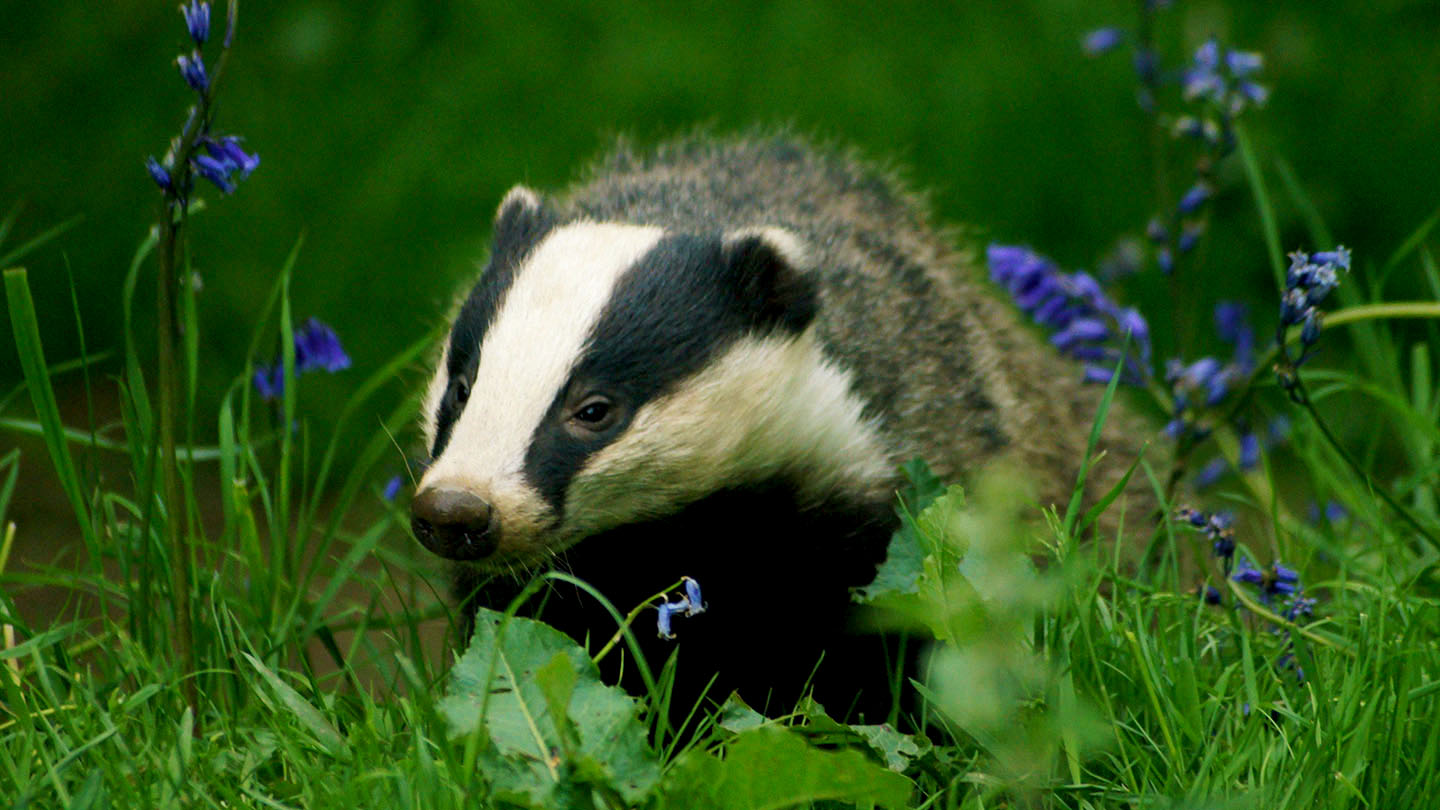
THE BADGER TRUST has called on the new Welsh Government to publish the scientific evidence behind any move towards wildlife controls as part of Wales’ bovine TB strategy.
The charity says ministers have repeatedly promised to “follow the science” while also leaving open the possibility of future interventions involving wildlife, including badgers.
The row follows recent Senedd exchanges in which Cabinet Minister Llyr Gruffydd said the Government was committed to a “holistic approach” to eradicating bovine TB in Wales, based on science and evidence, and informed by the Technical Advisory Group and the TB Programme Board.
Ministers have not announced a badger cull. However, the issue has become politically sensitive after Plaid Cymru’s manifesto pledged a new approach to bTB which recognises wildlife as a source of infection and enables “scientifically validated control methods”.
Badger Trust says that wording raises questions about whether the new administration is preparing to move away from Wales’ previous policy, which focused mainly on cattle measures, biosecurity, testing and vaccination rather than widespread badger culling.
The charity argues that Wales has already made progress without adopting the large-scale culling programmes seen in England.
Official figures published by the Welsh Government show there were 479 new TB herd incidents in Wales in the 12 months to March 2026, down 23.1% from 623 in the previous 12 months. The number of animals slaughtered for TB control in Wales also fell by 21.1%, from 13,171 to 10,395.
However, the Welsh Government has also acknowledged that the number of cattle slaughtered remains high and that there is “still a long way to go”. A written statement earlier this year said some slaughter figures reflect the use of more sensitive testing aimed at finding infection earlier and reducing the risk of future spread.
Nigel Palmer, chief executive of Badger Trust, said: “Ministers are saying they will follow the science repeatedly to the Senedd. That is welcome.
“But if they are considering a major policy change, the public has a right to know what evidence is driving that discussion.
“The evidence does not demonstrate that badger culling provides a meaningful solution to bovine TB in cattle or would improve on the progress already being made in Wales.
“We understand the devastating impact bovine TB can have on farming families and rural communities. That is why farmers deserve effective solutions based on evidence, not assumptions.

“That means continued investment in cattle measures, including on-farm and off-farm biosecurity, improved testing and vaccination. Farmers and wildlife can be protected by following the evidence.”
The charity also pointed to polling by RSPCA Cymru which, it says, found only 27% of respondents supported badger culling, while 46% opposed it. It said 63% of respondents were uncomfortable with killing badgers and 68% opposed public money being spent on culling programmes.
The debate has intensified since a Senedd exchange on June 10, when Labour MS Vikki Howells asked whether ministers would consider all the science, including evidence which she said showed culling badgers was not the answer.
Responding, Mr Gruffydd said the issue needed to be approached “in an objective manner with a clear head” and said any decision would be based on science, the evidence base, and advice from the Technical Advisory Group, which is looking at TB and wildlife.
Earlier in the same session, Mr Gruffydd said he had already met the TB Programme Board and the Technical Advisory Group, and said a position paper published in March made clear that TB needed to be tackled across livestock, wildlife and other sources of infection.
Farming unions and rural representatives have argued that the current approach has not gone far enough. NFU Cymru backed calls earlier this year for a “step change” in Wales’ bTB eradication strategy, saying the current trajectory was not sufficient to meet the target of Wales becoming officially TB free by 2041.
NFU Cymru president Abi Reader said at the time that while it was encouraging to see new breakdowns falling, the impact on farms under TB restrictions and the number of animals slaughtered could not be ignored.
The Welsh Government has also recently tightened cattle movement rules. From January 2026, cattle in Wales that previously tested as standard interpretation inconclusive reactors and later tested negative at re-test remain restricted to their holding for life. The Welsh Government said scientific evidence showed such animals were three times more likely to become TB reactors than clear-tested cattle.
In the Senedd, ministers have highlighted the Pembrokeshire TB project as a possible model for future work. Mr Gruffydd said he had visited the project and was “inspired” by its local, industry-led approach, involving farmers and vets working together on area-specific responses.
Badger Trust said it accepted the seriousness of bTB for farmers but said any change in policy involving wildlife must be justified by clear evidence.
Mr Palmer added: “Wales has already proved that progress against bovine TB is possible without widespread badger culling.
“If ministers are considering a different approach, they should share and explain the scientific evidence they have to support a change in policy direction.”
The Welsh Government has been asked to comment.
REMOVING fleeces from lambs can help boost growth rates, reduce the risk of flystrike and make flock management easier, according to Heiniger’s Hefin Rowlands.
Mr Rowlands, an experienced shearer, says shearing lambs during their first summer can increase growth rates by up to 20g a head.
“The best time varies between lowland and upland flocks, but the usual window is from the end of June to the beginning of October,” he said.
“Shearing lambs requires the same professionalism and attention to animal welfare as shearing ewes. Whether farmers are hiring a professional shearer or doing the job themselves on farm, it is important to use well-serviced equipment.”
Mr Rowlands said there are several additional benefits to shearing lambs during this period, including reducing the risk of flystrike, keeping lambs cleaner, and preventing them from becoming snagged or tangled in thick undergrowth.
The method for shearing lambs is no different to shearing adult sheep. Shearing towards the end of summer or early autumn can also mean that, the following spring, hoggs carry less wool on their backs, reducing the risk of them becoming cast because of heavy fleeces.
“Shearing lambs also makes them easier to manage and transport,” Mr Rowlands added. “With a smaller, shorn lamb, you can get more on a trailer.”
If lambs are shorn late in the season, when temperatures are falling and heavy rain is more likely, Mr Rowlands said housing them afterwards can help with acclimatisation. However, this is less likely to be needed if shearing takes place before the end of August.
“If shearing later, it is sometimes beneficial to leave the belly wool on because it offers insulation when the lamb lies down, especially in wet conditions,” he said.
With wool prices rising, Mr Rowlands said there may also be financial gains from having more wool to sell.
“If shorn well, with the right equipment and at the right time, lambswool can command a premium,” he said.
“Having professional shearers, or the training to shear accurately yourself, is important, as is using a well-maintained, quality handpiece with factory-sharp combs and cutters.”

Caption: Shearing lambs can help increase growth rates by up to 20g a head.



Business18 hours ago
Pembrokeshire lands £98m share of Wales marine energy boom
New industry report says county has received the second highest level of marine energy investment in Wales, supporting more than...


Crime18 hours ago
First aider tells jury teacher was “crying, shaking” after classroom stabbing
A SCHOOL first aider has told a jury that teacher Vicki Williams was “crying, shaking” and in “complete shock” after...


Crime2 days ago
Teacher feared she was dying after Milford Haven classroom stabbing
A TEACHER allegedly stabbed in the head at Milford Haven Comprehensive School told a jury she feared she was dying...


News2 days ago
Farage to resign as MP and fight Clacton by-election amid finance row
NIGEL FARAGE has announced he will resign as MP for Clacton and stand again in the by-election he intends to...
Crime2 days ago
Teacher tells jury there were ‘no issues’ with accused pupil hours before ‘stabbing’
Milford Haven teacher gives evidence as trial of 15-year-old continues at Swansea Crown Court A TEACHER allegedly stabbed at Milford...


News2 days ago
Major incident stood down after fire at Impala Terminal in Milford Haven
Fire involved decommissioned oil tank containing residual crude oil and around 60 cylinders A MAJOR incident declared during a fire...

News2 days ago
Large fire breaks out at Impala Terminal in Milford Haven
Black smoke seen for miles as emergency services respond to incident at former Puma Energy site A LARGE fire has...
Crime3 days ago
Prosecution outlines ‘planned attack’ as Milford Haven teacher stabbing trial opens
Jury hears teenager allegedly brought kitchen knife into school before teacher was stabbed in the head THE JURY in the...


Crime3 days ago
Boy, 15, denies attempted murder of Milford Haven teacher in ‘horrifying’ attack
Swansea Crown Court hears dramatic opening of trial over February stabbing A 15-YEAR-OLD boy from Milford Haven has gone on...


Crime3 days ago
Fishguard man cleared after five years in prison refused compensation again
Brian Buckle’s case raises fresh questions over justice system that says a man can be cleared by a jury but...
-

 Entertainment7 days ago
Pembrokeshire DJ lands record deal with London dance label
-

 Community6 days ago
Closure-threatened Stepaside school expected to remain open
-
 Education6 days ago
Education secretary vows to tackle ‘root causes’ of antisocial behaviour in schools
-

 Crime7 days ago
Llandeilo man accused of rape sent to Crown Court
-
 Education6 days ago
First Minister pressed on biological sex, additional learning needs, and NHS jobs
-

 Education6 days ago
Ysgol Glannau Gwaun celebrates prestigious Gold Active Travel award
-

 Community6 days ago
Saundersfoot Harbour regeneration project wins national planning award
-

 Charity7 days ago
Milford Haven Round Table receives £6,000 boost for carnival and fireworks