

international news
Starmer rocked by Mandelson row as Epstein links spark police probe

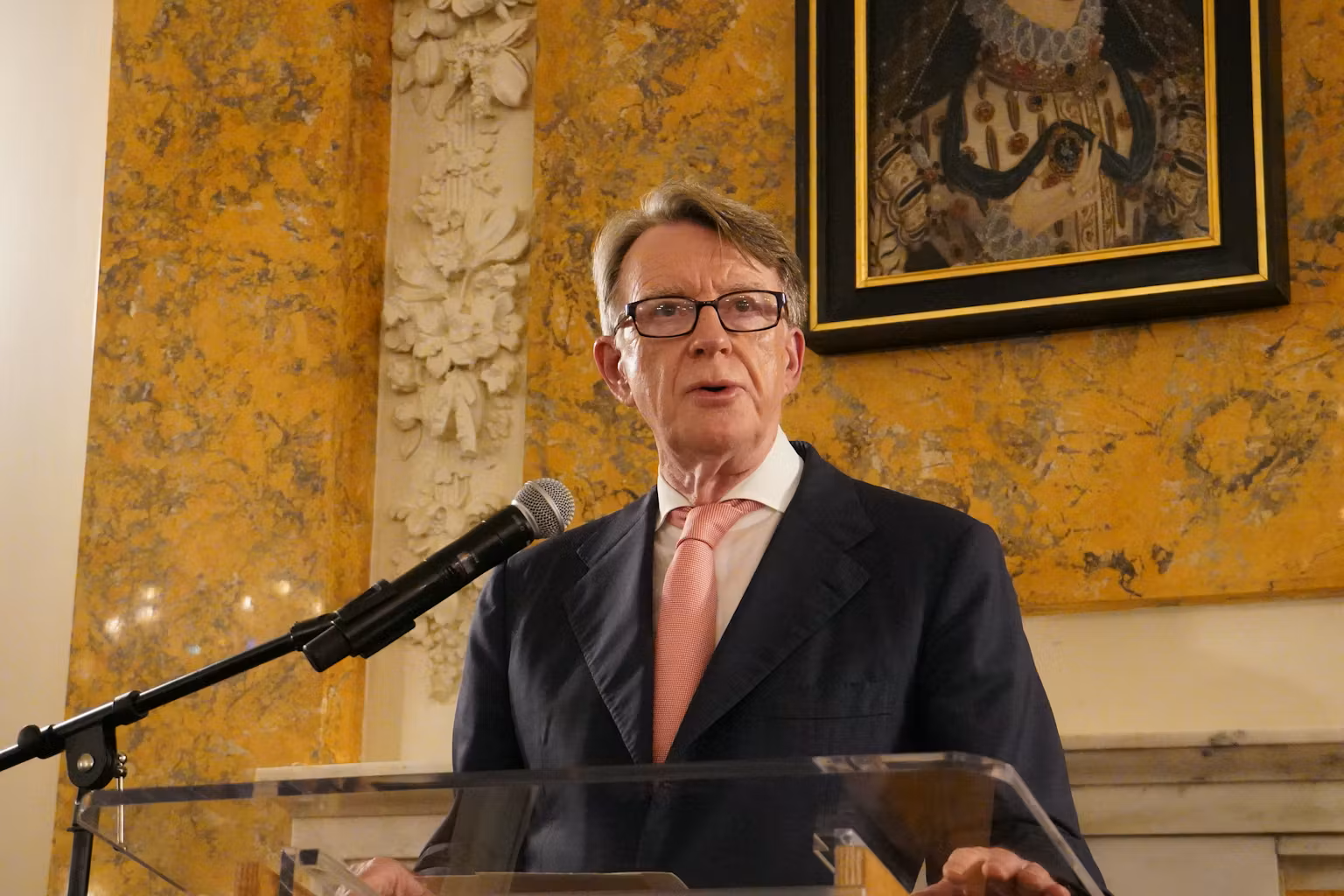
PM admits he knew of Mandelson’s post-conviction friendship with Jeffrey Epstein as questions mount over vetting and national security
IT took three attempts for Kemi Badenoch to get a straight answer, but when the Prime Minister finally responded, what remained of his authority appeared to drain away.
At Prime Minister’s Questions on Wednesday (Feb 4), the Conservative leader targeted the vetting process behind Peter Mandelson’s appointment as the UK’s ambassador to Washington. The line of attack was widely anticipated. Equally predictable were Keir Starmer’s attempts to deflect.
Eventually, however, disclosure proved unavoidable. The Prime Minister confirmed that when he appointed Mandelson, he already knew that the former Cabinet minister had maintained a friendship with convicted paedophile Jeffrey Epstein after Epstein’s 2008 conviction for child sex offences.
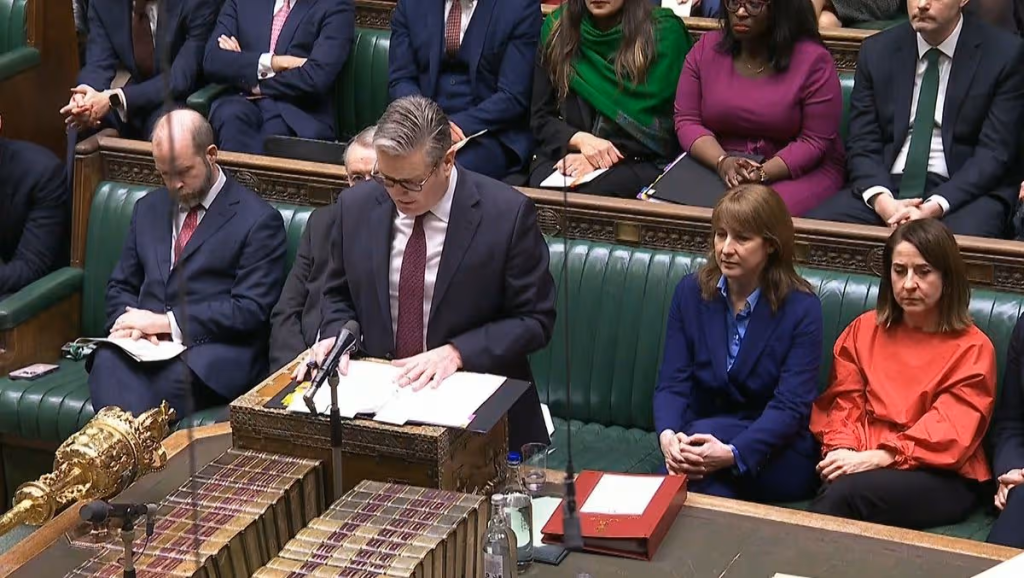
A packed House of Commons audibly gasped.
Whatever political cover Downing Street hoped to create by suggesting Mandelson had repeatedly misled questioners about the relationship quickly evaporated. The reality was stark. Those responsible for the appointment knew that Mandelson’s association with Epstein had continued after conviction, imprisonment and release — and still judged him suitable for Britain’s most sensitive diplomatic post.

That decision now raises profound questions about the Prime Minister’s judgment and the advice he received from senior officials and security services.
As MP after MP rose to speak, common themes emerged. Conservative members described the appointment as reckless. Labour backbenchers said it demonstrated a callous disregard for Epstein’s victims. Others questioned whether proper security warnings had been heeded at all.
When Mandelson was later removed from the Washington role, the Government claimed the decision followed “new revelations” about his association with Epstein. That explanation was left in tatters by the Prime Minister’s admission that the relationship was already known.
Yet the Epstein connection may not be the most politically damaging element of the affair.
During the 2008 financial crisis, taxpayers rescued Britain’s banking system after years of reckless risk-taking. Public anger led ministers to propose a 50% tax on bankers’ bonuses. Papers from the so-called Epstein files suggest that while serving as Business Secretary in Gordon Brown’s Cabinet, Mandelson briefed Epstein on confidential discussions about that tax.
One email indicates he even advised that a senior US banker should “slightly threaten” then-Chancellor Alistair Darling over the proposal.
Labour MP Emily Thornberry was among those who branded the conduct “treachery”.

Further disclosures suggest Mandelson also shared market-sensitive information about the 2010 General Election, including the progress of coalition negotiations and advance notice that Brown would step down. Even if intended as political gossip, such information could have delivered a significant trading advantage to well-placed investors.
Whether profits were made is beside the point. The mere possibility that privileged Cabinet intelligence reached a convicted sex offender is politically toxic.
Now the Metropolitan Police Service has launched an investigation into whether any criminal offences were committed, placing the Prime Minister in an increasingly awkward position. Detectives have warned against the release of potentially relevant documents, complicating calls for full transparency.
Although the Intelligence and Security Committee will review the material, public confidence may already be too badly shaken.
Mandelson’s long and controversial career in public life appears finished. The unresolved question is whether his downfall will drag the Prime Minister down with him.
With Labour sliding in the polls, internally divided, facing elections in Scotland and Wales and a looming by-election in Manchester, the political crunch may not be far away.


Sanctioned vessel boarded in first UK-led operation of its kind as Britain targets Moscow’s oil revenues
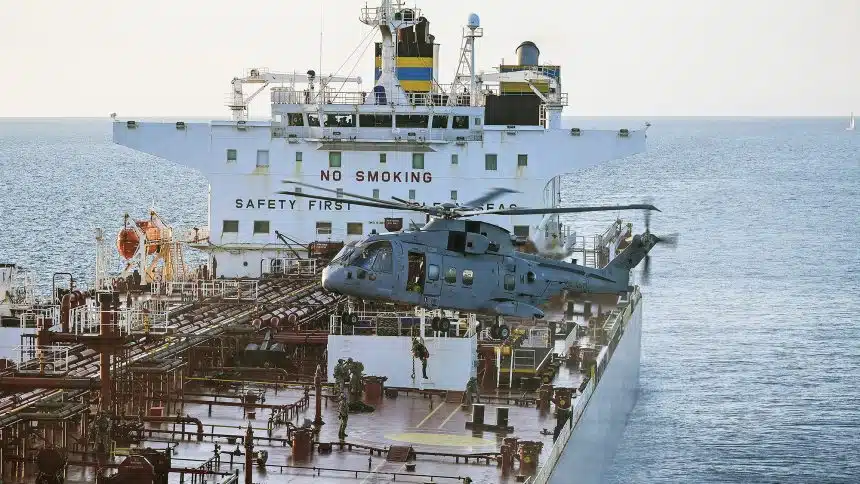
ROYAL MARINE COMMANDOS have boarded and seized a sanctioned Russian-linked oil tanker in the English Channel in a major UK-led military operation targeting Moscow’s so-called “shadow fleet”.
The vessel, named Smyrtos, was intercepted in the early hours of Sunday morning (Jun 14) as it attempted to pass through the Channel.
The six-hour operation involved Royal Marines, officers from the National Crime Agency, HMS Sutherland, HMS Ledbury, RAF P-8 maritime surveillance aircraft, and helicopters including Chinooks, Merlin Mk4s and Wildcats.
The tanker, which has been linked to Russia’s efforts to evade international oil sanctions, is now being held and monitored off the south coast of England while investigations continue.
The Prime Minister, Sir Keir Starmer, said he had directed British forces to intercept the vessel, describing the operation as another blow to Russia’s war economy.
He said: “This successful operation delivers yet another blow to Russia and reminds those fuelling Putin’s war in Ukraine that we will not let them hide.”
The Ministry of Defence said it was the first UK-led operation of its kind against a Russian shadow fleet vessel.
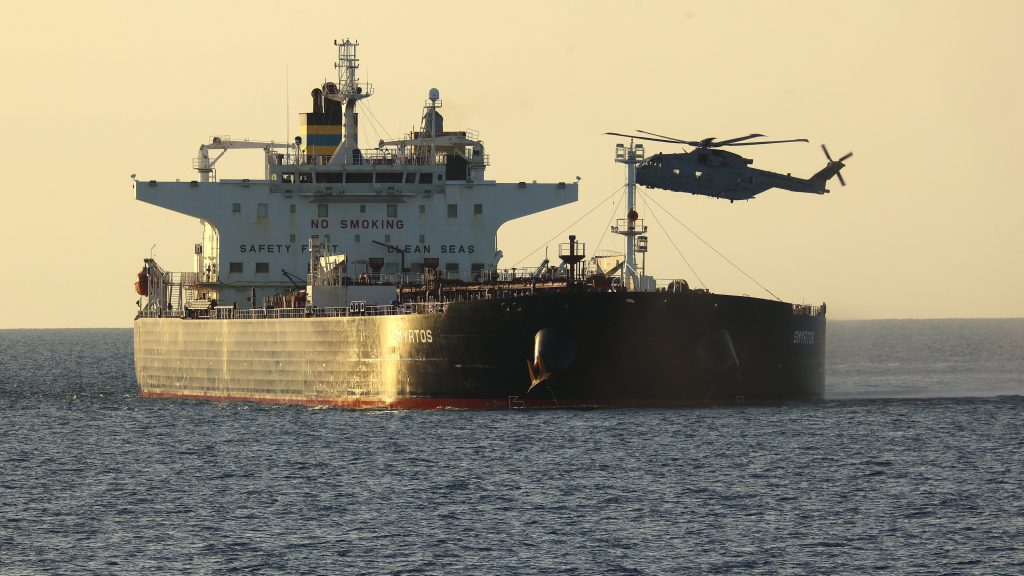
The Smyrtos was reportedly sailing under a Cameroonian flag, although shipping reports say questions had already been raised over its registry status.
The tanker had travelled from Ust-Luga in Russia and was understood to be heading towards Port Said in Egypt. Some reports said it was carrying hundreds of thousands of barrels of Russian crude oil.
The “shadow fleet” is the name given to a network of ageing and often obscurely owned tankers used to move Russian oil around the world despite sanctions imposed after the invasion of Ukraine.
Western governments say the fleet helps generate billions of pounds for Vladimir Putin’s war machine.
Defence Secretary Dan Jarvis praised those involved in the operation, saying missions of this kind required “skill, professionalism and courage”.


Ukraine’s President Volodymyr Zelenskyy thanked the UK for taking action, and called for European countries to go further by passing laws allowing not only detention of suspect vessels but the confiscation of their cargoes.
The operation was carried out in coordination with French authorities and marks a significant escalation in Britain’s enforcement of sanctions at sea.
Officials said the vessel would be monitored for environmental and safety concerns while the investigation continues.
Photo caption: Royal Marines board the tanker Smyrtos during the UK-led operation in the English Channel (Pic: Ministry of Defence / UK Defence Journal).
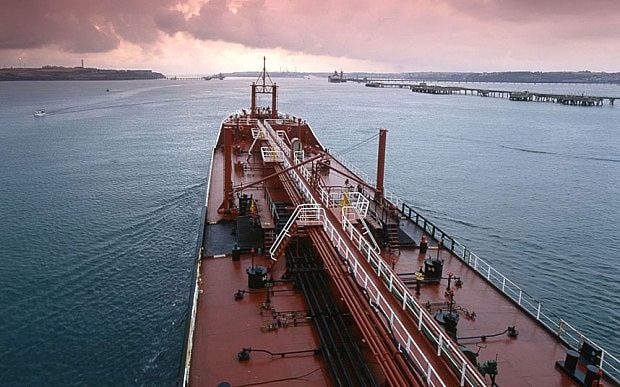
OIL prices dropped sharply on Friday after Iran announced that the Strait of Hormuz had reopened to commercial shipping, raising hopes that energy supplies could begin to move more freely through one of the world’s most important maritime routes.
The development was welcomed by US President Donald Trump and immediately eased pressure on global markets, with traders reacting to the prospect of more oil and gas reaching international buyers.
The Strait of Hormuz, a crucial passage for global energy exports, has been effectively shut since the US-Israeli bombing campaign in Iran began at the end of February. The disruption has pushed up fuel and energy costs worldwide.
Brent crude fell by more than 10 per cent to just above 89 US dollars a barrel during Friday afternoon trading. European stock markets also rose strongly, with the FTSE 100 up 0.6 per cent at 10,656, Germany’s Dax climbing 2 per cent and France’s Cac 40 gaining 1.7 per cent.
The announcement came as Prime Minister Sir Keir Starmer and French President Emmanuel Macron hosted an international meeting in Paris focused on securing trade routes through the Strait once fighting in the Middle East ends.
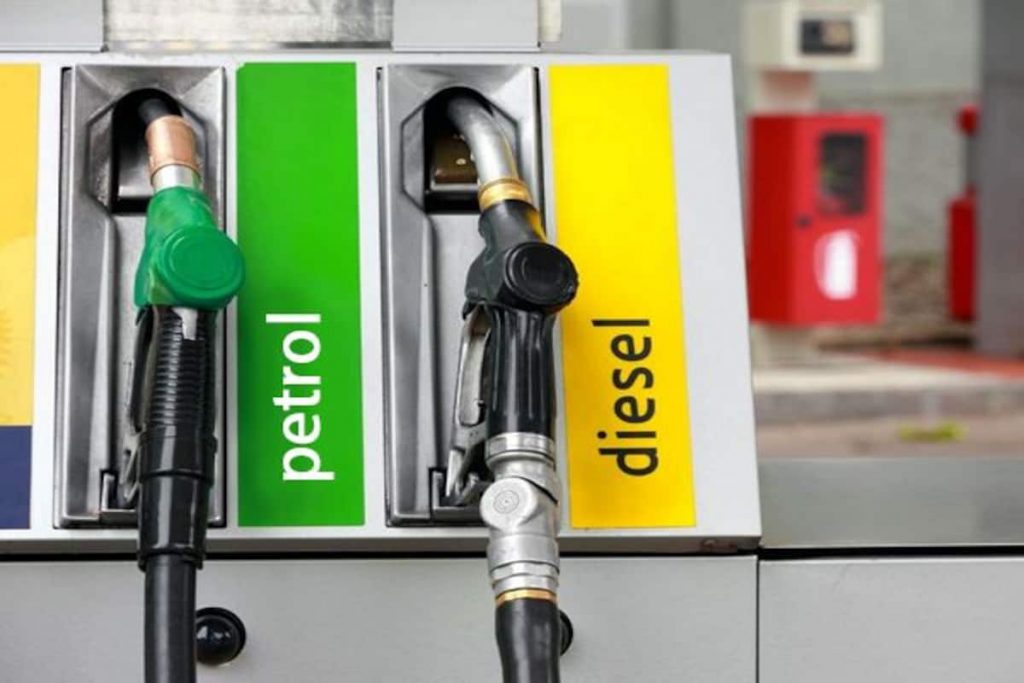
Iran’s Foreign Minister Abbas Araghchi said the route would be open to commercial shipping for the remainder of the current ceasefire period.
He said: “In line with the ceasefire in Lebanon, the passage for all commercial vessels through Strait of Hormuz is declared completely open for the remaining period of ceasefire, on the co-ordinated route as already announced by Ports and Maritime Organisation of the Islamic Rep of Iran.”
The United States and Iran are currently observing a fragile truce due to run until April 22, while Israel and Lebanon have entered a separate 10-day ceasefire.
Mr Trump said Tehran had declared the “strait of Iran” to be “fully open and ready for full passage”, but warned that the US blockade of Iranian ports would remain in place until Washington’s dealings with Tehran were fully resolved.
In Paris, Sir Keir said he would do “everything I can” to help restore safe passage through the route, as leaders from around 40 countries and the International Maritime Organisation gathered at the Elysee Palace.
The talks are aimed at building support for an international effort to protect freedom of navigation and restore confidence in commercial shipping.
Before the meeting, Sir Keir and Mr Macron met in the courtyard of the Elysee Palace, where they shook hands and posed for photographs.

The Prime Minister said: “It is very important that we build a coalition of countries around the principle that the ceasefire should be permanent, there should be a deal, and that the Strait of Hormuz is open.”
He was joined by Foreign Secretary Yvette Cooper and Chief of the Defence Staff Sir Richard Knighton, and called for a multinational initiative to safeguard shipping and support mine-clearance work.
Sir Keir said: “We must reassure commercial shipping and support mine clearance operations to ensure a return to global stability and security.”
A further multinational military planning summit is due to take place next week at the UK’s permanent joint headquarters in Northwood, north-west London.
Despite Friday’s diplomatic push, it remains unlikely that countries involved in the talks will send ships into the Strait while the conflict continues, because of the risk of attack from Iran’s coastline.

Historic defeat for Europe’s longest-serving nationalist strongman could redraw Hungary’s place in the West — but the real battle may only just be beginning
VIKTOR ORBAN has conceded defeat in Hungary’s parliamentary election, bringing a dramatic end to the nationalist leader’s 16-year grip on power and delivering what could prove to be the most significant political upset in Europe this year.
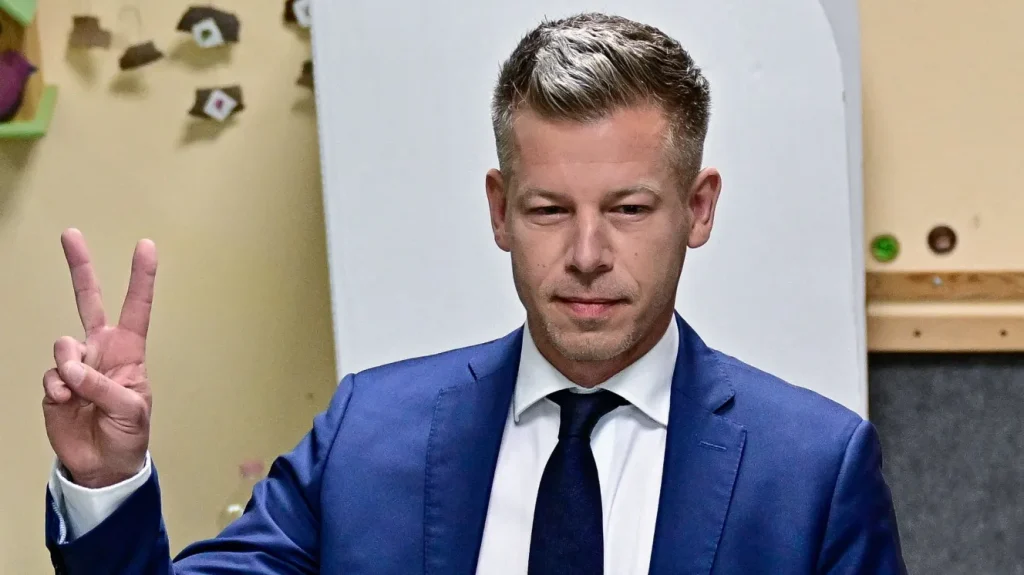
Early and partial results put Péter Magyar’s Tisza party well ahead of Fidesz, with Orbán acknowledging a painful loss as record turnout suggested a country no longer willing to settle for more of the same. For many Hungarians, this was not simply a vote to change government, but a decision to break with a political era that had come to define the nation itself.
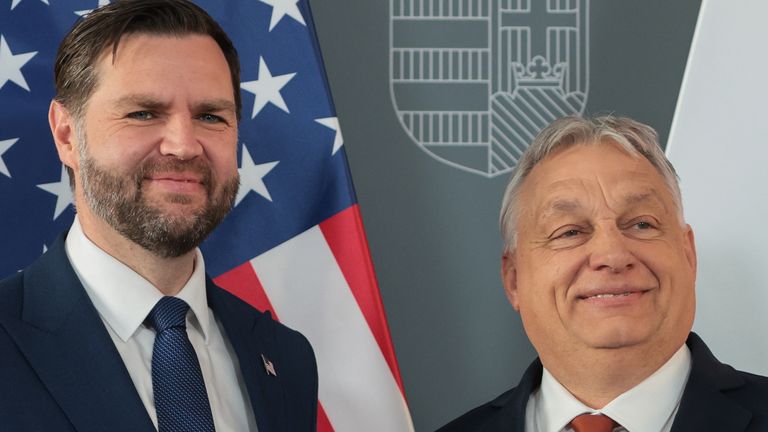
This was no ordinary election defeat for a sitting prime minister. It was a rejection of an entire system. Orbán did not merely govern Hungary; he remade it in his own image, constructing what he proudly called an “illiberal” state and turning himself into a hero for parts of the global Right. In the process, Hungary became the European Union’s most disruptive and controversial member.
That is why his fall matters far beyond Budapest. The result is significant not just because of who has won, but because of what voters appear to have turned against: entrenched power, allegations of cronyism, democratic backsliding, and a style of politics built on permanent cultural warfare.
The scale of the result is what makes it historic. Reuters reported that with 46 per cent of votes counted, Tisza was on course to win 135 seats in the 199-seat parliament — enough for a two-thirds majority if confirmed. The Associated Press, reporting on later partial returns, said Tisza had more than 52 per cent of the vote with around 60 per cent counted, far ahead of Fidesz on 38 per cent. Turnout was above 77 per cent, described by AP as the highest in post-communist Hungarian history.
That turnout tells its own story. Hungary was not sleepwalking into change; it was straining towards it. After years in which Orbán had seemed electorally untouchable, voters appear to have decided that economic drift, rising living costs and long-running corruption allegations mattered more than the government’s warnings about migrants, war and foreign enemies. Reuters said frustration over economic stagnation and the cost of living helped drive the opposition surge.
Péter Magyar’s rise makes the outcome all the more remarkable. He is not a veteran dissident or a familiar opposition grandee. He is a former Fidesz insider who broke with the ruling camp and then reinvented himself as the vessel for anti-Orbán anger. That gave him an advantage previous challengers lacked: he could not easily be dismissed as an outsider who failed to understand the system he was trying to dismantle. To Orbán loyalists, he is a traitor. To his supporters, he is proof that the rot had begun from within.
For Brussels, this could mark the start of a major reset. Orbán spent years obstructing EU partners over rule-of-law disputes, media freedom, relations with Moscow and support linked to Ukraine. Reuters reported that a Tisza victory could reopen the path to frozen EU funds and shift Hungary’s stance on key European decisions, including those connected to Ukraine. Put simply, one of the EU’s most stubborn blockers may have been removed by his own electorate.
The symbolism reaches well beyond Europe. Orbán became a reference point for nationalist and populist movements across the Western world, admired by figures on the American Right and tolerated elsewhere as a difficult but durable fact of European politics. His defeat is therefore more than a domestic upset. It is a reminder that strongman politics can look invincible until the moment voters decide they have had enough.
But this is where caution is needed. Orbán’s defeat does not necessarily mean Orbánism is finished. Even if Tisza secures a commanding majority, Hungary remains deeply divided, and much of the state, media landscape and political culture has been moulded by Fidesz over a decade and a half. Removing Orbán from office is one thing. Unpicking the loyalties, habits and networks of his era is another entirely. That will be Magyar’s true test.
There is a danger for the victors too. Political earthquakes create expectations that are almost impossible to satisfy. Magyar has campaigned as the man who can clean up the state, restore trust, improve services and bring Hungary back towards the European mainstream. That is a compelling message in opposition. It is far harder in government, particularly in a country where Orbán’s influence has been embedded so deeply. Voters may have delivered a revolution at the ballot box, but revolutions do not, by themselves, produce stable government.
Still, the meaning of the night is already unmistakable. Hungary has not merely changed government; it has rejected the assumption that Viktor Orbán’s model was permanent. After sixteen years in power, the man who made himself the face of Europe’s nationalist resistance to liberal democracy has been brought down not by Brussels, nor by foreign pressure, but by Hungarian voters themselves.

That is what makes this result so powerful — and why its consequences may reach far beyond Hungary.



Local Government11 hours ago
Calls grow for independent investigation into Manorbier school closure
Councillor alleges misleading figures, inadequate insurance and poor treatment of staff CALLS for an independent investigation into the controversial closure...


Community17 hours ago
Neyland Carnival hailed a huge success after streets fill with colour and crowds
NEYLAND CARNIVAL organisers have thanked the community, volunteers and local businesses who helped make this year’s event a memorable success....

Community20 hours ago
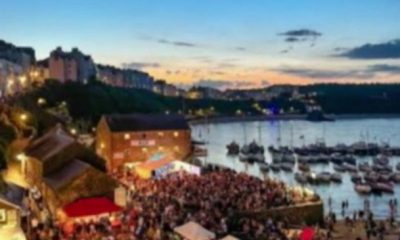
Tenby Summer Spectacular: Anger grows over ‘disaster waiting to happen’ warning
A growing backlash has followed police calls for the event’s licence to be revoked, with supporters questioning why authorities failed...

Charity2 days ago
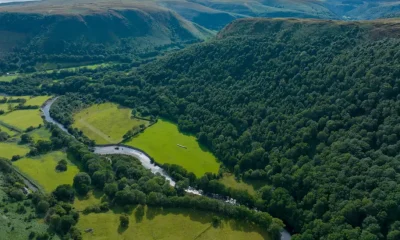
RSPB secures ‘missing link’ to reconnect wildlife habitats in Carmarthenshire
RSPB CYMRU has purchased a 96-hectare upland site in Carmarthenshire, describing it as a vital step towards reconnecting one of...


Crime3 days ago
Ann Widdecombe: Welsh politicians pay tribute as murder probe launched
Prime Minister Sir Keir Starmer has praised the former minister’s “conviction and dedication”, while political figures in Wales remembered her...


News3 days ago
Solardo pulls out of Haverfordwest show as organisers offer full refunds
Headline act confirms non-appearance as Park House Series announces major event changes DANCE music duo Solardo will no longer perform...


Local Government3 days ago
Conservatives win Pembroke Dock seat as Reform stalls and Dowson polls just 11
Jamie Street takes Market ward with a 43-vote majority as Reform finishes fourth despite its major Senedd breakthrough two months...

Health3 days ago
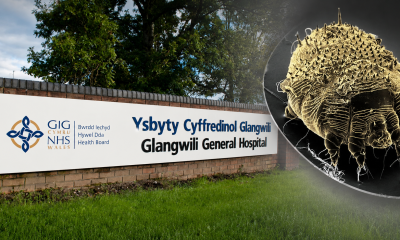
Hospital ward closed after highly contagious scabies outbreak
Hywel Dda confirms wider rise in cases across Carmarthenshire, Pembrokeshire and Ceredigion as patients and staff are offered treatment A...


Crime4 days ago
Teacher stabbing trial: The first week of evidence
Jury hears accounts of alleged planned classroom attack, teacher’s fear she was dying, and boy’s words after leaving school A...


Community4 days ago
Haverfordwest Castle refurbishment reaches new heights as roof goes on
Major milestone reached in project to transform historic gaol building into flagship visitor attraction A MAJOR milestone has been reached...
-

 Farming6 days ago
Pembrokeshire slaughterhouse given urgent improvement rating after audit failure
-
 News7 days ago
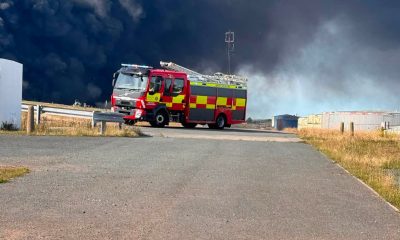
Large fire breaks out at Impala Terminal in Milford Haven
-

 Entertainment5 days ago
Swing and big band classics heading to Torch Theatre
-

 News6 days ago
From boccia to boxing: ALN multisport events give youngsters chance to try activities
-

 News6 days ago
Questions raised over Hamilton Accies finances after club’s Haverfordwest friendly
-
 Education7 days ago
Council failed Welsh language standards over school closure
-
 Entertainment7 days ago
Crymych Arms to host weekend of local music, food and drink
-

 Farming4 days ago
Working Carmarthenshire farm opens gates to visitors with new holiday cottages