


Health
Welsh pharmacies forced to sell medicines at a loss as funding model buckles


COMMUNITY pharmacies across Wales are being forced to sell some medicines at a loss because of an outdated NHS funding system that no longer reflects real-world costs, owners have warned.
Under current rules, pharmacists must dispense prescriptions at prices set nationally, even when those prices are lower than what they paid wholesalers — leaving them out of pocket on everyday items such as aspirin.
The situation has led to mounting debts, emergency loans and, in some cases, owners remortgaging their homes simply to keep their doors open.
Figures from the National Pharmacy Association suggest four in ten Welsh pharmacies were not profitable last year, with many described as “clinging on by their fingertips”.
Selling at a loss
Unlike normal retailers, pharmacies cannot set their own prices or refuse to stock products.

They are contracted to the NHS through the Welsh Government’s Community Pharmacy Contractual Framework, which fixes reimbursement rates for prescription medicines.
But wholesalers’ prices have risen sharply due to inflation, supply shortages and higher manufacturing costs.
That means the maths often no longer adds up.
In one example shared by pharmacists, a packet of 75mg aspirin costs £3.75 to buy but is reimbursed at just £3.05 — a loss of 70p each time it is dispensed.
Multiply that across hundreds of packs a month and dozens of other medicines, and small losses quickly turn into thousands of pounds.
One west Wales pharmacy owner told The Herald: “You wouldn’t run a corner shop selling bread for less than you paid for it. But that’s effectively what we’re told to do every day.”
‘Averaging out’ no longer works
The government’s model assumes that losses on some drugs will be balanced by profits on others.

But pharmacists say that system — once workable — has broken down.
Generic medicines that previously provided modest margins are now also rising in price, while reimbursement rates lag weeks or months behind market costs.
At the same time, running costs have surged.
Energy bills, staff wages, National Insurance contributions, fuel for deliveries and regulatory costs have all increased, while core NHS funding has remained largely flat in real terms for nearly a decade.
Owners say they are now busier than ever too, as GP surgeries redirect patients to pharmacies for minor ailments, vaccinations and clinical advice — work that takes time and staff but often brings little additional income.
Debt and closures
The result is growing financial pressure.
Some pharmacists report taking out short-term loans just to cover monthly payroll, while others have dipped into pensions or personal savings.
Across the UK, hundreds of community pharmacies have closed in recent years, with rural and small-town chemists particularly vulnerable.
Health campaigners warn that if closures continue, patients could lose easy access to prescriptions, advice and walk-in care — pushing more pressure back onto already stretched GP practices and hospitals.
David Thomas, Welsh Board member for the National Pharmacy Association said: “These shocking findings should sound major alarm bells to the Welsh government and will understandably cause concern to patients who depend on their local pharmacy.
“It is simply unsustainable and unfair to expect individual pharmacy owners to remortgage their house and dip into their pension pot to subsidise the cost of prescriptions and to keep their doors open for their patients.
“Pharmacies are hanging on by their fingertips and something has to change. Without urgent action, the government risks pharmacies closing for good and their New Prescription Service going up in smoke.
“To prevent this from happening, the government should step in and offer pharmacies a stabilisation payment, similar to recently offered to GP colleagues.
“Only through stabilisation and long term investment can pharmacies deliver the expansion in services for patients and take pressure away from others in the NHS.”
Russell Goodway, Chief Executive at Community Pharmacy Wales, the organisation representing all community pharmacy owners in Wales, said:
“The findings of this poll closely mirror our own evidence and reinforce the very real financial pressures currently facing community pharmacies across Wales, regardless of size or ownership model.
“Community Pharmacy Wales has been in ongoing dialogue with the Welsh Government Cabinet Secretary for Health and Social Care since before Christmas, seeking to secure a recurring stabilisation payment. Such support is essential to prevent further deterioration and to safeguard the sustainability of the sector. We will continue to make a strong and evidence-based case for the additional resources that are urgently needed.”
Government response
The Welsh Government says it recognises pharmacies are an essential part of primary care and points to increased investment, including additional stability payments and grants for premises improvements.
A spokesperson said reimbursement prices are set using supplier data and that “while some medicines may be reimbursed below cost on occasions, this is offset by the profits pharmacies make on most of the medicines they dispense”.
But pharmacists argue that assumption no longer reflects reality.
A simple question
At the heart of the row is a basic principle.
If the NHS commissions a service, pharmacists say, it should at least cover the cost of providing it.
As one owner put it: “No business can survive by selling stock at a loss and hoping it balances out. Eventually the numbers catch up with you.”
Unless the funding formula changes, many fear more local chemists could disappear from Welsh high streets — and with them one of the most accessible parts of the health service.
Photo caption: Community pharmacies say fixed NHS prices are forcing them to dispense some medicines below cost (Pic: stock).


HYWEL DDA University Health Board is urging people to take part in its consultation on the future of stroke services, as the process reaches the halfway point.
The second phase of the eight-week consultation began on May 28 and will remain open until July 26.
The health board is seeking views from patients, carers, staff, local communities and stakeholders on its preferred option for stroke services across Carmarthenshire, Pembrokeshire and Ceredigion.
Under the preferred option, a 24-hour acute stroke and rehabilitation unit would be based at Glangwili Hospital, with a stroke rehabilitation unit at Bronglais Hospital. Treat-and-transfer services would continue at Bronglais, Prince Philip and Withybush hospitals.
Stroke services are currently provided at all four main Hywel Dda hospitals, namely Bronglais, Glangwili, Prince Philip and Withybush. However, the health board says services do not consistently meet national clinical standards and that specialist stroke cover is not available 24 hours a day, seven days a week.
More than 1,700 people have already taken part in the second phase of consultation, either through public events or by completing the questionnaire.
Mark Henwood, Hywel Dda University Health Board’s Executive Medical Director, said: “We know how important stroke services are to members of our communities and to our staff.
“Providing timely, high-quality specialist care for people who experience a stroke is critical. Stroke care has advanced significantly, and evidence shows that patients have better outcomes in specialist units with access to expert teams and equipment around the clock.
“We are listening carefully to what people are telling us, and this feedback is important in helping us understand what matters most to our communities. Thank you to everyone who has already attended our engagement events, both in person and online. We look forward to speaking to more people before the consultation ends on July 26.”
Lee Davies, Executive Director of Strategy and Planning, said the health board had been meeting staff and communities across the three counties, as well as representatives from neighbouring health board areas.
He said people had raised questions about where they would go for diagnosis and treatment, how transfers between hospitals would work, and why stroke services could not continue as they are across all four hospital sites.
Mr Davies said: “It’s important to reassure people that, now and in the future, if you think someone is having a stroke, you should seek immediate help by calling 999.

“As happens today, and with any future option, they will be taken to the nearest appropriate hospital for assessment and initial treatment. If specialist treatment such as a thrombectomy is needed, patients would continue to be transferred to specialist centres in Bristol or Cardiff.
“Throughout this process we are working with the Welsh Ambulance Services University NHS Trust, and other providers such as the Adult Critical Care Transfer Service and national commissioners.
“Once an option for the future of stroke services is chosen, detailed modelling will take place to understand what dedicated transport arrangements will be needed, so this would not impact on emergency ambulance availability.
“We need to make changes to ensure we meet national standards and can provide safe, sustainable, accessible and kind services. We need to give people the best possible chance of recovery after the devastating effects of a stroke.”
The remaining public drop-in events are:
- Tuesday, June 30, 2pm to 7pm, Y Plas, Machynlleth, SY20 8ER
- Monday, July 6, 2pm to 7pm, Canolfan Creuddyn, Lampeter, SA48 7BN
- Wednesday, July 8, 2pm to 7pm, Pater Hall, Pembroke Dock, SA72 6DD
- Tuesday, July 14, 2pm to 7pm, Ivy Bush Royal Hotel, Carmarthen, SA31 1LG
- An online session will also be held on Tuesday, July 7, at 6:30pm.
Everyone is welcome to attend to find out more, ask questions and share their views.
The health board says all feedback received during this phase of consultation, along with views gathered in 2025 and the latest evidence, will be considered before a final decision is made later this year.
Further information, including the questionnaire, is available on the Hywel Dda stroke consultation website.
People can also contact the engagement team by emailing [email protected] or by calling 0300 303 8322, option 5.
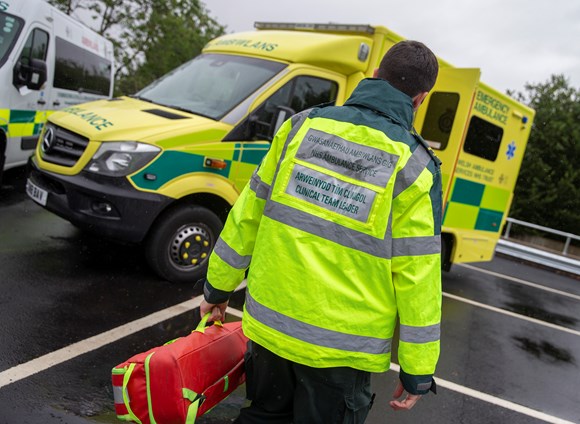
THE WELSH AMBULANCE SERVICE has stood down the critical incident declared on 26 June following three days of sustained pressure linked to the extreme heat.
The service said demand has now begun to reduce, although it remains under significant pressure.
Members of the public are still being urged to call 999 only in serious or life-threatening emergencies.
For less urgent health concerns, people are being asked to use NHS 111 Wales or the online Albot service for advice and support.
The Trust thanked staff, volunteers, partner organisations and the public for their patience, professionalism and support during what it described as an exceptionally challenging period.
THE WELSH AMBULANCE SERVICE has issued a fresh appeal to the public following the declaration of a critical incident on Friday (June 26), as exceptionally high demand continues to place pressure on crews across Wales.
In a social media post published today (Saturday, June 27), the Trust warned that hot weather is contributing to a rise in ambulance call-outs, including incidents involving heat-related illness, falls, breathing difficulties and existing medical conditions worsened by the heat.
The message comes less than 24 hours after the service declared a critical incident amid unprecedented demand, with ambulance resources stretched across Wales.
The Trust is urging people to call 999 only for serious or life-threatening emergencies, contact NHS 111 Wales for urgent health advice, and use local pharmacies for minor illnesses and ailments.
It said choosing the right service can help ambulance crews reach the sickest patients more quickly while pressures remain high.



Crime13 hours ago
Judge calls pensioner a ‘dirty old man’ as he avoids jail for exposing himself to women
Judge says 75-year-old Stewart Laugharne behaved ‘disgracefully’ as he avoids jail but is ordered to sign sex offenders register A...


Health14 hours ago
Stroke services consultation reaches halfway point as public urged to have say
HYWEL DDA University Health Board is urging people to take part in its consultation on the future of stroke services,...


Business15 hours ago
Welsh firms eye share of £5bn defence drone boom
WELSH defence and aerospace firms could be in line for a share of billions of pounds in new military spending...


Community2 days ago
Thousands line Cardigan streets for Lord Rhys homecoming parade
THOUSANDS of people lined the streets and quayside in Cardigan on Saturday as the town marked 850 years since Lord...


Crime3 days ago
Dyfed-Powys Police rated only ‘Adequate’ in organised crime inspection
A WATCHDOG has rated Dyfed-Powys Police only “Adequate” in its response to serious and organised crime, despite praise for the...


News4 days ago
Two taken to hospital after aircraft ditches in Cardigan Bay
Coastguard helicopter spotted two casualties after light aircraft came down off west Wales coast TWO people were taken to hospital...


Sport4 days ago
Long Course Weekend gets underway in Tenby as thousands head for county
Three days of swimming, cycling and running begin with The Wales Swim at North Beach THOUSANDS of athletes and supporters...


Climate4 days ago
Welsh waters, Westminster profits: Crown Estate row reignited in Wales
PLAID CYMRU has renewed calls for the Crown Estate to be devolved to Wales after figures showed income linked to...


News5 days ago
Reform MS: ‘I felt like shouting get out of the water’
Paul Marr says children playing in streams at Pembrokeshire beaches deserve better protection from pollution risks REFORM UK MS Paul...
Health6 days ago
Senedd backs call to rule out hospital downgrades after heated NHS debate
Reform UK amendment passes as West Wales hospital fears remain central political issue THE SENEDD has backed a call for...
-

 Crime7 days ago
Milford man threatened to smash parents’ windows, court hears
-

 Crime7 days ago
Haverfordwest father stole groceries amid cost-of-living struggle
-

 Crime7 days ago
Woman sentenced over neglect of child at Haverfordwest property
-

 Crime6 days ago
Police appeal after reported rape at Young Farmers rally
-
 Crime7 days ago
Dock woman given mental health treatment order after supermarket thefts
-

 Crime7 days ago
Hakin man stole Tesco goods to fund drink and gambling addictions
-

 Crime7 days ago
Grandmother banned after cocaine drug-drive offence
-
Crime3 days ago
Dyfed-Powys Police rated only ‘Adequate’ in organised crime inspection