

Crime
Police warn cryptocurrency holders after personal data found on dark web


Regional cyber crime officers urge residents to act quickly if contacted
POLICE in Wales have issued an urgent warning to cryptocurrency holders after officers discovered personal data linked to individuals in the region on the dark web.
Specialist officers from the Cyber Crime Team at Tarian Regional Organised Crime Unit (ROCU) have already contacted a number of people whose details were identified.
Anyone who received an email from Tarian ROCU on Thursday (Feb 19) is being urged not to ignore it, as action may be needed to protect themselves from fraud.
Officers stressed that genuine police emails will not usually contain links or attachments. Anyone unsure about the authenticity of a message claiming to be from police is advised to contact 101 to verify it.
Detective Inspector Mathew Davies, from Tarian ROCU, said cryptocurrency owners are increasingly being targeted by criminals.

He said: “Cryptocurrency holders are attractive targets to fraudsters. I would urge anyone who has cryptocurrency to ensure they are secure online and to be aware of potential scams.
“Make sure you are using strong passwords, enable two-factor authentication, and consider using a password manager. Regularly check your bank and other financial accounts for signs of suspicious activity.”

Police warned that fraudsters often impersonate trusted organisations such as banks, police, or financial institutions. Genuine representatives from these bodies will never ask people to transfer money, share financial details, or hand over remote access to devices.
Officers also highlighted the growing role of social media in scams, with around two-thirds of cryptocurrency frauds now beginning on online platforms, including dating sites.
Detective Inspector Davies added: “Fraudsters may attempt to build a rapport with you online and then encourage you to invest your cryptocurrency in a scheme that seems too good to be true. I would encourage all cryptocurrency holders to learn how scams work and how their money or data could be stolen.”
Anyone who believes they have been targeted or fallen victim to fraud is urged to report it via Action Fraud at www.reportfraud.police.uk.
Further advice on staying safe online is available from the National Cyber Security Centre.



Last woman hanged in Britain receives conditional pardon after Government recognises domestic abuse and “profound injustice” of her death sentence
RUTH ELLIS , the last woman to be hanged in Britain, has been granted a conditional posthumous pardon more than 70 years after her execution.
Ellis was 28 when she was hanged at Holloway Prison in July 1955 after being convicted of murdering David Blakely, a racing driver with whom she had been in a violent and abusive relationship.
The pardon was granted by The King following advice from Deputy Prime Minister and Justice Secretary David Lammy. It follows an application made on behalf of four of Ellis’s grandchildren.
The Government said the case involved exceptional circumstances, including evidence of domestic abuse and coercive and controlling behaviour which would be understood very differently by the courts today.
Ellis shot Blakely on April 10, 1955. She was convicted of murder and executed on July 13 that year. No appeal was lodged and no reprieve was granted.
The conditional pardon does not overturn her conviction. Instead, it recognises that the death sentence itself was unjust, replacing it in legal effect with a sentence of life imprisonment.
Mr Lammy said: “We cannot change what happened seventy years ago. But we can recognise that this was an exceptional case. Today’s conditional pardon is an act of mercy. We hope it brings some measure of peace to Ruth’s family.”
Matrix Chambers, whose lawyers acted on the application, said Ellis had suffered “terrible abuse” by Blakely which affected her mental state and culpability, and that the full circumstances of the killing were not properly investigated or explored at trial.
The chambers said the case prompted widespread public condemnation at the time and helped accelerate the eventual abolition of capital punishment in Britain.
Ellis’s granddaughter Laura Enston said the pardon could not undo what happened, but formally acknowledged that Ellis should not have been executed and that the justice system had failed her.
The case has long been seen as one of the most controversial executions in modern British history, not only because Ellis was the last woman to be hanged, but because later accounts revealed the extent of the abuse she had suffered before the killing.
Under modern law, the Government said, Ellis may have been able to argue partial defences including loss of control or diminished responsibility. Had those arguments succeeded, her conviction could have been reduced from murder to manslaughter.

Lawyers Alex Bailin KC and Jessica Jones, of Matrix Chambers, were instructed by Mishcon de Reya on the application and acted pro bono.

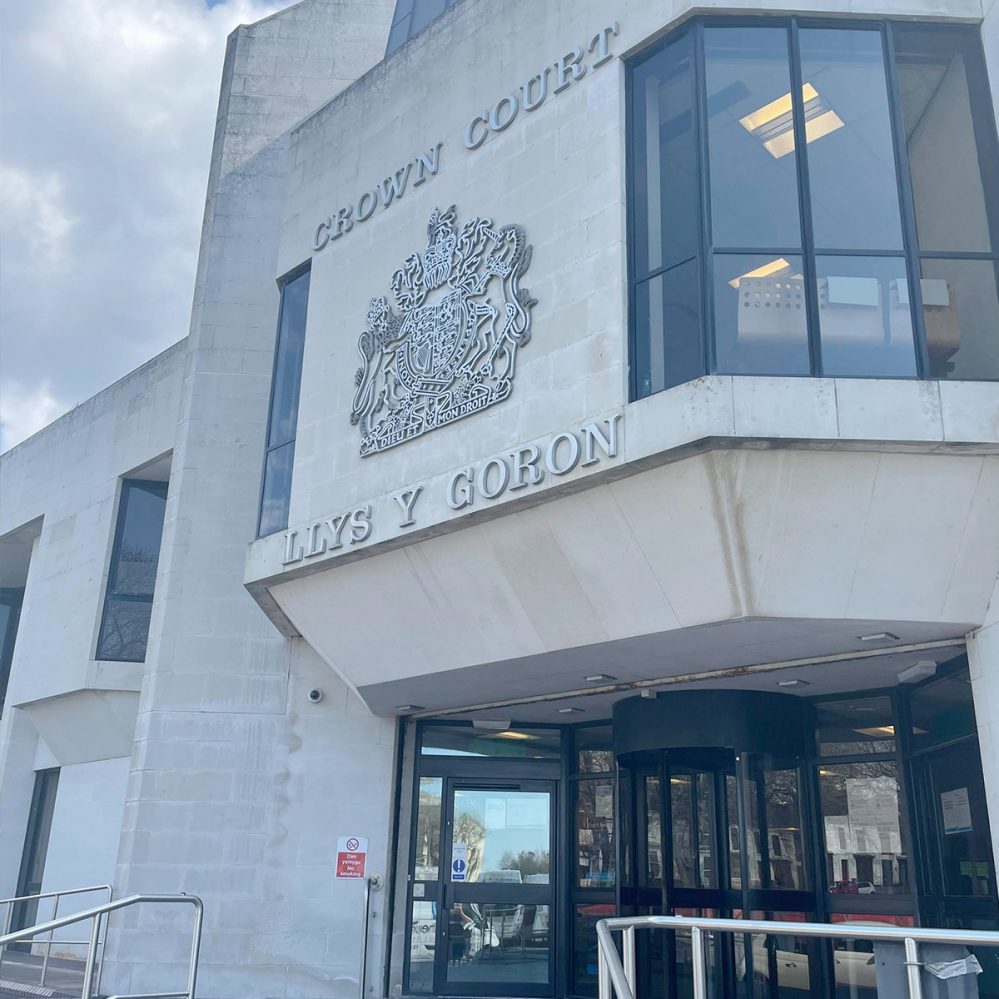
A SCHOOL first aider has told a jury that teacher Vicki Williams was “crying, shaking” and in “complete shock” after allegedly being stabbed in the head at Milford Haven Comprehensive School.
Mrs Walters Jones, the school’s main first aider and medical coordinator, gave evidence at Swansea Crown Court on Wednesday morning as the trial of a 15-year-old defendant continued.
The boy, who cannot be identified because of his age, denies attempted murder, inflicting grievous bodily harm with intent, and unlawful wounding. He has admitted possessing a bladed article on school premises.
Mrs Jones told the court that a colleague came to her office before another person ran in asking for help.
She went to the H2 classroom, where she found Mrs Williams sitting at a pupil’s desk, distressed and bleeding from injuries to her head and hand.
“She was upset, crying, shaking,” Mrs Jones told the jury.
“Her whole body was in complete shock.”
The court heard Mrs Jones provided treatment to Mrs Williams, who told her she had been attacked with a knife.
Mrs Jones said Mrs Williams told her the defendant had been acting “strange” and “weird”, and that she felt unsafe and did not want to turn around.
The jury heard the school was placed into lockdown following the incident.
Mrs Jones said she was the person who called police, but had to pass the phone to a colleague because she “couldn’t get my words out”.
The knife allegedly used in the incident was produced in court and shown to the witness, judge and jury.

Mrs Jones said she cleaned through Mrs Williams’ hair to assess the head wound, and described the injuries to her hands as “erratic”.
The court also heard evidence from Stephen Martin, the school’s inclusion and behaviour manager.
He told the jury he heard a message over the radio that something had happened and later saw Mrs Williams with blood on her hands, running down the side of her face and onto her T-shirt.
Mr Martin said Mrs Williams was “distressed, scared, shocked” and confused.
He told the court Mrs Williams said she did not know why she had been attacked or what she had done wrong.
Under questioning, Mr Martin confirmed there was no recorded conflict between Mrs Williams and the defendant.
The trial continues before Judge Paul Thomas KC.


A HAVERFORDWEST machine operator has been disqualified from driving for three years after admitting his third drink-driving offence.
Gareth James, 40, was stopped by officers on June 14 because of the speed at which he was driving his black Hyundai Tucson along Vine Road in Johnston.
“There was a strong smell of intoxicants and the defendant’s face was very red,” Crown Prosecutor Sian Vaughan told Haverfordwest magistrates this week.
Subsequent breathalyser tests showed James had 53mcg of alcohol in his breath. The legal limit is 35mcg.
The court heard that James had two previous drink-driving convictions, imposed in 2009 and 2019.
This week he pleaded guilty to drink-driving and was represented in court by solicitor Michael Kelleher.
Mr Kelleher told the Bench that although James works as a machine operator in Haverfordwest, he lives in Merthyr Tydfil.
“This offence happened soon after he began his new job,” he said.
“He had gone out with his new work colleagues and made the dreadful decision to drive. He thought he was okay, and he co-operated fully with the police.”
Probation officer Julie Norman said James had gone out with work colleagues before making a decision he now clearly regretted.
In addition to the three-year driving ban, James was fined £908 and ordered to pay a £363 court surcharge and £85 costs.



Business19 hours ago
Pembrokeshire lands £98m share of Wales marine energy boom
New industry report says county has received the second highest level of marine energy investment in Wales, supporting more than...


Crime19 hours ago
First aider tells jury teacher was “crying, shaking” after classroom stabbing
A SCHOOL first aider has told a jury that teacher Vicki Williams was “crying, shaking” and in “complete shock” after...


Crime2 days ago
Teacher feared she was dying after Milford Haven classroom stabbing
A TEACHER allegedly stabbed in the head at Milford Haven Comprehensive School told a jury she feared she was dying...


News2 days ago
Farage to resign as MP and fight Clacton by-election amid finance row
NIGEL FARAGE has announced he will resign as MP for Clacton and stand again in the by-election he intends to...
Crime2 days ago
Teacher tells jury there were ‘no issues’ with accused pupil hours before ‘stabbing’
Milford Haven teacher gives evidence as trial of 15-year-old continues at Swansea Crown Court A TEACHER allegedly stabbed at Milford...


News2 days ago
Major incident stood down after fire at Impala Terminal in Milford Haven
Fire involved decommissioned oil tank containing residual crude oil and around 60 cylinders A MAJOR incident declared during a fire...


News3 days ago
Large fire breaks out at Impala Terminal in Milford Haven
Black smoke seen for miles as emergency services respond to incident at former Puma Energy site A LARGE fire has...
Crime3 days ago
Prosecution outlines ‘planned attack’ as Milford Haven teacher stabbing trial opens
Jury hears teenager allegedly brought kitchen knife into school before teacher was stabbed in the head THE JURY in the...

Crime3 days ago
Boy, 15, denies attempted murder of Milford Haven teacher in ‘horrifying’ attack
Swansea Crown Court hears dramatic opening of trial over February stabbing A 15-YEAR-OLD boy from Milford Haven has gone on...


Crime3 days ago
Fishguard man cleared after five years in prison refused compensation again
Brian Buckle’s case raises fresh questions over justice system that says a man can be cleared by a jury but...
-

 Entertainment7 days ago
Pembrokeshire DJ lands record deal with London dance label
-

 Community6 days ago
Closure-threatened Stepaside school expected to remain open
-

 Education6 days ago
Education secretary vows to tackle ‘root causes’ of antisocial behaviour in schools
-

 Crime7 days ago
Llandeilo man accused of rape sent to Crown Court
-

 Education6 days ago
First Minister pressed on biological sex, additional learning needs, and NHS jobs
-

 Education6 days ago
Ysgol Glannau Gwaun celebrates prestigious Gold Active Travel award
-

 Community6 days ago
Saundersfoot Harbour regeneration project wins national planning award
-
News3 days ago
Large fire breaks out at Impala Terminal in Milford Haven