


Cymraeg
Reform plan to scrap Welsh language target sparks criticism from campaigners


Language activists warn proposal could undermine long-term support for Welsh
CAMPAIGNERS have warned that proposals by the Nigel Farage-led Reform UK to scrap Wales’ target of one million Welsh speakers by 2050 could place the language at risk.
The comments came during the launch of Reform’s Welsh manifesto in Newport on Thursday (Mar 5), where Farage and the party’s Welsh leader Dan Thomas set out their plans for the language.
The party says it would remove what it describes as “arbitrary” targets for the number of Welsh speakers, arguing that the language is already growing naturally.
Farage told supporters that Welsh appeared to be “thriving” in parts of the country and said younger generations were increasingly learning and using the language.
He argued that Welsh culture and language should be allowed to develop organically rather than being driven by official targets or public bodies.

Questions were also raised at the event about the future of the Welsh Language Commissioner. Farage suggested there was no clear need for additional “quangos” if the language continued to grow through public interest.
However, campaign group Cymdeithas yr Iaith said the proposals demonstrate a misunderstanding of the current challenges facing the language.
Chairman Owain Meirion said it was wrong to describe Welsh as thriving when the proportion of speakers has fallen in recent census results.
According to campaigners, around 17.8 per cent of people in Wales currently report being able to speak Welsh, with the overall proportion declining over the past two censuses.

They warned that removing the 2050 target of one million speakers could weaken long-term support for the language and the communities where it is most widely spoken.
Campaigners also pointed out that the manifesto includes relatively few references to Welsh beyond cultural pledges.
Reform has said it would continue supporting events such as the National Eisteddfod and would press the UK Government to maintain funding for the Welsh-language broadcaster S4C.

Despite this, Cymdeithas yr Iaith warned that the wider approach set out in the manifesto could weaken existing structures designed to protect and promote the language.
Farage also used the Newport event to claim that Reform could challenge the long-standing dominance of the Welsh Labour in Welsh politics.
The party says its manifesto represents a plan for significant political change ahead of the next Welsh election.
Language campaigners, however, say the debate highlights continuing tensions over how best to protect the future of Welsh while ensuring policies reflect the realities facing communities across Wales.



FINANCIAL backing of this year’s Eisteddfod in Pembrokeshire, to the tune of £73,000, with a potential budget of up to £200,000, has been approved by senior councillors.
The 2026 Eisteddfod, running from August 1-8 at Llantwd, north Pembrokeshire, holds particular historical significance as it marks the 850th anniversary of the first recorded Eisteddfod, held in 1176 at Castell Aberteifi.
With this year’s Maes located close to the original site, the event is expected to be a landmark occasion for the region and for Wales as a whole.
The National Eisteddfod is the largest cultural festival in Europe and one of the most prominent events in the Welsh cultural calendar, attracting approximately 175,000 visitors annually.
The festival celebrates Welsh language, literature, music, and the arts, with a diverse programme of competitions, performances, exhibitions, and community activities.
The Eisteddfod proclamation took place in Narberth last May, with hundreds attending.
At the June meeting of Pembrokeshire County Council’s Cabinet, members were asked to approve Pembrokeshire County Council to lead and deliver Pentre’r Garreg Las at the National Eisteddfod 2026.
Cabinet was also asked to approve the current financial commitment of approximately £73,751 (+ VAT), noting that further costs will be finalised as the programme develops, and endorse collaborative arrangements with Ceredigion and Carmarthenshire County Councils.
A budget for up to £200,000 for the promotion of the event is also being pencilled in; members hearing it was hoped this figure would be a ceiling of potential costs, with hopes the council’s part could be lowered by external funding.
A report for members, presented by Cabinet Member for Adult Social Care, Safeguarding and the Welsh Language Cllr Alistair Cameron, said: “The National Eisteddfod is Europe’s largest travelling cultural festival, attracting up to 170,000 visitors annually and providing a nationally significant platform for the celebration of Welsh language, culture and identity.
“As lead authority, Pembrokeshire is responsible for the overall coordination, planning and funding of the Pentre. This includes the development of the overarching concept, the curation of a coherent thematic programme, and the management of key relationships with partner authorities, stakeholders and delivery partners.”
It went on to say: “While initial site, infrastructure and concept costs have been identified at approximately £73,751 (+ VAT), it is recognised that the full delivery of Pentre’r Garreg Las, as a flagship offer led by Pembrokeshire, will necessitate a broader major events budget estimated in the region of £200,000. The funding for this is coming from the current major events budget with additional funding coming from the initiative fund reserve.”

The report said efforts will be made to maximise external funding opportunities in order to mitigate the net cost to the council.
Cabinet Member for Residents’ Services Cllr Rhys Sinnett said: “This is a fantastic opportunity for Pembrokeshire to showcase the best of this county,” adding: “The last time it was here was 2004, we get to see this opportunity maybe every 20 years, it’s down to us to make the best of the opportunity, overall it’s a fantastic story for us as a county.”
A full budget breakdown is expected at the July Cabinet meeting, members agreeing to back the recommendations.

AS THE NATIONAL Centre for Learning Welsh celebrates its highest ever number of learners – over 20,000 in 2024–2025 – it has announced a new ambassadors scheme with the aim of inspiring even more people to learn, use and enjoy the Welsh language.
The Learn Welsh Ambassadors Scheme will be launched today (May 23) at the Urdd Eisteddfod on Anglesey, as part of the Eisteddfod’s ‘Learners’ Day’ celebrations.
Four high-profile ambassadors have been appointed to the new scheme:
- Aleighcia Scott – singer and DJ, and one of the mentors on S4C’s talent show Y Llais, who will also be honoured with the Green robe at Eisteddfod Genedlaethol y Garreg Las in August.
- Tori James – adventurer and the first Welsh woman to climb Mount Everest.
- Katie Owen – DJ and social media influencer.
- Ian Gwyn Hughes – Head of Public Relations at the Football Association of Wales.
The four ambassadors will represent the Centre, sharing their personal experiences of the Welsh language, and promoting the work of the Learn Welsh sector. They will also support recruitment campaigns, encouraging people from all backgrounds to begin learning Welsh, or to continue their language journey.
The scheme reflects the Centre’s vision to attract and support a wide range of audiences to learn and use Welsh, including workforces, communities, key sectors such as Health and Social Care, the Education Workforce and Sport, young people and families.
The Centre is launching the scheme at the Urdd Eisteddfod. It works in partnership with the Urdd to provide a range of opportunities for the organisation’s staff, and the young people using its services, to strengthen their Welsh language skills or to begin learning the language.
The Centre is also pleased to support the Urdd’s medals for young Welsh learners, the Bobi Jones Medal for learners aged 19 years’ old and above, and the Learners’ Medal for learners aged under 19 years.
Dona Lewis, Chief Executive of the National Centre for Learning Welsh, said: “Creating new Welsh speakers is the Centre’s main aim, supporting them to use and enjoy the language with confidence in their everyday lives.
“I’m pleased to say the Learn Welsh sector is going from strength to strength, with more people than ever completing our courses.
“We’re delighted to welcome a group of passionate ambassadors who will share their experiences of the Welsh language and help promote and celebrate our work. We’re proud to launch this new scheme at the Urdd Eisteddfod, one of our partners.
“The Centre works creatively and in partnership across different sectors, providing one, single learning pathway to becoming a Welsh speaker. We are all here to welcome and support our learners and new speakers at every stage of their language journey.”
Aleighcia Scott said: “I’m delighted to take part in this scheme. Learning Welsh has been an important personal journey for me, and it has opened new doors – both creatively and socially.”

Tori James said: “Learning a new skill can be a bit like climbing a mountain – it can be a challenge, but every small step is a success!
“I’m very pleased to have the opportunity to support people to take their first step into learning Welsh, and to keep going – it’s a journey well worth taking.”
Katie Owen said: “I’d always wanted to learn Welsh, and it has been the best thing I’ve done. The Welsh-speaking community is so welcoming, and the National Centre for Learning Welsh offers so many opportunities to learn and use the language.”
Ian Gwyn Hughes said: “Welsh belongs to all of us, and it has been fantastic to see the positive response to our use of the language at the Football Association of Wales. I look forward to supporting the Centre’s work to extend the use of Welsh in all kinds of contexts.”

A NEW report has found that Welsh-speaking students face inconsistent access to Welsh language services across Wales’ colleges and universities.
The research, published by the Welsh Language Commissioner on Monday (May 25), gathered responses from more than 1,500 further and higher education students.
It examined four key areas: whether students can submit written work in Welsh, choose accommodation with Welsh-speaking students, access a Welsh-speaking personal tutor, and receive wellbeing support through the medium of Welsh.
The report also looked at the wider language culture on campuses, including how institutions promote Welsh language services and support students to use Welsh naturally in academic and social settings.
Osian Llywelyn, Deputy Welsh Language Commissioner, said colleges and universities had a vital role in helping students use Welsh as part of everyday life.
He said: “Given the importance of sustaining and developing the continued use of the Welsh language, it is essential to recognise the key role that further education colleges and higher education institutions play in ensuring that students have the opportunity to use Welsh naturally as part of their academic and social lives.
“While it is encouraging to see strong examples of good practice, that experience is not consistent across the sector. As a result, we have identified clear improvement actions, and we will be asking the relevant institutions to address them.”
Five improvement actions have been identified. These include standardising Welsh-medium assessment arrangements, proactively offering Welsh language services rather than simply making them available on request, addressing gaps in workforce Welsh-language skills, strengthening students’ sense of belonging through Welsh, and improving self-assessment and monitoring.
James Owen, Chief Executive of Medr, the body responsible for funding and regulating tertiary education in Wales, said the findings showed the need for more support across the sector.
He said Medr’s new Welsh Language Condition would place a clearer focus on providers promoting and supporting the use of Cymraeg, and on creating formal and informal opportunities for staff and learners to develop their Welsh-language skills.
Ioan Matthews, Chief Executive of Coleg Cymraeg Cenedlaethol, said students’ experiences of Welsh at college or university could influence their willingness and ability to use the language later in the workplace.
He said the report showed the need for the Welsh-language experience to extend “well beyond the classroom”.
The report will be officially launched at the Welsh Language Commissioner’s stand at the Urdd Eisteddfod in Anglesey at 11:00am on Monday (May 25).



Community6 hours ago
Milford Haven School pupil praised after stepping in during real-life emergency
A YEAR 11 pupil at Milford Haven School has been praised after putting his first aid training into action to...


Community9 hours ago
River festival brings crowds to Haverfordwest
A CELEBRATION of the River Cleddau brought crowds into Haverfordwest on Saturday (June 13) as the town’s River Festival returned...


Charity9 hours ago
Voices at the Castle hailed as unforgettable night after weather setback
Russell Watson headlines spectacular charity concert at Pembroke Castle A SPECTACULAR evening of live music at Pembroke Castle has been...

Local Government1 day ago
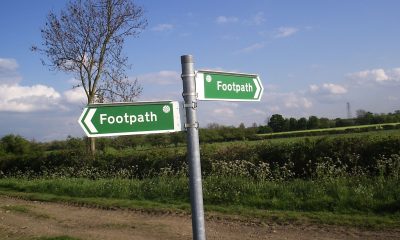
Council admits 74 rights of way complaints remain unresolved
Key post vacant since February as walker raises safety concerns over paths near Llanteg and Amroth PEMBROKESHIRE COUNTY COUNCIL has...


Education2 days ago
Diocese threatens legal action as Manorbier school closure battle intensifies
Church says council could face judicial review over fire-hit school A BITTER row over the future of Manorbier Church in...


Health2 days ago
Baby loss charity calls for urgent action after latest Wales figures published
Sands says Welsh Government must set clearer targets to reduce stillbirths and neonatal deaths A BABY loss charity has called...

Health2 days ago
Cancer delays worsening as west Wales hospitals struggle to recruit specialists
Health board admits standards are difficult to meet as doctors warn of “extremely dangerous” shortages PATIENTS in west Wales are...


News2 days ago
Rhun ap Iorwerth highlights first 25 days in office as First Minister
Plaid Cymru leader says government is moving quickly on NHS, farming and economic priorities FIRST MINISTER Rhun ap Iorwerth has...


Crime3 days ago
Man accused of six rapes including alleged Haverfordwest offence
A MAN has been sent to Crown Court accused of six rapes, including an alleged offence at a Haverfordwest campsite....


News3 days ago
Childcare row erupts as Plaid faces questions over costs and delivery
Opposition parties clash over flagship pledge as Senedd debate exposes growing divisions PLAID CYMRU’S flagship promise to create what it...
-

 Crime6 days ago
Sex offender in senior role at Tenby family hotel
-
 Crime5 days ago
Haverfordwest pair accused of £80,000 rogue trading frauds
-
Crime3 days ago
Man accused of six rapes including alleged Haverfordwest offence
-
Education2 days ago
Diocese threatens legal action as Manorbier school closure battle intensifies
-

 Community6 days ago
Forgotten wartime archive found in Pembroke Dock attic after 80 years
-

 Crime5 days ago
Families condemn failed appeal by paddleboard boss jailed over Haverfordwest tragedy
-
 Crime5 days ago
Knife blankets call as school staff face rising violence fears
-

 Local Government2 days ago
Taxi suspended after county-wide licensing checks