


News
From Baghdad to Pembrokeshire: The Herald’s remarkable satellite news truck


A SCRUFFY satellite truck rescued from a London scrapyard has become one of the most unusual members of The Pembrokeshire Herald newsroom.
Bought and driven to west Wales in 2020, the ageing Mercedes-based vehicle is no ordinary van. It is a fully equipped satellite news gathering (SNG) truck – once used by international broadcasters to beam live television pictures from around the world.
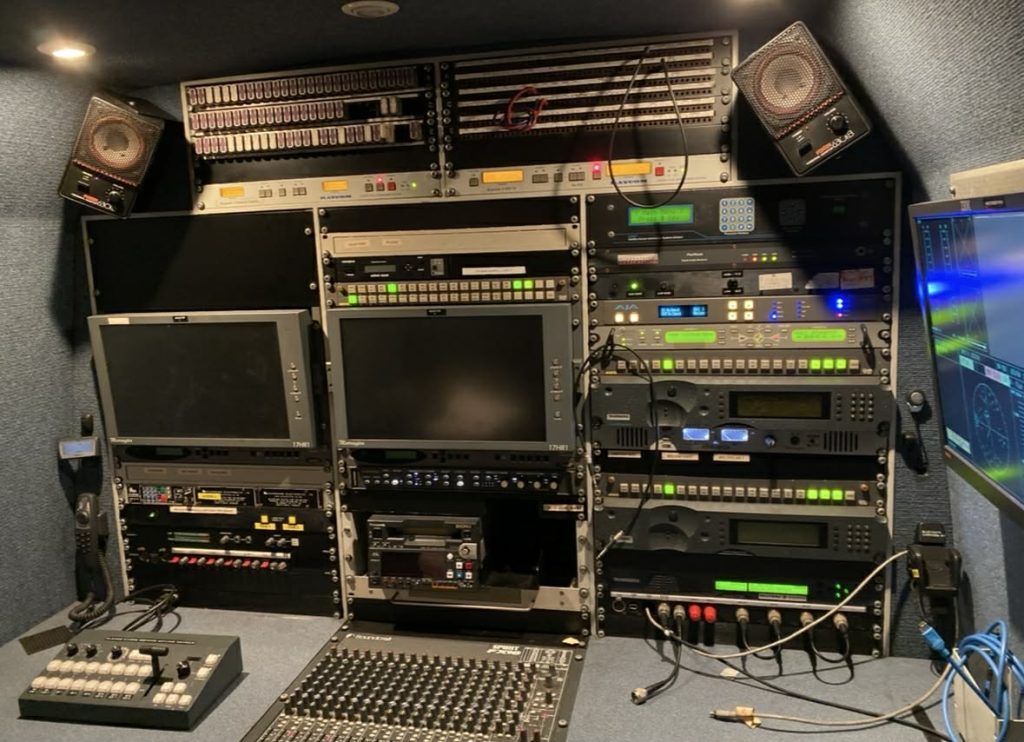
Today it sits ready outside the Herald office, prepared to roll out at a moment’s notice to fires, harbour incidents, elections and breaking news across the county.
But its past life reads like something out of a newsroom adventure story.

From world events to West Wales
Evidence inside the vehicle suggests it once worked for the global news agency Reuters, carrying the uplink identifier UKI-415.

Satellite hobbyists scanning broadcast frequencies logged the truck transmitting live video feeds during major international events, including coverage linked to the 2011 G8 summit in Deauville, France.

In those days the truck would park at a location, deploy the satellite dish on its roof, and uplink video signals directly to communications satellites orbiting 36,000 kilometres above the Earth.
Within seconds the footage could be received by television networks anywhere in the world.
Inside the Herald van, much of that original equipment is still in place.

Engineering racks, patch panels, schematics and instruction manuals remain exactly as they were when the truck was in professional service. Even rolls of broadcast cable were left behind.
Among the more curious discoveries were a box of DV tapes recorded during the football World Cup in Germany, giving a glimpse of the vehicle’s former life covering international sporting events.

The geeky bit: how it worked
Before fibre broadband and mobile internet made live broadcasting easy, vehicles like this were the cutting edge of television technology.

The truck’s roof-mounted dish automatically locks onto a communications satellite using precise positioning motors. Engineers would dial in the satellite’s coordinates and adjust the signal until the uplink was perfectly aligned.
The signal was then transmitted on frequencies such as 10.996 GHz horizontal with a symbol rate of 5632, technical settings that satellite enthusiasts around the world could detect while scanning broadcast satellites.
Inside the van, video from cameras was encoded and fed into a powerful transmitter. The signal travelled from the truck to the satellite and then down again to television studios thousands of miles away.
The whole process could take less than a second.
These systems were expensive. When new, a fully equipped satellite news truck could cost more than £300,000, combining a specially converted vehicle with high-power transmitters, precision tracking systems and professional broadcast equipment.
A truck that has seen conflict
One patch of welded metal at the back of the vehicle tells an even more dramatic story.
Underneath the repair is what appears to be a bullet or shrapnel hole – believed to have been sustained while the truck was operating in Iraq.
Notes left inside the vehicle indicate the satellite truck had at some point been deployed in Baghdad during the early years of the Iraq conflict, when broadcasters relied heavily on satellite uplinks to transmit footage from the war zone.
The truck also travelled extensively across Europe. Receipts found with the vehicle show that at one point it underwent an engine rebuild in Italy costing around €11,000.
A narrow escape from the scrapyard
When the Herald discovered the truck in a London scrapyard, it was close to being dismantled.
The scrap dealer who owned it had planned to strip out the specialist equipment and sell the empty vehicle as a standard van.
Instead, the Herald purchased it intact and drove it straight from London back to Pembrokeshire without incident.
Today the truck still retains its deployable satellite dish and stabilisers, though modern reporting is usually transmitted via satellite internet rather than traditional broadcast uplinks.
A mobile newsroom
The vehicle has since been converted into a mobile newsroom capable of operating almost anywhere.
It carries workspace, power generation equipment, communications systems and safety gear including helmets and high-visibility clothing used when reporting from major incidents.
Its distinctive appearance – complete with satellite dish – has also proved useful when covering events.
On one memorable occasion, the van even managed to gain access backstage at a major music festival when security assumed it belonged to a television crew.
Ready to respond
Despite its extraordinary history, the truck’s current job is much closer to home.
From fires and road accidents to harbour incidents and election counts, the Herald’s rapid-response vehicle helps reporters reach breaking news quickly across Pembrokeshire and beyond.
A vehicle once used to transmit footage of world leaders and international crises now spends its days covering the stories that matter most to local communities.
For a truck that once travelled from Baghdad to the G8 summit, its latest assignment may be its most important yet: helping tell the stories of Pembrokeshire.

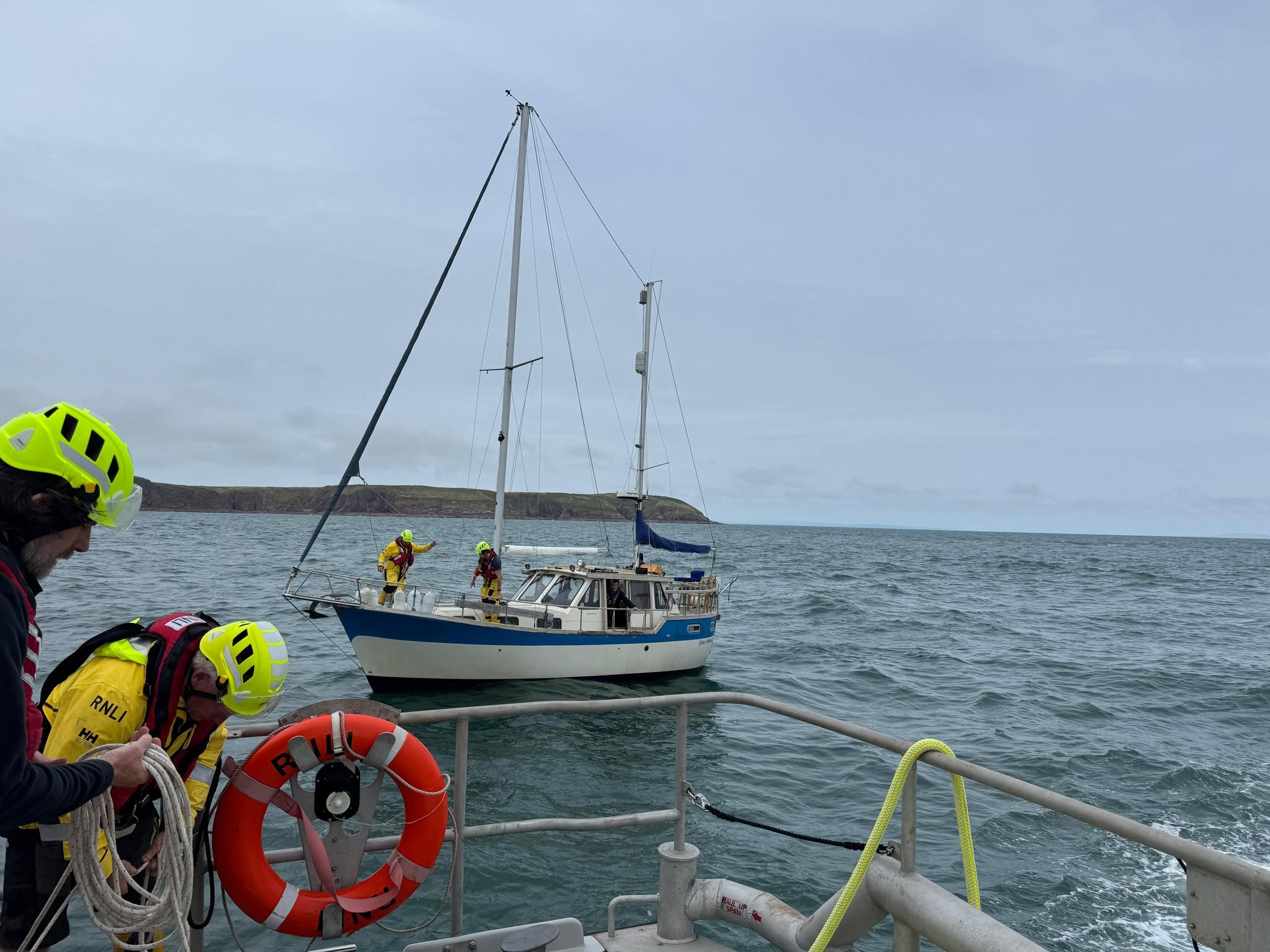
A YACHT was towed back to Tenby after its skipper became unwell off Caldey Island.
Tenby’s all-weather lifeboat was requested to launch at 1:40pm on Monday (Jun 15), after the coastguard received a call from the occupants of a yacht reporting that the skipper had become ill around one mile south of Caldey Island.
The volunteer crew quickly made their way to the vessel, which had three people and a dog on board.
Once alongside, the lifeboat crew discovered that the skipper was suffering badly from seasickness and that the other two people on board were unable to sail the yacht themselves.
After a full assessment by the coxswain, it was decided that the safest course of action was to tow the yacht back to Tenby. The vessel was drifting with the tide towards Caldey Island and was also considered a potential navigational hazard to other boats.
Two lifeboat crew members were placed aboard the yacht to help set up the tow and to monitor the unwell skipper during the journey back.
After a tow of around an hour, the yacht was placed on the lifeboat mooring in the calmer waters of North Bay.
The lifeboat then returned to station, arriving back at 3:15pm.
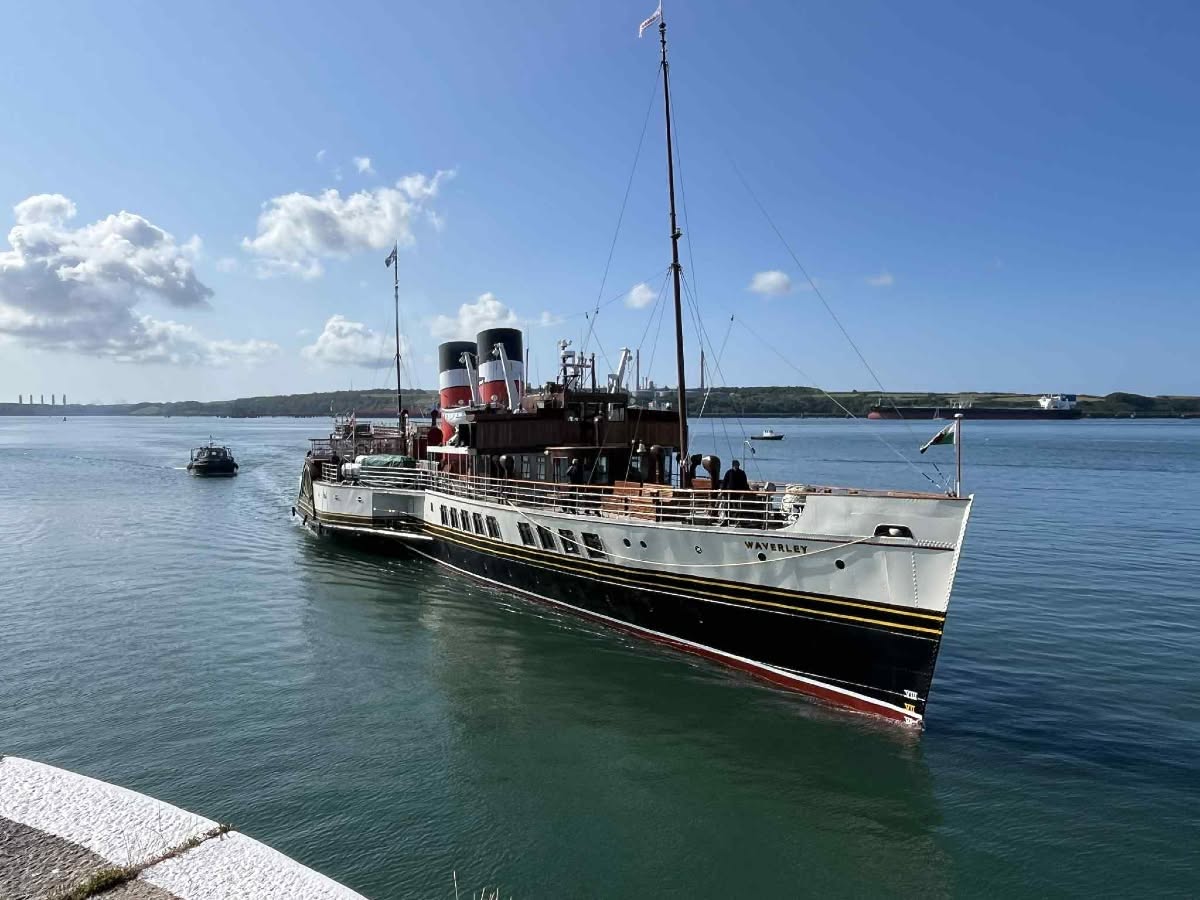
THE WORLD’S last seagoing paddle steamer will return to Pembrokeshire this week as Waverley marks the 79th anniversary of her maiden voyage.
The historic vessel will sail from Milford Haven and Tenby on Tuesday (Jun 16), with trips including a daytime cruise around Skokholm, Skomer, St Brides Bay and Ramsey Island from 11:30am to 4:30pm.
There will also be an evening sailing from Milford Haven at 5:00pm, travelling to St Govan’s Head, Caldey Island and along the Pembrokeshire coast, returning at 9:50pm.
Passengers can also join Waverley at Tenby, with sailings to Milford Haven and an evening cruise around Caldey Island and the coast.
On Wednesday (Jun 17), Waverley will make her only Fishguard visit of 2026, with an evening cruise to St David’s Head, passing Strumble Head Lighthouse, from 6:15pm to 9:15pm.
Tickets are available through Waverley Excursions.

MID WALES peace activist Angie Zelter was arrested outside the Royal Courts of Justice in London after holding a placard in support of Palestine Action.
The 75-year-old campaigner, from Knucklas, Powys, was detained at around 12:20pm on the steps of the court, according to Radnor Palestine Links.
The group said Ms Zelter was arrested under Section 13 of the Terrorism Act 2000 after holding a sign which read: “Saving lives is not terrorism. I support Palestine Action.”
She was taken to Charing Cross Police Station and released around two hours later, the group said.
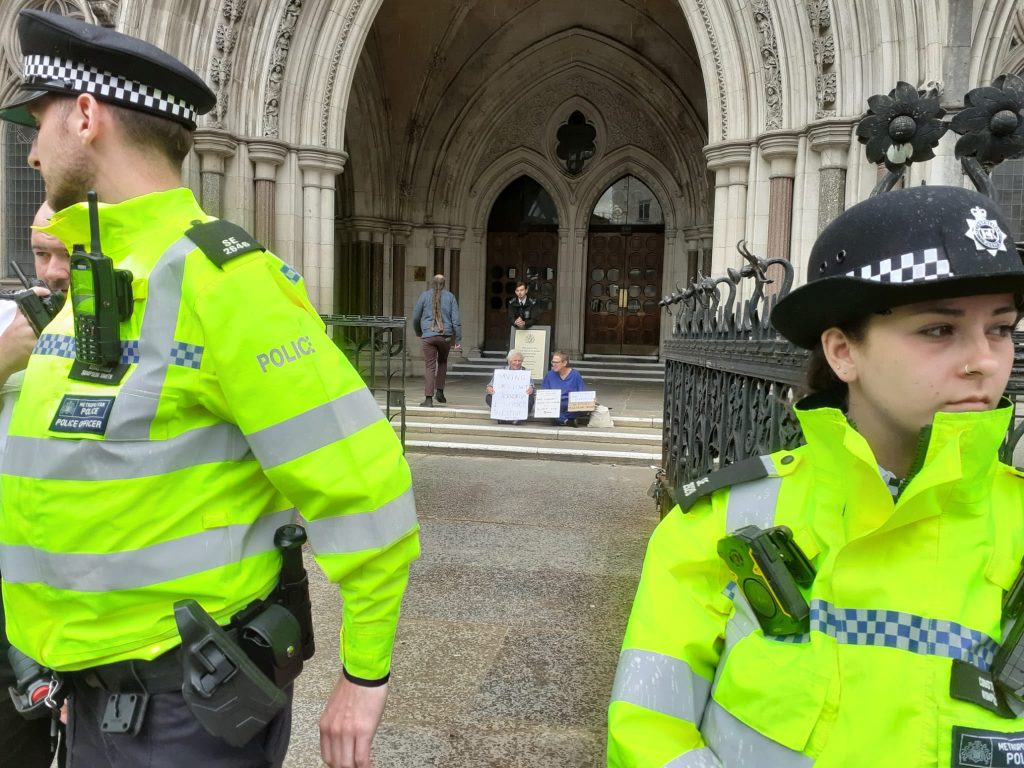
The arrest came as the Court of Appeal ruled in favour of the UK Government over its decision to proscribe Palestine Action under terrorism legislation.
The ruling overturned an earlier High Court decision which had found the ban unlawful. The Court of Appeal held that the Government’s decision was lawful and proportionate.
Palestine Action was banned after the Home Secretary moved to proscribe the group under the Terrorism Act 2000. Supporting or inviting support for a proscribed organisation can be a criminal offence.
Radnor Palestine Links said the protest formed part of an ongoing campaign against the use of counter-terrorism laws against peaceful demonstrators.
Ms Zelter, a long-standing peace and human rights campaigner, has been arrested more than 100 times worldwide during decades of non-violent direct action. She is also known as a founder of Trident Ploughshares.
Speaking after her arrest, Ms Zelter said: “I think it’s a terrible indictment of the criminal justice system that you are charging me with terrorism for holding a peaceful sign.
“We have to uphold the most important international laws. Peaceful, disruptive protest is absolutely essential to protect democracy.”
The Metropolitan Police has been asked to confirm the circumstances of the arrest, whether Ms Zelter was formally charged, and the conditions of her release.

Photo caption: Court protest: Angie Zelter outside the Royal Courts of Justice in London holding a sign in support of Palestine Action (Pic: Radnor Palestine Links).


Business13 hours ago
Celtic Freeport five-year plan puts Milford Haven at centre of green energy future
Strategy promises investment, skilled jobs and new supply chains, but major barriers remain over grid connections, planning and delivery THE...

Education14 hours ago
Closure of Ysgol Clydau approved after emotional council debate
COUNCILLORS WARNED RURAL COMMUNITIES WILL REMEMBER DECISION PEMBROKESHIRE councillors have voted to close Ysgol Clydau following an emotional debate over...


Education14 hours ago
Manorbier school closure process to continue after narrow council vote
Questions remain over insurance, rebuilding costs and possible legal action by Diocese PEMBROKESHIRE councillors have voted to press ahead with...

Community17 hours ago
The father, son and daughter lifeguard trio saving lives in Pembrokeshire
A FATHER, son and daughter are preparing to help keep beachgoers safe on the Pembrokeshire coast this summer as part...

Community1 day ago
Beating of the Bounds brings music, boats and tradition to Haverfordwest
CENTURIES-OLD CEREMONY DRAWS FAMILIES TO THE RIVERSIDE HAVERFORDWEST’S historic Beating of the Bounds returned on Sunday (Jun 14), with boats,...


Community1 day ago
Milford Haven School pupil praised after stepping in during real-life emergency
A YEAR 11 pupil at Milford Haven School has been praised after putting his first aid training into action to...


Community2 days ago
River festival brings crowds to Haverfordwest
A CELEBRATION of the River Cleddau brought crowds into Haverfordwest on Saturday (June 13) as the town’s River Festival returned...


Charity2 days ago
Voices at the Castle hailed as unforgettable night after weather setback
Russell Watson headlines spectacular charity concert at Pembroke Castle A SPECTACULAR evening of live music at Pembroke Castle has been...

Local Government2 days ago
Council admits 74 rights of way complaints remain unresolved
Key post vacant since February as walker raises safety concerns over paths near Llanteg and Amroth PEMBROKESHIRE COUNTY COUNCIL has...


Education3 days ago
Diocese threatens legal action as Manorbier school closure battle intensifies
Church says council could face judicial review over fire-hit school A BITTER row over the future of Manorbier Church in...
-

 Community1 day ago
Pembrokeshire Chess Club crowned Welsh champions
-

 Crime6 days ago
Haverfordwest pair accused of £80,000 rogue trading frauds
-
Education3 days ago
Diocese threatens legal action as Manorbier school closure battle intensifies
-

 Crime5 days ago
Man accused of six rapes including alleged Haverfordwest offence
-
 Crime4 days ago
Pembroke Dock teenager sentenced over train strangulation attack
-

 Crime7 days ago
Families condemn failed appeal by paddleboard boss jailed over Haverfordwest tragedy
-
 Crime7 days ago
Knife blankets call as school staff face rising violence fears
-
 Local Government4 days ago
Taxi suspended after county-wide licensing checks