


News
Reform UK candidate quits days after Nazi salute row


Corey Edwards stood in Pen-y-bont Bro Morgannwg and appeared at national hustings shortly before stepping down
REFORM UK Senedd candidate Corey Edwards has stepped down from the upcoming election, just days after controversy over a photograph appearing to show him making a Nazi salute.
The party confirmed on Thursday (Mar 27) that Edwards had withdrawn from the race, citing mental health issues. A spokesperson said: “Corey Edwards has informed us that he is stepping down as a candidate for the Senedd election this May, citing issues with his mental health.
“We wish him well for the future and hope his privacy can be respected at this difficult time.”
Edwards had been selected as Reform UK’s lead candidate for Pen-y-bont Bro Morgannwg, meaning he was in a strong position to be elected if the party secured a seat in the constituency.
His withdrawal comes shortly after a photograph emerged, first published by Nation.Cymru, which appeared to show him performing a Nazi salute. Edwards said the image, taken in 2019, could be “misinterpreted” and claimed he had been imitating either a scene from Fawlty Towers or Welsh footballer Wayne Hennessey, who was previously involved in a similar controversy.

Reform UK leader Nigel Farage said the image “looked terrible” but confirmed Edwards would not be removed as a candidate at the time, describing him as “a human being” and referencing the sitcom scene as context.
Edwards had also appeared publicly as a Reform representative at a national youth hustings event in Cardiff on Thursday (Mar 19), alongside politicians from other major parties.
In a statement, Edwards said: “Like many young people, I have made mistakes. But I am proud of the person I am today and the values I stand for.”
The Herald understands that Reform UK has not yet confirmed whether a replacement candidate will be selected for the constituency.



Phillip Roberts stole cash from USA Chicken and returned the following day with intent to steal
A CARMARTHEN man has admitted a string of burglaries at the same takeaway business on consecutive days.
Phillip Roberts, 44, of Brewery Road, Carmarthen, appeared before Llanelli Magistrates’ Court after pleading guilty to three offences connected to USA Chicken on Blue Street.
The court heard that on June 4, Roberts entered the premises as a trespasser and stole a tip jar containing cash. He also admitted a second burglary at the same business on the same date, during which £50 cash was stolen.
A further offence took place on June 5, when Roberts entered USA Chicken as a trespasser with intent to steal.
Magistrates adjourned sentence for the preparation of a pre-sentence report. The report will consider all sentencing options, including possible committal to the Crown Court.
Roberts was granted conditional bail. He must not enter USA Chicken, Blue Street, and must not contact Mustafa Baksi, either directly or indirectly.
He is due to return to Llanelli Magistrates’ Court on July 1 for sentence.

THE WELSH AMBULANCE SERVICE has issued a fresh appeal to the public following the declaration of a critical incident on Friday (June 26), as exceptionally high demand continues to place pressure on crews across Wales.
In a social media post published today (Saturday, June 27), the Trust warned that hot weather is contributing to a rise in ambulance call-outs, including incidents involving heat-related illness, falls, breathing difficulties and existing medical conditions worsened by the heat.
The message comes less than 24 hours after the service declared a critical incident amid unprecedented demand, with ambulance resources stretched across Wales.
The Trust is urging people to call 999 only for serious or life-threatening emergencies, contact NHS 111 Wales for urgent health advice, and use local pharmacies for minor illnesses and ailments.
It said choosing the right service can help ambulance crews reach the sickest patients more quickly while pressures remain high.

SIX people have been arrested following Immigration Enforcement raids at Florentino’s Italian restaurants in Tenby and Carmarthen.
Officers visited the Tenby branch in St Julian’s Street on June 18, where two Romanian nationals were identified as allegedly having no right to work in the UK. Both were arrested on suspicion of illegal working.
The Tenby operation followed an earlier raid at Florentino’s in Carmarthen in February, where four workers — two Romanian nationals, a Bangladeshi national and a Mongolian national — were also arrested on suspicion of illegal working.

The Herald previously reported in March that the Carmarthen restaurant had been linked to a major HMRC case, after Claudio Cernat Ltd, formerly trading as Florentino’s on Jacksons Lane, was listed over a £278,000 deliberate tax underpayment and a further £186,000 penalty.
Immigration officials say inquiries are now under way to establish who may be liable for employing the individuals. Employers found to have breached illegal working rules can face civil penalties of up to £60,000 per worker.
One of the Tenby workers has already returned, while the other is in the process of returning. Of the Carmarthen workers, two have returned, one was placed on immigration bail and another was de-arrested with a warning.
Immigration Enforcement Lead for Wales, Richard Johnson, said: “I want to thank my officers who showed the highest levels of professionalism under challenging circumstances on these operations.
“Immigration Enforcement teams in Wales continue to work round the clock to ensure businesses play by the rules and those with no right to be in the UK are tracked down and returned at the earliest opportunity.”
The Home Office says illegal working enforcement has increased significantly since July 2024, with raids and arrests rising across the UK and Wales.
No finding has yet been made against the restaurant operators in relation to the latest arrests.
Florentino’s has been approached for comment.



Crime20 hours ago
Dyfed-Powys Police rated only ‘Adequate’ in organised crime inspection
A WATCHDOG has rated Dyfed-Powys Police only “Adequate” in its response to serious and organised crime, despite praise for the...


News1 day ago
Two taken to hospital after aircraft ditches in Cardigan Bay
Coastguard helicopter spotted two casualties after light aircraft came down off west Wales coast TWO people were taken to hospital...


Sport2 days ago
Long Course Weekend gets underway in Tenby as thousands head for county
Three days of swimming, cycling and running begin with The Wales Swim at North Beach THOUSANDS of athletes and supporters...


Climate2 days ago
Welsh waters, Westminster profits: Crown Estate row reignited in Wales
PLAID CYMRU has renewed calls for the Crown Estate to be devolved to Wales after figures showed income linked to...
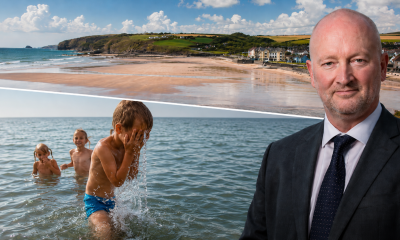

News2 days ago
Reform MS: ‘I felt like shouting get out of the water’
Paul Marr says children playing in streams at Pembrokeshire beaches deserve better protection from pollution risks REFORM UK MS Paul...

Health3 days ago
Senedd backs call to rule out hospital downgrades after heated NHS debate
Reform UK amendment passes as West Wales hospital fears remain central political issue THE SENEDD has backed a call for...
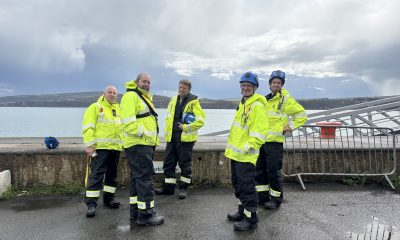

News3 days ago
Coastguard callout payments axe sparks fears for coastal communities
VOLUNTEER coastguards across the UK are set to lose callout payments, prompting concern over the future resilience of emergency cover...


Farming3 days ago
Rural Wales ‘left out’ of net zero debate, warns carbon entrepreneur
A WELSH carbon entrepreneur has warned that rural Wales risks being left behind in the national conversation about net zero....


Local Government4 days ago
Tenby Spectacular row continues as organisers say key question remains unanswered
Round Table says legal clarity over pedestrian access is still holding up event plan TENBY ROUND TABLE has welcomed Pembrokeshire...


Community5 days ago
Manorbier fire scandal: Council’s payout just £63,777 after school destroyed
PEMBROKESHIRE COUNTY COUNCIL has accepted an insurance settlement which leaves it with just £63,777.07 after the catastrophic fire which destroyed...
-

 Crime3 days ago
Police appeal after reported rape at Young Farmers rally
-

 Community7 days ago
The gentle giant behind the tattoos
-
Health7 days ago
Welsh Government refuses to halt Withybush and Bronglais service review
-

 News7 days ago
Long Course Weekend set to bring thousands to Pembrokeshire
-

 News6 days ago
Rhun ap Iorwerth urges new deal for Wales after Starmer quits
-

 Charity7 days ago
Voices at the Castle hailed a huge success for Paul Sartori Foundation
-

 Charity6 days ago
Sea shanties and street food bring crowds to Cardigan RNLI festival
-

 Crime5 days ago
Government fraud squad hunts down Covid loan scams