


international news
US surveillance aircraft hit in Iranian strike on Saudi base


A US AIR FORCE E-3 Sentry airborne warning and control aircraft appears to have been heavily damaged — and possibly destroyed — during an Iranian missile and drone strike on Prince Sultan Air Base in Saudi Arabia on Friday (March 27).
Images circulating online, now also carried by The New York Times and other international outlets, show the rear fuselage of an E-3 burned out, with its distinctive radar dome separated and lying on the tarmac nearby. The extent of the visible damage suggests the aircraft may be beyond repair, although US officials have not formally confirmed the loss.
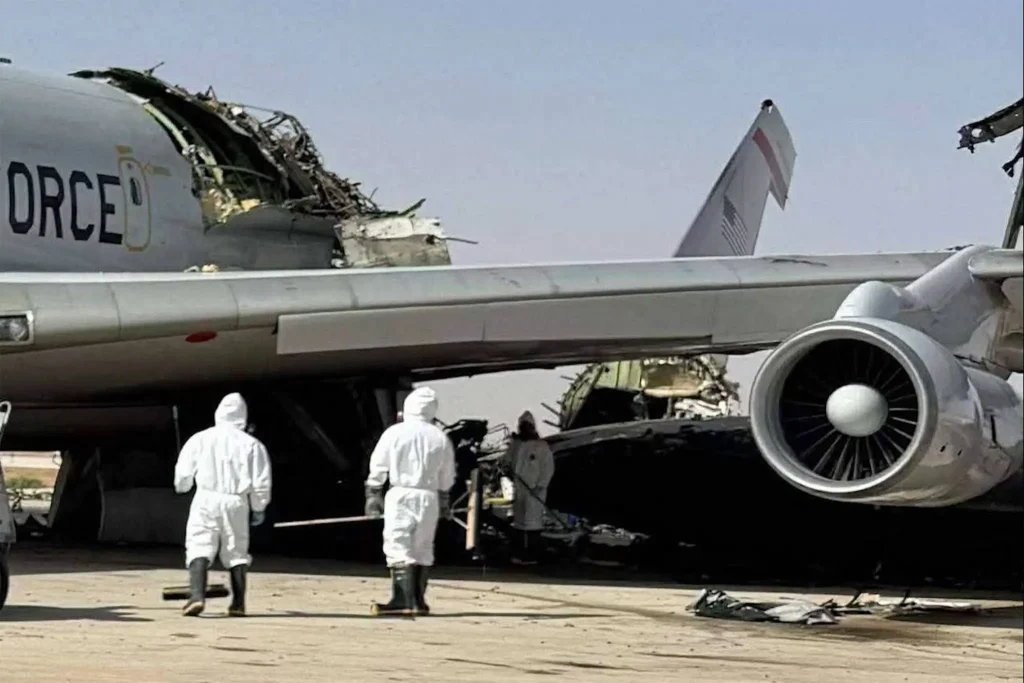
Reports cited by the The Jerusalem Post indicate that between ten and twelve American service personnel were wounded in the attack, with at least two said to be in a serious condition. The strike, which took place around 60 miles south of Riyadh in the early hours, is understood to have involved a coordinated barrage including at least one ballistic missile alongside multiple attack drones.
The same reports claim that other aircraft at the base may also have been damaged, including KC-135 Stratotanker refuelling aircraft, although this has not been independently verified.
Prince Sultan Air Base has been a key hub for US air operations in the region and has reportedly come under repeated attack in recent weeks. According to the Jerusalem Post, earlier incidents included a strike that wounded fourteen personnel earlier in the week, and a missile attack on March 1 which is said to have killed one servicemember.

High-value target
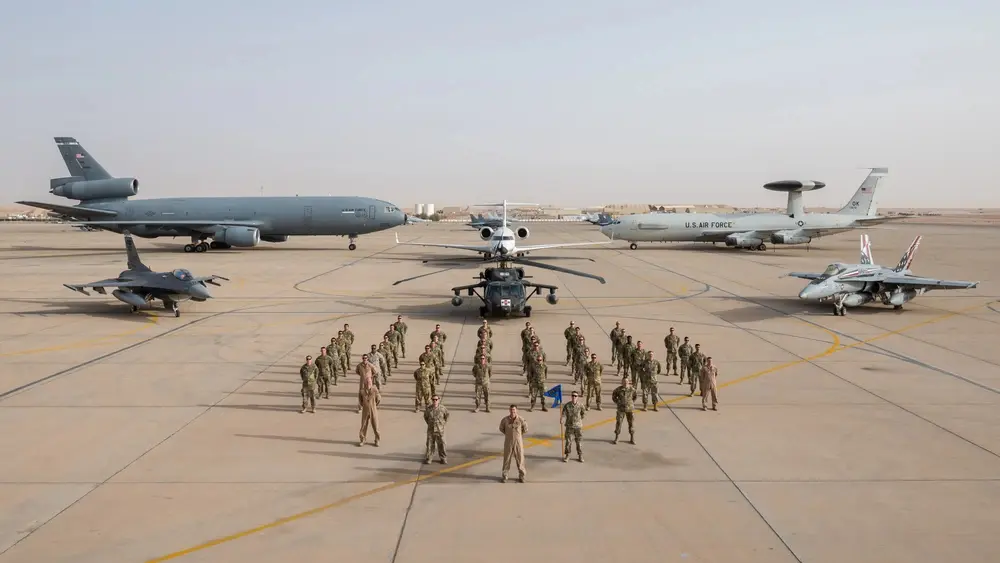
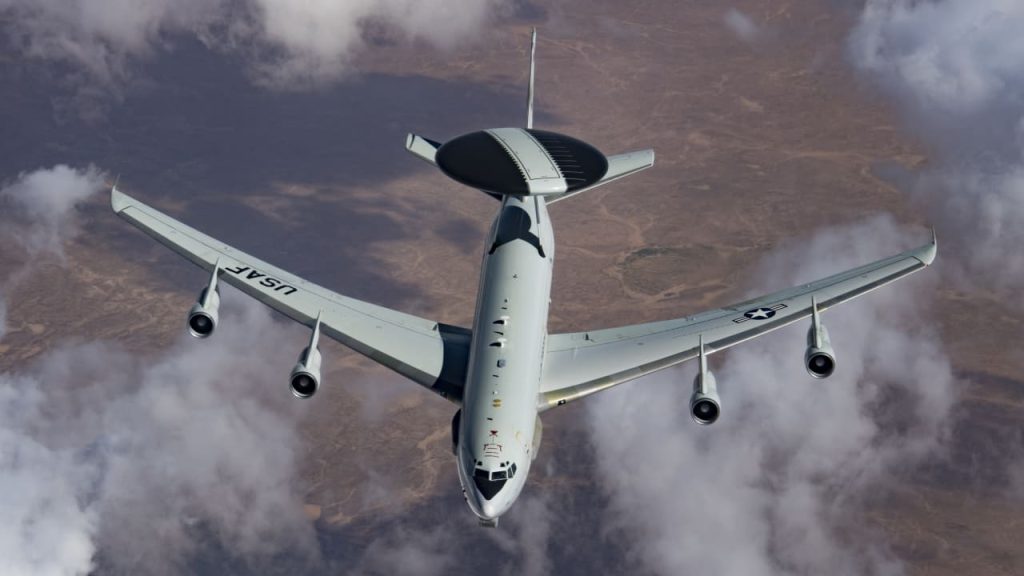
The E-3 Sentry is one of the most important aircraft in the US military’s inventory. Based on a modified Boeing 707 airframe, it is equipped with a large rotating radar dome providing 360-degree surveillance over hundreds of miles. The aircraft acts as a flying command centre, coordinating fighters, tracking threats, and managing complex air operations in real time.
The US Air Force originally operated around thirty E-3 aircraft, although that number has now been reduced to approximately sixteen as the ageing fleet is gradually retired. Around six had reportedly been deployed to the Middle East ahead of the current conflict.
Each aircraft cost roughly $270 million to build in the 1990s, which would equate to approximately $500 million to $700 million (£400m–£550m) today. However, analysts say the true value of the platform lies not in its price tag, but in the critical role it plays in maintaining air superiority and battlefield coordination.
Heather Penney, a former F-16 pilot and analyst at the Mitchell Institute for Aerospace Studies, described the potential loss as “incredibly problematic,” noting that such aircraft act as the “chessmaster” of modern air warfare, overseeing and directing operations across the battlespace.

Strategic implications
If confirmed, the loss or severe damage of an E-3 would represent a significant blow to US and allied operations in the region. The aircraft provides early warning of incoming threats and enables the coordination of large-scale air campaigns — capabilities that are difficult to replace quickly.
The strike may also highlight increasing sophistication in Iranian targeting. The Jerusalem Post reports that the attack appeared to focus on high-value assets, suggesting access to detailed intelligence on aircraft positions and operational patterns at the base. However, claims of external intelligence support have not been independently verified.
The incident underlines the vulnerability of even heavily defended installations to coordinated missile and drone attacks, and raises further concerns about escalation in an already volatile region.

At the time of publication, US officials had not issued a detailed public assessment of the damage or confirmed whether the aircraft has been written off.

Reliance on US interceptors leaves gaps as Iran’s reach grows
BRITAIN would struggle to defend itself against a long-range ballistic missile attack and would instead rely heavily on American systems based in Eastern Europe and at sea — with no guarantee of success.
That is the stark reality emerging after Iran’s attempted strike on a UK–US base at Diego Garcia on Saturday (March 21), a move that caught many world leaders off guard and marked a significant escalation in capability.
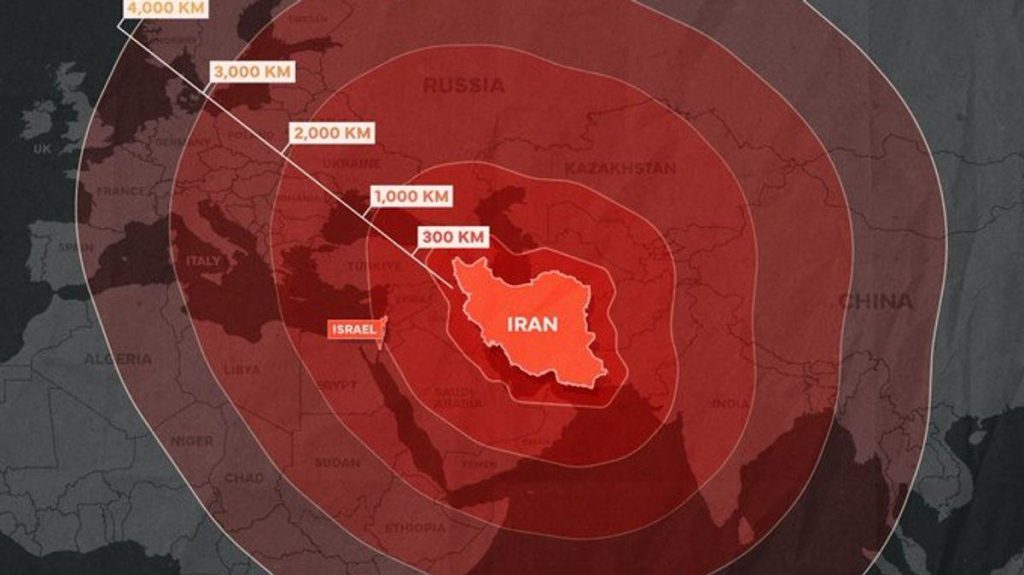
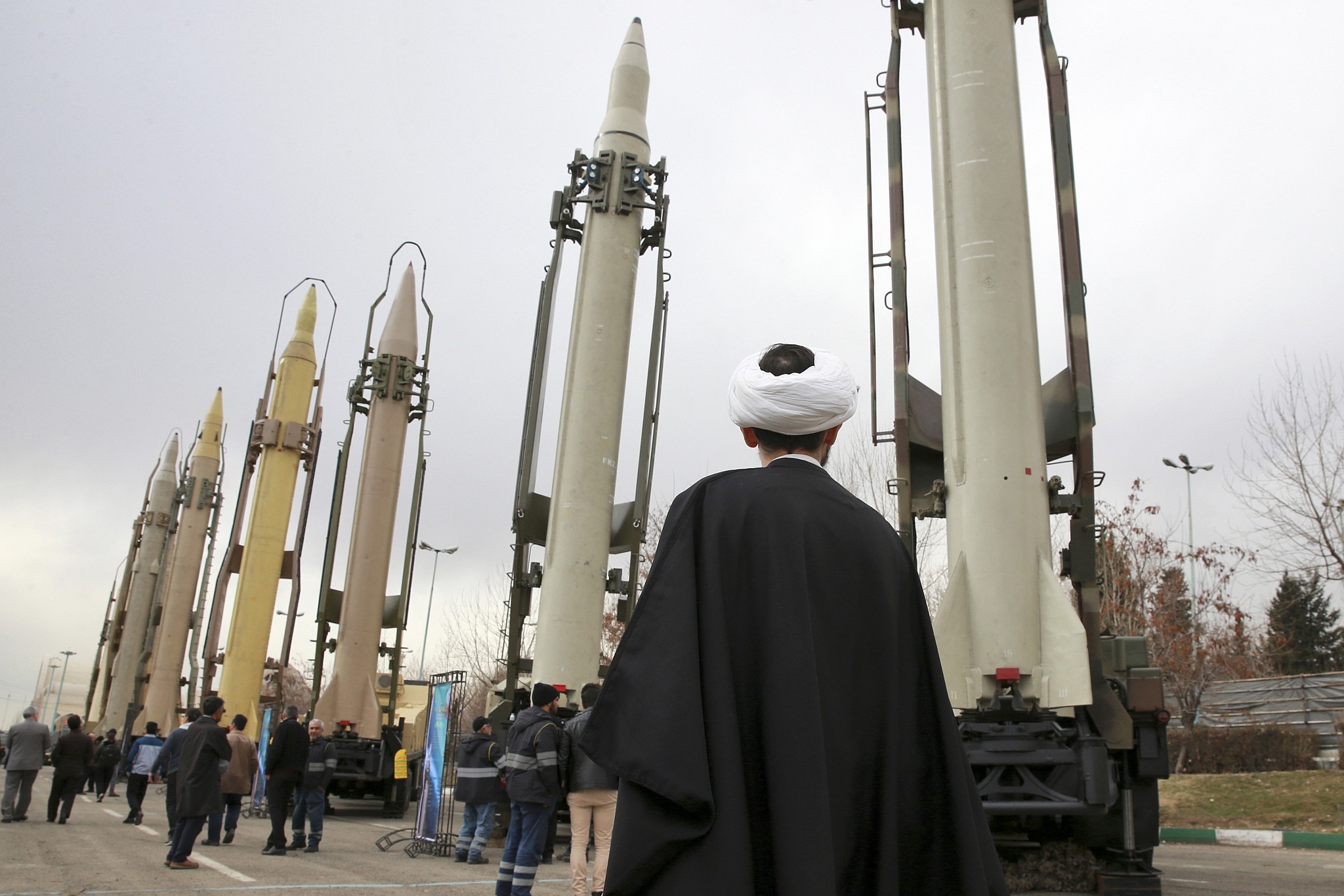
Concerns are further heightened by Iran’s development of larger space launch vehicles, including the Simorgh, Zuljanah, Ghaem-100 and Qased systems, which on paper demonstrate ranges of between 2,200 km and up to 6,000 km, with payload capacities of up to 1,000 kg. While these rockets are officially designed to place satellites into orbit rather than deliver warheads, they use the same multi-stage technology and propulsion systems found in long-range ballistic missiles. Defence analysts have long warned that such programmes provide a clear pathway to intercontinental strike capability, raising the prospect that parts of Europe — and potentially even the UK — could fall within reach if these technologies are adapted for military use.
No UK shield over Britain
The UK has no dedicated system to shoot down long-range ballistic missiles over its own territory.
While RAF Fylingdales provides early warning and tracking, it cannot intercept incoming threats. Britain’s air defence network — including RAF jets and ground systems — is designed for aircraft, drones and cruise missiles, not high-speed ballistic weapons.

In simple terms, if a missile were heading toward a target such as Milford Haven’s energy facilities, there is no British-operated system that could reliably stop it at the last moment.
America would have to act
Instead, any interception attempt would fall to the United States.
Key assets include:
- Aegis Ashore missile defence bases in Romania and Poland
- US Navy warships equipped with SM-3 interceptors
- Wider NATO tracking and coordination systems
These systems are capable of striking a missile in space during its midcourse phase, long before it reaches the UK.

But there is a crucial limitation: they can only engage if the missile passes within range of those systems.
If the trajectory falls outside that envelope — or if no US ship is positioned correctly — there may be no interception at all.
A probability, not protection
Even when an intercept is attempted, success is far from certain.
Testing data for the SM-3 system suggests success rates of roughly 50 to 80 per cent per engagement, depending on conditions. In practice, multiple interceptors are often fired at a single target to improve the odds.
That still leaves a significant margin for failure.
In a real-world scenario involving countermeasures, technical faults or multiple missiles, the chances of at least one getting through rise sharply.
Gaps in coverage
The NATO missile defence network is not a continuous shield.
It is a patchwork of coverage zones tied to specific systems:
- Romania and Poland provide fixed land-based interception capability
- US warships offer flexible but limited coverage depending on deployment
There is no permanent protective umbrella over the UK itself.
If a missile does not pass through one of those defended zones, Britain would effectively be relying on luck and geometry.
Deterrence, not defence
Ultimately, the UK’s primary protection is not interception — it is deterrence.
Any successful strike on British soil would almost certainly trigger a major NATO response, making such an attack extraordinarily risky for any adversary.
But deterrence does not equal defence.
A growing concern
Iran’s attempted long-range strike on Diego Garcia has shifted the debate sharply.
The use of a missile capable of travelling thousands of kilometres surprised many Western leaders, who had not expected Tehran to demonstrate that level of reach in the current crisis. Although one missile failed and another was intercepted, the incident has raised fresh questions about how far Iran’s capabilities have advanced.
For years, the idea of a missile threat to Europe — let alone Britain — was largely theoretical. Now, defence analysts are treating it as a credible future risk, even if capability remains limited today.
The bottom line
The UK can detect a missile, track it, and coordinate a response — but when it comes to actually stopping it, the country would be dependent on American systems operating at distance, with no certainty of success.
If a missile ever did get through, there would be little standing between it and its target.
And that is the uncomfortable truth behind the headlines.

Direct flights from Cardiff make Canada more accessible than ever
TORONTO has long been one of the world’s most dynamic cities—but in 2026, it is set to shine brighter than ever.
With a packed calendar of major sporting events, new attractions, and a renewed focus on arts, culture, and design, Canada’s largest city is fast becoming one of North America’s must-visit destinations.
For travellers across Wales and the West of England, getting there has never been easier. New direct flights from Cardiff Airport with WestJet launch on Friday (May 23), with return fares starting from £425*, offering a convenient alternative to travelling via London.
A city constantly reinventing itself, Toronto offers something new on every visit. In 2026, visitors can expect expanded waterfront experiences, new cultural spaces, and a thriving creative scene that continues to redefine the city.
Neighbourhoods such as Queen West, Riverside, and the Distillery District are at the heart of this energy—home to independent boutiques, craft breweries, contemporary galleries, and live music venues that showcase Toronto’s creative pulse.

The city’s diversity is perhaps its greatest strength, and nowhere is this more evident than in its food. From authentic Chinatown dumplings and Little Italy pasta to Caribbean street food and cutting-edge chef-led pop-ups, Toronto offers a global dining experience unlike any other. Nearby Ontario wine regions and lakeside farm-to-table restaurants add even more depth to its culinary appeal.
Despite its urban scale, Toronto also offers easy access to nature. A short ferry ride brings visitors to the peaceful beaches of the Toronto Islands, while scenic parks, lakes, and hiking trails are all within easy reach. Just 90 minutes away, Niagara Falls provides one of the world’s most iconic natural day trips.
The city will also take centre stage in 2026 as a host city for the FIFA World Cup, giving visitors the chance to experience world-class football in a truly global setting.
Toronto’s position as a major international hub makes it an ideal gateway for further travel. From here, visitors can easily extend their journey to destinations including Montreal, Ottawa and Quebec City, or major US cities such as New York, Chicago and Boston. Canada’s vast national parks and scenic regions are also within reach.
Whether it’s a family holiday, a cultural escape, or a multi-city North American adventure, Toronto offers a compelling alternative to traditional long-haul destinations.
With direct flights now operating from Cardiff Airport, travellers can begin their journey closer to home—avoiding long transfers and enjoying a smoother start to their trip.
Cardiff Airport CEO Jon Bridge said: “Toronto is one of the most vibrant and exciting destinations in North America, offering visitors an incredible mix of culture, cuisine, sport and natural beauty.

“With direct flights now available from Cardiff with WestJet, travellers across Wales and the West of England can discover everything the city and the wider region has to offer, while enjoying the convenience of starting their journey from their local airport.”

PRIME MINISTER Keir Starmer is walking an increasingly delicate diplomatic tightrope as tensions in the Middle East threaten to spill into a broader international conflict.
Speaking at a press conference on Monday (Mar 16), Starmer repeatedly declined to be drawn into speculation about military escalation, stressing that any potential effort to reopen the strategic Strait of Hormuz would not be a NATO operation but rather “an alliance of partners”.
The narrow waterway between Iran and Oman is one of the most important shipping routes in the world, with around a fifth of global oil supplies passing through it.
Recent tensions in the region have raised fears that disruption there could trigger a major international crisis.
But Starmer’s message was clear: Britain will support efforts to keep trade routes open while avoiding being pulled into a full-scale conflict.
When asked directly about comments made by former US President Donald Trump suggesting NATO allies should help reopen the strait, Starmer refused to engage in the escalating rhetoric.
Instead, he emphasised diplomacy and cooperation.
“It’s not straightforward,” the Prime Minister said, adding that discussions with international partners were ongoing.
Observers noted that Starmer also avoided responding to speculation about potential military commitments, a move widely interpreted as an attempt to prevent Britain being boxed into a position before negotiations with allies are complete.

Relations with Washington
Starmer was also pressed by journalists about his relationship with Donald Trump, who has been increasingly critical of some NATO allies.
Asked to rate their relationship on a scale of one to ten, the Prime Minister said simply that it was “a good relationship”.
“We’re strong allies and have been for decades,” he said, adding that his responsibility was always to act “in the best interests of Britain”.

Despite the diplomatic language, the exchange underlined the growing pressure facing the UK government as global tensions rise.
The United States has been urging partners to support efforts to secure key shipping routes, while some European leaders remain cautious about the risks of escalation.
Energy and economic stakes
The stakes are not purely military.
Any disruption to shipping through the Strait of Hormuz could have immediate consequences for global energy markets, pushing up fuel costs and inflation.
That prospect is already weighing heavily on governments across Europe.
At the same press conference, Starmer announced new financial support for households struggling with rising heating costs and outlined plans to strengthen regulation of the heating oil market.
The move was widely seen as preparation for potential energy price shocks linked to instability in the Middle East.
A careful balancing act
For Starmer, the challenge now is balancing Britain’s commitments to international allies with a public that remains wary of overseas military entanglements after conflicts in Iraq and Afghanistan.
So far, the Prime Minister appears determined to keep the UK involved diplomatically while resisting pressure to escalate militarily.
Whether that position can hold if tensions in the region worsen remains the key question facing Downing Street.
For now, Starmer’s strategy is clear: support allies, protect global trade routes — but avoid sliding into a wider war.



Crime3 hours ago
Gunshot fired by police during incident in Milford Haven
A POLICE officer discharged a firearm during an incident in Milford Haven on Saturday evening (March 28), prompting an investigation...


Community1 day ago
Three Amigos Easter Run roars through Pembrokeshire
MOTORCYCLE enthusiasts turned out in force today (Saturday, March 28) as the popular Three Amigos Easter Run returned to the...


Education2 days ago
Ysgol Henry Tudor reassures parents over Sikh ceremonial kirpan
School says religious item worn by pupil is secured, symbolic and non-functional YSGOL HENRY TUDOR has moved to reassure parents...


Crime3 days ago
Teen jailed after starting fire while others slept
Fire set in shared home left sleeping residents at risk and caused £130,000 damage A TEENAGER who started a fire...


Health3 days ago
GP crisis driving NHS pressure in Wales, Senedd report warns
Falling GP numbers and funding gaps blamed for worsening hospital delays THE NHS crisis highlighted earlier this week is being...


News4 days ago
Reform reveals west Wales candidates for Senedd battle
Monkton councillor tops Pembrokeshire list as party confirms Carmarthenshire names and includes Haverfordwest councillor in unwinnable Swansea spot REFORM UK...


Health4 days ago
Clash over Withybush Hospital services as Paul Davies challenges First Minister
A HEATED exchange in the Senedd has laid bare growing tensions over the future of hospital services in west Wales....


Crime5 days ago
Police stop car in Pennar as three arrested in drugs investigation
Suspected drug driver report leads to major police response and multiple arrests DRAMATIC scenes were reported in Pennar on Monday...


Business5 days ago
New pilot vessel Llanion arrives at Milford Haven
State-of-the-art 22-metre craft marks reset after £3.6m pilot boat controversy THE PORT OF MILFORD HAVEN has taken delivery of a...


Community5 days ago
Sycamore Gap legacy tree to take root in Pembrokeshire landscapes
A SAPLING grown from the famous Sycamore Gap tree is set to become part of Wales’ protected landscapes — with...
-

 Business5 days ago
Taxi fare shock in Milford Haven as drivers switch to meters
-

 Business6 days ago
Could Primark be coming to Haverfordwest? Major retailer in talks for former Wilko site
-

 Health5 days ago
Average of 18 deaths a week in Wales linked to A&E delays, figures reveal
-

 Sport7 days ago
Haverfordwest secure bonus-point win over title-chasing Tumble
-

 Community3 days ago
Hero female officer keeps job after sexual touching finding
-

 News4 days ago
Welsh Government outlines progress on flood resilience plans
-

 Local Government6 days ago
Milford Haven set for £200m investment with schools, leisure centre and rail upgrade
-

 Crime6 days ago
Armed police attend knife-related incident in Fishguard street