


News
Almost half of Welsh voters blame government policy for pub closures, polling finds


ALMOST half of Welsh voters blame national or local government when a pub closes, new research has found.
Polling carried out for the Long Live the Local campaign by More in Common found that 48% of people in Wales hold government policy partly responsible when a local pub shuts its doors.
Campaigners say the findings should act as a warning to politicians ahead of the Senedd election, with voters calling for greater support for pubs and brewers.
The survey found that almost one-third of Welsh voters, 32%, believe the single most important action government could take to help the sector would be to make business rates fairer for pubs.
The figures also suggest voters feel their elected representatives are not doing enough. Only one-in-ten said their MP had spoken up for the pub sector, while just 6% said their MP had done enough to protect pubs in their constituency.

The results come despite recent support for pubs from the UK Government, with campaigners warning that many voters still believe not enough is being done to protect Britain’s locals.
According to figures from the British Beer and Pub Association, one pub a day is currently closing in England and Wales, while the UK has lost 2,000 pubs since 2020.
Industry leaders say pubs are under pressure from a combination of business rates, employment costs, energy bills, beer duty, VAT and wider inflation. However, ministers have previously pointed to support measures for hospitality businesses, including rates relief and changes announced in the Budget, while arguing that difficult decisions must be balanced against wider public spending pressures.
Changing consumer habits, the cost-of-living crisis, and the long-term impact of the pandemic have also affected many pubs, particularly in rural and town-centre communities where footfall has not fully recovered.

‘Soul of the community’
Emma McClarkin, chief executive of the Welsh Beer and Pub Association, said: “Despite recent important support from the Government and the many MPs across all political parties that champion pubs and brewers, voters clearly believe that there is still more to be done.
“Pubs are the soul of the community, create jobs, and, with a quarter of a million people joining our Long Live the Local campaign that supports the people behind the pint, including thousands in Wales, it’s no wonder people care about them so much.
“What the public want is a fair tax system for pubs, one that keeps businesses competitive and recognises their unique role as valuable spaces for communities across the country.

“With the Senedd election right around the corner, it’s key for candidates to recognise just how important pubs are for so many and to back their local.
“We’re calling on both the UK and Welsh governments to continue to work with us and deliver permanent business rates reform, lower employment costs, cut beer duty and VAT to save countless locals who are burdened with huge regulatory costs.”
‘Public really care’
Luke Tryl, executive director at More in Common, said the polling showed the strength of public concern over pub closures.
He said: “One thing comes through really strongly in this polling, the British public really care about pubs, they think they are a central part of their community and they don’t think the Government is doing enough to protect them.
“In fact, over half of British voters blame national or local government for pub closures and want to see politicians at all levels doing more to stand up for them.
“At a time when the Government already finds itself struggling with a restless electorate, a wave of further pub closures will only reinforce the frustration that those in charge are unable or unwilling to deliver for local communities across Britain.
“On the flipside, taking action on issues like rates is one way the Government can show that it gets it, recognises the value of pubs and gets the public back onside.”
The Welsh Beer and Pub Association’s Long Live the Local campaign launched in 2018 to raise awareness of the UK’s rate of pub closures. It now has more than 250,000 supporters across the country.
The campaign says almost 40,000 letters were sent to MPs last year alone as part of efforts to raise concerns about the pressure facing pubs.
More in Common’s polling, commissioned by the British Beer and Pub Association, was conducted between March 28 and March 30, 2026, and sampled 2,003 adults across Great Britain. Respondents were weighted according to age, sex, region, ethnicity, 2024 General Election vote and education level.

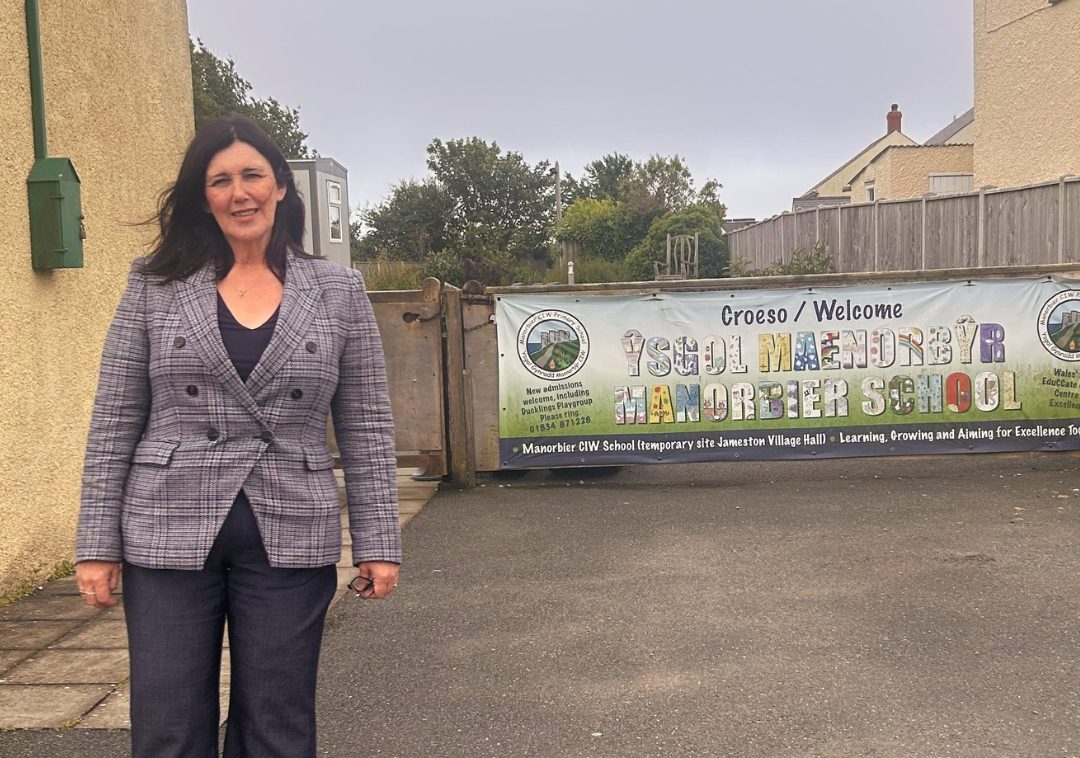
MS WARNS CLOSURES COULD DAMAGE RURAL COMMUNITIES
CLAIRE ARCHIBALD MS has urged Pembrokeshire councillors to protect village schools ahead of a key vote on the future of Ysgol Clydau and Manorbier Church in Wales School.
The Member of the Senedd for Ceredigion Penfro has written to councillors before today’s meeting, asking them to consider the wider impact that losing small rural schools could have on children, families and local communities.
Ms Archibald said village schools provided a type of education that was becoming increasingly rare, offering smaller, more familiar settings where children were well known by staff.
She visited Manorbier Church in Wales School on Friday, where she met staff and saw the school for herself.

Ms Archibald said: “Small village schools provide families with a type of education that is increasingly rare. They offer a more homely environment where children are well known by their teachers and where strong relationships exist between the school, families and the wider community.
“Not every child thrives in a large, busy setting. For some children, particularly those who struggle with anxiety or additional learning needs, a smaller school environment can make a real difference.”
During her visit to Manorbier, Ms Archibald said she was impressed by the care shown to pupils and the strong sense of community around the school.
She added: “These schools are not simply buildings where lessons take place. They are an important part of village life and often sit at the heart of their communities.”
In her letter to councillors, Ms Archibald said the decision was not only about buildings or numbers, but about whether different types of education were valued for different children.
She also pointed to the exceptional circumstances faced by Manorbier following the fire at the school, and said the community had already shown how strongly it valued the school through local support.
Ms Archibald warned that once rural schools close, they are very unlikely to reopen.
She said councillors should support deferral if they were not satisfied that every question had been answered and every alternative properly explored.

The future of Ysgol Clydau and Manorbier Church in Wales School is due to be decided by Pembrokeshire County Council today.



PEMBROKESHIRE Chess Club is celebrating a fantastic weekend after being crowned champions of the Welsh Chess Union Premier League Under-1850.
The club played its final match of the season today, beating Abergavenny to win the league outright.
Earlier in the season, Pembrokeshire recorded wins against Castell Nedd, North Cardiff and Morriston, as well as drawing with Cardiff Tigers.
Although the club previously won the competition online during the Covid period, this is its first over-the-board league title.
A club spokesperson said it was “great to represent the county against teams from across Wales” and congratulated all the players who registered for the competition.
Those involved were Ben Brewer, Martin Jones, Scott Hammett, Mark Paffard, Henry Burton, Huw Jones and Kevin Heady.
Following its recent AGM, the club has now decided to enter two teams in next year’s competition, giving more members, especially junior players, the chance to take part.
It was also a successful weekend for two of the club’s juniors, Jozef Othen and Harry Harling, who played with distinction in an invitation Ceredigion and Pembrokeshire match against Carmarthenshire on Saturday afternoon.
Jozef also competed in an online Megafinals event on Saturday morning, progressing to the Gigafinals.
The club will hold its first ever Junior Rapid Tournament on January 24, with more details to follow.
Pembrokeshire Chess Club also praised FIDE Master Alexis Harakis, who has been coaching and supporting juniors and senior members of the recently formed Fishguard Chess Club.
The club said his involvement would help raise standards and benefit chess across the county.

Pictured are today’s winning team: Ben, Martin, Scott and Mark.
Pembrokeshire Chess Club are the 2026 champions of the Welsh Chess Union Premier League Under-1850.

A CHARITY concert aimed at improving access to the coast for disabled people is set to take place at Dale Seafront later this month.
The event, called Music for Changing Places, will be held on Saturday, June 27, and will raise money for a new toilet and changing facility designed to help disabled people enjoy time on the water and at the beach.
Organisers say the project will support greater accessibility in Dale, helping more people enjoy watersports and the coastline through specialist facilities and equipment.
The afternoon and evening event will feature a range of live music acts, with free admission for visitors, although donations will be welcomed to support the cause.
Music will begin at 2:30pm with performances from the Music for Fun group, followed by the Cleddau Flutes at 3:45pm.
At 5:00pm, the Malva Ukrainian band will take to the stage, before the day concludes with folk music from the Varifolkals folk band at 6:15pm.
The fundraiser is linked to the Dale Changing Places project, which aims to create a specialist accessible toilet and changing facility for disabled visitors, helping ensure more people can enjoy Pembrokeshire’s coastline regardless of mobility needs.
The project also supports accessible water activities, with adapted equipment helping disabled users get onto the water safely.
Organisers are encouraging residents and visitors to attend, enjoy an afternoon of music by the sea, and support a cause designed to make Dale more inclusive for everyone.




Community7 hours ago
Milford Haven School pupil praised after stepping in during real-life emergency
A YEAR 11 pupil at Milford Haven School has been praised after putting his first aid training into action to...


Community10 hours ago
River festival brings crowds to Haverfordwest
A CELEBRATION of the River Cleddau brought crowds into Haverfordwest on Saturday (June 13) as the town’s River Festival returned...


Charity10 hours ago
Voices at the Castle hailed as unforgettable night after weather setback
Russell Watson headlines spectacular charity concert at Pembroke Castle A SPECTACULAR evening of live music at Pembroke Castle has been...


Local Government1 day ago
Council admits 74 rights of way complaints remain unresolved
Key post vacant since February as walker raises safety concerns over paths near Llanteg and Amroth PEMBROKESHIRE COUNTY COUNCIL has...


Education2 days ago
Diocese threatens legal action as Manorbier school closure battle intensifies
Church says council could face judicial review over fire-hit school A BITTER row over the future of Manorbier Church in...


Health2 days ago
Baby loss charity calls for urgent action after latest Wales figures published
Sands says Welsh Government must set clearer targets to reduce stillbirths and neonatal deaths A BABY loss charity has called...

Health2 days ago
Cancer delays worsening as west Wales hospitals struggle to recruit specialists
Health board admits standards are difficult to meet as doctors warn of “extremely dangerous” shortages PATIENTS in west Wales are...


News2 days ago
Rhun ap Iorwerth highlights first 25 days in office as First Minister
Plaid Cymru leader says government is moving quickly on NHS, farming and economic priorities FIRST MINISTER Rhun ap Iorwerth has...


Crime3 days ago
Man accused of six rapes including alleged Haverfordwest offence
A MAN has been sent to Crown Court accused of six rapes, including an alleged offence at a Haverfordwest campsite....


News3 days ago
Childcare row erupts as Plaid faces questions over costs and delivery
Opposition parties clash over flagship pledge as Senedd debate exposes growing divisions PLAID CYMRU’S flagship promise to create what it...
-

 Crime6 days ago
Sex offender in senior role at Tenby family hotel
-

 Crime5 days ago
Haverfordwest pair accused of £80,000 rogue trading frauds
-
Education2 days ago
Diocese threatens legal action as Manorbier school closure battle intensifies
-
Crime3 days ago
Man accused of six rapes including alleged Haverfordwest offence
-

 Community6 days ago
Forgotten wartime archive found in Pembroke Dock attic after 80 years
-

 Crime6 days ago
Families condemn failed appeal by paddleboard boss jailed over Haverfordwest tragedy
-
 Crime5 days ago
Knife blankets call as school staff face rising violence fears
-

 Local Government2 days ago
Taxi suspended after county-wide licensing checks