


News
Wales heading to the polls in historic Senedd election

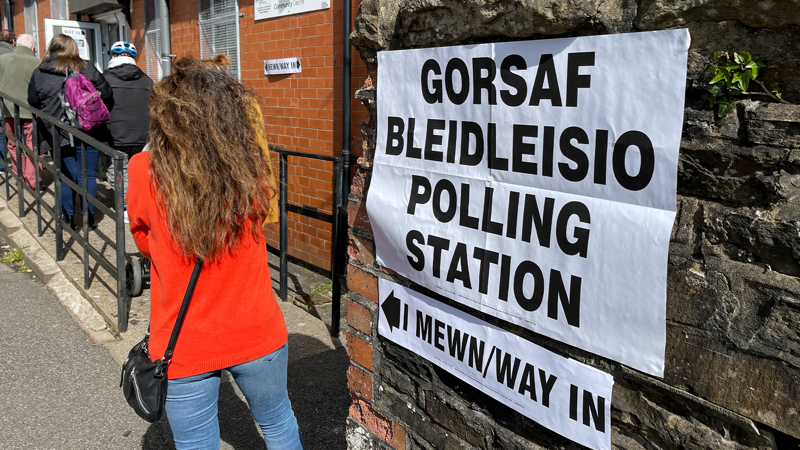
NEW SYSTEM, NEW SEATS, NEW BOUNDARIES AND A HIGH-STAKES CONTEST FOR CEREDIGION PENFRO
WALES goes to the polls next Thursday (May 7) in an election unlike any other since devolution began.
For the first time, voters will elect a larger Senedd, under a new voting system, in new constituencies, using one ballot paper and one vote.
The changes are significant. The Senedd will increase from 60 Members to 96. Wales has been divided into 16 new constituencies, each electing six Members of the Senedd. The old system of one constituency vote and one regional list vote has gone. In its place is a closed proportional list system.
That may sound technical, but the practical effect is simple: voters will no longer choose an individual party candidate. They will choose a party list, or an independent candidate.
The order of names on each party list now matters more than ever. If a party wins one seat in a constituency, the first name on its list is elected. If it wins two seats, the first two names are elected. If it wins three, the first three names go to Cardiff Bay.

It means voters will still see the names of candidates on the ballot paper, but they will not be able to pick and choose between them.
That is one of the biggest changes in Welsh democracy for a generation.
It also comes at a time when Welsh politics is already shifting. Labour has led every Welsh Government since devolution began in 1999. For more than a quarter of a century, the basic shape of Welsh politics has been familiar: Labour dominant, Plaid Cymru strong in parts of rural and Welsh-speaking Wales, the Conservatives competitive in rural and border areas, and smaller parties trying to break through.
This election may change that.

Polls throughout the campaign have suggested that Plaid Cymru and Reform UK are both in serious contention to become the largest party. Labour is under pressure after 27 years in power. The Conservatives are being squeezed by Reform on the right. The Greens hope to enter the Senedd in meaningful numbers. The Liberal Democrats are trying to rebuild a Welsh presence after years of limited representation.
But the story is not simply one of “change” replacing “more of the same”.
The new voting system means that Wales may vote for change and still end up with a complicated Senedd in which no party has an overall majority.

A majority in the new Senedd requires 49 seats. Current polling suggests that no party is likely to get there alone.
That means the real question after polling day may not be who wins the most seats, but who can work with whom.
For Reform, the difficulty is that it has few obvious allies. The party may take votes and seats from the Conservatives, but the more it weakens the Conservatives, the harder it becomes for the right-of-centre bloc to form any kind of majority.
For Plaid Cymru, the route to government may be easier mathematically, but not necessarily politically. Plaid has campaigned hard on the argument that Wales needs a complete change after years of Labour rule. If it then needs Labour support to govern, voters may ask how much change is really being delivered.
A deal or understanding with the Greens may look more natural to some Plaid supporters, but that would bring its own complications. Plaid’s base includes farmers, rural communities and Welsh-speaking areas, while the Greens’ strongest support is often urban and progressive. That could create tensions over farming, transport, housing, energy and the economy.
Labour, even if it loses heavily, may still matter. In a fragmented Senedd, a weakened Labour group could still hold the balance of power.
That is the paradox of this election.
The voters may deliver an historic result. They may end Labour’s long dominance. They may put Plaid or Reform at the top. They may send new Green voices to Cardiff Bay. They may reshape the Conservative presence in Wales.
But the final outcome may still depend on negotiation, compromise and deals.
Ceredigion Penfro: the new battleground
For Herald readers, the new Ceredigion Penfro constituency is one of the most interesting contests in Wales.
It is a vast seat, created by merging the Ceredigion Preseli UK Parliamentary constituency with Mid and South Pembrokeshire. It stretches across two counties and includes communities as different as St Davids, Haverfordwest, Milford Haven, Pembroke Dock, Narberth, Cardigan, Aberaeron and Aberystwyth.
That makes it difficult to predict.
This is not a neat urban seat, a classic Valleys seat, or a purely rural Welsh-speaking constituency. It contains farming communities, coastal towns, university voters, second-home pressure points, Welsh-language heartlands, tourism businesses, ports, market towns and working-class estates.
The old map has gone. Voters who were used to named constituency contests in Preseli Pembrokeshire, Carmarthen West and South Pembrokeshire, and Ceredigion are now being asked to vote in a much larger political area.
That is a major change.
Under the old system, voters had one named constituency Member and a separate regional vote. Under the new system, six Members will represent the whole of Ceredigion Penfro.
That could give voters more choice in who they contact after the election. But it could also make accountability less direct. If something goes wrong, who does the voter blame? The party? The individual MS? The list order? The government? The system?
Those questions may not be answered until after the election.
Ceredigion Penfro also contains some of the best-known political names in Wales.
Labour’s list is headed by First Minister Eluned Morgan, followed by Marc Tierney, Joshua Phillips, Margaret Greenaway, Tansaim Hussain-Gul, Luke Davies-Jones and Peter Huw Jenkins.
Plaid Cymru’s list is led by former Llywydd Elin Jones, followed by Kerry Ferguson, Anna Nicholl, Cris Tomos, Colin Nosworthy, Clive Davies, Owain Jones and Matt Adams.
The Welsh Conservatives have placed Paul Davies first and Samuel Kurtz second, followed by Claire George, Brian Murphy, Gill Evans and Claire Jones.
Reform UK’s list is headed by Susan Claire Archibald, followed by Paul Marr, Michael Timothy Allen, Elisa Bessie Gonzalez Randall, Peter Martin John and Bernard Holton.
The Green Party list is led by Amy Nicholass, followed by Tomass Jereminovics, James Purchase, Morgan Phillips, Rosie O’Toole and Kezia Hine.
The Welsh Liberal Democrats are led locally by Sandra Jervis, followed by Alistair Cameron, Tom Hughes, Lee Herring, Andrew Lye and Maggie Robinson.
There are also smaller party and independent options. Gwyn Wigley Evans is standing for Gwlad. Elizabeth Davies is standing for the Heritage Party. Paul Haywood Dowson, Aaron Carey and George Alexander Chadzy are standing as independents.
That is a crowded ballot paper.
It also means voters have a genuine choice between established names, national party brands, smaller parties and independents.
Why list order matters
The closed list system means voters need to think carefully about what their vote does.
A voter who wants Sam Kurtz back in the Senedd must vote Conservative, but the first Conservative seat would go to Paul Davies. Sam Kurtz would only be elected if the Conservatives win two seats in Ceredigion Penfro.
A voter who wants Marc Tierney elected must vote Labour, but Labour’s first seat would go to Eluned Morgan. Marc Tierney would only be elected if Labour wins two seats.
A voter who wants Kerry Ferguson elected must vote Plaid Cymru, but Plaid’s first seat would go to Elin Jones. Kerry Ferguson would only be elected if Plaid wins two seats.
The same applies to every party list.
That is not a comment for or against any candidate. It is simply how the new system works.
The old personal vote has not disappeared entirely, because well-known candidates may still influence how people vote. But the direct link between voter and individual candidate has changed.
The choice is now party first, list order second.
That may suit voters who are loyal to a party. It may be more difficult for voters who like one candidate on a list but not another, or who previously voted for a person rather than a party.
It also means that internal party decisions about who comes first, second, third and fourth on the list have become extremely important.
Those decisions may decide careers.
For the Conservatives, the key local question is whether they can win enough support to elect both Paul Davies and Sam Kurtz. If the party wins only one seat, Mr Davies returns and Mr Kurtz loses out.
For Labour, the question is whether the party can hold enough support to elect more than the First Minister. If Labour wins only one seat in Ceredigion Penfro, Eluned Morgan is elected and the rest of the list falls away.
For Plaid Cymru, Elin Jones is in the strongest position on the list, but the party will be aiming for more than one seat if it is to make a serious national breakthrough.
For Reform, the question is whether a surge in support can translate into a seat, or possibly more.
For the Greens and Liberal Democrats, the challenge is to reach the level of support needed to survive the rounds of counting.
For independents, the challenge is even harder. An independent candidate has no wider party list behind them and must win enough personal support across a huge constituency to compete with national parties.

The big issues
The central issues in this election are familiar because they are the issues people talk about every day.
The NHS is at the top of the list. Waiting times, ambulance delays, access to GPs and dentists, hospital services and social care have all dominated the campaign.
In West Wales, concerns over hospital provision and the future shape of healthcare have particular force. Voters do not experience health policy as an abstract Cardiff Bay debate. They experience it when they cannot get an appointment, when an ambulance is delayed, when a relative waits too long for treatment, or when a journey to hospital becomes longer and harder.
For Pembrokeshire, the future of hospital services has been a long-running concern. For Ceredigion, distance from major services and access to treatment are equally serious issues. Across the new constituency, health is not just a policy area. It is a lived reality.
Education is another major issue. School standards, attendance, behaviour, funding, additional learning needs and the new curriculum have all become part of the wider argument about whether Wales is moving in the right direction.
Then there is the cost of living. Council tax, fuel prices, food prices, rents, mortgages, business costs and wages are still shaping household decisions.
In rural Wales, those pressures are sharpened by transport costs and limited public services. A family in a village without regular buses, a young worker travelling long distances to work, or an elderly resident trying to reach medical appointments faces a very different set of pressures from voters in more urban areas.
Housing is one of the sharpest local issues. Second homes, holiday lets, council tax premiums, local wages, planning rules and the lack of affordable homes for young people all feed into a wider sense that some communities are being priced out of their own future.
That issue is felt strongly in coastal towns and Welsh-speaking rural communities. It affects school numbers, chapel life, sports clubs, local businesses and the ability of young people to remain close to their families.
Farming is also central in Ceredigion Penfro. Agriculture is not just another sector in this constituency. It is part of the social, economic and cultural structure of the area.
Any government formed after this election will have to deal with the future of Welsh farming, food security, environmental rules, bovine TB, water quality, subsidies, rural jobs and the relationship between farmers and Cardiff Bay.
For many farmers, the question is not whether the environment matters. It is whether the people making policy understand the pressures on working farms.
Tourism is another balancing act. It brings money into Pembrokeshire and Ceredigion, supports thousands of jobs, and keeps many small businesses alive. But it also creates pressure on housing, roads, services, parking, waste, beaches and local communities.
Tenby, Saundersfoot, St Davids, Cardigan, Aberaeron and New Quay all understand both sides of that argument.
Transport matters too. Roads, buses, rail services, active travel, speed limits and access to work or hospital are all part of the daily reality of living in West Wales.
A policy that sounds simple in Cardiff can land very differently in a village, a farming area, or a town where the last bus has already gone.
The economy is also central. Milford Haven port, energy, floating offshore wind in the Celtic Sea, small businesses, farming, tourism, public sector employment and town centre regeneration are all part of the local picture.
The promise of green jobs will be tested against the reality of whether those jobs actually reach local workers and communities.
The Welsh language also sits close to the heart of this constituency. Ceredigion Penfro contains communities where Welsh is not just a symbol of national identity, but the language of work, family, school, chapel, sport and everyday life.
For some voters, the election will be about competence. For others, it will be about identity. For others still, it will be a protest vote against the political class.
That is what makes the election so unpredictable.
What the parties are offering
Labour is asking voters to stick with experience and continuity. Its argument is that Wales needs serious government, not slogans, and that public services require investment, stability and practical reform.
But Labour also has to defend its record. After 27 years in power, it cannot easily present itself as the party of change. In this election, every debate about the NHS, education, transport and the economy eventually comes back to the same question: if things are not working, why not?
Plaid Cymru is making the most direct pitch for a change of government. Its argument is that Wales has been held back by Labour and needs a government that will put Welsh interests first.
Plaid’s challenge is to convince voters that it is not only a strong opposition party, but a credible party of government. In Ceredigion Penfro, it will also have to hold together a coalition of voters that includes Welsh-language communities, farmers, rural families, public sector workers, students and people simply looking for a change.
Reform UK is appealing to voters who feel ignored, frustrated or angry with the political system. Its message is simple and disruptive: Labour has failed, the Conservatives have failed, and Wales needs a break from the political establishment.
Its challenge is to show that protest can be turned into government. Winning seats is one thing. Finding a route to power in a Senedd where most other parties are unlikely to work with it is another.
The Conservatives are trying to hold ground in areas where they have traditionally been strong, including rural Wales and Pembrokeshire.
Locally, they have two sitting Senedd Members in Paul Davies and Sam Kurtz at the top of their list. Their difficulty is that Reform is now competing aggressively for voters who might once have automatically backed the Conservatives as the main anti-Labour option.
The Greens are hoping the new system gives them the breakthrough they have long wanted. Their pitch is built around climate, housing, public transport, social justice and a different economic model.
Their challenge in Ceredigion Penfro is to persuade rural and coastal voters that Green politics can work outside urban Wales and that environmental policy can sit alongside farming, local jobs and practical transport needs.
The Liberal Democrats are trying to appeal to voters who want a moderate, localist alternative. In some parts of Wales, the party still has deep community roots.
Its challenge is visibility in a crowded field and in a political argument increasingly dominated by Labour, Plaid, Reform and the Conservatives.
Smaller parties and independents will also hope that the new system gives them a route through. But under a six-member constituency system, they still need a significant share of the vote to win a seat.
How the vote is counted
The voting system is called d’Hondt.
The name may sound complicated, but the principle is straightforward.
First, all the votes are counted. The party or independent candidate with the highest total wins the first seat.
That winner’s vote is then divided by two. The totals are compared again. The highest remaining total wins the second seat.
If a party has won two seats, its vote is divided by three. If it has won three seats, its vote is divided by four.
This continues until all six seats in the constituency are filled.
The effect is to make the result more proportional than the old system. A party that comes first will usually win more than one seat, but it becomes progressively harder for it to keep winning more as its vote is divided.
That is why second, third and even fourth-placed parties can still win representation.
It also means every vote matters, even for parties unlikely to top the poll. A party does not need to win the constituency outright to win a seat. It needs enough votes to stay competitive through the six rounds of counting.
There is no fixed legal percentage that guarantees a seat, because the outcome depends on how votes are split between all parties and independents. But in practical terms, parties will be looking at whether they can reach a level of support strong enough to survive the later rounds.
That could make Ceredigion Penfro particularly interesting.
The contest may not be about one winner and several losers. It may be about how the six seats are divided.
Could Plaid win two? Could Labour hold one or two? Could the Conservatives keep both Paul Davies and Sam Kurtz? Could Reform break through? Could the Greens or Liberal Democrats reach the threshold? Could an independent gather enough support to survive the rounds?
Those are the questions that will decide the local result.
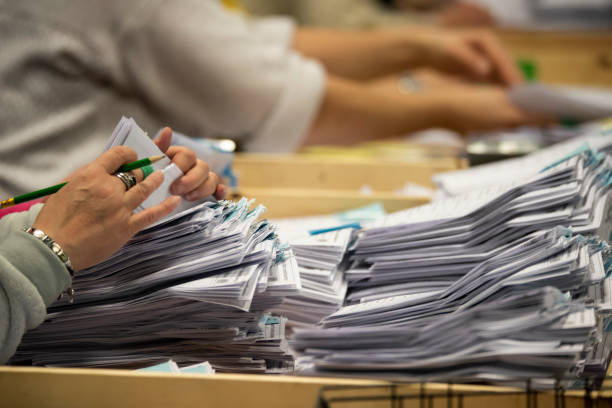
How to vote
Polling day is Thursday (May 7).
Polling stations will be open from 7:00am to 10:00pm.
Voters aged 16 and over can vote in this Senedd election, provided they are registered and meet the eligibility rules.
That means many 16 and 17-year-olds will be able to vote in a national Welsh election. For young people, this is not a school council exercise or a token consultation. It is a real vote for the people who will make decisions on education, transport, housing, health, the environment and the future of Wales.
At the polling station, voters will be given one ballot paper. The ballot paper will show the parties and independent candidates standing in the constituency. Party lists will show the candidates in the order chosen by each party.
To vote, mark one X next to the party list or independent candidate of your choice.
You do not need photo ID to vote in this Senedd election.
Postal voters should complete and return their ballot as soon as possible. Those who leave it too late to post can take their postal vote to their polling station by 10:00pm on polling day.
Voters should check their poll card for their polling station. It may not be the closest building to their home, and it may have changed since the last election.

Voter checklist
Election day: Thursday (May 7)
Polling hours: 7:00am to 10:00pm
The count: Friday (May 8)
How many votes: One
How to vote: Put one X beside one party list or one independent candidate
Photo ID: Not needed for Senedd elections in Wales
Who can vote: Registered voters aged 16 and over who meet the eligibility rules
Postal votes: Return as soon as possible, or hand in at the polling station before 10:00pm on polling day
The youngest voters
One of the most important changes in Welsh democracy is the right of 16 and 17-year-olds to vote in Senedd elections.
For young people in Ceredigion Penfro, this election is not remote from their lives. It touches school funding, college places, apprenticeships, public transport, housing, the Welsh language, climate policy, farming families, town centre jobs and whether young people feel they can build a future in their own communities.
In university towns such as Aberystwyth, the youth vote may also matter. But it is not only about students. It is about young people in Milford Haven, Haverfordwest, Cardigan, Pembroke Dock, St Davids, Lampeter, Narberth, Fishguard and every village between.
For many, this will be the first time they have walked into a polling station and made a decision that counts.
That matters.
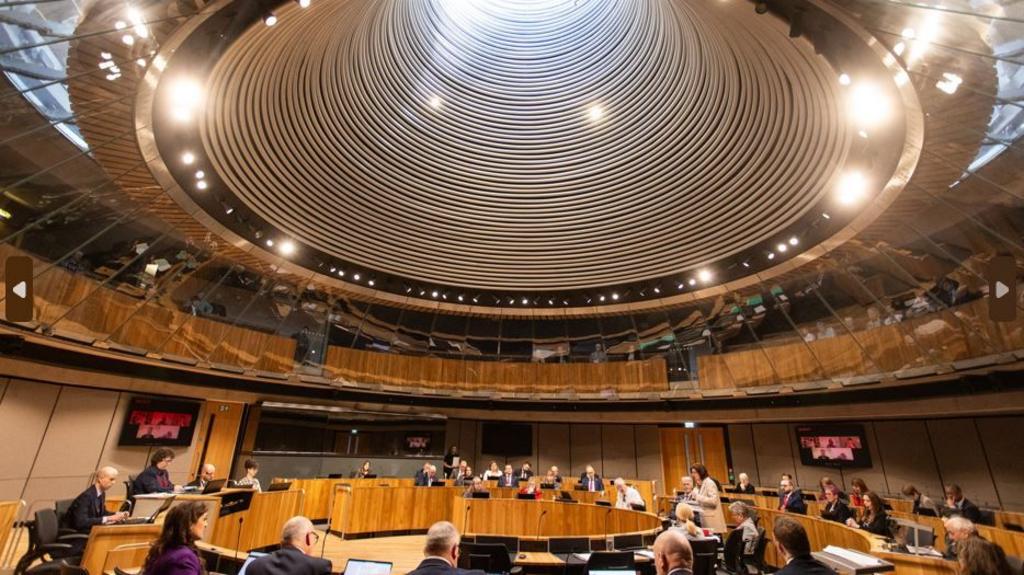
Why this election matters
The Senedd is not Westminster. It does not control everything. Defence, most welfare policy, immigration and many major economic powers remain with the UK Government.
But the Senedd and Welsh Government have major responsibilities over everyday life in Wales.
Health, education, transport, local government, housing, the Welsh language, culture, planning, agriculture, the environment and some taxes are all shaped in Cardiff Bay.
That means this election is not a second-order contest or a protest vote without consequences. The result will help decide how Wales is governed for the next four years.
It will decide who leads the Welsh Government. It will decide who controls ministerial departments. It will decide which parties chair committees, scrutinise legislation and shape the national debate.
For Pembrokeshire and Ceredigion, it will also decide who speaks for this new, huge constituency.
The six MSs elected for Ceredigion Penfro will have to represent an area with very different needs.
The concerns of Aberystwyth are not always the same as those of Milford Haven. The issues facing St Davids are not always the same as those facing Lampeter, Cardigan, Pembroke Dock or Haverfordwest.
That makes representation more complex.
It also makes the result more important.
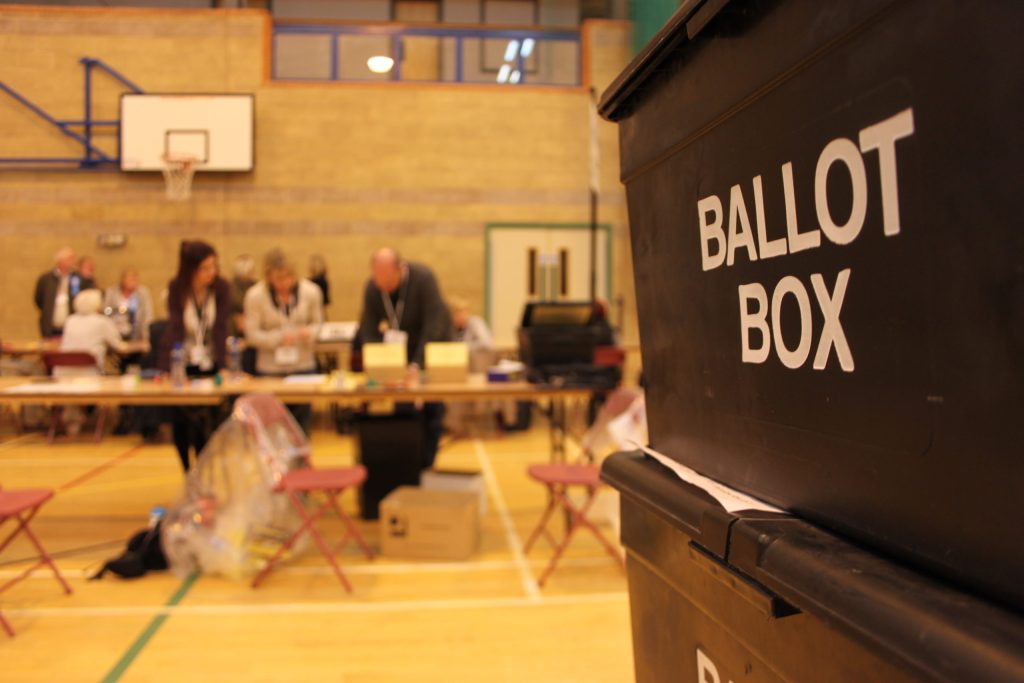
The morning after
The count will take place on Friday (May 8).
By the end of that day, Wales should know the shape of its new Senedd.
But it may not immediately know the shape of its new government.
Voters do not directly elect the First Minister. After the election, the Senedd must nominate a Member to become First Minister. If no party has a majority, parties may need to negotiate before a government can be formed.
If one party wins a majority, the answer is simple. But that looks unlikely.
The more likely result is a Senedd where the largest party must govern as a minority, form a coalition, or reach some form of agreement with another party.
A Plaid-led government, if Plaid finishes first, could seek support from Labour, the Greens, or both. But any arrangement with Labour would be politically delicate after a campaign built around replacing Labour. Any arrangement with the Greens could test Plaid’s relationship with rural Wales.
A Reform-led government, if Reform finishes first, would face an even harder route. Without enough Conservative seats to support it, and with other parties likely to resist working with it, Reform could find itself the largest party but still unable to command the Senedd.
Labour could still matter even if it loses heavily. In a fragmented Senedd, a weakened Labour group may still hold the balance of power.
That may frustrate voters who want a clear break from the past.
Yet it is also the reality of a more proportional system. The new Senedd is designed to reflect Wales’s divided political choices more accurately. That means it may also reflect the fact that Wales itself is not speaking with one voice.
The election on May 7 is therefore not just a contest between parties.
It is a test of whether Welsh democracy can handle a new system, a new political map, and a public mood that is clearly restless.
For Ceredigion Penfro, this is not just an election about Cardiff Bay. It is about whether the voices of Milford Haven, Haverfordwest, Pembroke Dock, St Davids, Fishguard, Cardigan, Aberaeron, Lampeter and Aberystwyth can be heard clearly inside a much larger political map.
Voters are not just choosing six names from a long ballot paper.
They are helping decide whether Wales continues with familiar government, turns to Plaid Cymru for the first time, gives Reform UK a dramatic breakthrough, or produces a Senedd where no party can move without talking to others.
Change is coming.
The only question is what kind of change voters will get.


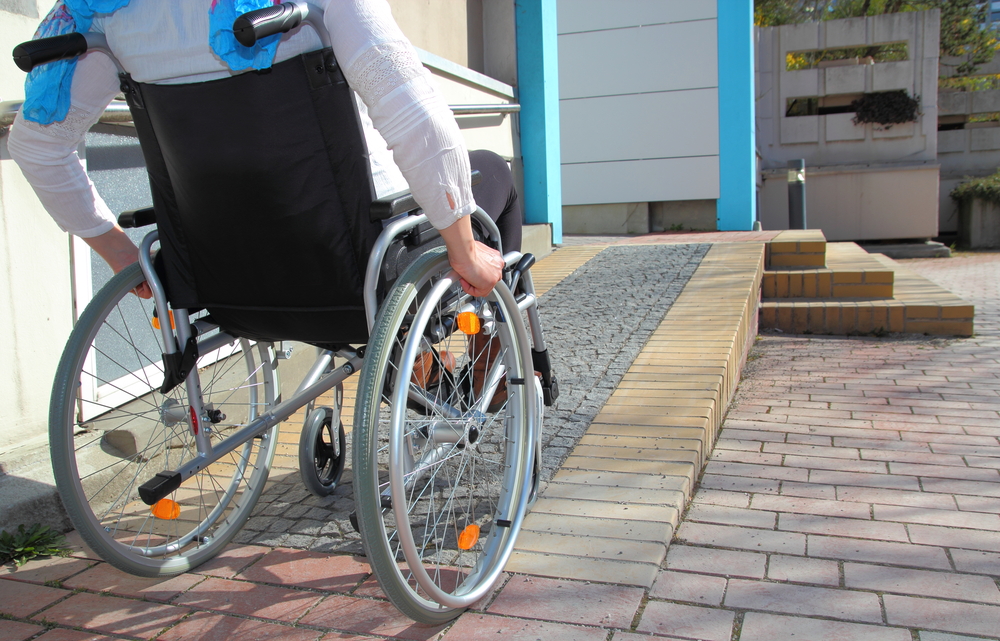
Council says poor and inaccessible housing can contribute to ill health and pressure on local services
PEMBROKESHIRE COUNTY COUNCIL has admitted there is not enough suitable accessible housing in the county to meet demand, with more than 400 people currently waiting for accessible social housing.
The council confirmed that 403 people are on the Pembrokeshire Accessible Housing Register, which forms part of the Choice Homes @ Pembrokeshire housing register.
Of those waiting, 81% are in the gold band, while 62% require one-bedroom accessible accommodation.
A further 111 cases are currently awaiting occupational therapy assessment through to approval of assessed works for disabled facilities or discretionary disabled assistance grants.
The figures were released following questions from The Pembrokeshire Herald after a report by the Royal College of Occupational Therapists warned that poor and unsuitable housing is damaging people’s health and placing avoidable pressure on health and social care services.
Pembrokeshire County Council said it recognised that unsuitable housing was a local challenge, often linked to ageing housing stock across all types of accommodation.
A spokesperson said: “Within Pembrokeshire, we recognise that there are challenges around unsuitable housing, often linked with an ageing housing stock across all tenures of accommodation.
“We recognise that poor and inaccessible housing can be a contributing factor to ill health and increased demand on housing, health and social care services.
“As a council where a need is identified, we work across service areas to ensure that people are able to live safely and independently within appropriate accommodation.”
Hospital discharge delays
The council also confirmed that housing-related issues can affect hospital discharge planning locally.
It said there had been an increase in housing-related delays in recent years, caused by a range of factors, including the need for suitable accommodation after changes in a person’s health or ability to function.
This can lead to a need for home adaptations or alternative accessible accommodation.

However, the authority said housing-related factors generally represented a relatively small proportion of overall discharge delays in the area.
The council said: “There are concerns related to housing-related delays which impact hospital discharge planning locally.
“There has been an increase in housing related delays due to a range of factors, including the need for suitable accommodation following changes in an individual’s health or functioning.
“This may be for any tenure of accommodation, which subsequently can lead to a need for home adaptations, or alternative accessible accommodation sourced.
“Despite this upward trend in recent years, housing-related factors generally represent a relatively small proportion of overall discharge delays in the area.”
Insufficient suitable homes
Asked whether enough suitable housing exists locally for older residents and people with disabilities or long-term health conditions, the council accepted there was a shortfall.
The spokesperson said: “Given the numbers we have on our Accessible Housing Register as well as the ageing population in the county, we acknowledge that there is insufficient suitable accessible housing to currently meet demand.
“This is recognised in the Local Housing Market Assessment 2023 and Pembrokeshire Housing Strategy 2024-2027.”
The council said its Occupational Therapy Service works closely with housing providers across Pembrokeshire to assess needs and support appropriate housing solutions.
This includes adaptations to existing properties and the development of adapted homes.
The council said its Housing Service was also working closely with Adult Social Care and health partners to address the challenges.
Adapting homes
For social housing tenants who need adaptations, the council said needs are assessed through the Occupational Therapy Service.
Depending on the outcome of that assessment and the extent of the works required, adaptations are either carried out by the social landlord or, in some circumstances, alternative more suitable accommodation is sought.
For new social housing, the council said Lifetime Homes standards form part of the Welsh Government’s Housing Quality Standards for new build properties.
Housing and social care services also work together to inform the type and design of properties being developed, with the aim of ensuring the needs of people with disabilities and long-term health conditions are considered.
The council said this work is targeted according to the needs identified from the Accessible Housing Register.
It added that the approach focuses on early identification, regular discussion and joint problem-solving to help support timely and appropriate hospital discharges, as well as planning for current and future need through new build and acquisition programmes.
Wider Welsh concern
The council’s comments come after the Royal College of Occupational Therapists published its Building Health into Homes report, which argues that unsuitable housing is worsening physical and mental health, increasing hospital readmissions and adding pressure to health and social care services.
The report says there is little point discharging people from hospital if they are returning to homes that fail to meet their needs or worsen their condition.
In response to the report, the Welsh Government told The Herald: “Poor or unsuitable housing directly impacts people’s health and places additional pressure on NHS services.
“Delayed discharges linked to unsuitable housing are a serious concern and we are taking steps to improve patient flow and reduce delays, strengthening joint working between health, social care and housing services so people can leave hospital safely.
“This Welsh Government has been clear that housing is a public health issue, which is why we are aligning action across government, including through dedicated ministerial oversight, to create a healthier population.
“We are also strengthening adaptation services to support independent living and prevent avoidable admissions and are establishing a new national development body to speed up delivery of accessible social homes.”
Hywel Dda University Health Board also said health was shaped by wider living conditions beyond the NHS.
James Severs, Executive Director of Allied Health Professions and Health Science at Hywel Dda University Health Board, said: “Most of what determines our health and well-being sits beyond the NHS. While healthcare is vital, it is the conditions in which people live, learn, work and age that have the greatest impact on health outcomes.
“As a Health Board, we recognise that the NHS contributes only a proportion of overall population health, with wider factors such as housing, education, employment and the environment playing a much larger role.
“This is why our strategy for ‘A Healthier Mid and West Wales’ is focused on moving beyond an illness-centred model of care to one that prioritises prevention, early intervention and support in communities.
“We are committed to working in partnership with local authorities, the third sector and our communities to address these wider determinants of health, reduce inequalities and enable people to live healthier lives, well lived.”

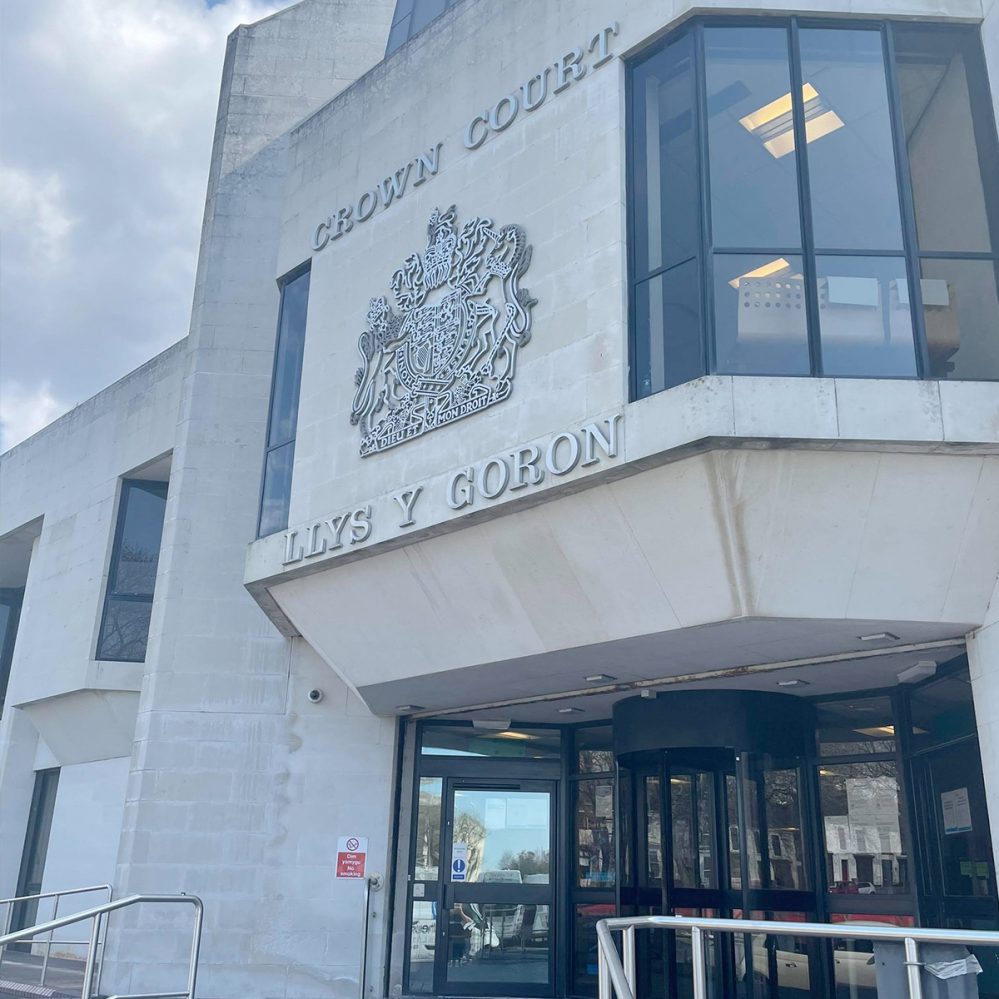
David Lewis was on police bail when he contacted a child decoy account on Snapchat
A PEMBROKE man has been jailed after sending sexual messages and an explicit video to what he believed was a 12-year-old girl.
David Lewis, aged 42, of Ashdale Lane, Pembroke, was sentenced at Swansea Crown Court after admitting child sex offences and offences involving indecent images of children.
The court heard Lewis was already on police bail when he contacted the Snapchat account, which was being operated by a police officer.
Prosecutor Craig Jones said police first attended Lewis’ home on August 6 last year and seized three mobile phones. An initial examination found child abuse material.
A full forensic download later revealed 263 Category A, 71 Category B and 51 Category C indecent images of children. The court heard the material included 246 Category A videos, 55 Category B videos and 37 Category C videos.
Lewis was also found to have shared a Category A image with another user on Telegram on July 27. The image showed a girl aged between ten and twelve being raped by an adult male.
While on bail, Lewis added what he believed was a 12-year-old girl on Snapchat on November 10. The account was in fact a decoy operated by police.
The court heard the account told Lewis she was at school and was 12. Lewis claimed he was 20 and sent a photograph of a younger man.
Over the following days, Lewis sent sexual messages, asked for inappropriate photographs and tried to call the account on Snapchat.
During one video call, he exposed himself and masturbated.
After his arrest, officers searched Lewis’ home and were able to match his bathroom and boxer shorts to those seen in the video.
Lewis pleaded guilty to attempted sexual communication with a child, attempted incitement of a child to engage in sexual activity, attempting to cause a child to watch sexual activity, distributing an indecent image of a child, and three offences of making indecent images of children.

Mitigating, Dan Griffiths said Lewis accepted the position he was in and pointed to his early guilty pleas.
Judge Paul Thomas KC described Lewis as “a committed paedophile” and jailed him for five years.
Lewis must sign the sex offenders register for life and was made subject to a Sexual Harm Prevention Order for ten years.


A HAVERFORDWEST man has been fined after admitting he breached a community order by missing probation appointments.
Asa Wandelt, aged 37, of Harrier Road, Haverfordwest, appeared before Haverfordwest Magistrates’ Court on Monday (Jun 15).
Wandelt admitted failing to comply with the requirements of a community order made by the court on February 23.
The breach related to missed office appointments on April 14 and May 18.
Magistrates ordered the community order to continue and fined Wandelt £80.
He was also ordered to pay £60 costs, bringing the total to £140. The court ordered payments to be made at £24 per month from July 13.



Business1 hour ago
Celtic Freeport five-year plan puts Milford Haven at centre of green energy future
Strategy promises investment, skilled jobs and new supply chains, but major barriers remain over grid connections, planning and delivery THE...


Education3 hours ago
Closure of Ysgol Clydau approved after emotional council debate
COUNCILLORS WARNED RURAL COMMUNITIES WILL REMEMBER DECISION PEMBROKESHIRE councillors have voted to close Ysgol Clydau following an emotional debate over...


Education3 hours ago
Manorbier school closure process to continue after narrow council vote
Questions remain over insurance, rebuilding costs and possible legal action by Diocese PEMBROKESHIRE councillors have voted to press ahead with...

Community6 hours ago
The father, son and daughter lifeguard trio saving lives in Pembrokeshire
A FATHER, son and daughter are preparing to help keep beachgoers safe on the Pembrokeshire coast this summer as part...

Community16 hours ago
Beating of the Bounds brings music, boats and tradition to Haverfordwest
CENTURIES-OLD CEREMONY DRAWS FAMILIES TO THE RIVERSIDE HAVERFORDWEST’S historic Beating of the Bounds returned on Sunday (Jun 14), with boats,...


Community24 hours ago
Milford Haven School pupil praised after stepping in during real-life emergency
A YEAR 11 pupil at Milford Haven School has been praised after putting his first aid training into action to...

Community1 day ago
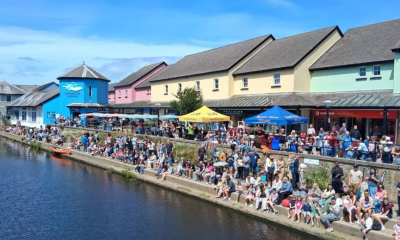
River festival brings crowds to Haverfordwest
A CELEBRATION of the River Cleddau brought crowds into Haverfordwest on Saturday (June 13) as the town’s River Festival returned...

Charity1 day ago
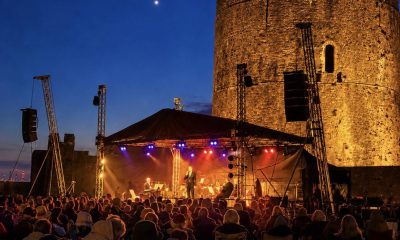
Voices at the Castle hailed as unforgettable night after weather setback
Russell Watson headlines spectacular charity concert at Pembroke Castle A SPECTACULAR evening of live music at Pembroke Castle has been...

Local Government2 days ago
Council admits 74 rights of way complaints remain unresolved
Key post vacant since February as walker raises safety concerns over paths near Llanteg and Amroth PEMBROKESHIRE COUNTY COUNCIL has...

Education3 days ago
Diocese threatens legal action as Manorbier school closure battle intensifies
Church says council could face judicial review over fire-hit school A BITTER row over the future of Manorbier Church in...
-
 Community18 hours ago
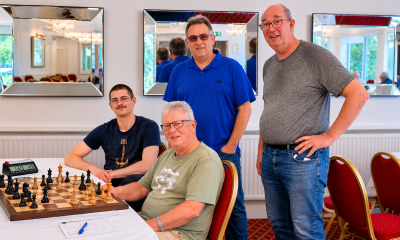
Pembrokeshire Chess Club crowned Welsh champions
-
Education3 days ago
Diocese threatens legal action as Manorbier school closure battle intensifies
-
 Crime6 days ago
Haverfordwest pair accused of £80,000 rogue trading frauds
-

 Crime4 days ago
Man accused of six rapes including alleged Haverfordwest offence
-

 Community7 days ago
Forgotten wartime archive found in Pembroke Dock attic after 80 years
-
 Crime4 days ago
Pembroke Dock teenager sentenced over train strangulation attack
-

 Crime6 days ago
Families condemn failed appeal by paddleboard boss jailed over Haverfordwest tragedy
-
 Crime6 days ago
Knife blankets call as school staff face rising violence fears