


News
Labour deputy says party ‘will not form next Welsh Government’

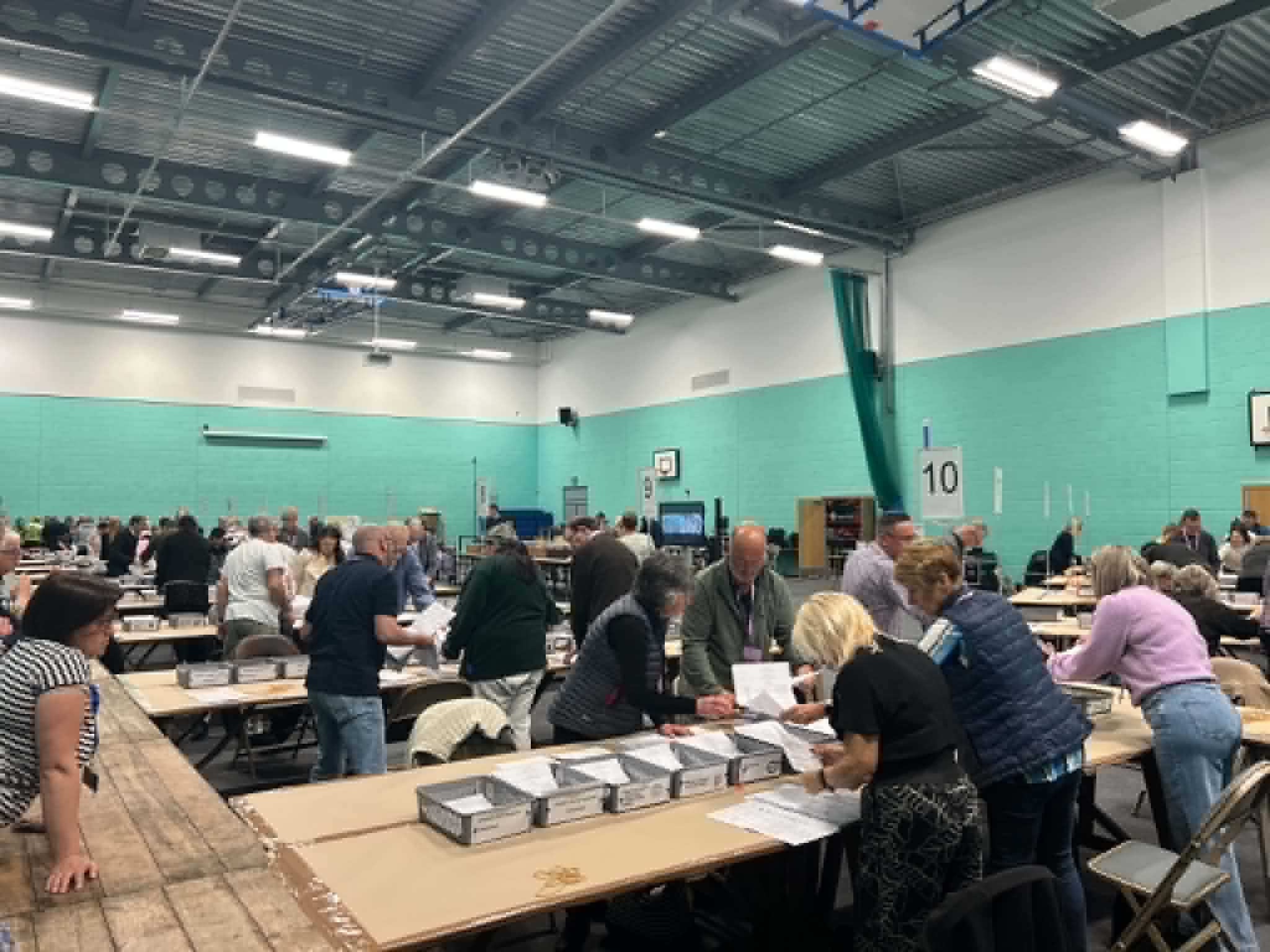
LABOUR FACES HISTORIC DEFEAT AS COUNTING CONTINUES ACROSS WALES
LABOUR’S Deputy Leader in Wales has effectively conceded the Senedd election, saying the party will “not form the next government” as counting continued across the country.
Huw Irranca-Davies, Eluned Morgan’s Deputy First Minister and Rural Affairs Minister, made the candid admission on BBC Wales on Friday (May 8), in what will be seen as one of the most dramatic moments in modern Welsh political history.
He said the result was “not the end” for Welsh Labour, but accepted that the party now faced a major period of reflection over what went wrong, why its campaign failed to cut through, and how it had lost the confidence of so many Welsh voters.
Mr Irranca-Davies also said it appeared “likely” that Eluned Morgan would not return to the Senedd as a member for the new Ceredigion Penfro constituency.
If confirmed, that result would be a devastating blow for Labour and would leave the party without its First Minister in the new Welsh Parliament.

Labour MSs are expected to meet on Saturday to discuss their changed position and decide their next steps as a group.
Mr Irranca-Davies avoided a direct answer when asked whether he would seek to lead Labour in the Senedd if Baroness Morgan loses her seat.
He is widely regarded as a possible contender for the post of Presiding Officer if Labour’s final results are as poor as early indications suggest.
Counting began on Friday morning after voters went to the polls on Thursday (May 7) in the first Senedd election held under the new electoral system.
The old arrangement of constituency MSs and regional list members has been replaced by sixteen larger “super constituencies”, each electing six members.
The system uses the d’Hondt formula, which allocates seats proportionally according to party vote totals.
Once all votes are counted, each party’s total is divided by the number of seats it has already won, plus one. The highest remaining total wins the next seat, and the calculation is repeated until all six seats are filled.

The process has drawn criticism from some voters and commentators, who say it is difficult to understand.
Former Labour minister Harriet Harman also criticised the Welsh voting system this week, describing it as overly complicated.
However, the method was first chosen by Tony Blair’s Labour Government ahead of the first Senedd election in 1999. Welsh Labour also rejected alternatives, including the Single Transferable Vote, when the new system was designed.
Critics of the reforms say the counting method itself has received too much attention, while the more serious change has been the creation of vast multi-member constituencies, which have weakened the direct link between voters and individual elected representatives.
Labour has dominated Welsh politics for more than a century.
At every General Election since 1922, Labour has been the largest party in Wales in terms of seats won. Since devolution began in 1999, it has also been the largest party in the Senedd and has led every Welsh Government.
As recently as June 2024, Labour won 27 of Wales’s 32 Westminster seats.
But that record appeared to count for little as voters went to the polls this week, with early briefings suggesting Labour had suffered serious damage in both its traditional heartlands and in West Wales.
As polls closed on Thursday night, Labour figures were already briefing broadcasters about the scale of the reverse.
One report suggested the party’s performance in the South Wales Valleys had been disastrous, while the BBC later reported that a senior Labour source had described results in West Wales as “bloody” and “challenging”.
At this stage, however, the full picture remains unclear.
It is also possible that Labour figures have deliberately played down expectations, in the hope of presenting anything short of total collapse as a better result than feared.
If the opinion polls and early indications prove accurate, Plaid Cymru and Reform UK could emerge as the largest forces in the next Welsh Parliament.
Such a result would represent a political earthquake in Wales and could bring an end to Labour’s unbroken control of devolved government.
MORE TO FOLLOW














A 35-YEAR-OLD man stole almost £800 worth of goods from Tesco Extra in Haverfordwest to fund his alcohol and gambling addictions, a court has heard.
Five thefts from same store
Luke Brunton, 35, visited the store on five separate occasions between February and May 2025, taking items including pillows, duvets, Lego sets, Pokémon cards, alcohol, crisps and a saucepan set.
The first theft took place on February 27, when Brunton stole four packs of pillows, a double duvet, a cool pillow, a cuddle cushion, a Batman Lego set and a BMW Lego set, worth £167.50.
On March 1 he returned and stole Pokémon cards valued at £144. Three days later, he stole Baileys, vodka, Jack Daniel’s, three pillows, crisps and a saucepan set, worth £192.69.
The final offence took place on May 21, when Brunton again stole alcohol, pillows and toilet roll. The value of those items was not given to the court.
Addictions reduced
Brunton, of St Lawrence Close, Hakin, Milford Haven, appeared before Haverfordwest magistrates this week, where he pleaded guilty to five charges of theft.
The court was told the offences also breached a conditional discharge imposed by Kent Court for previous theft matters.
His solicitor, Michael Kelleher, said: “At the time, he was drinking to excess and was also gambling to excess.
“The shoplifts funded those habits, both of which were addictions.”
Mr Kelleher said Brunton’s drinking and gambling had significantly reduced since the offending.
Brunton was sentenced to a 24-month community order. He must complete 15 rehabilitation activity requirement days and 66 hours of unpaid work.
He must also pay £761.79 compensation to Tesco, a £114 surcharge and £85 costs.


Driver was heading home after visiting former girlfriend when police stopped him on the A477
A WEST London motorist has been banned after being caught driving on the A477 in Broadmoor with a cocaine metabolite and cannabis in his system.
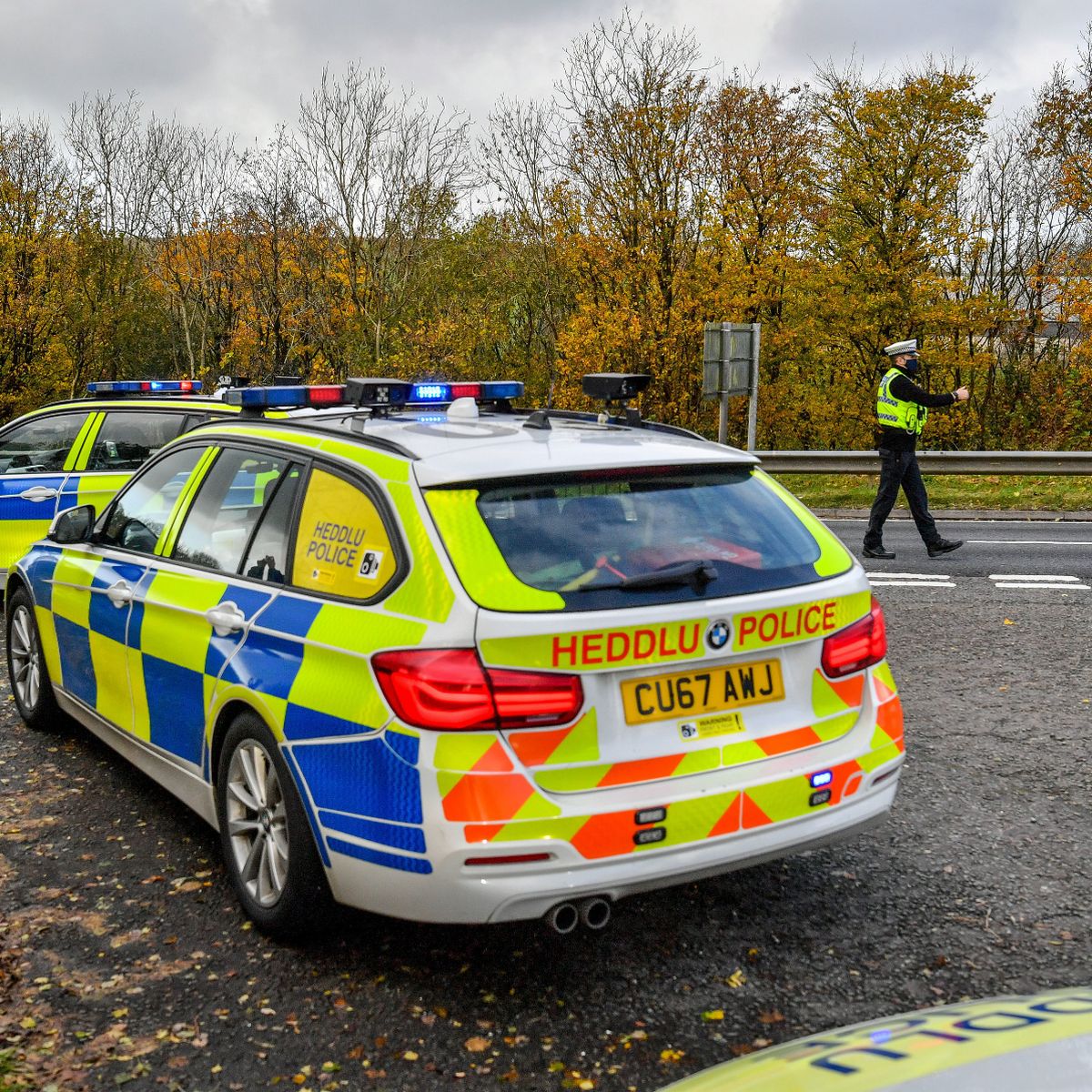
Danny Small, 32, was stopped by police carrying out routine checks at around 11:30am on January 28.
After providing a positive roadside drug swipe, Small was taken to a police station, where blood tests showed he had 157mcg of benzoylecgonine in his system. The legal limit is 50mcg.
He also had 2.9mcg of Delta-9 tetrahydrocannabinol in his system. The legal limit is 2mcg.
Small, of Little London Close, Uxbridge, appeared before Haverfordwest Magistrates’ Court this week, where he pleaded guilty to two drug-driving offences.
Probation officer Julie Norman told the bench that Small had been visiting his former girlfriend in Pembrokeshire and was driving home to Uxbridge at the time of the offence.
Ms Norman said Small was a regular cannabis and cocaine user.
“This helps treat his undiagnosed ADHD,” she said.
“He didn’t think the drugs would still have been in his system, as he’d consumed the drugs several days earlier. But drugs can often remain in the system for several weeks.”
Small was sentenced to a 12-month community order, during which he must complete 15 rehabilitation activity requirement days.
He was fined £80 and ordered to pay a £114 court surcharge and £85 costs. He was disqualified from driving for 15 months.
Driver was heading home after visiting former girlfriend when police stopped him on the A477
A WEST London motorist has been banned after being caught driving on the A477 in Broadmoor with a cocaine metabolite and cannabis in his system.
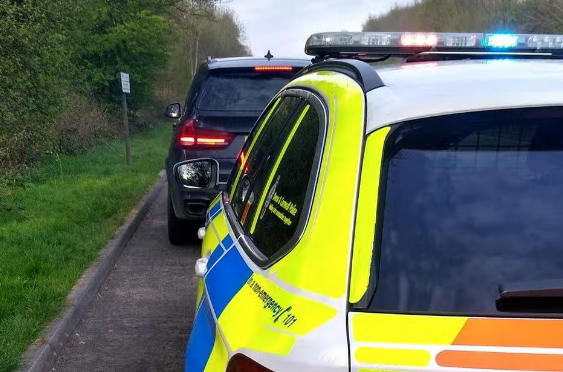
Danny Small, 32, was stopped by police carrying out routine checks at around 11:30am on January 28.
After providing a positive roadside drug swipe, Small was taken to a police station, where blood tests showed he had 157mcg of benzoylecgonine in his system. The legal limit is 50mcg.
He also had 2.9mcg of Delta-9 tetrahydrocannabinol in his system. The legal limit is 2mcg.
Small, of Little London Close, Uxbridge, appeared before Haverfordwest Magistrates’ Court this week, where he pleaded guilty to two drug-driving offences.
Probation officer Julie Norman told the bench that Small had been visiting his former girlfriend in Pembrokeshire and was driving home to Uxbridge at the time of the offence.
Ms Norman said Small was a regular cannabis and cocaine user.
“This helps treat his undiagnosed ADHD,” she said.
“He didn’t think the drugs would still have been in his system, as he’d consumed the drugs several days earlier. But drugs can often remain in the system for several weeks.”
Small was sentenced to a 12-month community order, during which he must complete 15 rehabilitation activity requirement days.
He was fined £80 and ordered to pay a £114 court surcharge and £85 costs. He was disqualified from driving for 15 months.



Community15 hours ago
Manorbier fire scandal: Council’s payout just £63,777 after school destroyed
PEMBROKESHIRE COUNTY COUNCIL has accepted an insurance settlement which leaves it with just £63,777.07 after the catastrophic fire which destroyed...


News24 hours ago
Bus overturns in major incident near Kidwelly
All passengers rescued as emergency services remain at scene A BUS overturned on the A484 between Kidwelly and Ferryside on...


Community2 days ago
Tenby Summer Spectacular cancelled amid council row over harbour access
Organisers say popular charity events cannot safely go ahead without clear powers to control crowds TENBY ROUND TABLE has announced...


News2 days ago
Motorcyclist dies after four-vehicle crash on A40 in Carmarthenshire
A MOTORCYCLIST has died following a four-vehicle collision on the A40 between St Clears and Whitland. Dyfed-Powys Police said the...


News2 days ago
Rhun ap Iorwerth urges new deal for Wales after Starmer quits
First Minister says next Prime Minister must focus on greater powers, fair funding and respect for Wales’ democratic mandate FIRST...


News2 days ago
How Labour’s landslide victory unravelled in just two years
Prime Minister announces resignation after losing support within his own party as Andy Burnham emerges as overwhelming favourite to take...


News3 days ago
Long Course Weekend set to bring thousands to Pembrokeshire
Three days of swimming, cycling and running will once again transform Tenby into one of the UK’s biggest endurance sporting...


Community3 days ago
The gentle giant behind the tattoos
Pembrokeshire security worker Josh Davies praised for professionalism, kindness and proving first impressions can be wrong JOSH Davies is hard...


Charity4 days ago
Toy Story fans fill charity toy box at Haverfordwest cinema
Donations pour in for SNAP Specialist Play as families embrace Toy Story 5 launch A TOY STORY-themed charity appeal at...


Community4 days ago
Lord Rhys emerges from the mist in St Davids
Giant puppet begins historic journey marking 850 years since the first Eisteddfod MIST swirled around St Davids Cathedral on Friday...
-

 Crime6 days ago
Milford Haven man jailed for breaching domestic violence protection order
-

 News6 days ago
Crash on Freeman’s Way causes school-run chaos across Haverfordwest
-

 Health4 days ago
Woman jailed assaults on police, harassment and XL Bully possession
-

 Crime4 days ago
Milford Haven woman spared jail despite string of shop thefts
-
 Crime6 days ago
Portfield Gate man faces careless driving allegation after Tufton crash
-
Community3 days ago
The gentle giant behind the tattoos
-

 Local Government6 days ago
Pembrokeshire faces accessible housing shortage as 403 people wait for homes
-

 News7 days ago
Brexit at 10: How Britain was sold a dream that cost us dearly