

Community
‘Uncle Ted’s’ daring Moby Dick stunt celebrated after seventy years

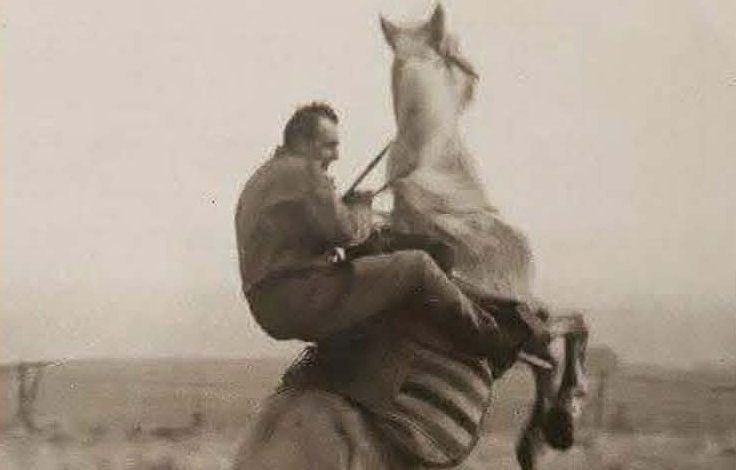
THE NIECE of a member of the crack stunt team who worked on the 1956 production of Moby Dick says she is thrilled that the movie is being celebrated by Fishguard’s Ar Ymyl y Tir/On Land’s Edge Festival in September – 70 years after its cinematic release.
Francesca Bosenius, of Llangwm, fondly recalls some of the escapades of her late “Uncle Ted” – Eduardo (‘Ted’) Palmieri – an accomplished horse rider and stuntman who worked on several top films.
He was immortalised in a famous scene from John Huston’s classic movie for his portrayal of the doomed lookout who loses his footing and plunges into the ocean from the Pequod’s top mast, never to re-surface.
Speaking after witnessing the scene for the first time, Francesca laughed as she said: “That was some drop! But then that’s just the sort of thing uncle Ted would do!
“The story that has been passed down through all of us all is that he apparently had to fall out of the crow’s nest, yet I’ve never found any mention of him in the film credits.

“My uncle was of Italian heritage. My grandparents came over to the UK around the time of the First World War and settled in the south London areas of Mitcham, Tooting and Balham. Uncle Ted was big into racing cars and he had an F M Car Sales showroom in Beckenham, Kent, at one time.One of his party tricks was driving down Streatham Hill in the 1960s in a sports car sat on the back of the driver’s seat steering with his feet!”
She continued: “He and my dad, one of his older brothers, knew the ‘Acid Bath Killer’, John Haig. We lived in Crawley at the time and, don’t ask me how they knew him, but they did. Uncle Ted was born in 1921 and sadly died in 2017. We all knew him as ‘Uncle Ted’ or ‘Uncle Teddy’.”
Another stuntman on Moby Dick was John Sullivan, who would go on to have a small, but memorable speaking role in the 1964 classic movie Zulu as the commander of a cavalry troop desperately fleeing the disaster at Isandhlwana.
During several months of filming in dangerous sea conditions off Fishguard, Sullivan worked alongside other uncredited stuntmen including Joe Powell, who would also appear in Zulu as Sgt Windridge.
According to local legend it was Sullivan who dived head-first from the top mast of the Pequod into the waters of Fishguard Bay in order to win a bet struck with director Huston on the last day of filming.
Other sources claim a local man named ‘Texas’ Jones also made the leap!
Visit On Land’s Edge for further information.



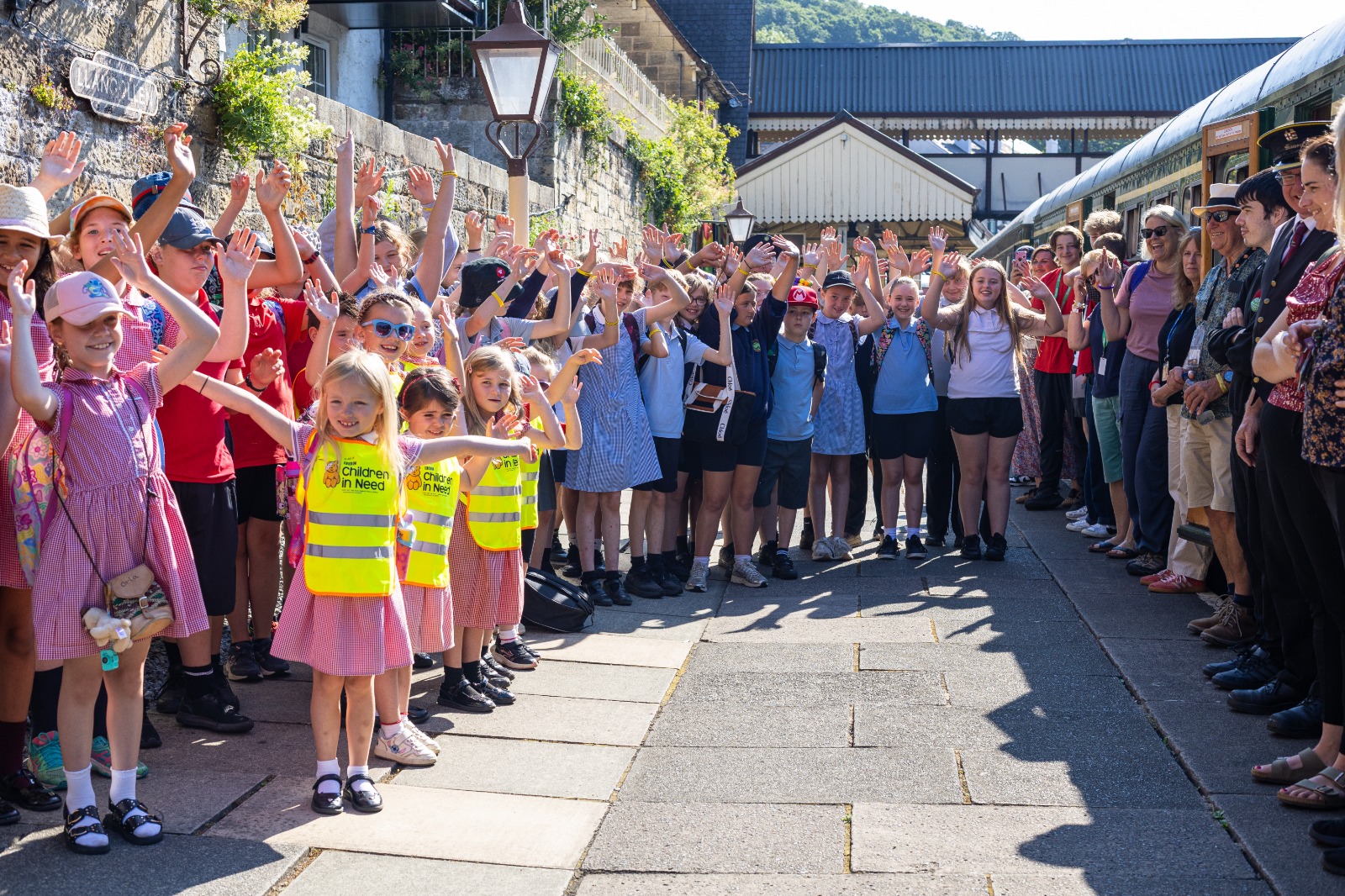
MORE than 50 children from two Dee Valley community schools stepped back into local history when they travelled by train to Llangollen International Musical Eisteddfod’s Children’s Day.
Pupils from Ysgol Corwen and Ysgol Carrog boarded a vintage diesel train at Corwen Station before making the journey along the heritage line to Llangollen, arriving shortly after 9am to enjoy a sunny day at the festival.

The journey revived a much-loved local tradition. Children from the Corwen and Carrog areas once travelled by train from their local stations to the Eisteddfod’s Children’s Day every year, until the Ruabon to Barmouth line was closed in the early 1960s following the Beeching cuts.
Thanks to the route’s revival as a thriving heritage railway, Llangollen International Musical Eisteddfod and Llangollen & Corwen Railway have been able to bring the annual outing back to life, with the tradition returning in 2019.
This year’s group of young “railway children” waved from the carriage windows as they pulled into Llangollen Station, where they were welcomed by representatives from the Eisteddfod and the railway.
There was also time for photographs, and even a couple of songs from the children, before they were guided from the station to the Eisteddfod field for a packed day of activities and performances.
Eisteddfod organiser Ian Lebbon, who helps arrange the special journeys, said they remained an important link with communities along the heritage line.
He said: “We see them as extremely important to the people in the communities at the other end of the heritage line, where the railway is part of their everyday lives.
“The railway, of course, is one of the three great highways of the valley, along with the River Dee and the A5 road.
“Many of these children will never have travelled by train before, especially one as magnificent as the heritage one they came on today.
“It’s also good for them to be able to see and enjoy the Eisteddfod. Many of them will be coming to the festival for the first time and we hope they will become regular visitors.”
Becky Mollison-White, assistant headteacher at Ysgol Carrog, said the children had thoroughly enjoyed the experience.

She said: “It was an amazing experience for the children from the two schools and they were all very excited about it.
“Corwen and Carrog both have stations on the heritage line and the children were very happy about getting the opportunity to travel on it.”
Helping guide the children to the Eisteddfod field were young people from Ysgol Dinas Brân in Llangollen and Ysgol Morgan Llwyd in Wrexham, who work at the festival each year as Welcome Hosts.
Mr Lebbon said the scheme also offered the young volunteers a valuable opportunity to build confidence, gain experience and improve their future career prospects.
Fourteen intricate aircraft models chart RAF flying boat history from the First World War to the late 1930s
A REMARKABLE timeline of RAF flying boat history can now be seen at Pembroke Dock Heritage Centre, following the donation of an exquisite collection of aircraft models.
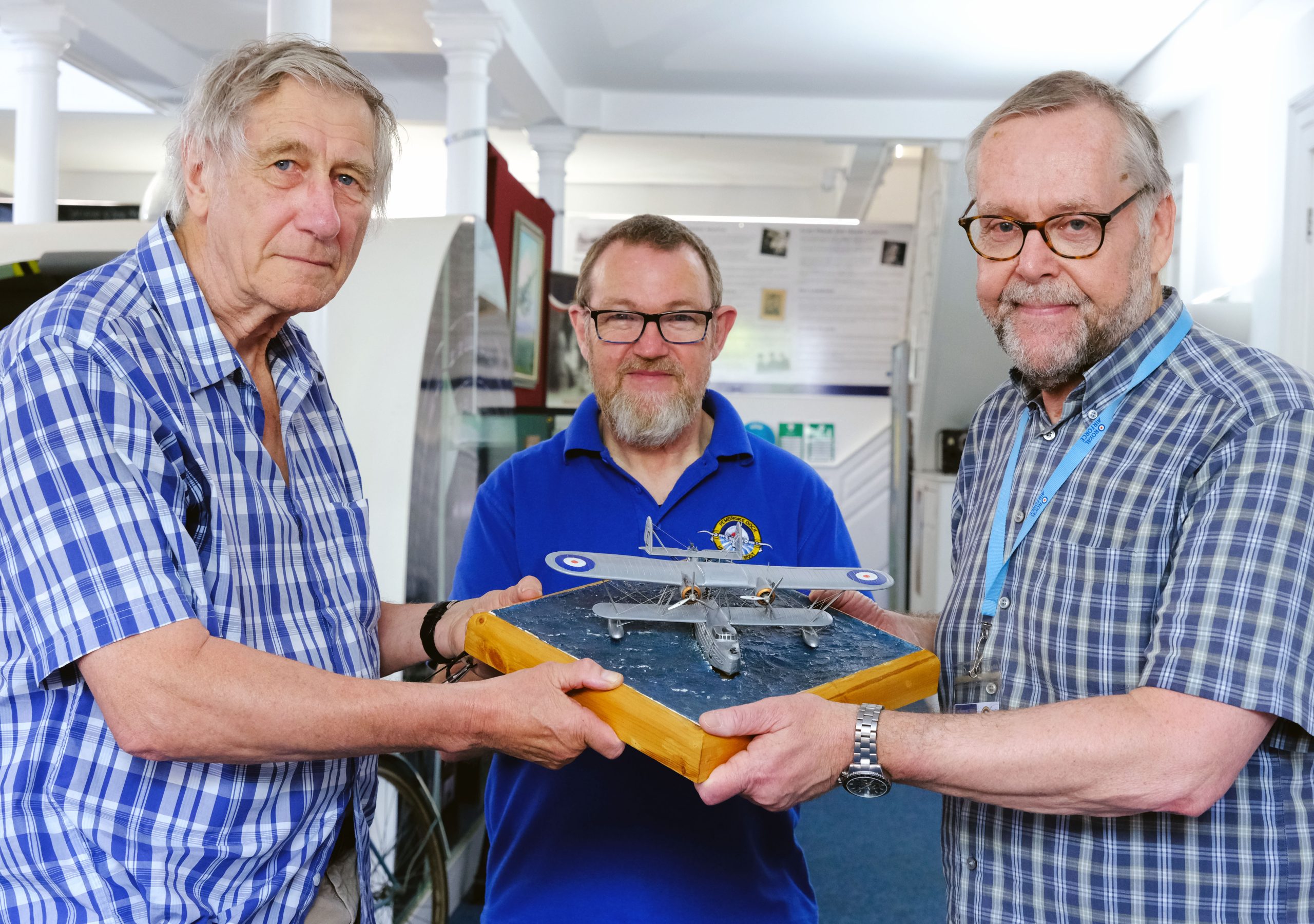
Fourteen models, showing flying boat types from the First World War through to the late 1930s, have been gifted by expert modelmaker Fred Martin, of Bristol, who made a special visit to Pembrokeshire to hand over the collection.
The models include the Supermarine Southampton, which in 1931 became the first flying boat to be stationed at the newly opened RAF Pembroke Dock, and the Short Singapore, the last of the biplane flying boats, which was still in operational use at the outbreak of the Second World War in 1939.
Fred, who has been making models for more than 60 years, estimates that many of the aircraft took between 80 and 100 hours each to complete.
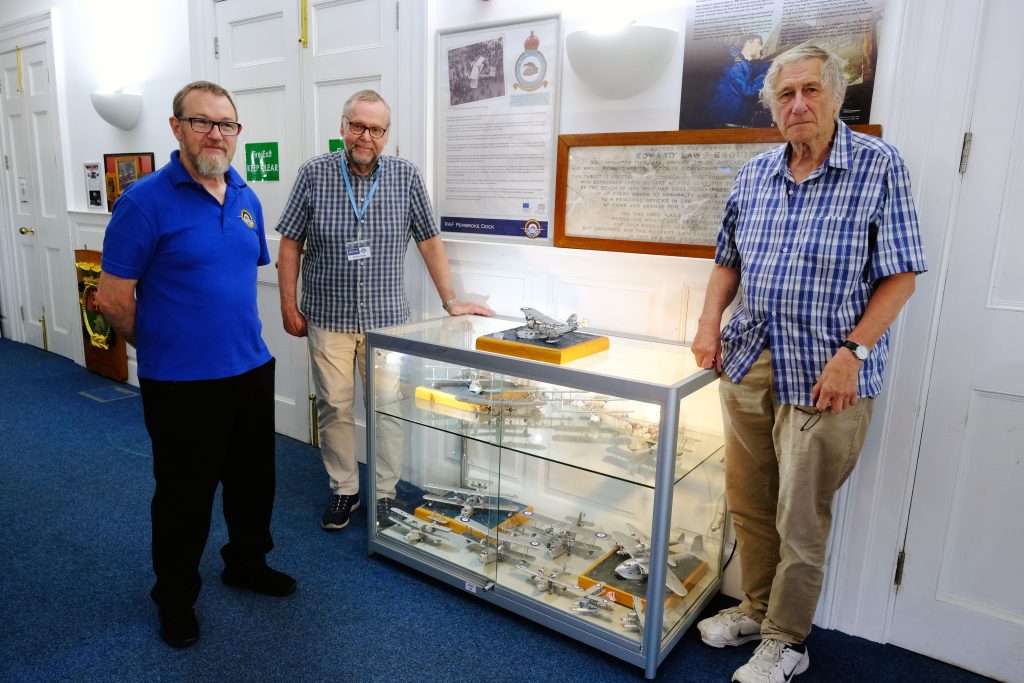
(Pic: Martin Cavaney Photography)
He said: “The Heritage Centre team have done a quite outstanding job and the exhibits are so professionally presented and varied. I am so pleased that I have been able to contribute to the story.”
Trevor Clark, of the Heritage Centre’s Collections Team, said the models were an important addition to the centre’s aviation displays.
He said: “Many of the models are from vacform kits, which are very intricate and challenging to make. Every type of biplane flying boat used by the RAF in the 1920s and 1930s is represented. All were seen on the Haven Waterway at various times.”
Volunteer Paul Emens, himself a highly skilled modelmaker and member of the Penfro Model Club, added: “It is a remarkable collection and the quality of each one is superb, right down to the myriad of rigging wires.”
The Heritage Centre already displays several models of Sunderland and Catalina aircraft from the Second World War era, but Fred noted that one flying boat is still missing from the collection.
“This is the Saro Lerwick, which looks like a two-engined Sunderland,” he said. “I am only aware of two kits that have been produced in 1/72 scale. Both are no longer in production and are very rare. It does, however, occasionally appear, so I will keep a lookout.”
Pembroke Dock was Wales’ only Royal Dockyard, a major garrison town and, during the Second World War, home to the largest flying boat station in the world.
The Heritage Centre’s displays interpret the maritime, aviation and military heritage of the town, as well as the social and community history of Pembroke Dock.

The centre is currently open Monday to Friday, from 10:00am to 4:00pm.
Cover image:
Fred Martin, left, hands over a model of a London flying boat to Paul Emens and Trevor Clark, right, of the Pembroke Dock Heritage Centre team.
Pic: Martin Cavaney

THE FAMILY of an 18-year-old man who died after entering the River Wye during a Duke of Edinburgh expedition have paid tribute to a “loving” young man who will be “dearly missed”.
Umar Dumbuya, from London, died in Glasbury, Powys, on Tuesday, June 30.
Dyfed-Powys Police have issued a photograph of Umar and a tribute from his family following the tragedy.
His family said: “We are heartbroken by the loss of our son, brother and grandson. There are no words that can describe the pain we are feeling as a family.
“Umar was a loving boy and will be dearly missed by everyone who knew him.
“Umar loved spending time playing basketball, attending the gym, and being with friends and family.
“We will always remember Umar for his kindness, warmth and sense of humour. His death has left a devastating hole in our family, and we now ask for privacy as we take time to grieve.”



Business17 hours ago
Pembrokeshire lands £98m share of Wales marine energy boom
New industry report says county has received the second highest level of marine energy investment in Wales, supporting more than...


Crime17 hours ago
First aider tells jury teacher was “crying, shaking” after classroom stabbing
A SCHOOL first aider has told a jury that teacher Vicki Williams was “crying, shaking” and in “complete shock” after...


Crime2 days ago
Teacher feared she was dying after Milford Haven classroom stabbing
A TEACHER allegedly stabbed in the head at Milford Haven Comprehensive School told a jury she feared she was dying...


News2 days ago
Farage to resign as MP and fight Clacton by-election amid finance row
NIGEL FARAGE has announced he will resign as MP for Clacton and stand again in the by-election he intends to...
Crime2 days ago
Teacher tells jury there were ‘no issues’ with accused pupil hours before ‘stabbing’
Milford Haven teacher gives evidence as trial of 15-year-old continues at Swansea Crown Court A TEACHER allegedly stabbed at Milford...

News2 days ago
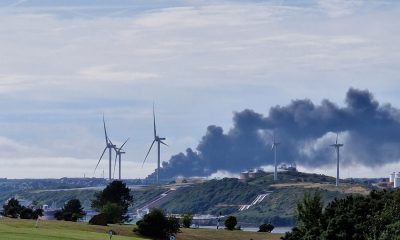
Major incident stood down after fire at Impala Terminal in Milford Haven
Fire involved decommissioned oil tank containing residual crude oil and around 60 cylinders A MAJOR incident declared during a fire...

News2 days ago
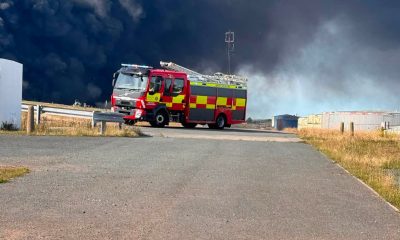
Large fire breaks out at Impala Terminal in Milford Haven
Black smoke seen for miles as emergency services respond to incident at former Puma Energy site A LARGE fire has...
Crime3 days ago
Prosecution outlines ‘planned attack’ as Milford Haven teacher stabbing trial opens
Jury hears teenager allegedly brought kitchen knife into school before teacher was stabbed in the head THE JURY in the...

Crime3 days ago
Boy, 15, denies attempted murder of Milford Haven teacher in ‘horrifying’ attack
Swansea Crown Court hears dramatic opening of trial over February stabbing A 15-YEAR-OLD boy from Milford Haven has gone on...


Crime3 days ago
Fishguard man cleared after five years in prison refused compensation again
Brian Buckle’s case raises fresh questions over justice system that says a man can be cleared by a jury but...
-

 Entertainment7 days ago
Pembrokeshire DJ lands record deal with London dance label
-
 Community6 days ago
Closure-threatened Stepaside school expected to remain open
-

 Education6 days ago
Education secretary vows to tackle ‘root causes’ of antisocial behaviour in schools
-

 Crime7 days ago
Llandeilo man accused of rape sent to Crown Court
-

 Education6 days ago
First Minister pressed on biological sex, additional learning needs, and NHS jobs
-
 Community6 days ago
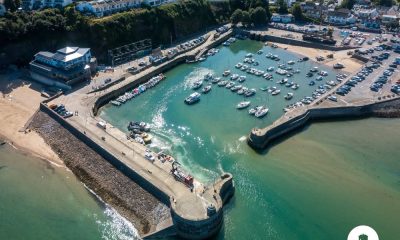
Saundersfoot Harbour regeneration project wins national planning award
-

 Education6 days ago
Ysgol Glannau Gwaun celebrates prestigious Gold Active Travel award
-
News2 days ago
Large fire breaks out at Impala Terminal in Milford Haven