

News
Mystery as hundreds of dead dogfish wash up on Saundersfoot beach

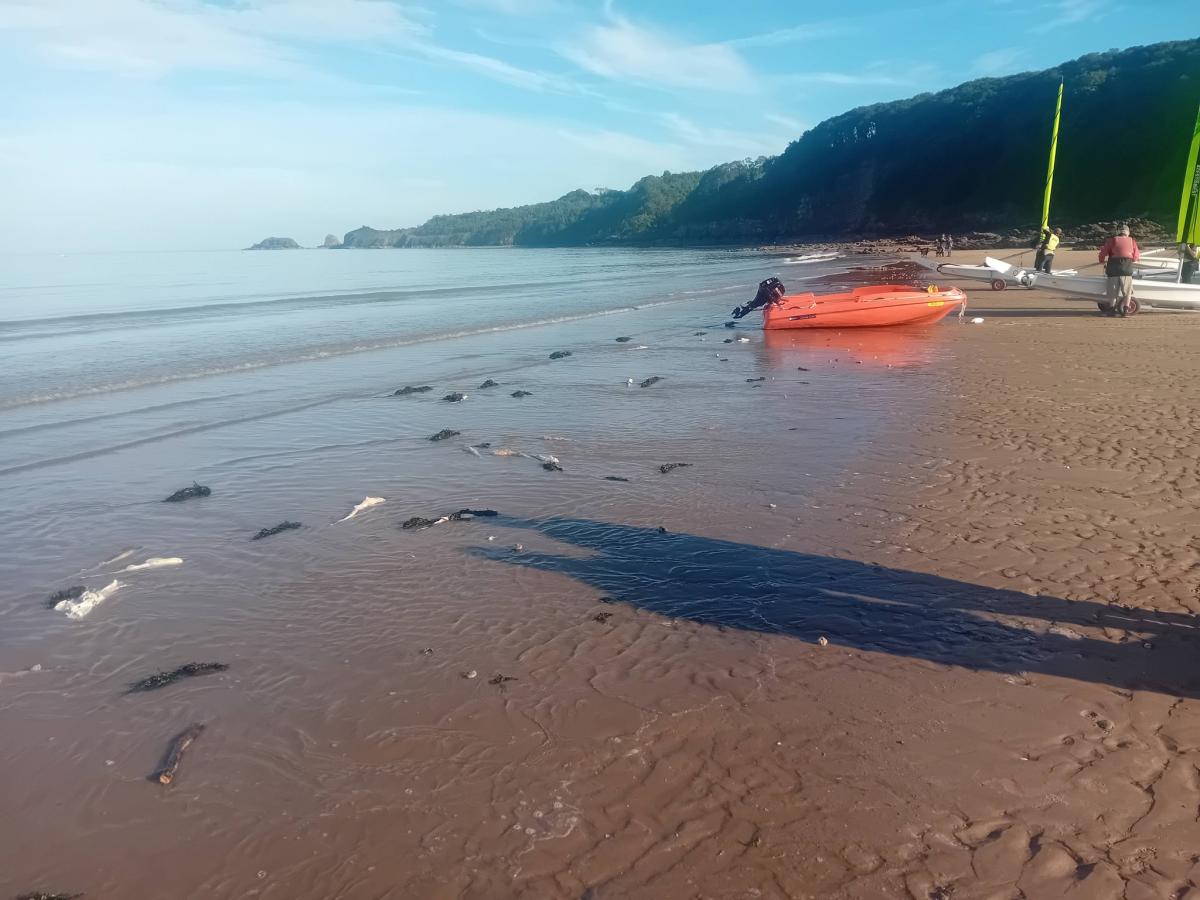
Concerns raised after mass stranding stretches hundreds of yards along shoreline
HUNDREDS of dead dogfish have washed up on a Pembrokeshire beach in a strange incident that has left locals and visitors searching for answers.
The fish, believed to be dogfish — a small species belonging to the shark family — were discovered scattered along Saundersfoot Harbour Beach on Thursday (May 21), with one witness estimating the carcasses stretched for around 500 yards.
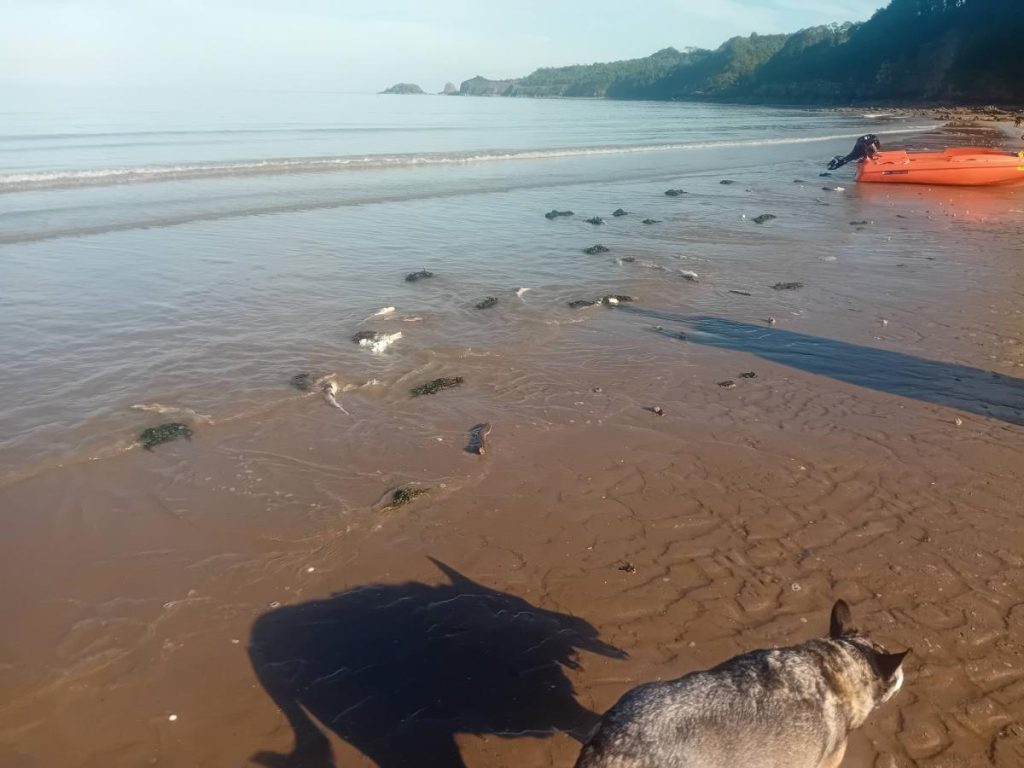
Holidaymaker Colin Hill, who came across the scene, said the scale of the wash-up was shocking, with large numbers of fish appearing to have washed in at roughly the same time.
While the exact cause remains unclear, early indications suggest the fish may have been discarded at sea before drifting ashore on changing tides.
Natural Resources Wales (NRW), which attended the scene, said there was no sign of a pollution incident.

A spokesperson for NRW told The Herald: “We investigated reports of dead fish at Saundersfoot and found no evidence of a pollution incident.
“The fish appear to be dogfish, and this is likely linked to fishing by-catch being discarded at sea.
“Tides have since cleared the majority from the shoreline and no wider environmental impacts were identified.”
Fishing link suspected
Marine experts say one of the most likely explanations is that the dogfish were unintentionally caught by fishing vessels targeting more commercially valuable species before being thrown back into the sea.
Dogfish, also known as catsharks, are common around the Pembrokeshire coast but are not generally landed commercially in large numbers.
However, local marine conservationist Cliff Benson of Sea Trust Wales said the scale of the incident appeared unusual.
“We quite often see dogfish or catsharks seemingly intent on suicide and beaching themselves, though nobody seems to know why,” he said.

“However, this is on a different scale and looks like they might have been caught by some fishing boat that was hoping to catch more commercial species and thrown overboard dead.”
He added that pollution was another possible explanation, although less likely if only one species had been affected.
Not the first time
Pembrokeshire has seen smaller incidents involving dead dogfish washing ashore before, but similar mass strandings elsewhere in Wales have previously been linked to fishing activity.
In one case at Burry Port in 2019, fisheries experts suggested dead dogfish found on the shoreline had likely been dumped following the clearing of fishing nets. In Barry in 2021, hundreds more washed up, some still attached to hooks and tackle.
For now, the mystery remains unresolved — although NRW believes discarded fishing by-catch is the most likely explanation.
Caption:
Hundreds of dead dogfish washed up on Saundersfoot Harbour Beach on Thursday (Pic: Colin Hill).


PEMBROKESHIRE COAST NATIONAL PARK AUTHORITY has published its latest Welsh Language Standards Annual Report, setting out the work carried out over the past year to support and promote the use of Welsh across its services.
The report covers the period from April 2025 to March 2026 and outlines the Authority’s progress in meeting its statutory duties under the Welsh Language Standards.
The Standards require public bodies in Wales to provide services and communicate with the public in Welsh, ensuring that people can access information, take part in public life and engage with organisations through the language of their choice.
The legal framework for the Standards is set out in the Welsh Language (Wales) Measure 2011, which places duties on public organisations, including National Park Authorities, to treat the Welsh language no less favourably than English.
For Pembrokeshire Coast National Park Authority, the report is not only a statutory requirement but also a reflection of the importance of Welsh to many communities across the county.
The Authority says its work under the Standards supports residents, schools, community groups, volunteers and visitors, while helping to ensure that Welsh remains visible and accessible in everyday life.
Tegryn Jones, Chief Executive of Pembrokeshire Coast National Park Authority, said: “The Welsh language is central to the identity, culture and everyday life of Pembrokeshire Coast National Park.
“As an Authority, we recognise our responsibility not only to comply with the Welsh Language Standards, but to help create the conditions in which Welsh can be used naturally and confidently.
“For many people in Pembrokeshire, Welsh is the language of home, family and community, and it is important that they are able to engage with the Authority in their first language.
“This work is reflected across the Authority’s services, from the way we share information with the public to our work with schools, communities, volunteers and visitors.
“The Annual Report provides an opportunity to look at what has been achieved over the past year, while also recognising where further progress can be made.”
The Authority’s wider commitment to the Welsh language is also reflected in its Welsh Language Strategy, National Park Management Plan and Local Development Plan 2.
The full Welsh Language Standards Annual Report is available at: www.pembrokeshirecoast.wales/welsh-language-standards/.


Robert Seymour was three times the legal limit after police received reports of a car swerving near Pembrokeshire coastal village
A FORMER serviceman has been banned from the road after being caught driving a BMW Z4 while three times over the drink-drive limit.
Robert Seymour, 56, was seen driving between Portfield Gate and Nolton Haven at around 9.15pm on June 13 after police were alerted by a member of the public concerned about his driving.
“The Z4 had been seen swerving all over the road,” Crown prosecutor Sian Vaughan told Haverfordwest Magistrates’ Court.
Officers found the car around ten minutes later, reversing slowly out of a caravan park before moving forward.
Ms Vaughan said Seymour had removed the keys from the ignition when officers approached.
“He was very intoxicated and was slurring his words,” she said.
“There was also a very strong smell of alcohol emanating from the vehicle.”
Seymour, of Chestnut Tree Cottage, Portfield Gate, Haverfordwest, gave a positive roadside breath test and was arrested.
At the police station, he gave a lowest breath reading of 105 microgrammes of alcohol in 100 millilitres of breath. The legal limit is 35.
Seymour pleaded guilty to drink-driving.
Defending, solicitor Michael Kelleher said Seymour had served in the military for nearly 30 years and was now employed as a public servant with the Department for Work and Pensions.
“His full-time work takes him to various centres all over Dyfed,” he said.

“This is going to have a huge effect on his life, however his employers have said that he is going to retain his job.”
Magistrates fined Seymour £750 and ordered him to pay a £300 surcharge and £85 costs, making a total of £1,135.
He was disqualified from driving for two years.

Michael Carruthers was described as “shaking and shivering” at Parc Prison before court appearance was adjourned
CONCERN was raised for a Pembroke Dock prisoner after he was unable to appear before magistrates by video link from Parc Prison.
Michael Carruthers, 34, was due to appear before Haverfordwest Magistrates’ Court on Tuesday morning charged with assaulting a police officer by beating.
The alleged offence is said to have taken place in Haverfordwest on April 24.
But prison staff told the court Carruthers was not in a fit state to appear by live link from the Bridgend prison.
“After being taken out from his cell, he sat shaking and shivering on the floor and was holding his head in his hands,” a prison officer told the court.
“His head isn’t really in it.”
When asked whether Carruthers had been seen by a prison medic, prison staff confirmed he had not.
Defending, solicitor Tom Lloyd said Carruthers’ behaviour was consistent with his medical history.
“He’s appeared before this court many times before, but he’s severely autistic and has PTSD,” said Mr Lloyd.
“He has severe issues. When the prison officers described the way in which he is today, it’s clear that today came as a particular shock to him, as the first he learned of today’s court appearance was this morning.”
Mr Lloyd asked for the case to be adjourned so he could speak to Carruthers and prepare him for his next appearance.
Magistrates agreed, and the case was adjourned until July 14.

The court’s legal adviser stressed the importance of Carruthers attending the next hearing.
“People can’t hide by being in prison,” she said.
“If he’s deliberately refusing to come to court, then he must be physically brought here by the prison staff.”



Crime16 hours ago
Teacher feared she was dying after Milford Haven classroom stabbing
A TEACHER allegedly stabbed in the head at Milford Haven Comprehensive School told a jury she feared she was dying...


News16 hours ago
Farage to resign as MP and fight Clacton by-election amid finance row
NIGEL FARAGE has announced he will resign as MP for Clacton and stand again in the by-election he intends to...


Crime19 hours ago
Teacher tells jury there were ‘no issues’ with accused pupil hours before ‘stabbing’
Milford Haven teacher gives evidence as trial of 15-year-old continues at Swansea Crown Court A TEACHER allegedly stabbed at Milford...


News1 day ago
Major incident stood down after fire at Impala Terminal in Milford Haven
Fire involved decommissioned oil tank containing residual crude oil and around 60 cylinders A MAJOR incident declared during a fire...


News2 days ago
Large fire breaks out at Impala Terminal in Milford Haven
Black smoke seen for miles as emergency services respond to incident at former Puma Energy site A LARGE fire has...
Crime2 days ago
Prosecution outlines ‘planned attack’ as Milford Haven teacher stabbing trial opens
Jury hears teenager allegedly brought kitchen knife into school before teacher was stabbed in the head THE JURY in the...

Crime2 days ago
Boy, 15, denies attempted murder of Milford Haven teacher in ‘horrifying’ attack
Swansea Crown Court hears dramatic opening of trial over February stabbing A 15-YEAR-OLD boy from Milford Haven has gone on...


Crime2 days ago
Fishguard man cleared after five years in prison refused compensation again
Brian Buckle’s case raises fresh questions over justice system that says a man can be cleared by a jury but...


Crime3 days ago
Wales’ police commissioners to face MPs over future of policing
WALES’ four Police and Crime Commissioners are to be questioned by MPs next week as major changes to the way...


Crime3 days ago
Man in critical condition after serious assault in New Quay
A 20-YEAR-OLD man remains in a critical condition in hospital after being seriously assaulted in New Quay. Dyfed-Powys Police said...
-

 Entertainment6 days ago
Pembrokeshire DJ lands record deal with London dance label
-
 Education6 days ago
Council deputy leader moves to halt Stepaside school closure plan
-

 News6 days ago
Bridge installation to begin at Tenby station as accessibility upgrade reaches key stage
-

 Crime6 days ago
Llandeilo man accused of rape sent to Crown Court
-
 Community5 days ago
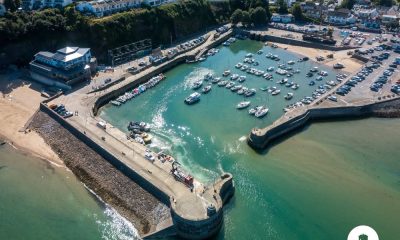
Saundersfoot Harbour regeneration project wins national planning award
-

 Community6 days ago
Welsh pupils pitch green ideas as youth confidence crisis deepens
-

 Charity6 days ago
Prince of Wales praises Wales Air Ambulance as charity marks 25 years
-

 Crime6 days ago
Fishguard man jailed after breaching order banning contact with mother