


Community
Brave Teddy highlights need for ‘Gift of Life’

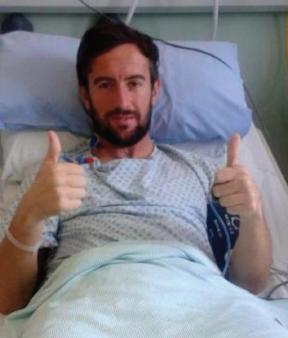

Adam Hughes: Just after his transplant.
FOR Jess Evans and Mike Houlston from Cardiff, the birth of twin boys Teddy and Noah on April 22 2014 was one of both heartbreak and hope. Teddy was born with a rare yet fatal condition – anencephaly – but his parents were determined his short life would not be in vain. Once the diagnosis was confirmed during pregnancy, the parents discussed and wanted, if possible, for his organs to be donated. The family managed to spend precious time with him before he passed away and Teddy became the youngest organ donor in the UK. In the last ten years, 39 babies younger than two years old have become organ donors helping to save the lives of strangers.
As his twin Noah celebrated his first birthday the family used the anniversary to mark the occasion when his brother Teddy became a hero. His kidneys were transplanted to help save the life of another person.
Jess, 28, said: “Knowing that part of your loved one is living on in someone else is comforting. If it stops any other person going through the same thing then this can only be good. Teddy´s life had a very important role to play. Unless you have been through the same thing or know someone affected it´s hard to understand how important organ donation is.”
Mike, 30, added: “We want Teddy´s story to inspire others and help break any taboos people might still hold regarding organ donation. Organ donation wasn´t prominent in my life growing up and while I was up for it I never got round to doing anything about it. I´m sure there are many more men like me who think the same! I want to spread the word as much as possible about how organ donation saves lives, and that we should all speak to each other about our wishes. Without that discussion it is a very difficult conversation to have when it comes out of the blue. Put simply, you should ask yourself the question “Would you take an organ if you needed it?” Everyone would do so if the truth were told so we hope what Teddy did can educate people and prompt them to get talking.”
April 22 2015, the one year anniversary of Teddy’s heroism, was also a personal milestone for myself, it marked six months to the day since I received my kidney transplant and got to experience first hand the ‘gift of life’. In April 2013 I was admitted to hospital with symptoms of cramps, breathlessness, headaches, nosebleeds and chest pains. A simple blood pressure test at the doctor’s surgery had indicated a blood pressure reading of 230/170, high by anyone’s standards, but stratospheric for a 25 year-old.

This was the start of a three week stay in hospital. I had suffered Chronic Renal Failure, my blood readings were so dangerously unbalanced that I was told I may not have survived a fortnight longer. My blood pressure had been so high for so long that my heart’s muscular walls had doubled in size, I was seriously ill. Although I knew I hadn’t been feeling right for a few months, my decline from being a fit and healthy individual to being registered on the transplant waiting list was swift.
For nearly two years I was in a daily routine of medications, injections and ten hours of dialysis which took place overnight. I was unable to eat almost all of the food I liked and travel, which had been one of my main interests, was made almost impossible through the sheer amount of equipment and supplies I would have to take with me in order to survive.
For me the only option was a transplant and with an average waiting time for a kidney of between three and five years I was incredibly fortunate to have received a match in just under two years. I am one of the lucky ones and the need for donors has never been more urgent. More than 8,000 people in the UK need an organ transplant. Despite the huge advances in medicine and the great success of transplant operations, people are still dying while waiting.
There is a critical shortage of organs and the gap between the number of people waiting for a transplant and the number of organs donated is increasing. One donor can save the life of several people, restore the sight of two others and improve the quality of life of many more. The more people who pledge to donate their organs and tissue after their death, the more people stand to benefit.

In a recent survey 90% of people said they supported organ donation and almost everyone would accept a transplant if they or their loved one needed one. Yet only a third of people in the UK have registered to be an organ donor. Last year, over 40% of families refused to allow organ donation to go ahead, sometimes even when their loved one was a registered donor.
In September 2013 the Welsh Assembly passed what it described as it’s ‘most significant’ legislation to date. From December 1, Wales will be the first UK country to introduce a soft opt-out system for organ and tissue donation. The new law aims to make it easier for people in Wales to become organ donors. From this date, if you have not registered a decision to opt-in or opt-out of organ donation, you will be treated as having no objection to being an organ donor. This is called deemed consent. Thus meaning that if you did not want to donate your organs then you would have to ‘opt-out’.
In 2012/13, 36 people died in Wales whilst waiting for an organ transplant as a donor could not be found. In 2011/12 30,000 people died in Wales. Around 250 of these died in a way that would have allowed them to become a potential organ donor. But only 67 people became organ donors. Through the ‘opt out’ legislation it is hoped that waiting times for people requiring organ transplants and the number of preventable deaths can be reduced significantly.

It is rare for families to be in the awful situation where their loved one could be a potential donor. In 43% of cases where organ donation is possible, families say no to donation because they don’t know whether their loved one wanted to be a donor. When the new system is in place, families will know their loved one could have opted out if they didn’t want to be a donor. Therefore by proceeding with organ donation, they can be reassured that they are carrying out the decision of their loved one.
The law will mean if you support organ donation but simply haven’t got around to signing the Organ Donor Register, you won’t need to. As someone who has experienced first hand the positive impact organ donation can have upon a person’s life, the law change is an extremely positive move. Despite this I would still encourage people to sign up to be an organ donor. My message is a simple one: if you would accept an organ, surely you should be prepared to be a donor. Sign up to the NHS Organ Donor Register and tell your relatives that you want to donate. You can do this online by following the links on http://www.organdonation. nhs.uk or by calling 0300 123 23 23.

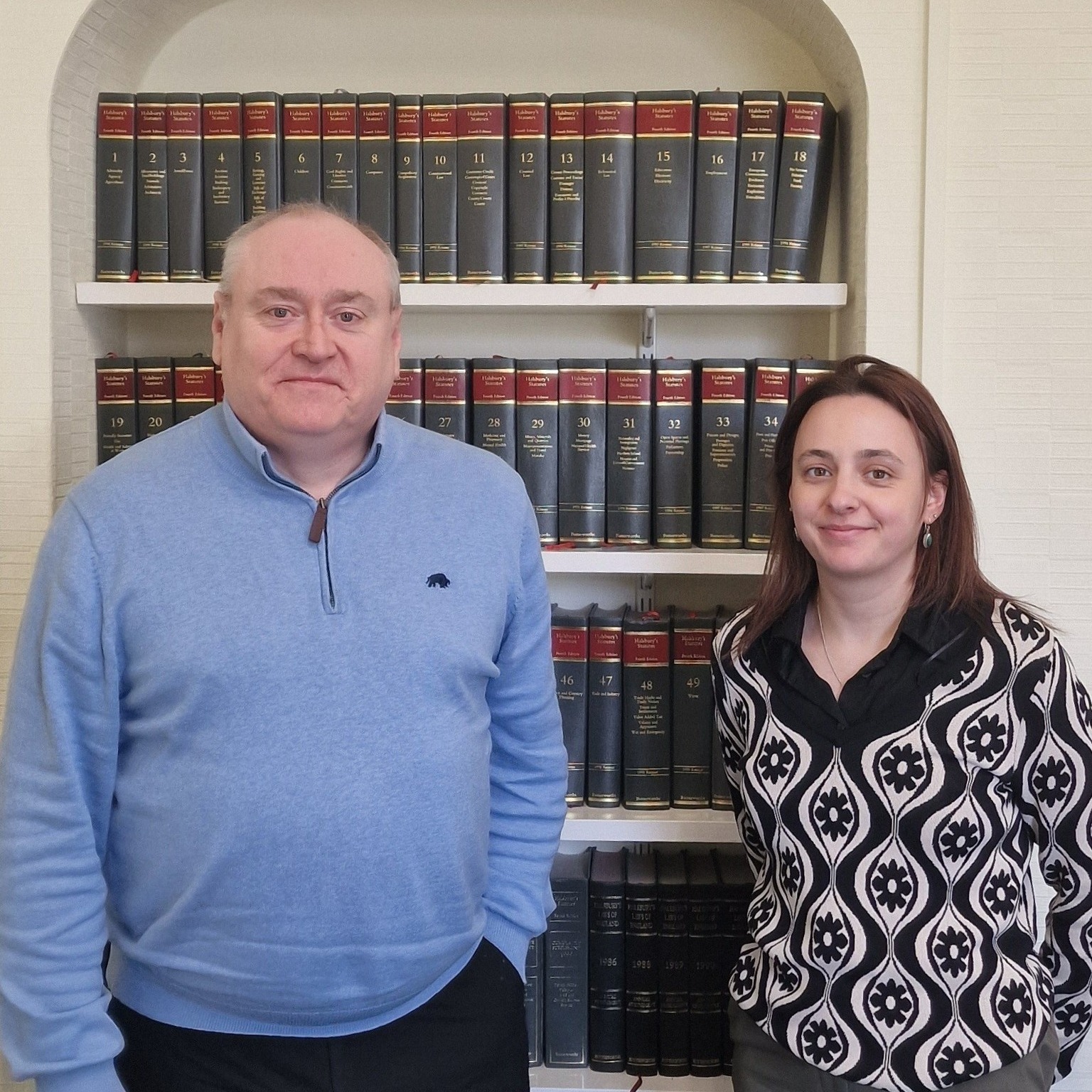
Pembrokeshire law firm confirms internal promotion after Lauren joined the business as a paralegal in 2024
LAUREN CLEWES has been promoted to trainee solicitor at Eaton-Evans and Morris Solicitors.
Lauren joined the firm in 2024 as a paralegal, working first with Helen Hodges and later with Pauline Mainwaring. Over the coming months, she will work alongside the firm’s fee earners across all departments as part of her training.
Sean Dyer, one of the firm’s directors (pictured), offered his congratulations on her promotion.

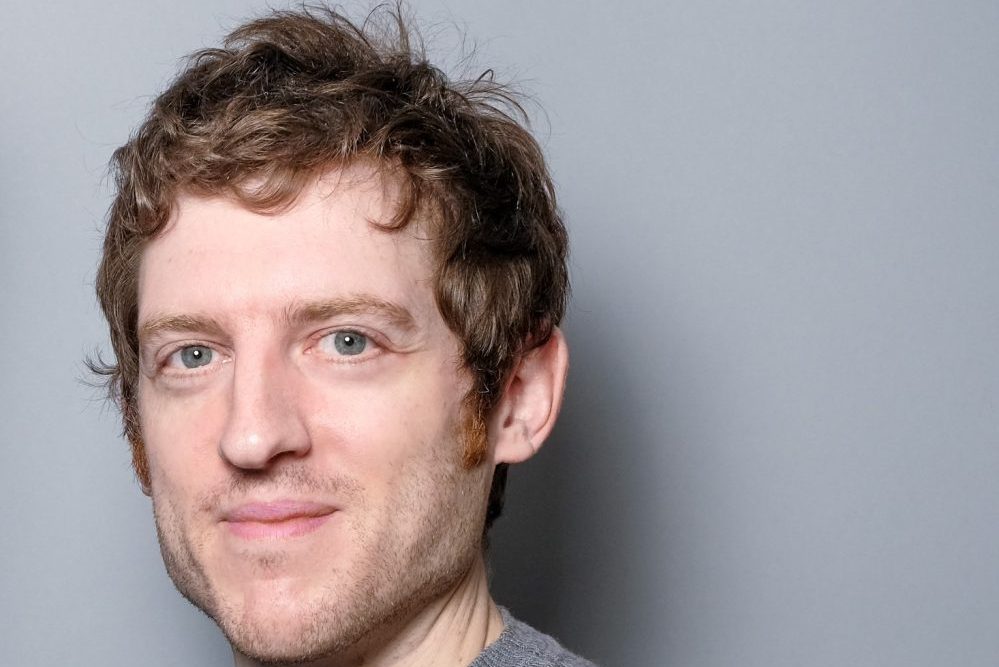
COMEDIAN Elis James will take to the Pavilion stage at the National Eisteddfod for the first time this year, performing on Wednesday, August 5 as part of the festival programme. Entry to the gig is included in the Maes day ticket, and with strong roots in the area, his return promises an evening of laughter and a warm homecoming atmosphere.
Famous for making quick connections with people from across Wales on his podcast ‘Elis & John’ on BBC Sounds, Elis will no doubt receive a warm welcome at the National Eisteddfod, arguably one of the best places in the world to connect with fellow Welsh people. With his observational comedy, often inspired by his upbringing in west Wales, this is expected to be an evening full of humour, marking the halfway point of the Eisteddfod week.
Elis said: “I’m very excited. I’ve never done stand-up in the Pavilion before. Mam will be there, I’m sure other members of the family will be there too, but don’t worry, I’m one of those people who is funny under pressure!”
Betsan Moses, the Eisteddfod’s Chief Executive, added: “It’s a pleasure to welcome Elis back home to the Garreg Las area.
“As a Welsh comedy giant, we’re looking forward to a night of humour in his company, reflecting the true spirit of the Eisteddfod.”

Elis was born in Haverfordwest and raised in Carmarthen. He’s a comedian, podcast presenter, actor and broadcaster. Since 2014, he’s presented a radio show with his friend and fellow comedian, John Robins, originally on Radio X before moving to BBC 5 Live in 2019.
Among the UK’s most popular comedians, Elis toured Wales with his show Derwydd in 2024, recording a performance at Carmarthen’s Lyric Theatre. He has since returned to English‑language stand‑up after a ten‑year break.
Day Maes tickets, which include admission to the gig, are available on the Eisteddfod website.
Eisteddfod Genedlaethol y Garreg Las will be held in Llantwd, north Pembrokeshire between August 1 and August 8.
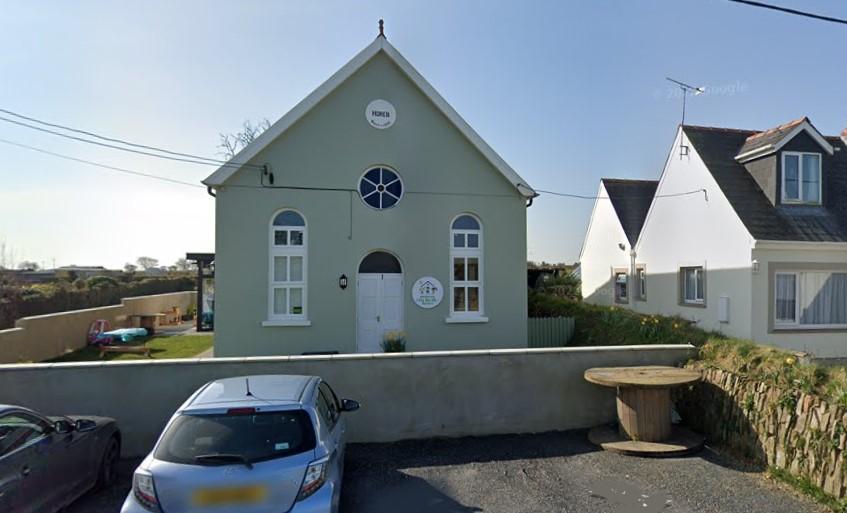
A CALL for a storage container for a “well-established and valued” Pembrokeshire children’s nursery in a nearby cemetery has been refused by county planners.
In an application to Pembrokeshire County Council, Diane Evans of Meithrinfa Do Re Mi Nursery sought permission for the installation of a storage container, partially in retrospect, at Horeb Cemetery, Station Road, Letterston.
A supporting statement said: “The container is required to provide essential ancillary storage to support the lawful and established nursery use within the [nearby] chapel building.
“The site forms part of an active cemetery, owned and managed by a group of trustees. The applicant is one of the trustees and has obtained formal permission from the trustees for the container to be sited on this land.”
It added: “The container will be used solely for storage of nursery equipment and materials, including outdoor learning resources, maintenance equipment, and items required to manage both the nursery grounds and the cemetery land. No additional operational activity will take place within or around the container.”

It said the nursery, which provides childcare for approximately 83 children from the local community, “operates with a strong community focus and promotes sustainability and environmental awareness,” with plans to soften the container appearance through the planting of trees, shrubs and flowers.
An officer report recommending refusal said: “Whilst the container itself is modest in size and of a simple rectangular form, the proposal does introduce a rudimentary and visually incongruous structure. Its appearance is out of scale with its surroundings and detracts from the polite architectural character of Horeb Chapel.
“Consideration has been made with regards to alternative locations within the site, however, due to site constraints, the applicant has stated that there is no other feasible position for the container. Given the restrictive nature of the site, combined with its use as a cemetery, raises concerns as to whether a shipping container by its form and design can be considered an appropriate or complementary addition.
“Although the applicant has provided justification regarding the operational need for the additional storage, and while the local planning authority recognises and supports the functional requirements of the nursery, consideration must also be given to more sympathetic design solution.”

One letter of objection raised concerns including the container design, scale, inappropriate siting, visual impact and concerns about its deterioration, along with a potential impact on property values.
The application was refused on the grounds it would be “an overbearing and visually intrusive feature,” having “a detrimental impact on the character and appearance of the site and surrounding area,” and it “fails to identify the green infrastructure baseline of the site and follow a stepwise approach to provide sufficient and accurate mitigation and compensation measures”.


News18 hours ago
Reform attacks Plaid on spending and immigration ahead of Senedd poll
Party claims Plaid’s plans would strain public finances and increase pressure on services, while rivals insist Wales needs a different...


News19 hours ago
Emergency response after person enters water at Milford Haven marina
Casualty recovered as police, coastguard and lifeboat crews attend A MAJOR emergency response was launched at Milford Marina in Milford...


News2 days ago
Senedd election candidates confirmed as vote.wales goes live
Voters can now check who is standing in their constituency ahead of polling day on May 7 A TOTAL of...


Crime2 days ago
Police and partners launch summer crackdown after Tenby station stabbings
Extra patrols, more rail security and tougher action promised after violent disorder left four youths injured POLICE and partner agencies...


Crime3 days ago
Drug and weapon charges after Pembroke Dock arrest
Man remanded in custody following Diamond Street vehicle search A MAN has been remanded in custody after appearing at Swansea...

Crime3 days ago
Woman fights order taking four dogs from her
Swansea Crown Court hears appeal after long-running barking dispute in Trefin A PEMBROKESHIRE woman has told Swansea Crown Court that...

News3 days ago
Former county councillor Paul Dowson to stand in Ceredigion Penfro
Ex-Pembrokeshire member says he will offer voters a straight-talking independent alternative at the Senedd election FORMER Pembrokeshire county councillor Paul...

News3 days ago
Plaid Cymru sets out childcare, NHS and child poverty pledges in 2026 manifesto
Rhun ap Iorwerth’s party says plan is radical and fully costed as it bids to lead next Welsh government PLAID...


Community4 days ago
Police intervene after post raises fears of planned Pembroke Dock fight
Extra patrols launched after social media alert in aftermath of Tenby stabbings POLICE intervened after an online warning raised fears...
Crime4 days ago
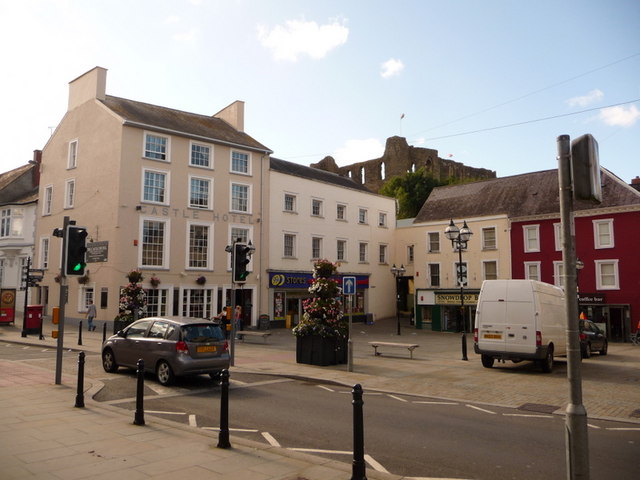
Man arrested after alleged child sexual assault in Haverfordwest
Police enquiries ongoing after incident in Castle Square A MAN has been arrested after an alleged sexual assault of a...
-
 Crime5 days ago
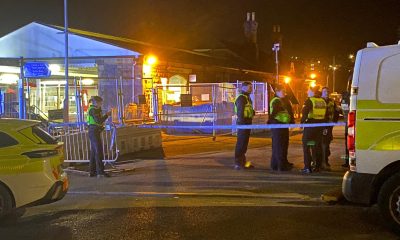
Four youths stabbed at Tenby railway station as two arrested
-

 Local Government6 days ago
Bridge works on Neyland-Burton road to continue into late April
-
 News6 days ago
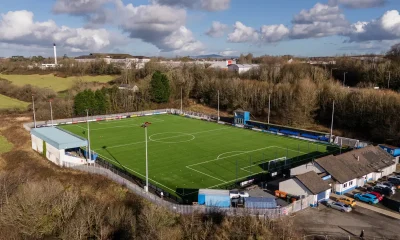
Haverfordwest County AFC faces High Court winding-up threat from HMRC
-
 Entertainment5 days ago
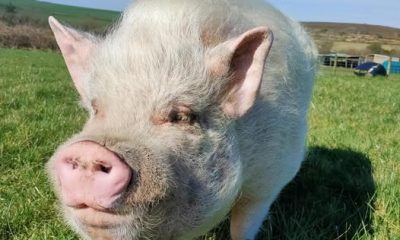
Little Pigs at Home offers a peaceful sanctuary escape in Pembrokeshire
-
 Charity7 days ago
Angle RNLI answers string of call-outs across the Milford Haven Waterway
-
 Community6 days ago
Cosheston gypsy traveller 60 foot shed plans refused
-
 Charity7 days ago
St Davids RNLI launches on Easter Monday after drifting kayak spotted off Solva
-
 Crime6 days ago
Questions raised as 81-year-old woman faces ‘failure to provide’ case