


News
It’s time to stop the stench, says MP


 LOCAL RESIDENTS from Llangwm Ferry have called on their MP for a second time to help put an end to a persistent odour problem which they have been struggling with from the Sewage Treatment Works located in the popular estuary village of Llangwm.
Stephen Crabb MP for Preseli Pembrokeshire was contacted by frustrated residents after they failed to get a positive response from former Welsh Water boss, about maintenance issues on the site.
In February 2012 Stephen was successful in pushing Welsh Water to replace the sludge storage tank which alleviated the problem for some time but during the last hot summer residents were forced to endure the return of severe smell problems both day and night.
Stephen has been in touch with the new Chief Executive, Chris Jones, calling on him to take action to upgrade the odour control unit which he hopes will bring welcome relief to those living in the vicinity.
Stephen Crabb MP commented,

“The continuing problems at the works are a source of huge frustration to those living in the neighbourhood. I am disappointed that the work carried out in 2012 did not provide a longer term solution to the problems that the residents have been experiencing.”
“I have written to Welsh Water again asking them to urgently address the underlying problems that exist with this facility. I have been informed that a new odour control unit will be installed shortly which I hope will bring about a change that will benefit the lives of the residents of Llangwm Ferry.”

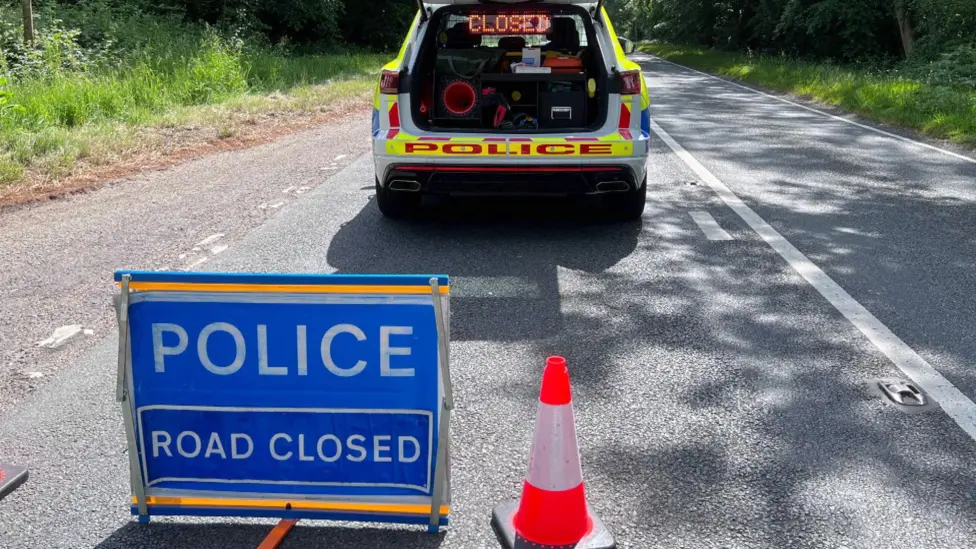
No suggestion of pursuit or contact between police vehicle and motorcycle, force says
A VOLUNTARY referral was made to the Independent Office for Police Conduct following the fatal A4075 crash which claimed the life of 22-year-old Callum Hanson.
Dyfed-Powys Police has confirmed the referral was made because a police vehicle was in the vicinity of the collision, which happened between Canaston Bridge and Yerbeston on Wednesday (Jun 17).
The force said the referral was made to ensure full transparency and independent oversight.
However, police have stressed that there is no suggestion of an active pursuit or any contact between the police vehicle and the motorcycle at the time of the incident.
The IOPC has now referred the matter back to Dyfed-Powys Police for an internal investigation by the force’s Professional Standards Department.
A Dyfed-Powys Police spokesperson said: “A voluntary referral was made to the Independent Office for Police Conduct in relation to this case, due to the presence of a police vehicle in the vicinity.
“This was to ensure full transparency and is a standard requirement in order to ensure independent oversight.
“There is no suggestion of an active pursuit or any contact between the motorbike and the police vehicle at the time of the incident.
“Due to this, the IOPC have referred the matter back to Dyfed-Powys Police for an internal investigation by the Professional Standards Department.
“While PSD carry out their enquiries it would not be appropriate to comment on the matter further.
“The thoughts of Dyfed-Powys Police remain with Callum’s family and friends at this time, and we would still ask that anyone with information about the incident contacts the force.”
Callum, from Haverfordwest, died in hospital following the collision involving a grey Kia Sorento and a white Yamaha motorcycle. A 22-year-old woman who was travelling as a pillion passenger was also taken to hospital.

His family later paid tribute to him as a “kind, loving” young man who lived life to the fullest despite his own personal challenges.
They said he was deeply caring and had spent the last month looking after his grandad, who had also recently passed away.
Callum had a passion for gaming and motorbikes and was training to become a mechanic at college.
Police are continuing to appeal for witnesses or anyone with dashcam footage from the A4075 between Canaston Bridge and Yerbeston at around 6:15pm on Wednesday (Jun 17).
Anyone with information is asked to contact Dyfed-Powys Police online, by emailing [email protected], by calling 101, or by direct message on social media.
Quote reference 362 of June 17.

ALMOST one in four working-age people in Wales are economically inactive, according to the latest labour market figures.
The Welsh Government’s June labour market overview shows the economic inactivity rate in Wales was 24.8% for people aged 16 to 64.
That is down 0.6 percentage points on the previous quarter, but up 0.6 percentage points over the year. The UK rate stood at 21.0%.
Economic inactivity refers to people who are not in work and are not classed as unemployed because they are not actively seeking work or are not available to start.
The figures have prompted criticism from the Welsh Conservatives, who said Wales’ economy was failing to grow strongly enough.
Janet Finch-Saunders MS, Shadow Minister for Enterprise, Connectivity and Energy, said: “These latest figures show the Welsh economy has continued to flatline with too many people economically inactive.
“We urgently need welfare reform to get people off benefits and into work, where they can pay their taxes and help generate more revenue to invest in better public services.
“The new Plaid Cymru government needs to focus relentlessly on creating the conditions for businesses to start up and expand because this is the only way to grow the Welsh economy and make Wales more prosperous.”
The latest statistics also show Wales’ unemployment rate was 3.8%, up 0.3 percentage points on the quarter but down 0.9 percentage points over the year. The UK unemployment rate was 4.9%.
The Welsh Government said evidence from a range of sources suggested the Welsh labour market was following a similar trend to the UK as a whole.
It also said Cabinet Minister for Enterprise, Connectivity and Energy Adam Price was keen to meet the Office for National Statistics to discuss the reliability of labour market data for Wales.
The issue is likely to remain politically significant because economic inactivity affects the size of the workforce, business recruitment, tax receipts and pressure on public services.

Across Wales, inactivity can include people out of work because of long-term illness, caring responsibilities, study, early retirement or other reasons. For rural and coastal areas, including Pembrokeshire, the challenge is often linked to the availability of suitable jobs, transport, skills and seasonal work.
RCN Wales joins doctors, patient groups and charities in call for national reporting before summer recess
NURSING leaders, doctors, patient groups and charities have called on the Welsh Government to take urgent action to end corridor care in Welsh hospitals.
A joint letter signed by Age Cymru, BMA Cymru Wales, Carers Wales, Llais, Marie Curie Cymru, Royal College of Nursing Wales, Royal College of Emergency Medicine Wales, Royal College of Pharmacy and Royal College of Physicians sets out a series of steps ministers are being urged to take immediately.
The organisations want the Welsh Government to publish a formal definition of corridor care, introduce national reporting, monitor the issue as a patient safety indicator, and require health boards to produce local plans focused on the most vulnerable patients.
They have also called for a coordinated approach across health and social care, warning that the problem cannot be tackled properly unless it is measured consistently across Wales.
The groups want a public commitment from the Welsh Government before the Senedd’s final sitting day before the summer recess on July 17.
‘Unsafe and unacceptable’
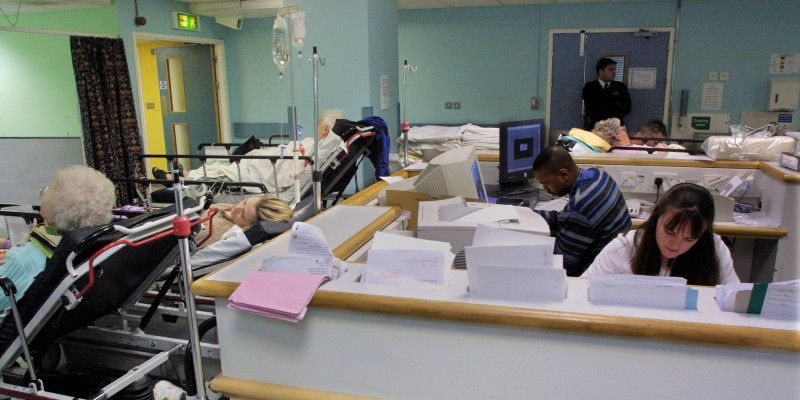
Corridor care refers to patients being assessed, treated or cared for in inappropriate areas such as corridors, waiting rooms, ambulance bays or other spaces not designed for clinical care.
Health bodies have repeatedly warned that the practice can put patients at risk, reduce privacy and dignity, and leave staff unable to provide the level of care they know patients need.
RCN Wales Executive Director Nicola Williams said corridor care was still happening every day across most hospitals in Wales.
She said: “Earlier this month, we welcomed the Cabinet Minister for Health and Care’s determination to address corridor care following England’s first publication of corridor care statistics.
“I have also been encouraged by the verbal commitments I have received from Welsh Government officials that echo our priorities of a clear, consistent definition of corridor care across Wales, and the development of a data set for use across NHS Wales for public reporting.
“Corridor care continues to happen every day across most hospitals in Wales, putting patients’ wellbeing and lives at risk and affecting the morale of nursing staff who cannot give the care that patients deserve.
“We must be able to quantify this problem if we are to eliminate it.”

Ms Williams added that the RCN must be involved in efforts to eradicate corridor care because nurses are “at the forefront of this crisis and a vital part of the solution.”
Wales behind England
The call comes after NHS England began publishing national corridor care data, giving a clearer picture of how often patients are being treated in inappropriate settings.
In Wales, there is still no formal national definition of corridor care and no routine public reporting.
RCN Wales has argued that without consistent data by health board, it is impossible to know the true scale of the problem, identify trends or hold the system properly accountable.
The issue has been raised repeatedly by nursing and medical bodies in recent months. In January, RCN Wales published a briefing calling for care delivered to a patient in a chair for more than 24 hours to be treated as a “never event.”
The RCN and BMA Cymru Wales have also called for reductions in hospital beds to be paused, for capacity to be reviewed nationally, and for greater investment in community and social care so patients who are medically fit to leave hospital can be discharged safely.
Healthcare Inspectorate Wales has also warned that corridor care should not become normalised, saying care in non-clinical spaces can compromise patient safety, dignity and the quality of care.
West Wales concerns
The issue is particularly relevant in west Wales, where hospital capacity, ambulance handover delays and the future of local services remain politically sensitive.
Hywel Dda University Health Board has faced repeated criticism over pressures at Withybush, Glangwili, Bronglais and Prince Philip hospitals, with patients in rural areas often facing long journeys for emergency treatment.
The call from nursing and medical bodies comes days after the Senedd backed a motion calling on the Welsh Government to rule out hospital closures and service downgrades during the current Senedd term, with patient safety prioritised.
That debate was dominated by concerns over Withybush Hospital, where changes to emergency general surgery mean some patients who need emergency operations will be transferred to Glangwili Hospital in Carmarthen.
Campaigners argue that distance is itself a patient safety issue in rural Wales, particularly when emergency departments and ambulance services are already under pressure.
Wider NHS pressure
Corridor care is widely seen as a symptom of wider problems across the NHS, including delayed discharges, lack of social care capacity, pressure on emergency departments, workforce shortages and too few available beds.
Doctors and nurses say patients can end up stuck in emergency departments because hospital wards are full, while patients on wards cannot leave because care packages or community support are not available.
The result is a system where pressure builds at the hospital front door, leading to long waits, ambulance queues and patients being cared for in unsuitable spaces.
The Welsh Government has previously said it recognises the seriousness of the issue and is committed to improving urgent and emergency care.
But professional bodies say recognition is no longer enough and that Wales now needs clear national data, local health board plans and public accountability.
The joint letter places fresh pressure on ministers to act before the Senedd breaks for summer.
For patients and staff, the message from Wales’ leading health organisations is blunt: corridor care cannot be ended until Wales properly defines it, measures it and treats it as a major patient safety issue.



Health3 hours ago
Senedd backs call to rule out hospital downgrades after heated NHS debate
Reform UK amendment passes as West Wales hospital fears remain central political issue THE SENEDD has backed a call for...

News6 hours ago
Coastguard callout payments axe sparks fears for coastal communities
VOLUNTEER coastguards across the UK are set to lose callout payments, prompting concern over the future resilience of emergency cover...


Farming8 hours ago
Rural Wales ‘left out’ of net zero debate, warns carbon entrepreneur
A WELSH carbon entrepreneur has warned that rural Wales risks being left behind in the national conversation about net zero....


Local Government22 hours ago
Tenby Spectacular row continues as organisers say key question remains unanswered
Round Table says legal clarity over pedestrian access is still holding up event plan TENBY ROUND TABLE has welcomed Pembrokeshire...


Community2 days ago
Manorbier fire scandal: Council’s payout just £63,777 after school destroyed
PEMBROKESHIRE COUNTY COUNCIL has accepted an insurance settlement which leaves it with just £63,777.07 after the catastrophic fire which destroyed...


News2 days ago
Bus overturns in major incident near Kidwelly
All passengers rescued as emergency services remain at scene A BUS overturned on the A484 between Kidwelly and Ferryside on...


Community3 days ago
Tenby Summer Spectacular cancelled amid council row over harbour access
Organisers say popular charity events cannot safely go ahead without clear powers to control crowds TENBY ROUND TABLE has announced...


News3 days ago
Motorcyclist dies after four-vehicle crash on A40 in Carmarthenshire
A MOTORCYCLIST has died following a four-vehicle collision on the A40 between St Clears and Whitland. Dyfed-Powys Police said the...


News3 days ago
Rhun ap Iorwerth urges new deal for Wales after Starmer quits
First Minister says next Prime Minister must focus on greater powers, fair funding and respect for Wales’ democratic mandate FIRST...


News3 days ago
How Labour’s landslide victory unravelled in just two years
Prime Minister announces resignation after losing support within his own party as Andy Burnham emerges as overwhelming favourite to take...
-

 Health5 days ago
Woman jailed assaults on police, harassment and XL Bully possession
-

 Crime5 days ago
Milford Haven woman spared jail despite string of shop thefts
-

 Community4 days ago
The gentle giant behind the tattoos
-

 Local Government7 days ago
Pembrokeshire faces accessible housing shortage as 403 people wait for homes
-

 Crime5 days ago
Spittal man to stand trial accused of ABH
-

 Crime5 days ago
Carmarthenshire pensioner, 86, accused of causing prostitution for gain
-

 Entertainment4 days ago
Harbour Fest to bring music, food and maritime magic to Milford Waterfront
-

 News7 days ago
Fatal train crash caused by overrun as braking systems failed to stop train