


News
MP warns people about passport advice firms


 MP STEPHEN CRABB is warning constituents about online passport advice firms who charge people for information and services that are available free from HM Passport Office.
A number of unofficial, online “checking” services are charging people to have their passport applications checked online. They use information that is free from official Government websites to check that passport applications are filled out correctly and then charge a hefty fee for this service.
These sites often look like official Government websites and appear near to the top of search engine results. Unsuspecting consumers are therefore led to believe that they are paying for the full cost of processing and submitting their passport application, only to find that official fees are still outstanding when they go to collect their passport.
Stephen recently visited the Passport Office in Newport with Home Office Immigration Minister, Mark Harper MP. During the visit, Stephen heard of many cases of people unwittingly paying third party firms for free information to renew their passports. In some cases, customers’ passports were not passed on to the Passport Office, despite being charged for a checking service.
Speaking from Westminster, Stephen Crabb said:

“As people increasingly rely on the internet to access services, some third parties have taken advantage of people looking to save time by doing their admin online. The branding and advertising of these websites looks very legitimate and it has clearly been very easy for firms to make a profit from charging for information that is available free online.
“When I visited the Passport Office in Newport, I heard the personal stories of countless people who had fallen victim to the scam. Many had paid out hundreds of pounds to renew family passports, only to find that they had in fact paid for free information and that the official fees were outstanding.”
The Government is now working closely with the Advertising Standards Authority (ASA) to ensure these sites do not mislead the customer into believing they are dealing with an official site. They have imposed strict fines on the sites and have warned companies to provide an up-front message that they are not acting on behalf of HM Passport Office. HM Passport Office will also make a formal complaint to the ASA about sites that are continuing to deceive consumers.
Stephen added: “I’ve heard first-hand from constituents the real difficulty and distress these scam advice firms have caused. It is unacceptable that these companies should be able to charge for free information and trick people out of their hard-earned money. I am pleased that the Government is taking tough action by fining these firms and forcing them to state clearly that they are not an official website.”
If you need to renew or apply for a new passport, use HM Passport Office website, which has all the information required to make your application.
https://www.gov.uk/apply-renew-passport
Alternatively, your local Post Office will be able to advise you on the application process.



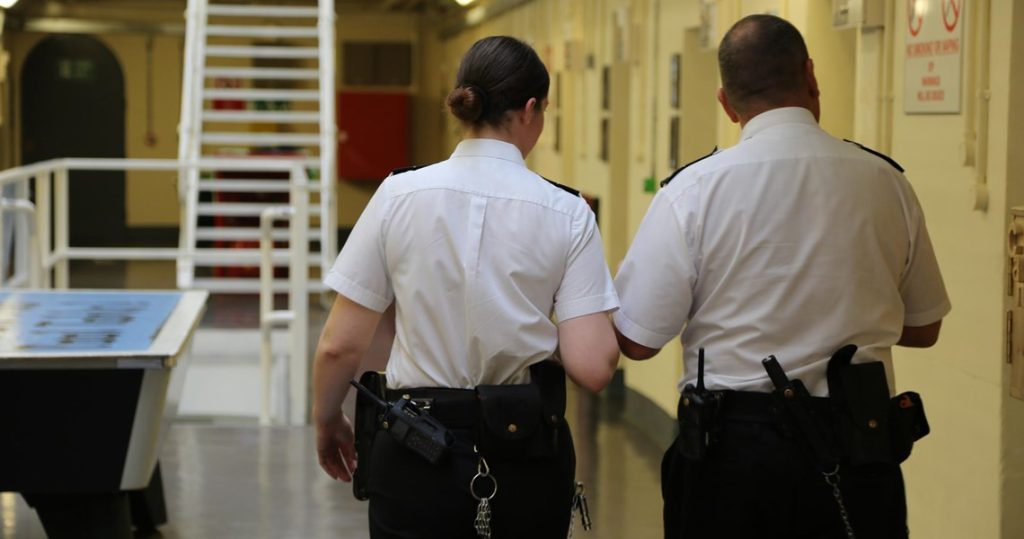
Frozen healthcare budgets, overcrowded jails, homelessness on release and mounting pressure on staff are undermining rehabilitation across Wales, according to a major parliamentary inquiry
A MAJOR parliamentary inquiry has delivered one of the starkest assessments yet of prisons and rehabilitation services in Wales, warning that overcrowding, staffing shortages and chronic underfunding are putting both prisoners and the public at risk.
The report, Jagged Justice: Prisons, Probation and Rehabilitation in Wales, was published by the House of Commons Welsh Affairs Committee following an extensive investigation into prisons, probation services and rehabilitation programmes across Wales.
Its conclusions paint a troubling picture of a system struggling to cope with rising demand, increasingly complex prisoner needs and a growing gap between what prisons are expected to achieve and the resources available to them.
MPs found evidence of overcrowded prisons, stretched probation teams, growing mental health needs, difficulties accessing healthcare and too many prisoners being released into homelessness or unstable accommodation.
The committee concluded that unless significant changes are made, the system will continue to struggle to rehabilitate offenders and reduce reoffending, ultimately creating greater costs for society and placing additional pressure on public services.
Healthcare funding frozen for more than a decade
Among the most alarming findings was evidence relating to prison healthcare funding.
The inquiry heard that the Welsh Government received a recurring transfer of approximately £2.5 million for prison healthcare in 2014. However, no additional ring-fenced funding has been provided since then despite more than a decade of inflation and increasing demand for medical services within prisons.
Evidence presented to MPs showed that the annual cost of delivering healthcare in HMP Swansea, HMP Cardiff and HMP Usk and Prescoed has risen to more than £7.25 million.
This has created an estimated funding shortfall of around £4.8 million.
The scale of the problem becomes clear when looking at individual prisons. Healthcare spending at HMP Swansea alone reached almost £2.47 million last year — nearly matching the original annual allocation intended to support healthcare services across all three institutions.
The committee warned that prisoners often arrive with significantly worse physical and mental health than the general population.
Rates of substance misuse, chronic illness, learning difficulties, self-harm and serious mental health conditions are considerably higher among prisoners than among the wider public.

As a result, prisons are increasingly being required to function not only as places of detention but also as healthcare providers, mental health facilities and rehabilitation centres.

Mental health needs continue to rise
Mental health concerns featured heavily throughout the inquiry.
MPs heard evidence that prisons are dealing with increasingly complex cases involving severe mental illness, addiction and trauma, while healthcare teams struggle to meet growing demand.
The report highlights concerns that delays in accessing specialist services and secure psychiatric facilities can leave vulnerable prisoners waiting for treatment.
Healthcare professionals and charities told the committee that many offenders arrive in prison with long-standing untreated conditions, often linked to poverty, addiction, adverse childhood experiences and social exclusion.
The inquiry also heard evidence suggesting communication difficulties are widespread among prisoners, creating further barriers to rehabilitation and increasing the likelihood of disciplinary problems and misunderstandings while in custody.
Experts warned that without adequate mental health support, prisons risk becoming warehouses for vulnerable people rather than institutions capable of helping offenders rebuild their lives.
Overcrowding creating additional pressures
The committee found that prison overcrowding is worsening many of the challenges facing the justice system.
Across England and Wales, prisons have been operating close to capacity for several years, placing additional strain on staff, facilities and support services.
Witnesses told MPs that overcrowding can reduce access to education, training, rehabilitation programmes and healthcare appointments.
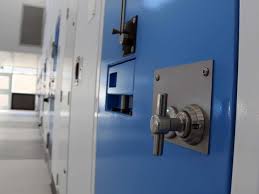
The report warns that prison staff are increasingly being asked to manage larger numbers of inmates with more complex needs, often with limited resources and staffing shortages.
This pressure affects not only safety within prisons but also the ability of institutions to prepare offenders for successful reintegration into society.
Released into homelessness
Perhaps one of the most concerning findings relates to what happens after prisoners leave custody.
The committee heard evidence suggesting that around one-third of prisoners are released into homelessness or unstable accommodation.
Without a fixed address, former prisoners often struggle to access benefits, healthcare, employment opportunities and probation support.
For many, the first days after release become a battle to find somewhere to sleep rather than an opportunity to rebuild their lives.
MPs concluded that housing shortages are becoming one of the biggest barriers to successful rehabilitation in Wales.
Witnesses argued that releasing people into homelessness significantly increases the likelihood of reoffending and places additional pressure on local authorities, health services and community organisations.
The report calls for stronger coordination between prisons, probation services, housing providers and local authorities to ensure offenders have a realistic chance of rebuilding their lives after release.

Too much time behind locked doors
The inquiry also raised concerns about the amount of time some prisoners spend confined to their cells.
Evidence submitted to the committee suggested some inmates receive as little as 45 minutes out of their cells each day.
Such restrictions limit opportunities for work, education, exercise and rehabilitation programmes.
Experts told MPs that meaningful rehabilitation requires purposeful activity, skills training and regular human interaction.
Without these opportunities, prisons risk becoming little more than places of containment rather than institutions capable of reducing future offending.
The committee warned that excessive confinement can also worsen mental health problems and increase tensions within prisons.
Wales’ high imprisonment rate under scrutiny
The report also questions why Wales continues to record one of the highest imprisonment rates in Western Europe.
MPs have called for further work to understand why Welsh communities appear to be disproportionately affected by incarceration.
The issue has renewed debate over whether criminal justice powers should eventually be devolved to Wales.
Supporters argue that many services linked to rehabilitation — including healthcare, housing and education — are already devolved, while responsibility for sentencing and prison policy remains with Westminster.
The committee described this split responsibility as creating a “jagged edge” between devolved and non-devolved services, making effective planning and accountability more difficult.
Parc Prison remains in the spotlight
Although the inquiry examined prisons across Wales, concerns surrounding HMP Parc continue to cast a long shadow over discussions about prison safety and rehabilitation.
The Bridgend prison came under intense scrutiny following an unprecedented number of prisoner deaths in 2024.
Questions have also been raised about drug use, violence, self-harm, staffing levels and access to healthcare services.
The Welsh Affairs Committee has previously expressed concern about conditions at Parc and urged caution over proposals to expand the prison until safety concerns are fully addressed.
For communities across Wales, including Pembrokeshire, the issues identified in the report will be familiar.
Many offenders passing through the prison system originate from communities already facing challenges linked to poverty, addiction, mental illness and housing shortages.

A warning for governments
The Welsh Affairs Committee stops short of blaming any single organisation for the current situation.
Instead, MPs argue that years of rising demand, workforce pressures and fragmented responsibilities have combined to create a system struggling to cope.
Their warning is straightforward.
If prisons are expected to rehabilitate offenders, reduce reoffending and protect the public, they need adequate healthcare, housing support, staffing and rehabilitation services.
Without those foundations, the report suggests Wales risks trapping thousands of people in a cycle of imprisonment, release and reoffending that serves neither offenders nor society.
Ten years after many of these challenges first began attracting serious attention, MPs are warning that the cost of inaction is becoming increasingly difficult to ignore.
The question now facing governments in Cardiff Bay and Westminster is whether they are prepared to invest in the changes needed — or whether the problems identified in Jagged Justice will continue to deepen in the years ahead.


A PORTFIELD GATE man has appeared before magistrates accused of failing to stop after a road accident on the B4329.
Tony Mallon, 32, of Chestnut Tree Cottage, Portfield Gate, Haverfordwest, appeared before Llanelli Magistrates’ Court on Wednesday (Jun 17).
He is charged with driving a Peugeot Partner without due care and attention on the B4329 Preselly Mountain Road at Tufton on November 12, 2025.
Mallon is also accused of failing to stop after an accident in which damage was allegedly caused to a Toyota Auris, and failing to report the accident to police within 24 hours.
The case was adjourned at the request of the defence for an intermediary report to be prepared.
Mallon is due to appear again at Llanelli Magistrates’ Court on July 8 for a further pre-trial review.
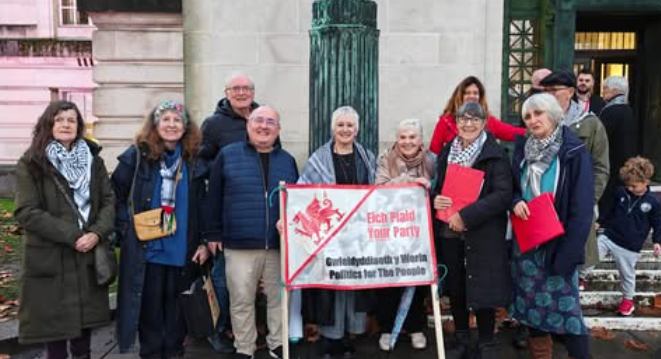
Founding conference to be held at Aberystwyth University with Jeremy Corbyn expected to speak
A NEW political party has formed its first Welsh branch covering Ceredigion and Pembrokeshire.
The Ceredigion Penfro branch of Your Party Cymru held its inaugural meeting on Sunday, June 7, with members attending in person in Aberystwyth and online from across both counties.
The group says it is the first Your Party Cymru branch to be formally constituted in Wales and will now receive party funding to develop locally and begin campaigning.
Your Party Cymru says it aims to address inequality and injustice, with the new branch planning to stand candidates in elections, launch local campaigns, and support existing causes.

The branch said its priorities would include industrial action, housing campaigns, protecting local health services, environmental issues, Palestine solidarity, and opposing the far right.
Organisers say the party will operate as a member-led movement, giving local members a say in how branches are run and offering opportunities to become active in campaigns.
Dinah Mulholland, Your Party Ceredigion Penfro organiser, said: “We are offering a significant alternative to political parties in the Senedd and in Westminster, who have disregarded the needs of ordinary people for far too long.
“Your Party Cymru will be a new kind of political party. We are rooted in communities, trade unions and social movements, and we are building positive and sustainable change from the ground up.”
Maria Donnellan, Your Party Cymru representative for Your Party UK’s collective leadership, said the formation of the branch was a “historic day” for the party and for Welsh politics.
She said: “Ceredigion Penfro communities have always found ways to look after each other when the state has failed to. It is exactly the right place for Your Party Cymru to take its first steps as a member-led party built from communities, not from the top down.”
The Ceredigion Penfro branch will host the Your Party Cymru founding conference at Aberystwyth University on Saturday, July 18 and Sunday, July 19.
Jeremy Corbyn and other socialist figures are expected to speak at the event.






Crime15 minutes ago
Prisons at breaking point: MPs warn Wales is paying the price of a failing system
Frozen healthcare budgets, overcrowded jails, homelessness on release and mounting pressure on staff are undermining rehabilitation across Wales, according to...


News14 hours ago
Brexit at 10: How Britain was sold a dream that cost us dearly
A decade after the referendum, the promised benefits remain hard to find while the economic costs are increasingly difficult to...


Crime16 hours ago
Worcestershire man jailed after violent attack on woman in Tenby
Defendant was already serving a suspended sentence when serious assault took place A WORCESTERSHIRE man has been jailed for more...


Climate17 hours ago
Offshore wind ‘could bring new generation of jobs to Milford Haven’
Pembrokeshire ports and Celtic Sea projects placed at centre of Wales’ green energy ambitions MILFORD HAVEN and Pembroke Dock could...


Community2 days ago
Police officer hailed hero after midnight sea rescue in Milford Haven
PC swam 100 metres offshore to save distressed woman heard calling for help in darkness A DYFED-POWYS POLICE officer has...


Local Government2 days ago
Security privately arranged by Mayor at Beating of the Bounds
HAVERFORDWEST TOWN COUNCIL has confirmed that security personnel seen at this year’s Beating of the Bounds were privately arranged and...


Business3 days ago
Celtic Freeport five-year plan puts Milford Haven at centre of green energy future
Strategy promises investment, skilled jobs and new supply chains, but major barriers remain over grid connections, planning and delivery THE...


Education3 days ago
Closure of Ysgol Clydau approved after emotional council debate
COUNCILLORS WARNED RURAL COMMUNITIES WILL REMEMBER DECISION PEMBROKESHIRE councillors have voted to close Ysgol Clydau following an emotional debate over...


Education3 days ago
Manorbier school closure process to continue after narrow council vote
Questions remain over insurance, rebuilding costs and possible legal action by Diocese PEMBROKESHIRE councillors have voted to press ahead with...


Community3 days ago
The father, son and daughter lifeguard trio saving lives in Pembrokeshire
A FATHER, son and daughter are preparing to help keep beachgoers safe on the Pembrokeshire coast this summer as part...
-

 Community4 days ago
Pembrokeshire Chess Club crowned Welsh champions
-
Local Government2 days ago
Security privately arranged by Mayor at Beating of the Bounds
-

 Crime7 days ago
Pembroke Dock teenager sentenced over train strangulation attack
-

 Education6 days ago
Diocese threatens legal action as Manorbier school closure battle intensifies
-

 Crime7 days ago
Man accused of six rapes including alleged Haverfordwest offence
-

 Crime2 days ago
Man wanted by court after failing to attend hearing over alleged shop thefts
-

 Local Government6 days ago
Taxi suspended after county-wide licensing checks
-
 Crime2 days ago
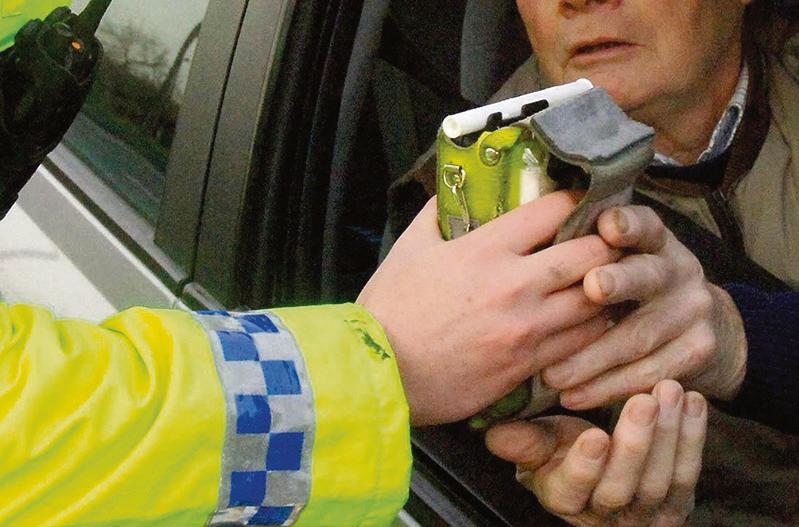
Man banned from roads after drink-driving offence