

News
GBH charge denied

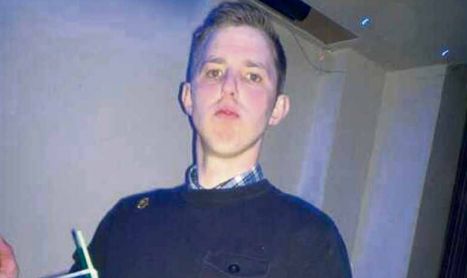
 A SAUNDERSFOOT man is to stand trial accused of causing grievous bodily harm.
James Robert Toulouse, aged 22, of Bonville Close, appeared before Judge Keith Thomas at Swansea crown court for a preliminary hearing.
Brian Simpson, prosecuting, said he understood Toulouse was willing to admit assault but denied intending to cause GBH.
There was an allegation of kicking, he added, but Toulouse accepted only punching.
Forensic examination of footwear was underway.

Toulouse will attend a plea and case management hearing on February 21.
Judge Thomas ruled that if the plea was one of not guilty then a four day trial would begin on April 8.Toulouse was remanded in custody to Swansea prison meanwhile.

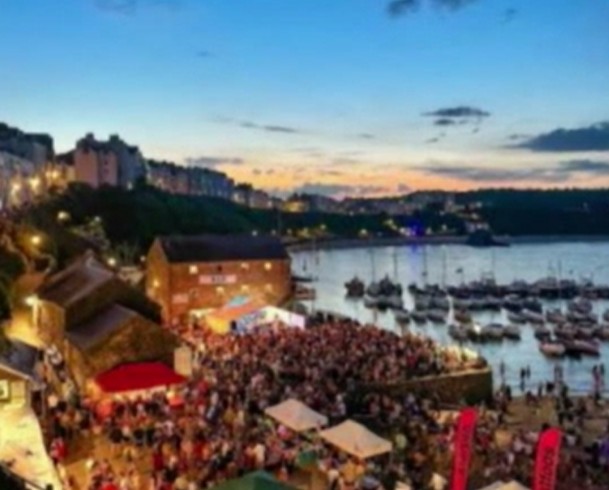
A growing backlash has followed police calls for the event’s licence to be revoked, with supporters questioning why authorities failed to resolve known safety concerns before one of Tenby’s biggest community events was cancelled
ANGER is mounting over the future of Tenby Summer Spectacular after police described the long-running harbour event as “a disaster waiting to happen” and urged councillors to revoke its premises licence.
The warning, delivered during a Pembrokeshire County Council licensing hearing, has provoked a fierce reaction from residents, businesses and supporters of Tenby Round Table.
Many accept that crowd safety must come first.
What they are questioning is why an event which has operated for decades, raised substantial sums for local causes and become a defining feature of Tenby’s summer calendar is now being portrayed in such stark terms after months of talks failed to produce a workable solution.
The two Summer Spectaculars scheduled for August have already been provisionally cancelled by Tenby Round Table.
The volunteer organisation says it cannot responsibly stage the events without a lawful and practical system for controlling access to Tenby Harbour and the adjoining beach once the area reaches capacity.
That question, organisers say, has been raised repeatedly with Pembrokeshire County Council since September 2025.
Yet no final arrangement has been agreed.
Police have now told the council’s licensing sub-committee that the present set-up is unsafe, the premises licence is no longer fit for purpose and the harbour event presents a serious risk of overcrowding and crowd surging.
The intervention has intensified a dispute which is no longer simply about licensing conditions.
It is now about how a known safety concern was allowed to remain unresolved until one of Tenby’s best-known community events reached the point of cancellation.
Among those leading the public criticism is Steve Briers, one of Pembrokeshire’s best-known entertainers, a long-time compère of the Summer Spectacular and a Guinness World Record holder for backwards talking.

Mr Briers said the police description of the event had gone far beyond what was justified by its long history.
“‘A disaster waiting to happen in its current format’, says the police. Really?” he said.
“This current format has been the same format for the past 20 years at least, and the overall format has not been too dissimilar for the past 40 years that Tenby Round Table have been running this event.
“Guess what? In all those 40 years, no disaster.”
Mr Briers stressed that public safety was paramount, but said the absence of any major catastrophe over decades suggested Tenby Round Table had been doing much right.
He accused the authorities of changing the public perception of an event whose basic character had remained broadly consistent.
“Why this move to change the perception of the way this event has been run consistently with the same format, when nothing has actually changed?” he asked.
He also criticised the tone of the hearing, describing it as a “witch hunt” and claiming Round Table representatives were at times treated dismissively and condescendingly.
His comments reflect a wider sense of frustration across Tenby.
The anger is not simply that safety concerns have been raised.
It is that volunteer organisers say they raised those same concerns themselves, asked for help resolving them and then found the absence of a solution being used as evidence against the event.
A warning with serious consequences
Tenby Summer Spectacular has been staged at the harbour for decades.
The event features live music, food and drink stalls and a fireworks display, and has traditionally drawn large crowds into the town.
Its premises licence covers Tenby Harbour car park and extends towards Penniless Cove Hill.
The event is open-air, unticketed and unfenced. Visitors can enter from several directions and are invited to make voluntary donations.
Alcohol is sold under a temporary event notice rather than as a permanent licensable activity on the premises licence.
Police told the hearing that emergency services considered the safe capacity of the harbour area to be around 1,600 people.
Previous events were estimated to have attracted closer to 3,000.
A police representative warned of the risk of crowd surging and said limited escape routes could have devastating consequences in an emergency.
The officer said the event had evolved from a family occasion into “a large-scale drinking environment”.
The ambulance service raised concerns about emergency access, while the fire service also highlighted risks to public safety.
Pembrokeshire County Council’s lead licensing officer, Geraint Griffiths, described the existing arrangements as “very dangerous” and “an incident waiting to happen”.
Those concerns are serious.
But the force of the language has also raised difficult questions.
If the event has been operating in a fundamentally unsafe format, when was that conclusion first reached?
What changed between previous years and 2026?
What formal warnings were given after earlier events?
What practical measures were proposed, and why were they not implemented?
The description “a disaster waiting to happen” suggests an immediate and obvious danger.
Yet supporters argue that the event has operated for decades without a major disaster and that no clear explanation has yet been given as to why the same broad format is suddenly considered intolerable.
Past success does not guarantee future safety.
Crowds may have grown, modern standards may have tightened and expectations around capacity, stewarding and emergency planning may now be more demanding.
But the absence of a previous tragedy is still relevant.
It is one reason why many residents believe the authorities must explain not only what the risks are, but precisely what has changed.
The central problem no one has solved
Tenby Round Table is not arguing that the event should continue without safeguards.
Its position is that it cannot safely proceed without being able to control the number of people entering the harbour.
The organisation says it has spent months attempting to obtain a clear answer on how access to council-controlled land and the harbour beach can lawfully be restricted.
That is the crux of the dispute.
The Round Table, as the organiser, has responsibility for preparing an event management plan, assessing risks, monitoring capacity, maintaining emergency routes and providing sufficient trained stewards.
But volunteers cannot simply close a public route, block access to a beach or exclude people from land controlled by a public authority without legal permission.
The council says the organiser must produce a complete plan explaining how the event will be safely managed.
The Round Table says it cannot complete that plan until the council explains what lawful mechanism can be used to control public access.
Police then argue that the event is unsafe because there is no adequate access-control system.
The result is a circular stand-off in which everyone agrees the crowd must be controlled, but no one has delivered the legal and practical means to do it.
Tenby Round Table says the issue was first raised with Pembrokeshire County Council in September 2025.
Its members say they attended meetings, sought professional safety advice and worked on a detailed event management plan.
However, they maintain that one essential question remained unanswered: how could organisers legally stop more people entering once the harbour reached its agreed capacity?
The Round Table has said it could not responsibly hold the 2026 events without that answer.
Its decision to cancel was therefore not a rejection of safety advice.
It was an acknowledgement that the event could not be run safely while the access question remained unresolved.
That distinction lies at the heart of the public backlash.
Many supporters believe the volunteers are now being criticised for failing to solve a problem they did not have the legal power to solve alone.
Do police have a duty to police the event?
One of the most common reactions has been that police have a duty to police Tenby Summer Spectacular.
That is true, but only within defined limits.
Dyfed-Powys Police retains its normal responsibilities throughout Tenby.
Officers must respond to crime, disorder, breaches of the peace and immediate threats to life.
If violence broke out or a serious emergency developed, police could not simply decline to attend because the incident happened during an organised event.
But policing an area is not the same as managing an event.
Police are not ordinarily responsible for operating barriers, counting visitors, stewarding entrances, managing queues or preparing an evacuation plan.
Those tasks normally remain with the organiser and its stewards or security contractors.
Additional officers requested specifically for an event may also be treated as a paid-for service rather than part of routine policing.
Even a significant police presence would not remove the need for controlled entrances, trained stewards, emergency routes and reliable capacity monitoring.
Police can respond to disorder or danger.
They cannot, simply by being present, convert an open harbour into a controlled venue.
That does not mean the force has no wider role.
Police are one of the key responsible authorities within the licensing and event-safety process.
They can identify risks, advise on public order, comment on alcohol arrangements and work with organisers and the council on measures intended to prevent problems.
The question many people are now asking is whether that multi-agency process did enough to find a solution before the situation reached the brink.
The council’s dual role
Pembrokeshire County Council has said it supports the Summer Spectacular and did not instruct Tenby Round Table to cancel it.
The authority is right to insist that public safety cannot be compromised.
No event should be permitted to continue merely because it is popular, traditional or charitable.
But the council occupies more than one position in this dispute.
It is the licensing authority considering whether the premises licence should continue.
It is also involved in the management of the harbour, public realm and access arrangements which organisers say must be resolved before a safe event can take place.
If temporary barriers, access restrictions, public notices or formal legal orders are needed, the relevant authority must help establish what is lawful and achievable.
The council’s event-safety process is intended to bring organisers, police, ambulance, fire and other bodies together so that risks can be identified early and dealt with cooperatively.
That is why the failure to settle the access question has become so significant.
If the problem was raised in September 2025, why was no agreed system in place before the summer of 2026?
If a capacity of 1,600 was considered essential, who was responsible for explaining how that limit could be enforced?
If the event could not safely operate without controlled access, why was the legal mechanism not identified months earlier?
And if no lawful solution was available at the harbour, why was that not made clear before volunteers invested further time and money in planning?
Mr Briers said the approach should have been one of practical support.
“It should simply be: ‘This is a fantastic event, let’s look at how we can make it work. We will help you’,” he said.
“Not the negativity that has been reported.”
He added: “PCC, make it happen. Don’t hide.”
Claims of a changing drinking culture
The police suggestion that the Spectacular has evolved from a family event into “a large-scale drinking environment” has also caused anger.
Alcohol has been sold at previous events under temporary event notices.
If police believed the nature of the event was being materially altered by alcohol consumption, there are questions over when that concern first arose and what action was proposed.
Possible measures could have included reduced bar hours, restrictions on the type or quantity of alcohol sold, increased security, revised serving areas or tighter temporary-event conditions.
Supporters are asking why the answer appears to have moved directly towards revocation rather than a narrower set of conditions.
Tenby Round Table has also disputed some of the incident figures cited during the hearing, saying not all were directly connected to the event.
That evidence should now be made clear.
The public should be told how the estimated attendance of 3,000 was reached, how the capacity of 1,600 was calculated and which incidents were directly attributable to the Summer Spectacular.
Without that detail, there is a risk that general incidents taking place in a busy resort town are being presented as evidence against one particular event.
A victim of its own success
Councillors were told that the event may have become a victim of its own success.
Cllr Mark Carter suggested it may have outgrown its current location and described beach access as “the elephant in the room”.
The Round Table has said moving the event while retaining the harbour fireworks would create serious logistical difficulties.
Supporters go further, arguing that the harbour is not merely a backdrop but an essential part of the event’s identity.
Mr Briers rejected the suggestion that the event had outgrown the venue.
“Tenby is always busy in the summer, and this event certainly helps add to the numbers visiting Tenby,” he said.
“What is needed is a vehicle to enable Tenby Round Table to run the event safely by controlling numbers, not over-dramatising the rhetoric for negative impact.”
There are potential solutions.
They could include free advance tickets, temporary entry gates, barriers, professional capacity monitoring, increased stewarding, restrictions on beach access, revised alcohol arrangements or a lower crowd limit.
But none can be delivered by the Round Table acting alone.
Each would require agreement between the council, police, fire and ambulance services, harbour authorities, land managers, businesses and event organisers.
There would also need to be clarity over cost.
Professional security, barriers, ticketing systems, additional stewards and paid-for policing could fundamentally alter the economics of an event run by volunteers to raise money for good causes.
A condition may be theoretically possible but financially impossible.
That is another issue councillors must consider when deciding whether amended conditions would be proportionate.
Revocation will not solve the underlying problem
The licensing sub-committee has several options.
It can revoke the licence, suspend it, remove licensable activities or impose new conditions.
Police are entitled to seek a review where they believe the licensing objectives, including public safety, are being undermined.
But revocation would answer only one question: whether the existing premises licence should remain in force.
It would not explain how the dispute reached this point.
It would not provide a lawful system for controlling access.
It would not settle who is responsible for authorising restrictions on the beach and harbour.
And it would not create a route for one of Tenby’s biggest community events to return.
That is why this dispute now matters beyond the future of two cancelled dates in August.
It is a test of whether public authorities and volunteer organisations can work together to preserve major community events while meeting modern safety requirements.
The police are entitled to say an unsafe event must not proceed.
The council is entitled to demand a robust plan.
Tenby Round Table is responsible for managing the event safely.
But none of those statements answers the central public-interest question.
Why, after months of meetings and repeated warnings, was the one issue everyone agreed was critical still left unresolved?
The real controversy is not whether safety matters.
It is why a known and apparently solvable problem was allowed to become a crisis.
Tenby Round Table cancelled the Spectacular because it said it could not safely control the crowd.
Police are now seeking revocation because the crowd cannot be safely controlled.
Between those two positions lies a failure of coordination which has yet to be properly explained.
And unless that failure is addressed, revoking the licence may not simply end the current dispute.
It may bring down the curtain on one of Tenby’s most recognisable summer traditions.

FAMILIES in Wales are more likely than those anywhere else in the UK to have witnessed arguments over inheritance, according to new research.
A YouGov survey commissioned by wealth management firm Mattioli Woods found that 77 per cent of over-55s in Wales had seen inheritance-related disputes among relatives or friends.
This was the highest figure recorded across the UK, ahead of London at 72 per cent, the South East at 71 per cent, the South West at 70 per cent and Scotland at 69 per cent.
Across the UK as a whole, almost two-thirds of over-55s, 64 per cent, said they had witnessed family conflict over inheritance.
Arguments and damaged relationships were the most frequently reported consequences, although some disagreements had escalated into formal legal disputes.
Despite the prevalence of family conflict, most people still intend to pass on their wealth through a traditional inheritance after death rather than giving away the majority of their assets during their lifetime.
The second most popular approach was a combination of lifetime gifts and inheritance, while only a minority planned to transfer most of their wealth before they died.
The survey also found that many families continue to avoid talking openly about inheritance.
One in four over-55s said they had never discussed the subject with their family, with privacy concerns, discomfort and a belief that it was too early to begin planning among the reasons given.
Concerns about the cost of later-life care were found to outweigh worries about Inheritance Tax.
When asked about the greatest challenges involved in passing on wealth, respondents placed paying for care and other later-life costs ahead of taxation, running out of money in retirement, treating beneficiaries fairly and the risk of family disputes.
Adeline Christy, Wealth Management Director at Mattioli Woods, said: “Although inheritance disputes are remarkably common, they are not fundamentally changing how most people want to pass on their wealth.
“Leaving assets through an estate remains the preferred approach for many families, even among those who have seen first-hand the tensions inheritance can create.
“What the findings do highlight is the need for earlier planning and better communication.
“Many inheritance disputes arise not because of the value of an estate, but because expectations have never been discussed.
“Open conversations, supported by professional financial advice, can help families understand the reasoning behind decisions and significantly reduce the likelihood of conflict later on.”
Ms Christy said there was no single correct way for families to pass on their wealth.
She added: “Lifetime gifting can be an effective strategy for some families, helping to support the next generation while potentially improving tax efficiency.
“For others, retaining control of assets throughout later life will be entirely appropriate.
“The most important thing is that any approach forms part of a long-term financial plan that reflects personal circumstances, family dynamics and future objectives.”
The research was carried out by YouGov among 2,174 UK adults on June 1 and 2, 2026.

MOTORISTS are being warned to expect delays following a landslide on the coastal road between Coppet Hall and Wiseman’s Bridge.
Dyfed-Powys Police said officers were aware of the obstruction and advised drivers to use alternative routes where possible.
Anyone who cannot avoid the area is being urged to allow extra time for their journey and to remain patient while the incident is dealt with.
The road is particularly busy during the summer season, providing a popular coastal link between Saundersfoot, Coppet Hall and Wiseman’s Bridge.
It is not yet known how much material has fallen onto the road or when the route is expected to be fully cleared.
Police confirmed that a landslide was causing delays on the road between Coppet Hall and Wiseman’s Bridge at 2.15pm on July 12. Drivers were asked to remain patient and avoid the area where possible.
This is a developing incident and further updates will be published as they become available.


Community12 minutes ago
Tenby Summer Spectacular: Anger grows over ‘disaster waiting to happen’ warning
A growing backlash has followed police calls for the event’s licence to be revoked, with supporters questioning why authorities failed...
Community3 hours ago
Police warn Tenby Summer Spectacular is ‘a disaster waiting to happen’
POLICE have warned that Tenby’s Summer Spectacular has become “a disaster waiting to happen”, amid concerns about overcrowding, crowd surges...


Charity21 hours ago
RSPB secures ‘missing link’ to reconnect wildlife habitats in Carmarthenshire
RSPB CYMRU has purchased a 96-hectare upland site in Carmarthenshire, describing it as a vital step towards reconnecting one of...


Crime2 days ago
Ann Widdecombe: Welsh politicians pay tribute as murder probe launched
Prime Minister Sir Keir Starmer has praised the former minister’s “conviction and dedication”, while political figures in Wales remembered her...


News2 days ago
Solardo pulls out of Haverfordwest show as organisers offer full refunds
Headline act confirms non-appearance as Park House Series announces major event changes DANCE music duo Solardo will no longer perform...


Local Government2 days ago
Conservatives win Pembroke Dock seat as Reform stalls and Dowson polls just 11
Jamie Street takes Market ward with a 43-vote majority as Reform finishes fourth despite its major Senedd breakthrough two months...


Health2 days ago
Hospital ward closed after highly contagious scabies outbreak
Hywel Dda confirms wider rise in cases across Carmarthenshire, Pembrokeshire and Ceredigion as patients and staff are offered treatment A...


Crime3 days ago
Teacher stabbing trial: The first week of evidence
Jury hears accounts of alleged planned classroom attack, teacher’s fear she was dying, and boy’s words after leaving school A...


Community3 days ago
Haverfordwest Castle refurbishment reaches new heights as roof goes on
Major milestone reached in project to transform historic gaol building into flagship visitor attraction A MAJOR milestone has been reached...


Business4 days ago
Pembrokeshire lands £98m share of Wales marine energy boom
New industry report says county has received the second highest level of marine energy investment in Wales, supporting more than...
-

 Farming5 days ago
Pembrokeshire slaughterhouse given urgent improvement rating after audit failure
-

 News5 days ago
From boccia to boxing: ALN multisport events give youngsters chance to try activities
-
 News6 days ago
Large fire breaks out at Impala Terminal in Milford Haven
-

 Entertainment4 days ago
Swing and big band classics heading to Torch Theatre
-

 Education6 days ago
Council failed Welsh language standards over school closure
-

 News5 days ago
Questions raised over Hamilton Accies finances after club’s Haverfordwest friendly
-
 Entertainment6 days ago
Crymych Arms to host weekend of local music, food and drink
-

 Farming3 days ago
Working Carmarthenshire farm opens gates to visitors with new holiday cottages