


Politics
Reforms challenge local democracy


 A WHITE PAPER setting out how councils will deliver some of their services together will be unveiled this week by Local Government Secretary Mark Drakeford.
The White Paper, which is out for consultation until the beginning of April, is the result of months of discussions between the Welsh Government, local authorities and others on how to strengthen council services in the face of future challenges. It seeks views on proposals for mandatory regional working to deliver a range of services, address workforce issues, and implement electoral reform, including allowing voting at 16. It also calls on members of the public to become active participants in local democracy and in the design and delivery of services.
Amongst the proposals are a mandatory economic development footprint that would also cover certain planning functions and transport.
Councils would have some flexibility over what footprint they use to share responsibilities for other mandated services including education improvement, social services, additional learning needs, public protection and promotion of the Welsh language.
Councillors would make up the membership of new, enhanced joint committees which would oversee these services and make decisions on behalf of their respective councils. Funding arrangements would work on the existing practice of pooled budgets.

The local government workforce is an essential part of these proposals and the Welsh Government will consider, through the Workforce Partnership Council, how to support the transition over to the new arrangements, using statutory guidance where necessary.
Councils would still have the option of merging under the new plans and, where there is local agreement for this, the Welsh Government would work with them to make it a reality.
The White Paper also calls for a different and more equal partnership between people and the public services they use. This would see the development of a new set of principles recognising people as the best experts in how to manage their own lives and putting in place small interventions earlier to resolve issues before they escalate further.
The proposals strike a new balance between clear and unavoidable objectives for local government with flexibility for councils to determine how those shared objectives are best delivered locally. Thus the White Paper proposals provide councils with powers to choose between operating a Cabinet or Committee system and to decide how the activities of councillors are best reported to the electorate. Similarly, views are invited on enabling local authorities to adopt either ‘first past the post’ or ‘single transferable vote’ election systems. Following passage of the Wales Bill, further conversation will take place on a wider set of measures to reform electoral arrangements in Wales to improve both voter registration and turn out at elections.

In line with the new proposals, the Cabinet Secretary also announced that he would be considering how the wider local government finance system could be reformed – ensuring a fairer and more sustainable system to support local authorities in the future.
Setting out the proposals for consultation, the Local Government Secretary said: “This White Paper is not about change for change’s sake. Our councils are working against a backdrop of extraordinary austerity and some services are facing a great deal of pressure. Local government reform is essential if we’re to make these services stronger and more resilient to cope with the demands of the future.
“The new regional arrangements will bring councils together to work more effectively in the interests of people and their communities.

“We want to see a new relationship between councils and their communities where public services support people to live independent lives and intervene only when necessary and only for as long as is required.
“We also want a new relationship between the Welsh Government and our councils; one that is based on mutual respect for the important, and different, roles we each play.
“Underpinning all of these new arrangements will be effective scrutiny and accountability, where councillors act as the champion, advocate and guide for people who elect them.
“I want to thank local authority leaders and others for their help in forming a serious and credible set of proposals. I look forward to working alongside them further following the local government elections in May.”
Economic development footprints would be based on the WLGA regions of South-East Wales, North Wales and Central and South-West Wales. The shape of these regions fits with the economic development areas already in place; namely the Cardiff Capital and Swansea Bay city regions, the North Wales Economic Ambition Board and the Growing Mid Wales Partnership.
Crucially, however, there is no election to the quangos the Welsh Government has decided will direct local economies, with members of each being appointed by a variety of public and third sector bodies. Quite how those arrangements will advance and protect local democracy and accountability is a significant question, especially when considering the catalogue of disasters unleashed by similar arrangements in the past.
In particular, there are concerns that key local authority functions, such as oversight of major local planning projects, will end up being determined – either directly or indirectly – by unelected regional boards made up of place-men and women, failed local government bureaucrats, and appointees made up of what – in Welsh political circles – amounts to ‘the usual suspects’.
The consultation will close on April 11 and is available to view on the Welsh Government’s website: consultations.gov.wales.



A FRESH pause to trials of the Ajax armoured vehicle programme has prompted renewed calls for workers’ jobs in Wales to be safeguarded.
The trial has been halted after another soldier reportedly fell ill during testing, adding to a series of delays and technical problems that have dogged the long-running Ministry of Defence project.
Welsh Liberal Democrat Westminster spokesperson David Chadwick MP said the repeated failures raised serious questions about accountability and cost.
He warned ministers must ensure taxpayers are not left footing the bill if the programme ultimately collapses, arguing that responsibility should rest with defence contractor General Dynamics.
“With the Ajax programme beset by repeated failures and significant delays, ministers need to confirm that taxpayers will not be left to bear the cost of these failures,” he said.
“If the project does end up being scrapped, the Government must ensure that the 400 workers currently employed on the programme in Merthyr Tydfil will receive full support.”
Mr Chadwick added that the Merthyr site should be prioritised for future defence and military development work if Ajax does not proceed, to protect skilled jobs and investment in the area.
The Ajax programme has faced years of scrutiny over safety concerns, excessive noise and vibration, and mounting delays, with the latest pause reigniting pressure on the Government to clarify the project’s future.


CHILDREN are spending more time in digital worlds than the real one, the Senedd has heard, with excessive screen use shaping behaviour and health in ways society cannot ignore.
Labour’s John Griffiths expressed concerns about the impact of smartphones and online gaming on young people amid an “epidemic of screen use” in Wales.
Mr Griffiths titled the debate “Locked in, Bruh!” – “the state of playing a video game while oblivious to anything else” – on the suggestion of Tom, a teenager from Newport.
He raised research from the Centre for Social Justice, a thinktank, which estimates that up to 814,000 UK children aged three to five are already engaging with social media.
The Newport East Senedd Member told the chamber two-thirds of primary school pupils in Wales have their own smartphone by the age of 11.
Mr Griffiths said boys spend two hours more a day on online gaming while girls spend more time on social media and “reel scrolling” which has been linked to damaging self-esteem.
He told Senedd Members: “Boys are becoming more short-tempered and violent when exposed to violent video games and there is, rightly, much concern that children in more deprived families are particularly vulnerable.”
Mr Griffiths, who was first elected in 1999 and will stand down in 2026, said children aged five to 16 spend at least six hours a day looking at a screen. He added that for children, aged 11 to 14, that figure rises to nine hours a day.
He pointed to research showing more than 70% of young people in the UK do not undertake an hour of physical activity a day yet have at least six hours to spend looking at a screen.

He said: “Children are sat inside with a screen at the end of their nose and are not spending time outside enjoying their local communities or playing and interacting with friends.”
Mr Griffiths warned of increasing levels of obesity and rising numbers of young people reporting vision problems, with one in three children globally now short-sighted.
He told the Senedd: “As for the mental health and wider social impacts, anxiety and depression are increasingly linked to excessive screen use as is sleep disruption – with social media interfering with rest and emotional development.”
He raised a New Zealand study of more than 6,000 children that found a correlation between excessive screen time and below-average performance in literacy and numeracy. He warned children have increasingly shortened attention spans and an inability to concentrate.
Mr Griffiths shared the case of his constituent, Danielle, who said her son becomes more aggressive and snappier after a significant time gaming. Lucy, another constituent, explained how her children find the endless reels on social media addictive.
“Once they start scrolling, it’s hard to break that cycle,” the Senedd Member said. “And when she and her husband take the devices away, it often results in tantrums and tears.”
Mr Griffiths raised the example of countries such as Australia, France and Italy which have introduced strict age checks and bans on social media for under 16s.
He acknowledged such a policy would need to come from the UK Government because powers over internet services are not devolved. But he said Wales has the authority to introduce measures through education policy on, for example, smartphones in schools.
The Tories’ Sam Rowlands warned algorithms are having a “sickening” effect on teenagers who are eight times more likely to act on self-harm urges when exposed to such content. “TikTok users with eating disorders receive over 4,000% more toxic content,” he warned.
Responding to Wednesday’s (December 17) debate, Jane Hutt recognised how so-called doom scrolling can have a detrimental impact on young people.
Wales’ social justice secretary said: “We are living through profound change. Childhood today is shaped by technology in ways that were unimaginable a generation ago… For many young people, screens, smartphones and online gaming are part of everyday life.”


PLANS to make Wales the best place in the UK for British Sign Language (BSL) users moved a significant step closer to becoming law with the Senedd’s unanimous support.
If ultimately passed, the BSL bill – introduced by the Conservatives’ Mark Isherwood – would end Wales’ status as the only UK nation without specific sign language protections.
Leading a debate on Wednesday December 17, Mr Isherwood said the Senedd supporting the bill’s general principles was a “huge step ahead” for the “vital” legislation.
Mr Isherwood, a disability rights campaigner for decades, explained his backbench bill would introduce legal requirements to promote and facilitate the use of BSL in Wales.
He said the bill, if passed, would be the most progressive piece of BSL legislation anywhere in the UK, recognising BSL is a language in its own right, not a communication support need.
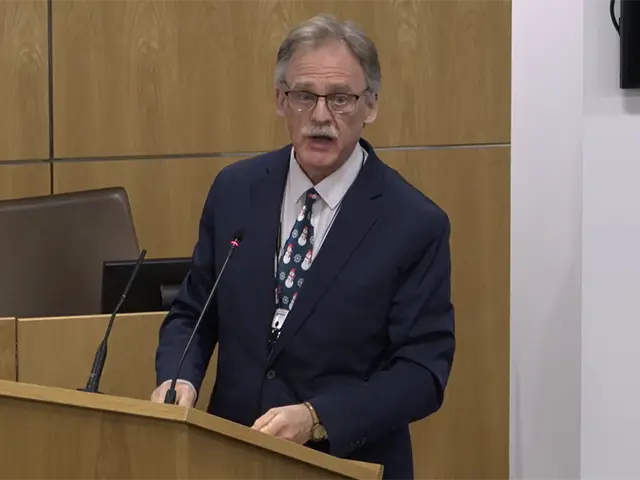
He highlighted that the bill would establish a BSL adviser role, the first statutory post of its kind in the UK, describing its importance as something that “cannot be overstated”.
Mr Isherwood, who chairs cross-party groups on disability and deaf issues, told the Senedd: “This isn’t just my bill. This is the bill of the BSL community. Let’s make this happen together and be proud of it together on behalf of deaf people across Wales.”
Jenny Rathbone, the Labour chair of the Senedd’s equality committee, was convinced of the “overdue” need for legislation to give more standing to British Sign Language.
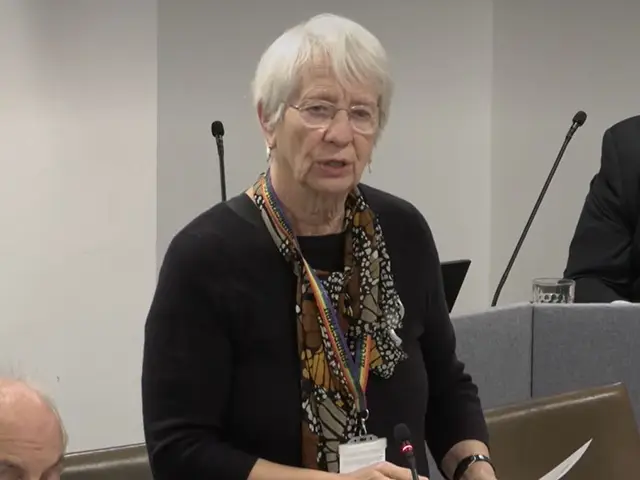
Ms Rathbone said the committee heard the biggest barrier “by some margin” was the availability of interpreters and the sustainability of the workforce.

She quoted a signer who told the committee: “The bill would make us feel respected and valued. But without proper funding, planning and deaf-led leadership, it won’t go far enough.”
Sioned Williams, Plaid Cymru’s shadow social justice secretary, told Senedd members: “Language is a part of our identity, our culture and our personal dignity.
“When someone cannot use their language, they are excluded from education, health care, employment and public life – and that is not acceptable in today’s Wales.”

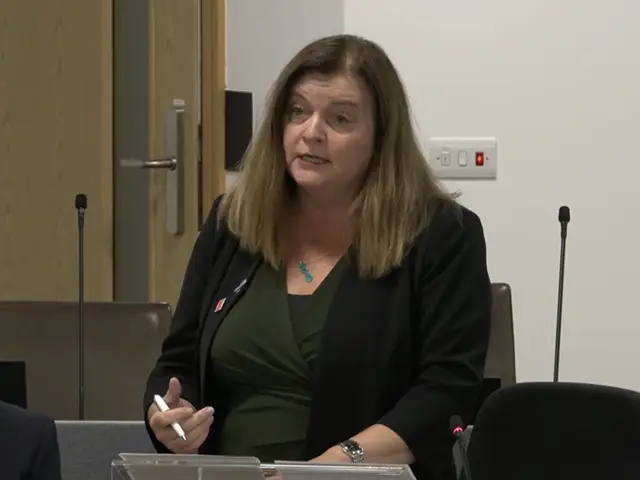
Ms Williams warned that if the legislation fails to deliver real change, the deaf community would be left “angry, disappointed and very, very disheartened”.
She expressed concern that the bill does not legally require the BSL adviser to be a deaf person, arguing it is “not appropriate, possible or efficient” for non-signers to lead the way.
Mr Isherwood defended the decision not to require that the adviser must be deaf, warning a successful legal challenge to a single such provision could cause the entire bill to fail.
Welsh Liberal Democrat leader Jane Dodds warned of an immediate workforce crisis, with only 54 registered sign language interpreters in Wales as of July.
With many now approaching the end of their working lives, she said: “We cannot – we must not – allow this bill to fail because we didn’t have the foresight to address this crisis now.”
Support for the bill stretched across the political spectrum, with Reform UK’s Laura Anne Jones similarly welcoming the “long-overdue” and “vital” legislation.
Jane Hutt, Wales’ social justice secretary, confirmed the Welsh Government’s financial backing, committing £214,300 for the bill’s first year of implementation in 2026/27.
If it clears the final hurdles, Mr Isherwood’s proposal will be the first backbench bill to enter the statute book in about a decade following the Nurse Staffing Levels (Wales) Act 2016.



Former police officer accused of making sexual remarks to women while on duty
Court hears allegations of inappropriate behaviour during official police visits A FORMER police officer has appeared in court accused of...


Community gathers to remember Corrina Baker
Lanterns and balloons released in emotional acts of remembrance FAMILY, friends and members of the local community came together to...


Teenager charged following rape allegation at Saundersfoot nightclub
Incident reported at Sands Nightclub in early hours of Sunday DYFED-POWYS POLICE is investigating an allegation of rape following an...


Milford Haven man jailed after drunken attack on partner and police officers
A MILFORD HAVEN man who launched a violent drunken assault on his partner before attacking two police officers has been...


Court hears historic child sex abuse claim emerged after ‘tarot reading’
Judge reminds jurors there is no standard timeframe for victims to come forward as trial reaches final stage A JURY...


Rape allegation investigated at Saundersfoot nightclub
Police appeal for witnesses after incident reported in early hours of Sunday DYFED-POWYS POLICE are investigating an allegation of rape...

Milford ground worker denies historic child sex abuse charges at Crown Court
Accused tells jury claims did not happen as trial hears evidence about alcohol use and alleged controlling behaviour A MAN...


Three inmates deny murder of Lola James killer at Wakefield prison
THREE prisoners have denied murdering child killer Kyle Bevan, who was found dead in his cell at HMP Wakefield. Bevan,...


Dyfed-Powys Police reassure communities after Bondi Beach mass shooting
Officers monitor local tensions following terror attack on Jewish event in Sydney DYFED-POWYS POLICE have issued reassurances to communities across...


Search under way in Pembroke Dock for missing man Lee
Coastguard, RNLI and rescue helicopter launched as fears grow he entered the water A MAJOR search and rescue operation is...
-
Crime24 hours ago
Milford Haven man jailed after drunken attack on partner and police officers
-

 News4 days ago
Dyfed-Powys Police launch major investigation after triple fatal crash
-
Crime22 hours ago
Teenager charged following rape allegation at Saundersfoot nightclub
-
Crime3 days ago
Man sent to Crown Court over historic indecent assault allegations
-
 Crime2 days ago
Man charged with months of coercive control and assaults
-
Crime5 days ago
Man spared jail after baseball bat incident in Milford Haven
-

 Crime3 days ago
Milford Haven man admits multiple offences after A477 incident
-

 Crime2 days ago
Woman ‘terrified in own home’ after ex breaches court order