


News
Carl lands TV role as evil ‘Gay Slayer’

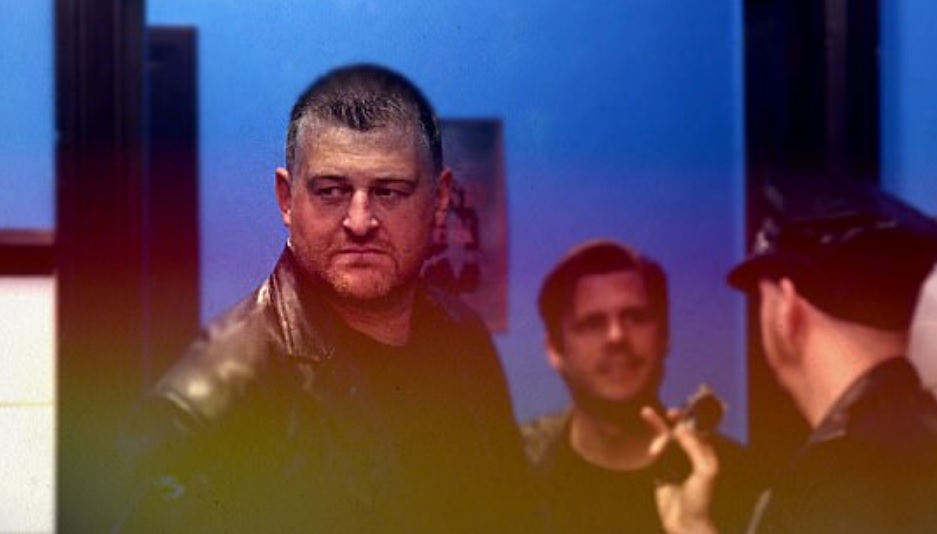
A HAVERFORDWEST man who has, over the last five years, worked as extra in TV programmes – such as ‘Casualty’ and ’Stella’ – has just landed his first lead role in a television docudrama about the ‘Gay Slayer’ serial killer Colin Ireland.
As he coolly told police that he had murdered five gay men – because he had taken the decision to be a serial killer one New Year’s Eve – Colin Ireland gave what he thought was a credible explanation for his campaign of brutality.
The former soldier became known as the ‘Gay Slayer’, reportedly posing as a homosexual to be taken to each of his victims’ homes, where he tortured and murdered them in the summer of 1993.
He also chillingly stayed with several of the bodies over night, possibly taking enjoyment in reliving the violence he had inflicted.
CBS Reality’s ‘Voice of a Serial Killer’ programme, broadcast for the first time this week, focused on the case of the ‘Gay Slayer’.

Carl Sykes, 38, who was brought up on Baring Gould Way, and attended Tasker Milward School, now lives in Risca, Newport, told The Herald that he ’honestly did not want to be an actor’.
“I never have”, he said.
Known back in the day by his school friends as a gentle giant, he is perhaps the last person people who know him in Pembrokeshire would expect to see on the screen portraying an evil murderer.
But the lead role – which he seems to have landed very much by accident – really challenged him, he said.
Carl went on to say: “I love being a supporting artist, and this role was suggested to me by my agent but I wasn’t aware at the time how involved it would be. It was fun to do but quite demanding, especially the lip-syncing with Ireland’s police interview.
“But I’m happy to step back and carry on being that guy you might recognise wandering around in ‘Casualty’ from time to time!”
hen asked what he found most challenging about playing the role of the serial killer he said: “Listening to the recordings of Ireland’s police interviews.

“He is so cold and calculating – he actually read books on serial killers beforehand to see how he could kill and get away with it, whilst at the same time, he tried to put the blame on his victims.
“At one point he says that if one of his victims hadn’t approached him, he’d have probably just gone home and nothing bad would have happened.
Dr David Holmes, a psychologist, tells the Voice of a Serial Killer programme: “He decided one New Year to make a resolution – I am going to be be a serial killer, that’s my new career, and set about it.
“It’s fairly complex as to whether Ireland was gay himself, which he protests he isn’t, and this was some kind of smokescreen … his way of engaging gay men then clearing his conscience.”
Dr Donna Youngs, directors of the International Centre for Investigative Psychology, said Ireland may have been picking up on the ‘vulnerabilities’ of gay men in the 1990s, who felt they had to be covert, and exploited it.
She said he was obsessed with being in control in the way he carried out the murders as well as throughout his police interviews.
She said: “He is proud, he thinks he has managed to achieve dominance and a freedom of expression of what he wanted to do to people in a way that very few others have the nerve to follow through on. He is proud, that’s why we get all the details we do in his confession.”
After confessing to all five murders, Ireland was given a whole-life tariff in 1993.
He died at the age of 57 from natural causes in the healthcare centre of Wakefield Prison in West Yorkshire in 2012.








Coastguard helicopter spotted two casualties after light aircraft came down off west Wales coast
TWO people were taken to hospital after a light aircraft ditched into the sea off the west Wales coast on Friday evening.
New Quay RNLI said its all-weather lifeboat was launched at 6:06pm following a direct page from Milford Haven Coastguard.
The emergency followed reports that an aeroplane had come down in the sea approximately 10 miles north-west of Cemaes Head, with two people on board.
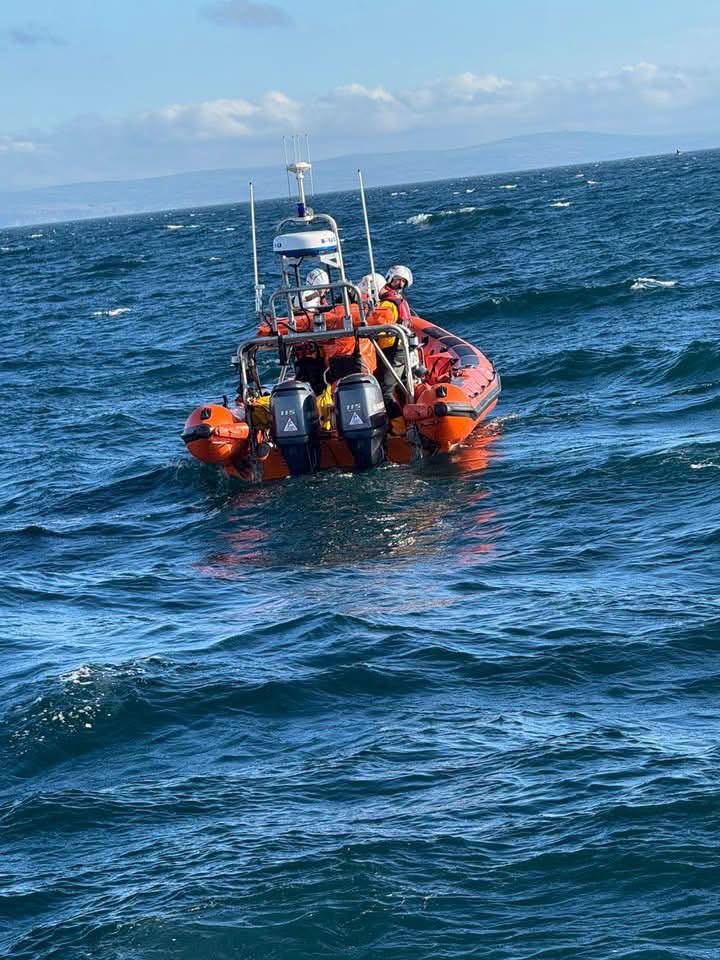
The New Quay all-weather lifeboat proceeded at best speed to the scene, alongside a Coastguard helicopter, RNLI Fishguard Lifeboat and RNLI Cardigan Lifeboat.
The two casualties were spotted by the Coastguard helicopter before being recovered by Cardigan Lifeboat.
They were then transferred to the larger New Quay all-weather lifeboat, where crew members were able to provide casualty care during the return to shore.
Both casualties were brought ashore at New Quay’s main pier and handed over to the Welsh Ambulance Service. They were then transferred to hospital.
Photographs from the incident show lifeboat crews operating in choppy sea conditions, an ambulance waiting at New Quay harbour, and the aircraft partially submerged in Cardigan Bay.
One image appears to show the aircraft floating with part of the fuselage, wings and tail visible above the water.
A navigation warning was later issued after a partially submerged microlight was reported adrift in Cardigan Bay.
The cause of the ditching has not yet been confirmed.
The aircraft’s departure point, intended destination and route have not yet been officially released.

New Quay RNLI confirmed that after the casualties were handed over, its all-weather lifeboat was recovered, rehoused and made ready for further service.
The incident involved a major multi-agency response from HM Coastguard, the Coastguard helicopter, New Quay RNLI, Fishguard RNLI, Cardigan RNLI and the Welsh Ambulance Service.
Aircraft accidents and serious incidents in the UK are reported to the Air Accidents Investigation Branch.
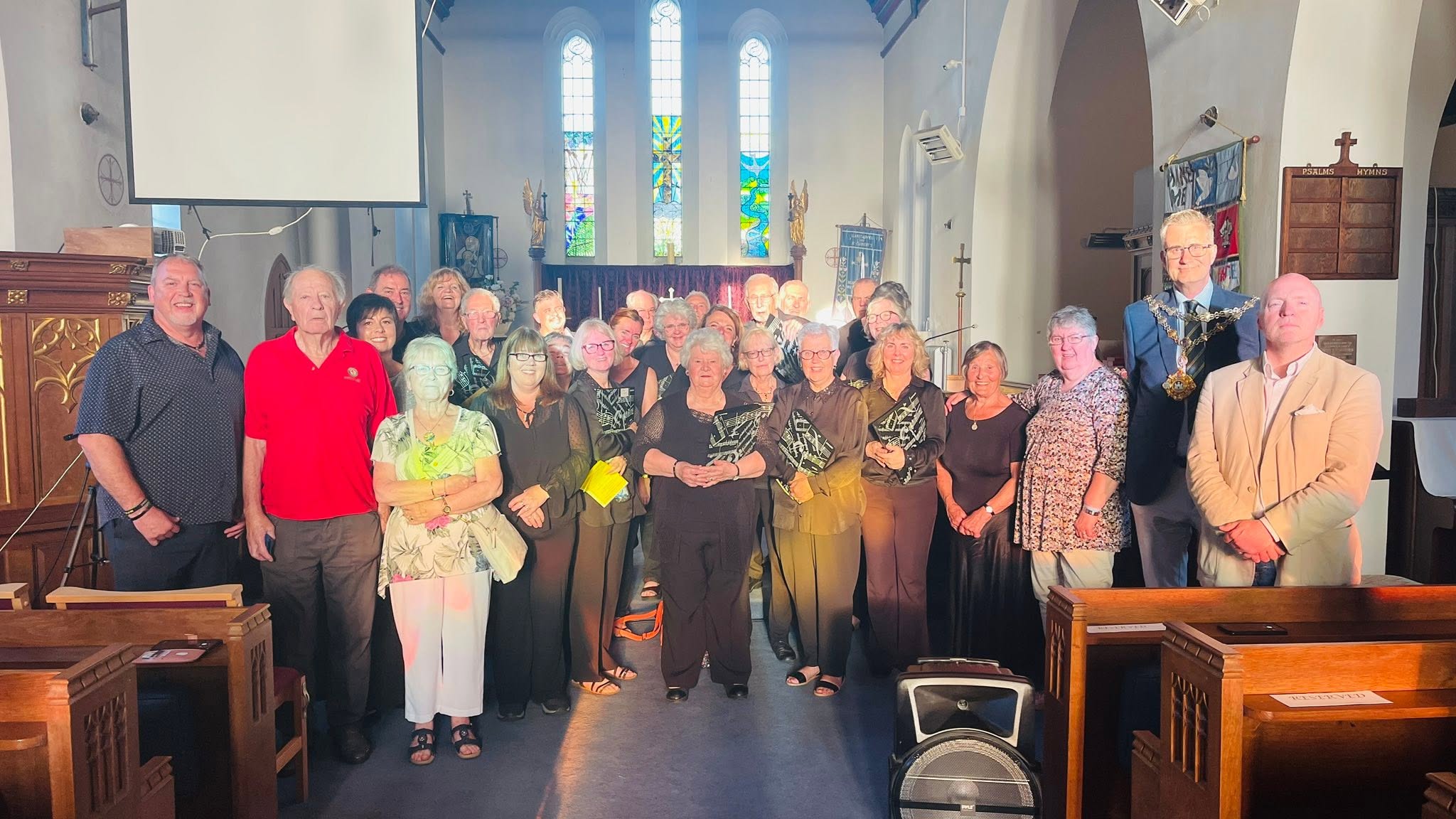
A special evening of music and celebration marked four decades of service by HOPE MS Therapy Centre, one of Pembrokeshire’s longest-serving self-funding charities.
THE ANNIVERSARY concert took place on Friday evening (June 26) at St Clement’s Church, Neyland, bringing together supporters, trustees, local councillors and members of the community to celebrate the charity’s 40th year.
Founded in 1986, HOPE MS Therapy Centre provides support and therapies for people living with multiple sclerosis and other neurological conditions across Pembrokeshire. The organisation has operated as a self-funding charity throughout its history, relying heavily on fundraising and community support.
Guests enjoyed performances from the Quaynotes Mixed Choir, along with acclaimed soloist Sarah Arthur, in what organisers described as an evening of music, song and thanksgiving.
Among those attending was Pembroke Mayor Jonathan Grimes, who praised the charity’s contribution to the county. He was joined by fellow county councillors and trustees including Simon Wright and Simon Hancock MBE.
Writing after the event, Cllr Grimes said: “Thank you to HOPE MS Therapy Centre for inviting me as Mayor of Pembroke to this evening’s concert to celebrate 40 years of service to Pembrokeshire.
“It was great to see my fellow county councillors and members of the trustee board as well as enjoying a fabulous performance from Quaynotes Mixed Choir and the fabulous soloist Sarah Arthur.
“Congratulations to HOPE MS Therapy Centre. I’m looking forward to being involved with the other events you have planned to celebrate 40 years.”
The concert is one of a series of events planned to mark the charity’s milestone anniversary year.
HOPE MS Therapy Centre continues to support people from across Pembrokeshire, providing therapies, advice and a vital social network for those affected by multiple sclerosis and related conditions.
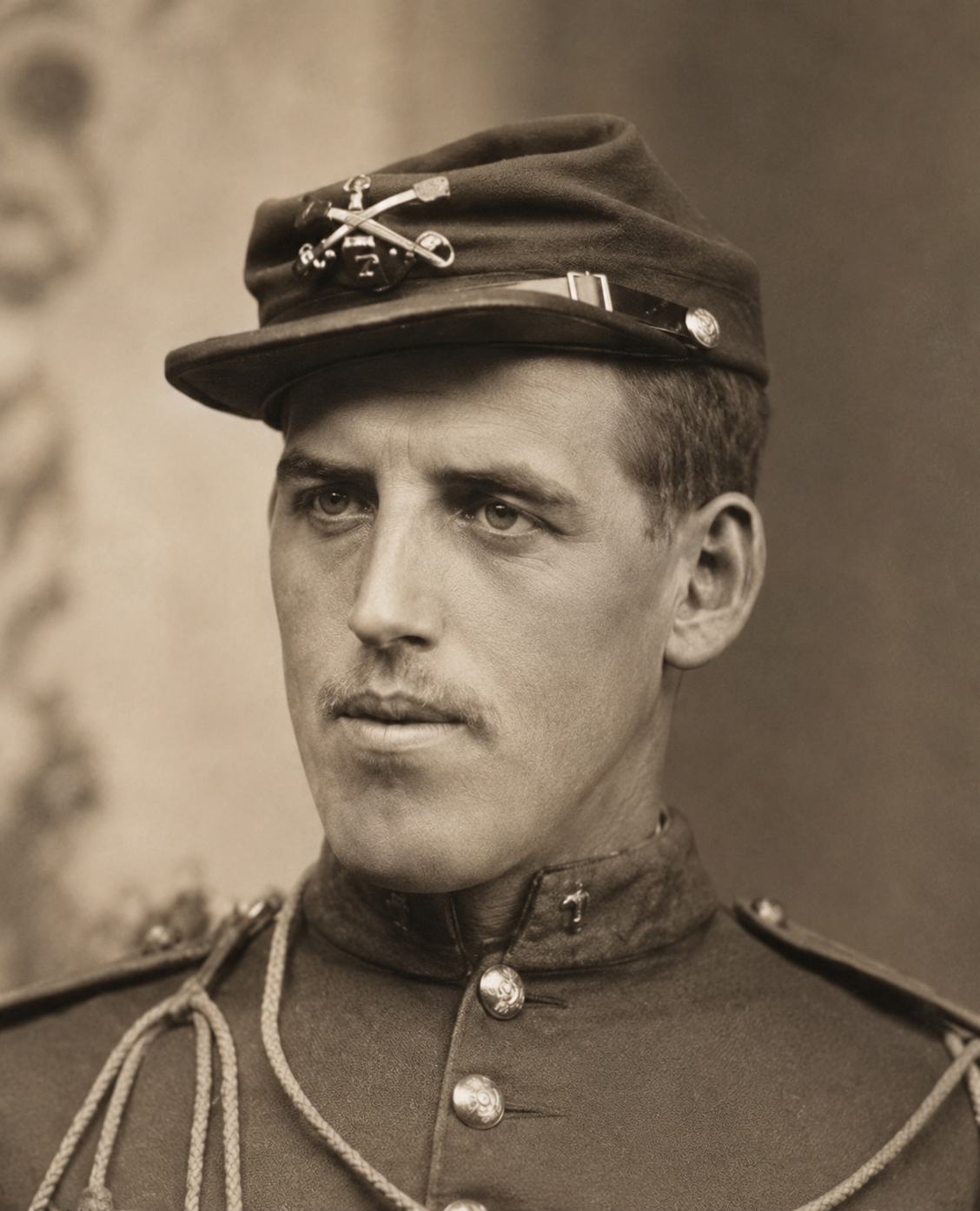
Dinas Cross-born soldier was among those killed at the Battle of the Little Bighorn 150 years ago this week
A YOUNG man from a remote Pembrokeshire farm found himself at the centre of one of the most famous battles in American history after leaving Wales in search of a new life across the Atlantic.
This week marks 150 years since Sgt William Batine James, originally from Pencnwc Farm near Dinas Cross, was killed alongside General George Armstrong Custer at the Battle of the Little Bighorn.
The battle, fought on June 25 and 26, 1876, became known around the world as “Custer’s Last Stand” after the defeat of the US Army’s 7th Cavalry by a coalition of Lakota Sioux, Northern Cheyenne and Arapaho warriors.

Among the dead was a 27-year-old Welshman whose remarkable journey had begun on the north Pembrokeshire coast.
Born on March 3, 1849, James grew up in rural Pembrokeshire before emigrating to North America as a young man. Records show he arrived in Toronto in 1871 before later crossing into the United States and joining the US Army.
He eventually became a sergeant in Company E of the famed 7th Cavalry Regiment.
Just five years after leaving Canada, James found himself riding with Custer into what would become one of the most studied and debated military engagements in American history.
The battle took place in present-day Montana during the Great Sioux War. Custer’s force was overwhelmed after encountering a much larger Native American force than expected.
Every member of Custer’s immediate command was killed.
For many years, James’s family back in Pembrokeshire had little idea what had become of him. Communication across the Atlantic was slow and unreliable, and news often took weeks or months to reach rural communities.
His story only gradually emerged through letters he had sent home, helping relatives piece together the fate of the young man who had travelled thousands of miles from Dinas Cross to the American frontier.
Today, historians of both Welsh emigration and the American West continue to document the lives of those who fought at the Little Bighorn. James remains one of Pembrokeshire’s most unusual historical figures – a local farm boy whose life became entwined with one of the defining moments of the American frontier era.

One hundred and fifty years after his death, Sgt William Batine James remains a reminder of how far Welsh emigrants travelled in the nineteenth century, and how people from even the smallest communities could find themselves caught up in events that would echo through history.



News41 minutes ago
Two taken to hospital after aircraft ditches in Cardigan Bay
Coastguard helicopter spotted two casualties after light aircraft came down off west Wales coast TWO people were taken to hospital...

Sport17 hours ago
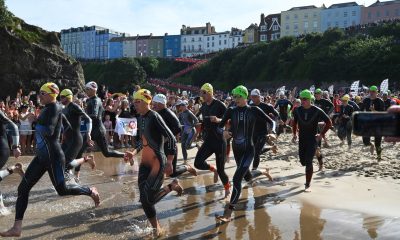
Long Course Weekend gets underway in Tenby as thousands head for county
Three days of swimming, cycling and running begin with The Wales Swim at North Beach THOUSANDS of athletes and supporters...


Climate20 hours ago
Welsh waters, Westminster profits: Crown Estate row reignited in Wales
PLAID CYMRU has renewed calls for the Crown Estate to be devolved to Wales after figures showed income linked to...

News1 day ago
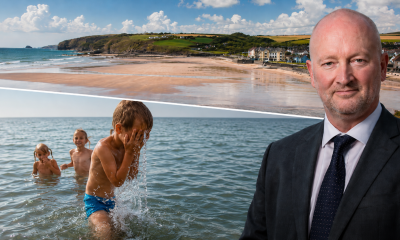
Reform MS: ‘I felt like shouting get out of the water’
Paul Marr says children playing in streams at Pembrokeshire beaches deserve better protection from pollution risks REFORM UK MS Paul...

Health2 days ago
Senedd backs call to rule out hospital downgrades after heated NHS debate
Reform UK amendment passes as West Wales hospital fears remain central political issue THE SENEDD has backed a call for...

News2 days ago
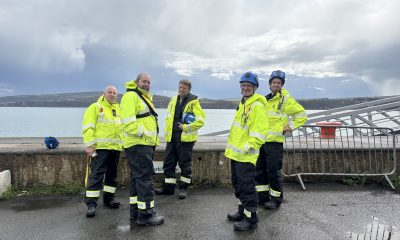
Coastguard callout payments axe sparks fears for coastal communities
VOLUNTEER coastguards across the UK are set to lose callout payments, prompting concern over the future resilience of emergency cover...


Farming2 days ago
Rural Wales ‘left out’ of net zero debate, warns carbon entrepreneur
A WELSH carbon entrepreneur has warned that rural Wales risks being left behind in the national conversation about net zero....

Local Government3 days ago
Tenby Spectacular row continues as organisers say key question remains unanswered
Round Table says legal clarity over pedestrian access is still holding up event plan TENBY ROUND TABLE has welcomed Pembrokeshire...


Community4 days ago
Manorbier fire scandal: Council’s payout just £63,777 after school destroyed
PEMBROKESHIRE COUNTY COUNCIL has accepted an insurance settlement which leaves it with just £63,777.07 after the catastrophic fire which destroyed...

News4 days ago
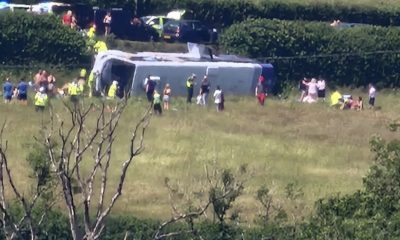
Bus overturns in major incident near Kidwelly
All passengers rescued as emergency services remain at scene A BUS overturned on the A484 between Kidwelly and Ferryside on...
-
 Crime2 days ago
Police appeal after reported rape at Young Farmers rally
-

 Crime7 days ago
Milford Haven woman spared jail despite string of shop thefts
-
 Community6 days ago
The gentle giant behind the tattoos
-

 Crime7 days ago
Spittal man to stand trial accused of ABH
-
 Entertainment6 days ago
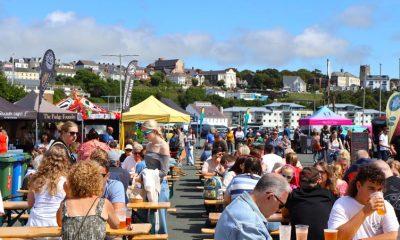
Harbour Fest to bring music, food and maritime magic to Milford Waterfront
-
Health6 days ago
Welsh Government refuses to halt Withybush and Bronglais service review
-

 News6 days ago
Long Course Weekend set to bring thousands to Pembrokeshire
-

 News5 days ago
Rhun ap Iorwerth urges new deal for Wales after Starmer quits