

News
Betty Guy ‘murdered by her daughter and grandson’

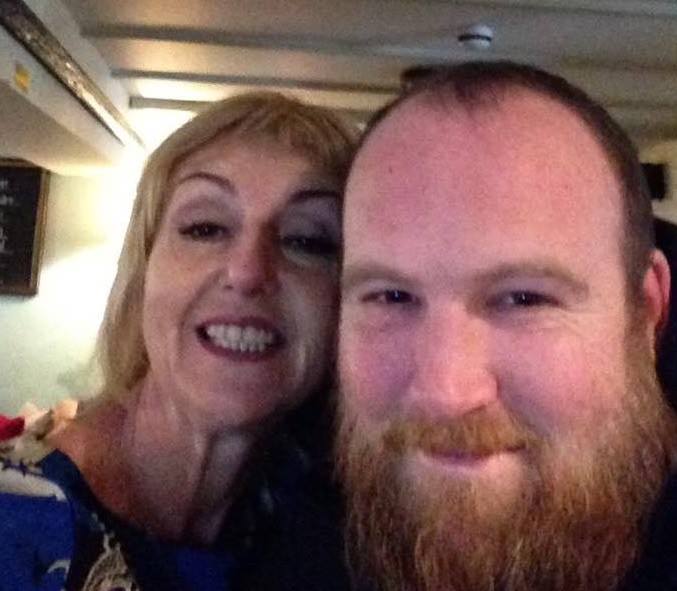
BETTY GUY was murdered by her own daughter and grandson, a jury heard today (Jan 9).
Penelope John fed her crushed transquilisers and alcohol and Barry Rogers smothered her with a pillow, it was alleged.
John, aged 50, of Union Terrace, St Dogmaels, and Rogers, 32, of High Street, Fishguard, deny murdering 84 year old Mrs Guy on November 7, 2011, at her home in Hillcroft, Johnston, near Haverfordwest.
Paul Lewis QC, prosecuting at Swansea Crown Court, said at first Mrs Guy’s death was put down to natural causes and her body was cremated soon afterwards.
But in the following years, he alleged, Rogers made a series of confessions to women he later had relationships with.

And police tape recorded more confessions after they secretly bugged John’s home and heard both of them discussing what they had done.
They included, said Mr Lewis, Rogers telling his mother: “But I did it. No honestly you have got nothing to worry about, it’s me that’s the one that’s done the act.”
Later they became concerned about whether Rogers had spoken about John putting tablets into Mrs Guy’s whiskey on a mobile telephone or put it in a text.
Rogers could be heard saying, softly, to John: “Are you starting to crack? Keep our story the same.”
John was taped saying: “No, I can’t remember. Did I text you when I said I crushed the diazepam up and I crushed zopiclone and put it in her….
“No, I would not have text that to you Barry. On reflection, I would have told you on the telephone.”
Rogers allegedly replied, “On the phone, yeah. I’m sure we spoke on the phone about it.”

Another recording caught Rogers, referring again to mobile telephones, saying to John: “But it’s f***ing technology like, a slip of a word here or there and we are in deep s**t like, we’re in jail for life.”
Mr Lewis said the prosecution case was that both Rogers and John had decided to end Mrs Guy’s life.
At 2.48am on November 7 John dialled 999 and said her mother had died. She said she had been suffering from stomach and bowel cancer, both of which were untrue.
She also said Rogers was in the house.
Because Mrs Guy was to be cremated her body was examined by two doctors. Dr Roger Burns noted small pinpoint bruising on the left side of her face.
No postmortem was carried out and the cremation went ahead at Narberth.
Rogers developed a relationship with Sandra Adams, who had been a junior school pupil in Haverfordwest with him many years before.
In November, 2015, Miss Adams went to the police to say Rogers had told her that he had smothered his grandmother with a pillow and an investigation began.
Detectives traced his estranged wife, Lisa Watkins, and another woman he had had a relationship with, Rhianne Morris.
Mr Lewis said they discovered that Rogers had also confessed to them.
The defendants were arrested on October 5, 2016.
While they were being interviewed bugs were placed at John’s home and on their release Rogers was granted bail on the condition he stayed with his mother.
“Almost as soon as they got in they began to talk,” said Mr Lewis.
When Rogers was re-interviewed and told about the tape recordings, he claimed to have made the statements ‘to take the p**s out of you pigs’.
Rogers, a former soldier, told police he knew the house had been bugged because he had bought a bug detector on EBay the day after he and his mother had been released on bail.
But, said Mr Lewis, the incriminating conversations had been recorded in the early hours of the morning or their release and ‘well before Barry Rogers could possibly have bought any bug detector’.
Mr Lewis said Rhianne Morris had told them that in 2010 she had moved in with Rogers, then living at 6 Rhydyfelin, Cardigan. Later, they moved to Frome in Somerset.
Late on November 6, 2011, Rogers received a telephone call from his mother and he could be heard saying: “It’s time, is it?”
Rogers then drove to Johnston and telephoned Miss Morris in the early hours of the following day to say ‘his Nan had gone’.
He allegedly told Miss Morris that John had given Mrs Guy ‘a load of tablets and a bottle of whiskey’.
Their relationship deteriorated and during a heated argument Rogers allegedly said to Miss Morris: “You want to be careful, or I’ll do to you want I did to her.”
Rogers allegedly picked up a pillow and held it to his face, saying to Miss Morris: “I’ll do it while you’re sleeping and you won’t know.”
Both John and Rogers deny having any involvement in Mrs Guy’s death.
t was now too late for anyone to prove medically how Betty Guy died, the jury heard.
Her body was cremated four days after her death.
But, said Paul Lewis QC, the prosecution would still show that she was suffocated as the result of an agreement between the two defendants.
After police had become suspicious about how she had died a Home Office forensic pathologist, Dr Deryck James, had reviewed her medical history and the notes made by the two doctors who had examined her body before she had been cremated.
Dr James concluded that although she had suffered ill health she had not any terminal illness.
Dr James said he noted that bruising had been visible on Mrs Guy’s face.
“In his opinion where a person is found dead, is face up and has not been the subject of any resuscitation attempts, then such petechiae (bruising) warrant further investigation because they raise the question of there having been pressure applied to the face or neck and thus the possibility of suffocation.
“However, such petechiae do not point inexorably to there having been an obstruction to Mrs Guy’s breathing and, from a medical standpoint, Dr James cannot now rule out that Mrs Guy suffered a natural death.
“The medical evidence cannot therefore provide any certainty as to how Mrs Guy died.”
He told the jury, “You will have to decide upon all the evidence that you hear.
“Did she die of natural causes as the defendants contend or, as we allege, was she suffocated as the result of an agreement reached between the two defendants.
“We submit, however, that she did not die from natural causes and that the defendants did not tell the truth in interview.
“Instead, they lied to try and conceal the arrangement they had made and the steps that they took to end Mrs Guy’s life.”
The trial continues and is expected to last for three weeks.










Christopher Sizer’s mother told magistrates the family could no longer cope with his behaviour and repeated demands for money
A MILFORD HAVEN man has been sentenced after threatening to damage his parents’ home with a hammer when they refused his demands for pizza and alcohol.
Christopher Sizer made the threats on March 3 while at his parents’ property with a group of friends.
Haverfordwest Magistrates’ Court heard that the 38-year-old had repeatedly asked his parents for money, causing increasing tension within the family.
“He came downstairs asking for pizza and drink, but was told there was already food in the house because they could not stretch to buying more,” Crown Prosecutor Sian Vaughan said.
Sizer then referred to a hammer he knew was kept inside the property.
“He told his parents he would use the hammer to damage the windows and that he would also kick the doors in,” Ms Vaughan told the court.
In a victim impact statement, Sizer’s mother, Kay Sizer, said she and her husband were no longer able to manage their son’s behaviour.
“If we don’t give him what he wants, he threatens to kill himself,” she said.
“If we have a night away, he phones the hotel and constantly asks us for money. My husband has had to get another job just to bring in additional money.
“We can’t cope with this behaviour any more, nor with the threats he makes against the house.”
Sizer, of Prescelly Place, Milford Haven, pleaded guilty to threatening to destroy or damage property.
Defending, Tom Lloyd said Sizer had paranoid schizophrenia and had lost his temper on the night of the offence.

“He said certain things which he regrets,” Mr Lloyd said.
“The defendant needs help and is willing to engage with the probation service to get it.”
Sizer was sentenced to a 12-month community order, including a 12-month alcohol treatment requirement and ten rehabilitation activity requirement days.
A two-year restraining order was also imposed, preventing him from contacting either of his parents directly or indirectly.
The order prohibits him from visiting any property occupied by his parents and from posting anything online or on social media that refers directly to them.
Sizer was fined £100 and ordered to pay £85 prosecution costs.


Adam Vickery damaged the Pembroke Dock social housing property after sending threatening messages to his partner
A MAN has been sentenced after smashing four large holes into the bedroom wall of a social housing property in Pembroke Dock.
The criminal damage was caused on the night of December 21 after Adam Vickery arrived at the rented home of his partner, Cerys Randall.
Haverfordwest Magistrates’ Court heard that earlier that evening Ms Randall had received numerous messages from Vickery while she was at work, some of which were threatening.
“When she got home, she walked upstairs to her bedroom and heard a series of bangs,” Crown Prosecutor Sian Vaughan told the court.
“She discovered Adam Vickery smashing up her bedroom, so she phoned the police.”
When officers arrived, they found four large holes in the plaster walls of the bedroom.
The property is owned by Pembrokeshire County Council and rented through Ateb housing association, with Ms Randall named as the sole tenant.
“I don’t know how to say this, but I’ve had enough,” Ms Randall said in a victim impact statement read to the court.
“I’ve tried to help so much in the relationship, but there’s nothing more I can do.”
Vickery, of West Percy Street, North Shields, pleaded guilty to causing criminal damage and was represented by solicitor Michael Kelleher.
“The defendant came down at Christmas to visit his children but found out that Ms Randall was going to take them away from him that night,” said Mr Kelleher.
“He became frustrated and took that frustration out on the wall. He fully accepts that this was wrong and that he now loses his good character as a result.”
Vickery, who had no previous convictions, was fined £40 and ordered to pay £85 prosecution costs and a £16 court surcharge.
No compensation was awarded for the damage because the local authority had not provided sufficient information about the cost of repairing the wall.

Independent shop owner said rising costs meant businesses could not afford to absorb losses caused by theft
A NARBERTH retailer has described the damaging impact shoplifting is having on independent businesses after a £120 collectable bear was stolen from her shop.
The owner of Matilda’s boutique and gift shop told Haverfordwest Magistrates’ Court that thefts were adding to the growing financial pressure faced by traders already struggling with rising costs.
Her victim impact statement was read during the sentencing of 45-year-old Christopher Brockway, who admitted stealing a pink leopard Charlie Bear from the High Street shop.
“People think they can just steal without realising the impact it has on other people and their families,” the proprietor said.
“I’m an independent retailer who has worked hard to set up my business, but it’s a real struggle to keep it going.
“I can’t afford thefts like this with the rising cost of electricity, and I just can’t absorb losses like this.”
The court heard that Brockway entered Matilda’s on May 12 before placing the £120 collectable bear inside his jacket.
CCTV footage showed him leaving the premises without making any attempt to pay.
Brockway, of Silverdale Lodge, Johnston, pleaded guilty to theft from a shop.
Magistrates ordered him to pay £120 compensation to Matilda’s.
He was also fined £80 and ordered to pay £85 prosecution costs and a £32 court surcharge.



Crime11 minutes ago
Narberth retailer speaks of shoplifting toll after ‘collectable bear’ stolen
Independent shop owner said rising costs meant businesses could not afford to absorb losses caused by theft A NARBERTH retailer...


Crime28 minutes ago
Teen accused of attempting to murder teacher says she lied about stabbing
Defendant accepts teacher was terrified and that a knife wound to the head could kill, but denies deliberately attacking her...


Local Government2 days ago
Calls grow for independent investigation into Manorbier school closure
Councillor alleges misleading figures, inadequate insurance and poor treatment of staff CALLS for an independent investigation into the controversial closure...


Community2 days ago
Neyland Carnival hailed a huge success after streets fill with colour and crowds
NEYLAND CARNIVAL organisers have thanked the community, volunteers and local businesses who helped make this year’s event a memorable success....


Community2 days ago
Tenby Summer Spectacular: Anger grows over ‘disaster waiting to happen’ warning
A growing backlash has followed police calls for the event’s licence to be revoked, with supporters questioning why authorities failed...


Charity3 days ago
RSPB secures ‘missing link’ to reconnect wildlife habitats in Carmarthenshire
RSPB CYMRU has purchased a 96-hectare upland site in Carmarthenshire, describing it as a vital step towards reconnecting one of...


Crime4 days ago
Ann Widdecombe: Welsh politicians pay tribute as murder probe launched
Prime Minister Sir Keir Starmer has praised the former minister’s “conviction and dedication”, while political figures in Wales remembered her...


News4 days ago
Solardo pulls out of Haverfordwest show as organisers offer full refunds
Headline act confirms non-appearance as Park House Series announces major event changes DANCE music duo Solardo will no longer perform...


Local Government4 days ago
Conservatives win Pembroke Dock seat as Reform stalls and Dowson polls just 11
Jamie Street takes Market ward with a 43-vote majority as Reform finishes fourth despite its major Senedd breakthrough two months...


Health4 days ago
Hospital ward closed after highly contagious scabies outbreak
Hywel Dda confirms wider rise in cases across Carmarthenshire, Pembrokeshire and Ceredigion as patients and staff are offered treatment A...
-

 News7 days ago
Questions raised over Hamilton Accies finances after club’s Haverfordwest friendly
-

 Farming5 days ago
Working Carmarthenshire farm opens gates to visitors with new holiday cottages
-

 Entertainment6 days ago
Swing and big band classics heading to Torch Theatre
-

 Sport5 days ago
Rising rally star claims maiden Mini Rally Challenge victory
-

 Crime5 days ago
Greenacres confirms seized dogs are safe as investigation continues
-

 Farming5 days ago
Outer Hebrides stickmaker to make final Royal Welsh Show appearance
-

 Sport5 days ago
Bluebirds give new home strip first run-out
-

 Crime7 days ago
Carmarthenshire rapist jailed for 22 years for child sex offences