


News
Deputy Council leader is suspended for misconduct


 COUNCILLOR Rob Lewis has been suspended for two weeks by the Standards Committee after they found that he was in breach of the code of conduct.
After receiving an anonymous DVD entitled ‘IPG election campaigns 2008 and 2012’ Councillor David Bryan made a complaint and in September 2012 the Public Services Ombudsman was called in to investigate.
‘lewisrob’ is shown as the author or last person to save the files, all of which were created between March and May of 2012. The first 16 files included election posters and documents encouraging voters to support Independent Group councillors Clive Collins, David Simpson, Elwyn Morse, Ken Rowlands, Lyndon Frayling, Pearl Llewellyn, Peter Stock and himself and former councillors Jim Codd and John George.
Cllr Lewis, who is also the Cabinet spokesperson for Highways, Planning, Transportation and Major Events, accepted that he had used the council’s computer system inappropriately in those 16 circumstances, but had disputed that the context of a further five instances were improper use. Cllr Lewis disputed the other five because he believed that they “relate to the management of the political structure of the council and are directly connected to the running of the council, and is therefore not a breach of the Code of Conduct”.
At the hearing, Cllr Lewis said: “I was asked by members to prepare a speculative view of how the authority would look after the elections.

“Maybe in hindsight I should have picked up my laptop, instead I used the machine which I had sat in front of for six or seven years.
“The five files are split into two sections: Pre election files and actual files. The pre-election ones could be deemed inappropriate, but the post-election ones are to do with the formation of the council.
“The files before you were stored in the council system, taken without my permission, and used against me.”
However, after deliberating the issue for over an hour, the committee considered that the documents that were disputed did not relate to council business. The council’s Monitoring Officer Laurence Harding said: “They were not appropriate uses of the council’s resources”.

Committee leader, Mr Ian Williams said: “Cllr Lewis will be suspended for two weeks. Cllr Lewis has been very forthright in his responses, but he is a senior member of the council and should have ensured that he fully understood the rules.
“The whole subject of the use of the council’s IT resources needs to be completely reviewed in light of the issues raised in this hearing and members must be provided with clear rules governing the use of IT resources and facilities”.


Judge rules expired licence does not invalidate insurance where driver is not disqualified
A HAKIN man has successfully overturned his conviction for driving without insurance in a case that could have wider implications for thousands of motorists.
Seventy-six-year-old Niall Taylor, of Haven Drive, won his appeal at Swansea Crown Court on Thursday (Mar 27), after the court ruled there was no case to answer on the insurance charge.
The court found that Taylor was insured in law at the time he was stopped, despite his driving licence having expired.
This is understood to be a landmark ruling on a point of law, directly addressing a long-standing assumption used in policing and prosecutions — that a driver whose licence has expired is automatically uninsured. The judgment provides rare clarification on how standard insurance wording should be interpreted in such cases, and may influence how similar prosecutions are handled in the future.
Key issue: licence expired but not disqualified
The case centred on an incident on January 18, 2023, when Taylor was stopped by police while driving a Vauxhall Zafira in Haverfordwest.
It was accepted that his driving licence had expired in November 2022 and had not yet been renewed, and Taylor did not challenge his conviction for driving otherwise than in accordance with a licence.
However, the appeal focused solely on whether he was also uninsured.
Certificate wording decisive
The court heard that Taylor held a valid insurance policy covering the date in question.
Crucially, the certificate of motor insurance stated that cover applied where the driver:

“holds a licence to drive the vehicle or has held and is not disqualified or prohibited by law from holding or obtaining such a licence.”
The court found that Taylor met this definition, as he had previously held a licence and was not disqualified or prohibited from obtaining one.
Judge relies on leading legal text
In a detailed ruling, the judge referred to Wilkinson’s Road Traffic Offences (32nd Edition), a leading legal authority, which states that policies using this wording commonly cover drivers even where a licence has expired.

The court also considered the case of Adams v Dunne (1978), which established that an insurance policy remains valid unless and until it is formally avoided.
The judge said that, in law, such policies remain effective even if they may later be considered “voidable” rather than void.
Prosecution evidence ‘insufficient’
The Crown had relied on evidence from an insurance company investigator, who said the policy might have been cancelled had the company known about the licence issue.
However, the court found this evidence did not establish that the policy was invalid at the time.
The judge noted that:
- the insurer had confirmed a policy existed,
- no full policy document had been produced, and
- the certificate itself clearly set out the relevant terms.
He concluded that the prosecution had failed to prove that no valid insurance was in force.
Conviction quashed
Allowing the submission of no case to answer, the court ruled:
“We are satisfied that Mr Taylor did indeed have a certificate of motor insurance… which covered him to drive on the 18th of January 2023.”
The judge added that the prosecution evidence, taken at its highest, was not sufficient to justify a conviction.
Taylor’s conviction for driving without insurance was therefore quashed.
Wider implications
The ruling raises important questions about how insurance policies operate where a driving licence has expired — an issue affecting many motorists, particularly those over 70 who must renew their licences regularly.
The court’s interpretation suggests that, where a policy uses standard wording covering drivers who have previously held a licence and are not disqualified, insurance may still be valid despite administrative lapses.
Taylor’s separate conviction for driving otherwise than in accordance with a licence remains in place and was not part of the appeal.

Haverfordwest woman claimed fear of police and missing custody footage supported her case
A HAVERFORDWEST woman has lost her appeal against conviction after Swansea Crown Court ruled she had no lawful excuse for refusing to provide a blood sample — despite claims she feared police abuse and that missing custody footage would support her defence.
Sally Nolan, 52, of Three Meadows, appeared at Swansea Crown Court on Thursday (Mar 27) to challenge her conviction for failing to provide a specimen for analysis following her arrest in Johnston on Aug 15, 2025.
Missing footage dispute
At the start of the hearing, Nolan — representing herself — argued that police custody footage had not been disclosed. She said the material would show she was mistreated and had offered to provide a urine sample instead of blood.
The Crown told the court no such footage was available and that custody desk recordings are typically retained for around 28 days. Prosecutors added there was no record on the custody log of any mistreatment or of Nolan offering a urine sample.
The court proceeded with what the judge described as a fresh hearing.
Police stop and roadside test
The court heard PC Dylan Davis stopped Nolan’s vehicle after receiving information it was being driven by someone suspected of being under the influence of drugs.
Body-worn video footage showed the officer activating blue lights and intercepting Nolan’s car before pulling her over.
Nolan provided a roadside saliva test, which gave a positive indication for cannabis. The court heard this was not conclusive but justified her arrest and further testing.
Refusal captured on video
Footage played in court showed Nolan repeatedly refusing to provide a blood sample after being taken to custody.

The officer read out the required legal warnings, including that failure to provide a specimen could lead to prosecution.
Nolan replied: “I’m refusing, take me to court,” and later said: “No, because I don’t trust you or the NHS.”
The court also heard she told officers: “I do not consent to anything that you will do to me,” and even refused to accept a glass of water due to concerns it could be tampered with.

Defence: PTSD and mistrust
Giving evidence, Nolan said her refusal was based on a deep mistrust of police, which she linked to previous experiences.
“I don’t trust the police,” she told the court. “You can do any test you want, but you’re not putting a needle in my arm.”
She said she would have provided a urine sample and maintained she was not under the influence of drugs.
Nolan also told the court she believed she suffered from post-traumatic stress disorder, although she accepted she had no formal diagnosis.
Medical evidence rejected
A letter from her GP confirmed Nolan had not been diagnosed with PTSD, though she was experiencing anxiety and distress.
A healthcare professional present in custody told the court Nolan appeared physically well, understood the procedure, and had no medical condition that would justify refusing a blood sample.
The court heard recognised medical reasons could include conditions such as a clinically supported phobia, but no expert evidence had been provided in Nolan’s case.
Court’s ruling
Delivering judgment, the court said it accepted Nolan held genuine fears and mistrust of the authorities.
However, the judge ruled that a “reasonable excuse” must arise from a physical or mental inability to provide a specimen, or a real risk to health, and would normally require medical evidence.
The court found Nolan’s refusal was instead a willful refusal based on mistrust, which — even if genuinely held — could not amount to a lawful excuse.
The judge also rejected Nolan’s argument that she should have been offered a urine test, ruling that the law does not require police to give drivers a choice between blood and urine samples.
Refusing the appeal, the judge said: “We find that you did not have a reasonable excuse defined by law. Therefore, we refuse the appeal.”
Nolan replied: “That’s all I wanted. A fair trial.”
Sentence and finances
Magistrates had previously imposed an 18-month driving disqualification, a £300 fine, £650 in prosecution costs and a £120 surcharge.
The Crown Court then heard Nolan receives around £1,300 a month in Universal Credit, alongside ongoing household and vehicle costs.
The court confirmed that the penalty imposed at the lower court was correct. Nolan must pay £250 costs to the CPS after losing the appeal.
She was ordered to pay at £20 a month to which she told the judge: “I can’t afford that I am poor. I am very poor. I have three cats to feed, and I won’t starve my cats.”
Despite being unsuccessful in court she added: “Thank you Your Honour for a fair trail. You have been very good. Thank you, thank you.”

Historic Haverfordwest building set for transformation after years of neglect
A HISTORIC Haverfordwest building is set to be transformed into a major cancer support centre, breathing new life into one of Pembrokeshire’s most significant architectural landmarks.
Foley House, which has stood neglected for nearly 20 years, will become the new home of Adam’s Bucketful of Hope Cancer Support Centre—an ambitious project inspired by the life and legacy of Adam Evans-Thomas.
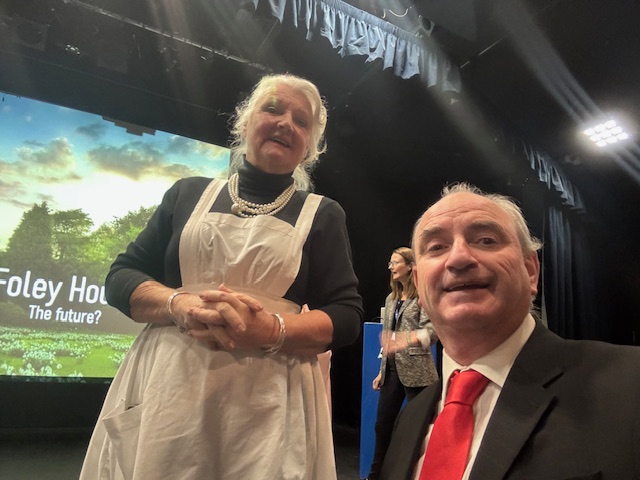
The plans were discussed at a recent meeting held at The Merlin Theatre, Pembrokeshire College, attended by local councillors, campaigners, and community supporters.
Speaking after the meeting, County Councillor for the Castle Ward and Chairman of the charity, Thomas Tudor, said it had been “lovely” to hear more about the building’s history and future potential.
He thanked guest speaker Mark Muller for outlining the history of Foley House, and Cris Tomos of PLANED for offering guidance on how the project could move forward. Tribute was also paid to The Bucket Music Makers and Chris Evans-Thomas for their continued support.
New purpose for historic building
Designed in 1791 by renowned architect John Nash—best known for his work on Regent Street, Regent’s Park and parts of Buckingham Palace—Foley House is regarded as one of Haverfordwest’s architectural gems.
Now, after years of decline, the building is set to be carefully restored and adapted to provide a modern, accessible centre for cancer support services.
The Herald understands the vision is to create a welcoming environment combining heritage with healthcare, including lifts, treatment rooms, and calm spaces designed for patients and their families.
Inspired by Adam’s legacy
The project builds on the legacy of Adam Evans-Thomas, who was diagnosed with Chronic Myeloid Leukaemia in his early twenties.
Despite years of treatment, Adam became known for his courage, humour, and compassion—qualities that inspired those around him. He died at the age of 35, but his story continues to shape cancer support services in Pembrokeshire and beyond.
Over the past 30 years, initiatives linked to his legacy have helped establish the PHODU ward at Withybush Hospital and a double ICU room at the University Hospital of Wales in Cardiff.
Friends and family are now aiming to take that legacy further by creating a dedicated centre of excellence in Haverfordwest.

Expanding support services
The new centre will not only continue existing support services but expand them, including therapies and treatments not always available through the NHS.
Plans also include a significant expansion of lymphoedema services, helping patients recovering from cancer surgery.
Alongside clinical support, Foley House will offer a wide range of wellbeing activities, including singing, gentle exercise, meditation, yoga, and arts and crafts.
Community at its heart
Organisers say the centre will be firmly rooted in the community, with volunteers and patients playing a central role.
A group known as the “Buckateers”—patients and volunteers aged 70 and over—will help bring energy and character to the project, including themed events celebrating the building’s Georgian heritage.
There are also plans to host performances by young musicians, creating a welcoming and uplifting atmosphere for visitors.
Call for support
With restoration work ahead, the charity is now seeking funding partners, grants, and corporate sponsors to help bring the project to completion.
Supporters say every contribution will help transform Foley House into a vital community resource—offering hope, care, and comfort to families across Pembrokeshire.
For more information, or to get involved, contact Adam’s Bucketful of Hope Cancer Support Centre at [email protected] or call 01437 779400.



Education7 hours ago
Ysgol Henry Tudor reassures parents over Sikh ceremonial kirpan
School says religious item worn by pupil is secured, symbolic and non-functional YSGOL HENRY TUDOR has moved to reassure parents...


Crime24 hours ago
Teen jailed after starting fire while others slept
Fire set in shared home left sleeping residents at risk and caused £130,000 damage A TEENAGER who started a fire...

Health1 day ago
GP crisis driving NHS pressure in Wales, Senedd report warns
Falling GP numbers and funding gaps blamed for worsening hospital delays THE NHS crisis highlighted earlier this week is being...


News2 days ago
Reform reveals west Wales candidates for Senedd battle
Monkton councillor tops Pembrokeshire list as party confirms Carmarthenshire names and includes Haverfordwest councillor in unwinnable Swansea spot REFORM UK...


Health2 days ago
Clash over Withybush Hospital services as Paul Davies challenges First Minister
A HEATED exchange in the Senedd has laid bare growing tensions over the future of hospital services in west Wales....


Crime3 days ago
Police stop car in Pennar as three arrested in drugs investigation
Suspected drug driver report leads to major police response and multiple arrests DRAMATIC scenes were reported in Pennar on Monday...


Business3 days ago
New pilot vessel Llanion arrives at Milford Haven
State-of-the-art 22-metre craft marks reset after £3.6m pilot boat controversy THE PORT OF MILFORD HAVEN has taken delivery of a...


Community3 days ago
Sycamore Gap legacy tree to take root in Pembrokeshire landscapes
A SAPLING grown from the famous Sycamore Gap tree is set to become part of Wales’ protected landscapes — with...


Business4 days ago
Could Primark be coming to Haverfordwest? Major retailer in talks for former Wilko site
Council confirms advanced discussions as speculation grows over high street boost HAVERFORDWEST could soon see a major high street revival,...


Business4 days ago
Rail investment ‘could unlock 40,000 jobs and £11bn for Wales’ says new report
RAILWAY stations across Wales could help unlock around 40,000 jobs and more than £11 billion for the economy by 2036,...
-

 Business3 days ago
Taxi fare shock in Milford Haven as drivers switch to meters
-
Business4 days ago
Could Primark be coming to Haverfordwest? Major retailer in talks for former Wilko site
-
 Crime5 days ago
Child rapist found with abuse images after moving to west Wales
-
 Crime6 days ago
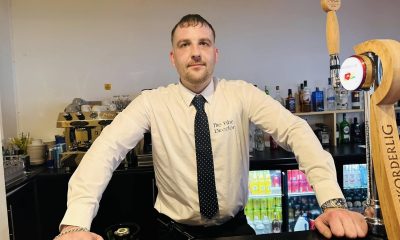
Milford Haven drug dealing pub boss who boasted of ‘best coke around’ jailed
-

 Health3 days ago
Average of 18 deaths a week in Wales linked to A&E delays, figures reveal
-

 Sport5 days ago
Haverfordwest secure bonus-point win over title-chasing Tumble
-

 Local Government4 days ago
Milford Haven set for £200m investment with schools, leisure centre and rail upgrade
-

 Community1 day ago
Hero female officer keeps job after sexual touching finding