


News
Valero Oil Refinery came close to ‘catastrophic incident’


EXCLUSIVE REPORT
A POTENTIALLY ‘catastrophic incident’ took place at Valero’s Pembroke Oil Refinery last year involving leaking gas and an ignition source, the Pembrokeshire Herald can reveal.
This newspaper has been contacted by a number of workers at the site who have told us that it is only ’pure luck’ which prevented leaking gases from being blown into an ignition source, believed to be a furnace, which could have led to another lethal incident at the plant.
Valero have confirmed that they are working with statutory authorities who are investigating the event, which occurred on November 30 last year. It involved the Alkylate Iso-Stripper, which creates Alkylate – a premium component of petrol that has exceptional anti-knock properties and is clean burning. The Iso-Stripper is a high risk area of refining, and uses either sulphuric acid or hydrofluoric acid as a catalyst for its chemical reactions.
The oil refinery’s management told The Herald that it is working with ‘continued co-operation’ with regulators, and highlighted in a statement that ‘no personnel were injured’ and that ‘there was no impact on the community’.
Valero, which says it is one of the leading employers in south Wales, added that they are unable to comment further during the period of investigation.
Valero, which says it is one of the leading employers in south Wales, added that they are unable to comment further during the period of investigation.
HSE INVESTIGATES
A Health & Safety Executive spokesperson told The Herald in a prepared statement: “We are aware of an incident at the Valero Energy Limited Pembroke Refinery in November 2017 which was reported to the Health and Safety Executive under RIDDOR (Reporting of Injuries, Diseases and Dangerous Occurrences Regulations 2013).
“We can confirm that the incident took place on the Alkylate Iso-Stripper, and is being investigated.
“No enforcement action has been taken, though the investigation remains ongoing.”
“We can confirm that the incident took place on the Alkylate Iso-Stripper, and is being investigated.
“No enforcement action has been taken, though the investigation remains ongoing.”
PUSHING THE PLANT HARDER
Our sources working at the refinery told The Pembrokeshire Herald, on condition of anonymity, that the incident last year was due to the refinery being pushed harder than before. This, combined with the ageing infrastructure at the site, lead to the close call.
He told us: “They have increased output which puts more strain on the equipment.”
Another employee at the site, who also did not wish to be named, confirmed this. He said that since the refinery was bought from Chevron, it is being stretched and running 20-30% harder than before.
This, combined with a lack of maintenance, is making it an ‘accident waiting to happen’, he added.
He told us: “They have increased output which puts more strain on the equipment.”
Another employee at the site, who also did not wish to be named, confirmed this. He said that since the refinery was bought from Chevron, it is being stretched and running 20-30% harder than before.
This, combined with a lack of maintenance, is making it an ‘accident waiting to happen’, he added.
RECENT LEAK OF GAS
Valero confirmed that last month’s activation of emergency sirens was in response to another leak of gas at the plant. But it is not currently known from which part of the refinery.
Readers contacted The Pembrokeshire Herald by telephone and social media on the morning of March 29 concerned after hearing a warning sound, which started at exactly 8.01am.
On contacting the refinery the Herald was initially told by a security worker: “We have no information at the moment, we are not sure if it’s a test or not.”
Looking to clarify his answer, our reporter asked: “So you are not sure if it’s a test or a real emergency?”
The Herald was told: “That’s right”
It is understood that there was confusion due to previous false alarms.
Later this newspaper received a statement from Valero spokesperson and Refinery Public Affairs Manager, Stephen Thornton, who said: “At 8:00 am on 29th March 2018, the alarm sounded on site due to identification of a minor gas leak.
“Operations responded promptly to isolate and de-pressure the line to stop the leak.”
Readers contacted The Pembrokeshire Herald by telephone and social media on the morning of March 29 concerned after hearing a warning sound, which started at exactly 8.01am.
On contacting the refinery the Herald was initially told by a security worker: “We have no information at the moment, we are not sure if it’s a test or not.”
Looking to clarify his answer, our reporter asked: “So you are not sure if it’s a test or a real emergency?”
The Herald was told: “That’s right”
It is understood that there was confusion due to previous false alarms.
Later this newspaper received a statement from Valero spokesperson and Refinery Public Affairs Manager, Stephen Thornton, who said: “At 8:00 am on 29th March 2018, the alarm sounded on site due to identification of a minor gas leak.
“Operations responded promptly to isolate and de-pressure the line to stop the leak.”
SAFETY A ‘GUIDING PRINCIPLE’
In a statement prepared by Valero for The Pembrokeshire Herald, the company said: “Safety is the guiding principle for all that we do at Pembroke Refinery, and Valero takes strong exception to any suggestions otherwise. As one of Europe’s largest and most complex refineries, our highly skilled workforce at Pembroke Refinery operates according to comprehensive and rigorous management systems and standards of safety.
“Valero does not comment on operational activities at Pembroke Refinery, however all our activities are conducted within approved regulatory permit limits. All refinery work is undertaken according to stringent regulatory, industry and company standards that ensure the continued effective integrity of the plant, regardless of working capacity. Our advanced and sophisticated operational, inspection and maintenance procedures at the refinery are underpinned by a safety culture fostered across all our personnel, focused on recognising and eliminating hazards before they occur.
“In addition to our own focus on safety, Valero also actively works alongside public bodies such as the Health and Safety Executive, emergency services, the local authority and other agencies to manage risk. This includes Valero’s continued cooperation with regulators regarding an ongoing investigation into an event that occurred in November 2017. No personnel were injured during this incident and there were no impacts on the community, however we are unable to comment further during this investigation.
“Anyone making enquiries regarding Valero’s operations, including our site alarm system, should ask to speak to a member of Valero’s Policy, Government & Public Affairs Department.
“All calls received at the refinery are dealt with by our dedicated security team who follow protocol of not confirming refinery operational details, but will pass your details on if requested.”
“In addition to our own focus on safety, Valero also actively works alongside public bodies such as the Health and Safety Executive, emergency services, the local authority and other agencies to manage risk. This includes Valero’s continued cooperation with regulators regarding an ongoing investigation into an event that occurred in November 2017. No personnel were injured during this incident and there were no impacts on the community, however we are unable to comment further during this investigation.
“Anyone making enquiries regarding Valero’s operations, including our site alarm system, should ask to speak to a member of Valero’s Policy, Government & Public Affairs Department.
“All calls received at the refinery are dealt with by our dedicated security team who follow protocol of not confirming refinery operational details, but will pass your details on if requested.”
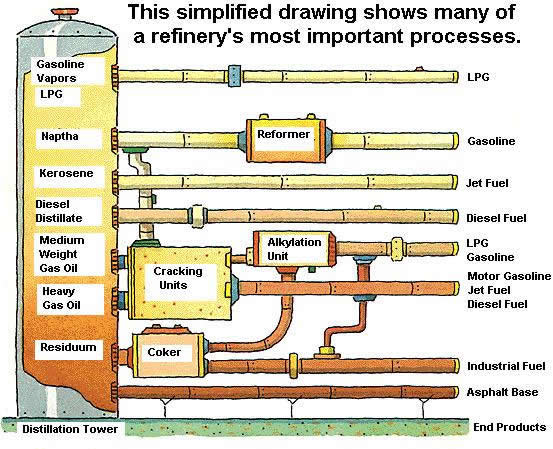
Akylation unit: The location in the refinery where ‘dangerous incident’ occurred
OIL REFINING – A HAZARDOUS ENTERPRISE
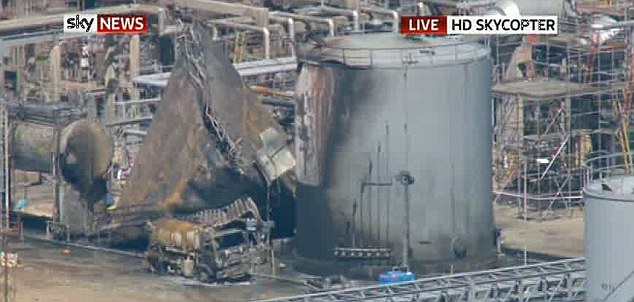
Refinery fire: 2011 accident tragically claimed four lives
It is not the first time that Valero have had the safety of their workplace questioned, nor the first time an incident has affected the Pembroke refinery.
Valero were fined £400,000 at Swansea Crown Court after an incident involving a walkway collapsing and an employee left hanging from ropes at their refinery in Pembroke. It was found that Valero, the American oil company which purchased the Pembroke site in a £447m deal in March 2011, failed to follow procedure and carry out a comprehensive risk assessment on the access tower of which the gangway collapsed seriously injuring a worker.
It was said in court that the maintenance contractor of Valero had their suggestions ignored over the potential risks of the access tower, as they raised the point that there was a ‘potential fatal accident waiting to happen.’ Valero were also seen to give inadequate training and instructions to employees, regarding the safe operation of the tower and gangway.
The incident took place on March 5 2012, as David Thomas, an operator at the refinery, was making his way towards an unloading oil tanker via the gangway of the access tower. The walkway suddenly collapsed and he was dropped 3.5 metres. Mr Thomas, 55, was left swinging from wire rope that had wrapped round his legs, but, as a keen rock climber, was able to distribute the weight from his legs by gripping a cross beam. Despite this, he suffered a dislocated knee as well as lacerations and fractures. Mr Thomas was released from hospital after 17 days, but soon developed arthritis, and ultimately didn’t return to work.
It was deemed that three other related incidents at the refinery previous to the gangway accident, in August 2010, February 2011 and September 2011, were poorly investigated and that a proper checklist assessment was not carried out.
At the time of the infamous explosion in June 2011, which resulted in four fatalities, the refinery was still operated by Chevron, yet the deal to sell the refinery to Valero had already been organised. In November 2015, the Crown Prosecution Service ultimately decided against pressing charges of corporate manslaughter.
Valero were fined £400,000 at Swansea Crown Court after an incident involving a walkway collapsing and an employee left hanging from ropes at their refinery in Pembroke. It was found that Valero, the American oil company which purchased the Pembroke site in a £447m deal in March 2011, failed to follow procedure and carry out a comprehensive risk assessment on the access tower of which the gangway collapsed seriously injuring a worker.
It was said in court that the maintenance contractor of Valero had their suggestions ignored over the potential risks of the access tower, as they raised the point that there was a ‘potential fatal accident waiting to happen.’ Valero were also seen to give inadequate training and instructions to employees, regarding the safe operation of the tower and gangway.
The incident took place on March 5 2012, as David Thomas, an operator at the refinery, was making his way towards an unloading oil tanker via the gangway of the access tower. The walkway suddenly collapsed and he was dropped 3.5 metres. Mr Thomas, 55, was left swinging from wire rope that had wrapped round his legs, but, as a keen rock climber, was able to distribute the weight from his legs by gripping a cross beam. Despite this, he suffered a dislocated knee as well as lacerations and fractures. Mr Thomas was released from hospital after 17 days, but soon developed arthritis, and ultimately didn’t return to work.
It was deemed that three other related incidents at the refinery previous to the gangway accident, in August 2010, February 2011 and September 2011, were poorly investigated and that a proper checklist assessment was not carried out.
At the time of the infamous explosion in June 2011, which resulted in four fatalities, the refinery was still operated by Chevron, yet the deal to sell the refinery to Valero had already been organised. In November 2015, the Crown Prosecution Service ultimately decided against pressing charges of corporate manslaughter.












Defendant admitted using Xbox without informing police as required under court order
ANTHONY COOMBES, aged 26, of Sand Banks, Broad Haven, appeared before Llanelli Magistrates’ Court on Thursday (Mar 20) charged with breaching a sexual harm prevention order.
The court heard that between February 26 and March 19, 2026, at Haverfordwest, Coombes repeatedly breached the order by using an Xbox device without informing police within three days, as required.
The offences relate to a sexual harm prevention order imposed at Swansea Crown Court on October 20, 2021.
Coombes indicated guilty pleas to the offences at the first hearing.
Magistrates committed the case to Swansea Crown Court for sentence.

He was remanded in custody ahead of the next hearing, which is due to take place at 9:00am on Friday, April 3, at Swansea Crown Court.
The court refused bail on the grounds that he was likely to offend, citing the nature and seriousness of the offences and his previous record and character.
A pre-sentence report was ordered.

Police say death not suspicious as 46-year-old arrested over alleged Class A drug supply
A MAN has died following a medical emergency at a property in Haverfordwest, police have confirmed.
Emergency services were called at 3:18pm on Wednesday (March 18) after a report of a medical incident.
A man was pronounced dead at the scene.
Dyfed-Powys Police said the man’s next of kin have been informed and are being supported by officers.
The death is not being treated as suspicious at this time.
However, police confirmed that a man, aged 46, was arrested on suspicion of being concerned in the supply of Class A drugs.
He has since been released under investigation while enquiries continue.
No further details about the deceased have been formally released.

FOUR people from Mynyddygarreg, Kidwelly, have been ordered to pay more than £129,000 following a successful prosecution for illegal dog breeding.
At Swansea Crown Court on Tuesday (Mar 10), before His Honour Judge Thomas KC, Stacey May June Edwards, Peter John Edwards, Sian Eleri Thomas and David Malcolm James Thomas, all of Sea Breeze, Mynyddygarreg, pleaded guilty to offences under the Breeding of Dogs (Wales) Regulations 2014.
The court imposed confiscation orders totalling £129,873.41 under the Proceeds of Crime Act across the four defendants. They were also ordered to pay £8,000 in costs, while each defendant received a £2,000 fine.
The investigation began in April 2021 after Carmarthenshire County Council’s Animal Health team received an enquiry from Peter Edwards about obtaining a dog breeding licence. Although licensing guidance was provided and a partial application was submitted in February 2022, this was later withdrawn.
In March 2024, the council received a complaint that puppies were being advertised for sale without the required licence. Officers subsequently contacted online advertising platforms and issued data requests to assess the scale of activity.
Analysis of records from Pets4Homes, Freeads and Gumtree revealed multiple litters being advertised by members of the same household.
Correspondence under the Police and Criminal Evidence Act confirmed that up to 25 dogs were kept at the property, including between 16 and 19 breeding females.
While some defendants claimed joint ownership of the dogs, others attempted to minimise their involvement.
The Herald understands that numerous puppy advertisements were posted between July 2020 and April 2025, demonstrating a sustained pattern of unlicensed breeding.

Carmarthenshire County Council’s Cabinet Member for Climate Change, Decarbonisation and Sustainability, Cllr Aled Vaughan Owen, said: “This case demonstrates the council’s firm stance against unlicensed and illegal dog breeding.
“These regulations are in place to protect animal welfare and ensure that breeding activities are subject to proper oversight. The scale of activity uncovered at this property was entirely unacceptable, and we welcome the court’s decision to issue significant confiscation orders under POCA.”
He added: “We urge anyone with concerns about illegal dog breeding to report it. Our Animal Health officers will continue to investigate thoroughly and take action against those who disregard the law.”

Residents are reminded that anyone breeding and selling dogs must comply with licensing regulations designed to protect both animal welfare and consumers.



Crime18 hours ago
Publican jailed for six years for supplying cocaine and cannabis
Milford Haven man sentenced at Swansea Crown Court following drug dealing operation A MILFORD HAVEN publican has been jailed for...


Local Government20 hours ago
Poverty summit highlights support efforts across Pembrokeshire
A SUMMIT bringing together key organisations from across Pembrokeshire has highlighted both the scale of local poverty and the work...


Education2 days ago
Milford Haven school plans unveiled but funding not yet secured
PLANS for a new £100 million school in Milford Haven have been unveiled, but the project has not yet secured...


News2 days ago
Council unveils plans for new state-of-the-art secondary school in Milford Haven
PEMBROKESHIRE COUNTY COUNCIL has revealed plans for a new state-of-the-art school in Milford Haven, promising modern, inspiring learning spaces for...


Health2 days ago
NHS waiting list falls — but cancer delays and diagnostic backlog worsen
Record progress claimed by Welsh Government as critics warn key targets are still being missed THE NHS in Wales has...


Crime3 days ago
Rapist jailed after ‘abhorrent’ attacks on woman and children
Haverfordwest man told police “women won’t have sex without force” A HAVERFORDWEST man who raped a woman and a young...


News3 days ago
Reform secures first Pembrokeshire councillor in Hakin by-election win
Late Reform candidate takes seat as independent surge and Labour withdrawal shape contest REFORM UK candidate Scott Thorley has won...


News3 days ago
Scott Thorley elected as Pembrokeshire’s first Reform councillor
REFORM UK candidate Scott Thorley has won the Hakin by-election after securing 179 votes. The full result is as follows:...


News4 days ago
Police confirm man has died after being recovered from River Cleddau
Major emergency response in town centre after concerns raised for man in water A MAN has died after being recovered...


Community4 days ago
Davies and Kurtz urge groups to seek employability funding
Community organisations in Pembrokeshire encouraged to apply for new grants supporting skills and job access LOCAL Senedd Members Samuel Kurtz...
-

 News7 days ago
Rayner and Lammy visit Wales to discuss justice and community safety
-

 News6 days ago
Fishguard linked to allegations in Many Tears Animal Rescue investigation
-

 News4 days ago
Emergency services flood Haverfordwest after reports of person in river
-

 Local Government7 days ago
Investigation confirmed after inspectors visit Many Tears Animal Rescue
-

 Crime3 days ago
Mother given community order after admitting child cruelty offence
-

 Business7 days ago
Oil firm praised for putting customers first during price surge
-

 Community7 days ago
Town hall takeover plan questioned as cost figures conflict
-

 News4 days ago
Senedd vote to ban greyhound racing hailed as ‘landmark moment’ by charities