


News
Are there ‘gender neutral’ toilets in local schools?


PEMBROKESHIRE COUNTY COUNCIL is denying that it has ‘gender neutral’ toilet facilities in five of its schools, explaining that they are unisex wash facilities with the toilet cubicles themselves being designated male or female.
Gelliswick Church In Wales School in Milford Haven, Penrhyn Church In Wales School in Hundleton, Ysgol Bro Gwaun Comprehensive School in Fishguard, Henry Tudor School in Pembroke, and Milford Haven Comprehensive School all have unisex wash facilities on site.
The change in policy has sparked heated discussion on social media as local children go back to school, many of whom are attending new build schools which are part of the 21st Century Schools programme.
Many Pembrokeshire pupils are seeing this new kind of facility for the first time this week. It is a trend across the whole of the UK, recently hitting the national headlines.
According to a recent BBC report, there were many critics of the plan to introduce these kids of washrooms, not least the Department for Education which ruled that ‘the time is not right for the introduction of unisex toilets in our schools’, saying they were technically illegal.

Parents also expressed concerns about young people being too embarrassed to use unisex toilets – or, somewhat on the other end of scale, that the cubicles could be used for sexual liaisons between pupils.
But there is another motivation – aside from school cleaners desperately seeking the end of soggy toilet paper stuck to ceilings – and that’s cost.
Unisex toilets with this design are often cheaper to build and maintain.
A spokesman for Pembrokeshire County Council told The Herald: “We do not have ‘gender neutral’ toilets in Pembrokeshire schools.
“There are several schools in Pembrokeshire with what are termed ‘unisex wash facilities’ whereby cubicles within the toilet blocks are designated male / female and are not shared.
“The rows of cubicles, which are separated by shared wash facilities, are equipped with floor to ceiling doors for privacy.
“This toilet layout is common in most new build schools and is also believed to be an effective tool in preventing bullying and bad behaviour.

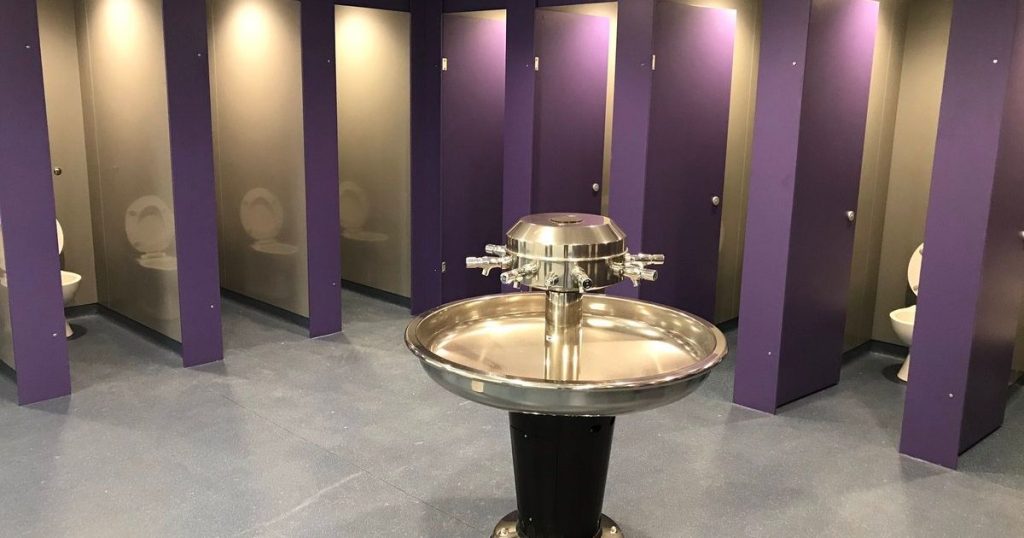
New idea: Unisex washroom at a school in Cardiff
VOICE OF THE PUBLIC
The Pembrokeshire Herald asked for comments online.
Sarah Jane Howlin said: “I honestly don’t see an issue with it, I’ve been and seen these facilities in Milford haven comp, there is plenty of space between the boys section of toilets and the girls, you cannot look over or under the doors, I honestly don’t know why people are kicking up a fuss again about it, they were there last year and everyone kicked up a fuss then. Nothing was done then nothing will be done now! Jesus there’s more important things going on in that school, there are also another set of toilets if people don’t feel comfortable using the unisex ones!
Tanya Rosemeyer said: “Well, it’s very PC as everyone seems very concerned about gender neutral everything just now. I wonder how the girls will feel when it’s their period though as when you’re a teenager that is like the most embarrassing time EVER and it’s bad enough without sharing facilities. It’s probably an invitation to “school time shenanigans” in the high school if the cubical are ultra private and no one would blink at both sexes coming out of the loos at the same time. As a parent if the kids think it’s fine and are comfortable with it I wouldn’t shout about it.”
Jessica Fox said: “Communication is free, why didn’t the school think to inform the parents, mentally prepare our 11yr old daughters for sharing toilets with 16-year-old boys.”
Tamsin Mathias added: “The only thing that I could see potentially being an issue in comprehensive schools in when girls need to use to bathroom to change a sanitary towel for instance. I remember in my teens it was a very private thing for us, and wasn’t talked about very much in front of boys for fear of being shamed.
“Now, maybe the problem should be solved by being more open in classes about women’s bodies (even some male teachers would shudder when you told them you HAD to go the toilet for “lady reasons”), and then there wouldn’t be so much of a stigma.
“But I remember wanting the toilets to be empty before I got out a fresh sanitary towel because they’re not packed in quiet packaging, and it can sometimes take a while.
“I think you have to judge it on how the students feel, I suppose.
“Preventing bullying can only work by speaking to the children and helping them understand the impact it can have, in my opinion. Shared toilets won’t prevent bullying, but speaking about bullying in classrooms and making students aware of the consequences might.”











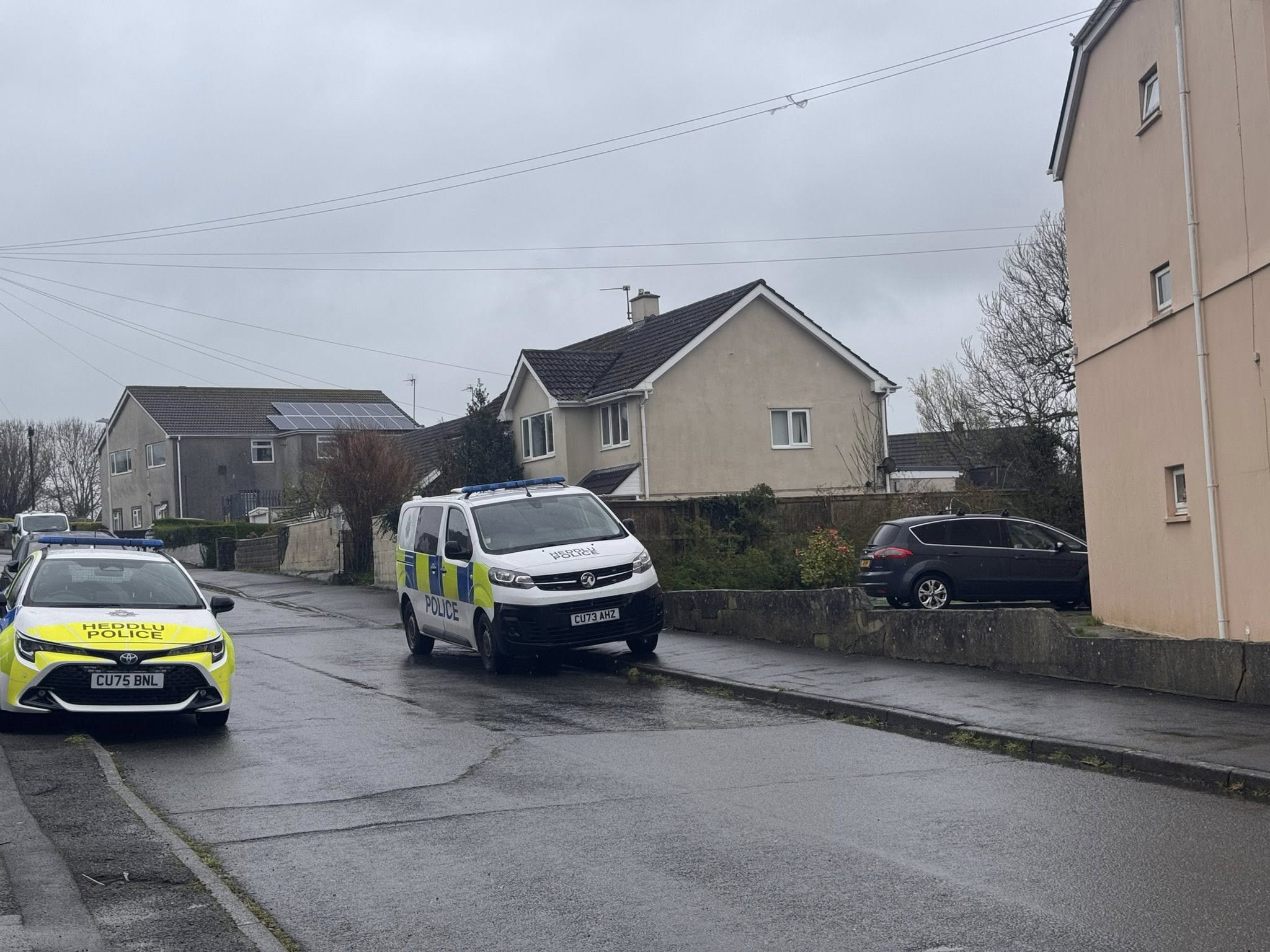
A POLICE officer discharged a firearm during an incident in Milford Haven on Saturday evening (March 28), prompting an investigation and referral to the police watchdog.
Dyfed-Powys Police were called to reports of disorder at Bunkers Hill at around 5:45pm, where an individual was believed to be in possession of a knife. Armed officers were deployed to the scene.
During the incident, at 6:32pm, a single shot was fired by an officer. Police have confirmed that the firearm was not directed at any person and that no injuries were reported.
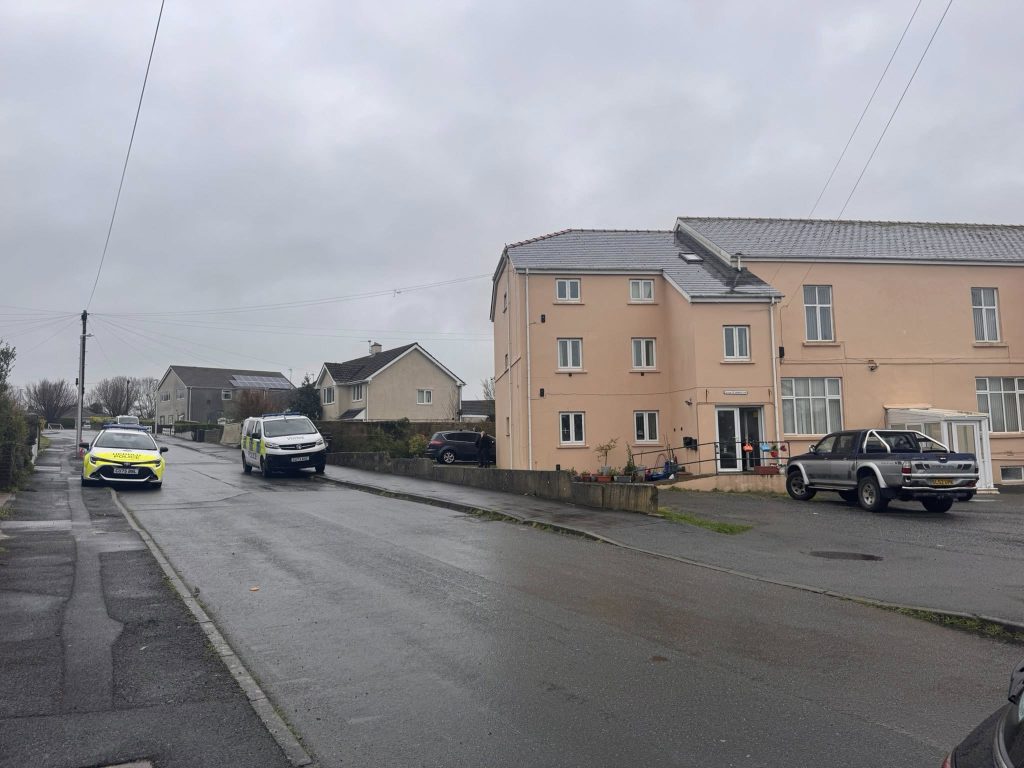
The circumstances leading up to the discharge of the firearm have not yet been confirmed.
When Herald reporters attended Bunkers Hill after 2:00pm on Sunday (March 29), a significant police presence remained in the area. Several police vehicles were at the scene, with officers seen going in and out and carrying out checks around the rear of a large block of flats as enquiries continued.
The force has voluntarily referred itself to the Independent Office for Police Conduct, which will determine whether the matter should be investigated independently or referred back to the force.
Deputy Chief Constable Gary Phillips said: “We have initiated a prompt investigation into the circumstances that led to the firearms being discharged, and have referred the incident to the Independent Office for Police Conduct.
“We will work with them as we continue to establish the circumstances leading up to the discharge.”
A police presence remains at Bunkers Hill as enquiries continue.


BASSETTS Motor Group has donated an electric van to support the vital work of Wales Air Ambulance, providing a major boost to the charity’s day-to-day fundraising operations.
The South West Wales-based company has gifted a Citroën e-Berlingo for use until the end of the year — marking the first time the business has made a significant gift in kind to the charity.
Staff from Bassetts recently visited the charity’s headquarters in Dafen to hand over the vehicle, where they met with a medic and were given an insight into the critical care delivered by the service, including a tour of a rapid response car.
Ashley White, of Bassetts Motor Group, said: “Being a South West Wales-based business, we’ve seen first-hand the incredible work that Wales Air Ambulance does.
“We knew the charity relies heavily on fundraising and donations, so when we were looking for a cause to support, it felt like a natural choice.”

The van has been branded with the charity’s logo and information on how the public can support its lifesaving lottery.
Explaining the choice of vehicle, Ashley added: “We’re strong advocates of electric vehicles. Getting people behind the wheel often changes perceptions and helps overcome misconceptions about going electric.
“Citroën offered us a deal that made it possible for us to provide the van in this way, and we felt it would be perfectly suited to the charity’s fundraising needs.”
The Wales Air Ambulance delivers consultant-led emergency care across the country, bringing hospital-level treatment directly to patients and, where necessary, transferring them swiftly to the most appropriate specialist centres. This approach can save critical time and significantly improve survival and recovery outcomes.

The service operates through a unique partnership between the charity and the NHS, with the Emergency Medical Retrieval and Transfer Service providing highly skilled consultants and critical care practitioners who work onboard its aircraft and rapid response vehicles.
As a pan-Wales service, its crews cover the entire country, delivering emergency care wherever it is needed.
Nina Rice, Head of Fundraising High Value Partnerships at Wales Air Ambulance, said: “We are incredibly grateful to Bassetts Motor Group for this generous gift in kind.

“The use of the electric vehicle will make a real difference to our fundraising efforts, helping us reach more communities and raise vital funds.
“As a local company, Bassetts understands just how important our service is to people across Wales. This support will directly help us continue our lifesaving work.”
The charity must raise £13 million every year to keep its helicopters in the air and its rapid response vehicles on the road.
For more information, visit the Bassetts Motor Group website.

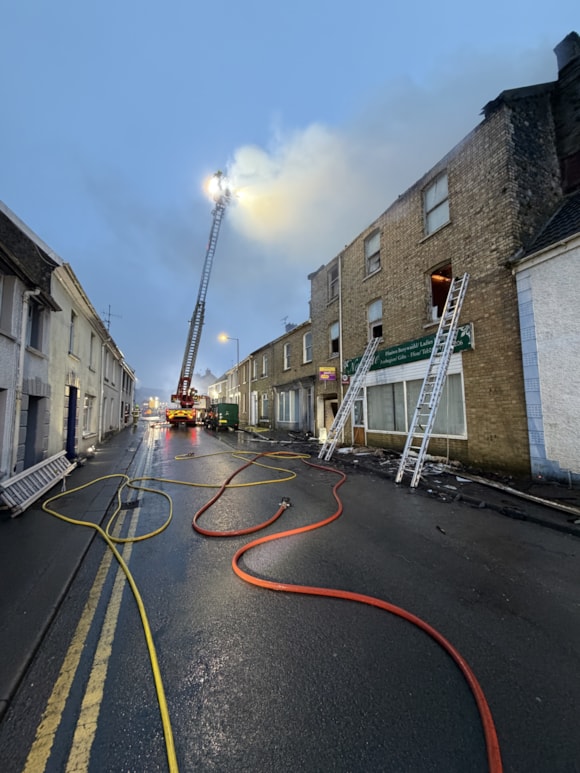
RESIDENTS forced to evacuate their homes following a major fire in Kidwelly have now been allowed to return, as emergency services confirm the scene has been stood down.
The blaze broke out at a property on Lady Street in the early hours of Tuesday (March 24), with emergency services called at around 4:20am. Several neighbouring homes were evacuated as a precaution while firefighters tackled the incident and assessed the safety of surrounding buildings.
In the latest update, Dyfed-Powys Police confirmed that officers have now left the scene and displaced residents were able to return to their properties on Thursday evening (March 26), following work to make the affected building safe.
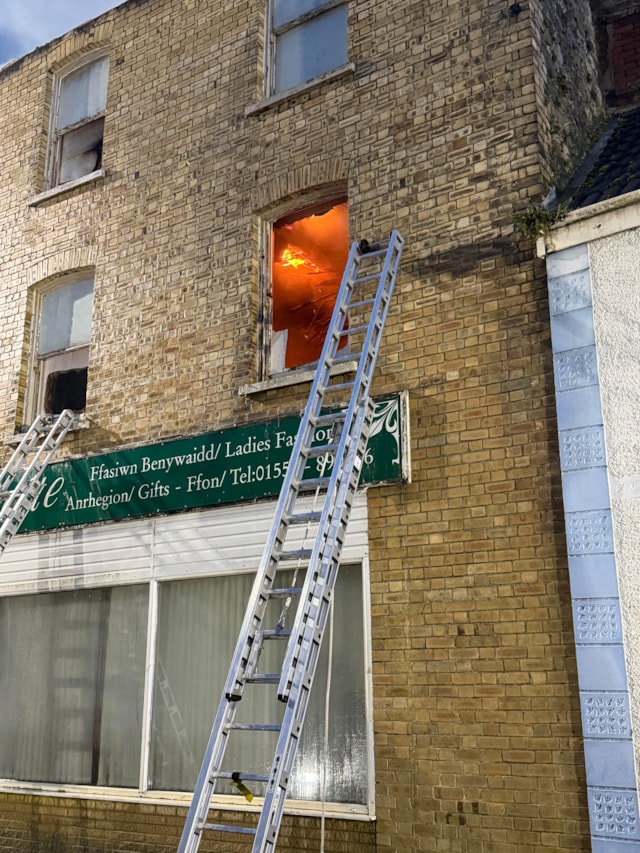
The incident caused significant disruption in the town, with Lady Street remaining closed while further work is carried out to ensure the safety of the highway and surrounding structures.
Emergency services, including Mid and West Wales Fire and Rescue Service, were on the scene for several hours during the initial response. Crews were understood to have dealt with a serious property fire, prompting a large-scale emergency operation in the centre of the town.

While the immediate danger has now passed, authorities have confirmed that investigations into the cause of the fire are ongoing. Police are continuing to appeal for witnesses or anyone with relevant information to come forward.
Officers are particularly keen to hear from anyone who may have CCTV, doorbell, or dashcam footage from the area between 11:00pm on Monday (March 23) and 4:00am on Tuesday (March 24).
Anyone with information is urged to contact police quoting reference 027 of 24/3, either via 101, online, or anonymously through Crimestoppers.
Authorities thanked residents and the wider community for their patience during the incident, which saw homes evacuated and roads closed while emergency services carried out their work.
Further updates are expected as the investigation progresses.


Crime4 minutes ago
Gunshot fired by police during incident in Milford Haven
A POLICE officer discharged a firearm during an incident in Milford Haven on Saturday evening (March 28), prompting an investigation...


Community1 day ago
Three Amigos Easter Run roars through Pembrokeshire
MOTORCYCLE enthusiasts turned out in force today (Saturday, March 28) as the popular Three Amigos Easter Run returned to the...


Education2 days ago
Ysgol Henry Tudor reassures parents over Sikh ceremonial kirpan
School says religious item worn by pupil is secured, symbolic and non-functional YSGOL HENRY TUDOR has moved to reassure parents...


Crime3 days ago
Teen jailed after starting fire while others slept
Fire set in shared home left sleeping residents at risk and caused £130,000 damage A TEENAGER who started a fire...

Health3 days ago
GP crisis driving NHS pressure in Wales, Senedd report warns
Falling GP numbers and funding gaps blamed for worsening hospital delays THE NHS crisis highlighted earlier this week is being...


News4 days ago
Reform reveals west Wales candidates for Senedd battle
Monkton councillor tops Pembrokeshire list as party confirms Carmarthenshire names and includes Haverfordwest councillor in unwinnable Swansea spot REFORM UK...


Health4 days ago
Clash over Withybush Hospital services as Paul Davies challenges First Minister
A HEATED exchange in the Senedd has laid bare growing tensions over the future of hospital services in west Wales....


Crime5 days ago
Police stop car in Pennar as three arrested in drugs investigation
Suspected drug driver report leads to major police response and multiple arrests DRAMATIC scenes were reported in Pennar on Monday...


Business5 days ago
New pilot vessel Llanion arrives at Milford Haven
State-of-the-art 22-metre craft marks reset after £3.6m pilot boat controversy THE PORT OF MILFORD HAVEN has taken delivery of a...


Community5 days ago
Sycamore Gap legacy tree to take root in Pembrokeshire landscapes
A SAPLING grown from the famous Sycamore Gap tree is set to become part of Wales’ protected landscapes — with...
-

 Business5 days ago
Taxi fare shock in Milford Haven as drivers switch to meters
-

 Business6 days ago
Could Primark be coming to Haverfordwest? Major retailer in talks for former Wilko site
-

 Sport7 days ago
Haverfordwest secure bonus-point win over title-chasing Tumble
-
 News4 days ago
Welsh Government outlines progress on flood resilience plans
-

 Health5 days ago
Average of 18 deaths a week in Wales linked to A&E delays, figures reveal
-

 Crime6 days ago
Armed police attend knife-related incident in Fishguard street
-

 Community7 days ago
Broad Haven volunteers secure ‘national asset’ status for nature reserve
-

 Local Government6 days ago
Milford Haven set for £200m investment with schools, leisure centre and rail upgrade