

Education
A practical lesson for primary school pupils on the problem of plastic pollution

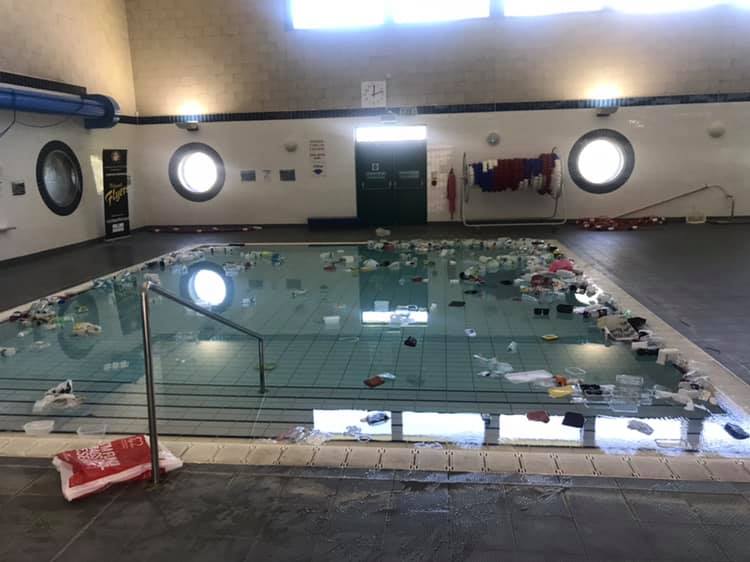
A PEMBROKESHIRE primary school came up with a novel way to educate its young pupils about the problems of plastic pollution.
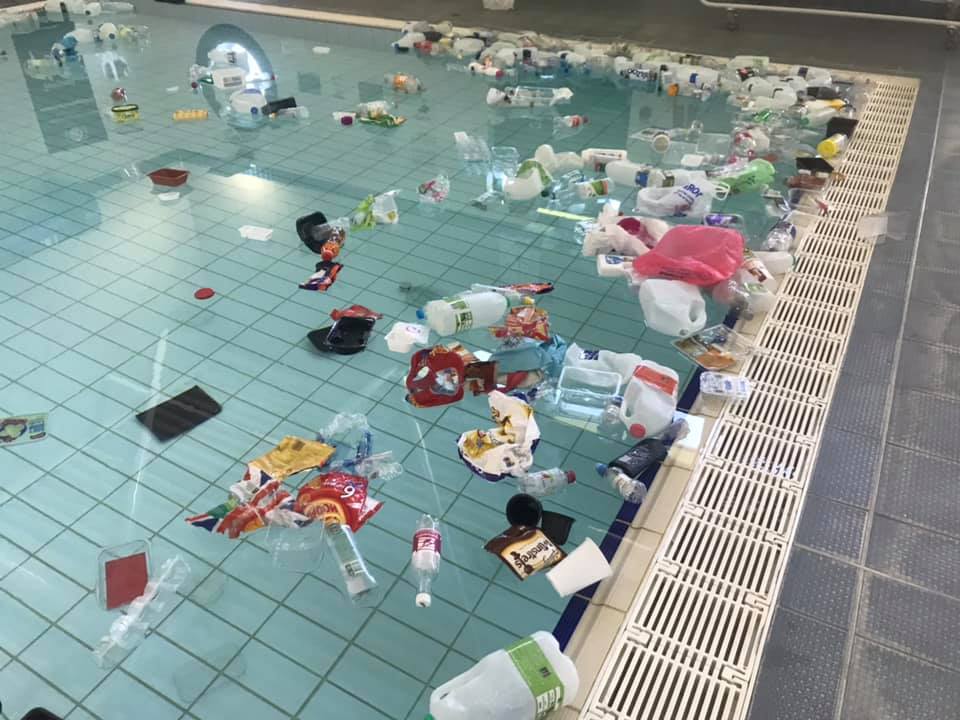
Goodwick CP School took its year 2 and 3 pupils to Fishguard Leisure Centre where the swimming pool was filled with plastic waste. The lesson was the idea of class teacher Miss Davies,
whose is teaching the effect of plastic on the environment and particularly the sea.
The children worked together to clean the pool of single use plastic, collecting more than ten bags of rubbish.
The school posted on Facebook: “Miss Davies’ class had a bit of a shock when they arrived at the swimming pool for a swimming lesson today!
“The pool was unfortunately full of plastic.

“It gave the children an insight into what it must be like for marine life living amongst plastic pollution.
“They then worked together to clean the pool.
“Thank you to Richards Bros for getting the children there and back, and to the staff of the leisure centre for allowing us to do this.”
Photos of the lesson were shared nearly 3,000 times from the school’s Facebook page.


WELSH Government funding choices are forcing headteachers to make “difficult decisions” about the support they can provide to vulnerable pupils, opposition leaders have warned.
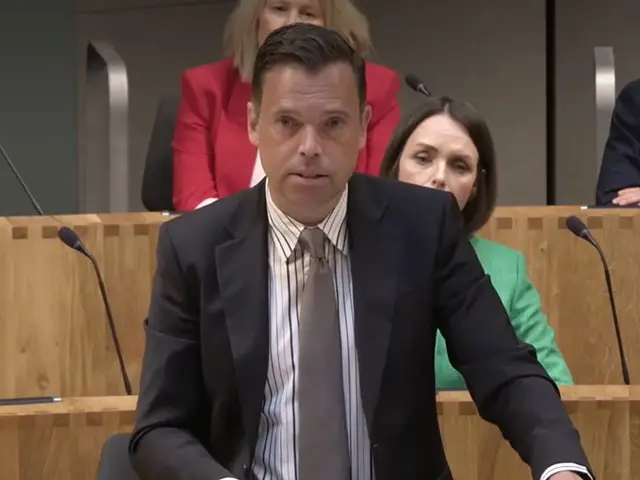
During First Minister’s Questions on Tuesday July 7, interim Welsh Labour leader Ken Skates called on Plaid Cymru’s First Minister Rhun ap Iorwerth to avoid “abdicating responsibility for the most vulnerable children in Wales”.
Recent extra funding for additional learning needs (ALN) in England mean £340 million is available to Wales in consequential funding.
This is not ring-fenced – meaning the Welsh Government can use the extra cash as it sees fit.
Mr Skates noted Plaid Cymru’s 2024 acknowledgment that schools are forced to make difficult decisions about the support they can provide – quoting Mr ap Iorwerth as saying: “Wales can do better than this. Under Plaid Cymru, the pupils who need support will receive it.”
Mr Skates therefore called on the First Minister to reveal why not “a single extra penny” was allocated towards ALN in the supplementary budget, which was announced last month.
Describing creating a “sustainable” ALN framework as a “priority” for his government, Mr ap Iorwerth told the Labour leader that he is as “keen” as he is to work on ALN.
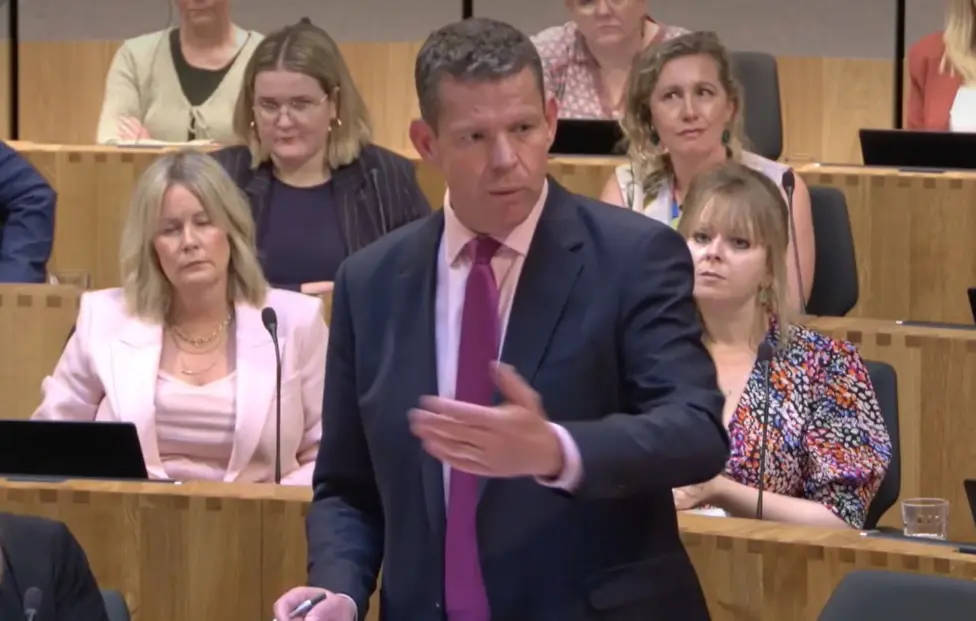
However, the First Minister also acknowledged the “tight constraints” within which his government must work, noting the “hundreds of millions of pounds of overspend” that his government “inherited from the last”.
Mr Skates called for the First Minister to avoid “abdicating responsibility for the most vulnerable children in Wales”.
In response, the First Minister said: “The problems that we face in ALN have been caused by 27 years of Labour education ministers. We want to work with this current group and anybody else to make sure that we build up sustainability for the future.
“The plans that we have in the supplementary budget stick with the previous government’s spending plans, whilst making allocations in areas I know the member’s party supports.
“I hope we can make positive progress on this, because we owe it to the people who are quite right in pointing out that we have a depth of problem in ALN in Wales and in England that deserves to be resolved. But it’s not going to be resolved by a one-off payment.”

It is not the first time the First Minister has faced questions over additional ALN funding, with the Welsh Conservatives and Reform UK raising the issue in previous sessions of First Minister’s Questions.
Mr Skates’ call for extra funding has echoed that of Caerphilly Council leader Jamie Pritchard and the local authority’s Labour group.

Cllr Pritchard said: “The Labour group on Caerphilly Council are calling on the Welsh Government to allocate consequential funding from the UK Labour Government to support children and young people with additional learning needs in Wales.
“There can be no raid on much needed additional learning needs provision.”
More than 3,500 school pupils across Caerphilly County Borough have ALN.
The council’s Labour group has said its “preparing in advance” for a Welsh Government U-turn.
Cllr Carol Andrews, Caerphilly Council’s cabinet member for education, said: “All of our schools have experienced increasing pressures in supporting learners with ALN. We feel that this funding consequential has to come to schools to the direct benefit of pupils with ALN.
“In addition to the specialist resource bases already approved by cabinet, we continue to experience significant growth in demand for ALN support. Should Welsh Government make additional this funding available, we already have plans of what will be done.”

Cllr Pritchard added: “I think the Welsh Government will be forced to U-Turn, and a U-Turn is no bad thing when it is the right thing to do.
“Our job as leaders of the 22 local authorities, is to ensure the voice of those local authorities are represented to Welsh Government. We are absolutely united in calling for the consequential funding to go straight to support our most vulnerable learners”.
The Welsh Local Government Association, which represents Wales’ 22 councils, has also expressed concern that funding for ALN support is not keeping up with the demand.
It says ALN costs are rising sharply, accounting for more than a quarter of all school budget pressures.
Councils say the growing complexity of need, alongside learner transport and workforce costs, is creating unsustainable financial strain.
According to a report by ITV Wales, the Welsh Government are in talks with Labour over ALN funding as it seeks support to pass its supplementary budget.
The Senedd is set to debate and vote on the budget on Tuesday July 14.

Local school placements helped Millie Brace gain the experience and connections needed to begin her career at Templeton Primary School
A SAUNDERSFOOT student is celebrating after graduating from the University of Wales Trinity Saint David and securing a teaching job in Pembrokeshire before completing her degree.
Millie Brace graduated this week with a BA in Primary Education with Qualified Teacher Status from UWTSD’s Carmarthen campus.
She will begin her first teaching post at Templeton Primary School in September.
Millie said the opportunity to remain close to home and complete placements in Pembrokeshire schools had been a major factor in her decision to study at UWTSD.
“I chose UWTSD because it allowed me to stay close to my family and continue living at home while studying, which was important to me,” she said.
“Another key reason was the opportunity to complete local teaching placements.
“I knew how competitive teaching jobs can be in Pembrokeshire, so gaining experience in local schools was a great way to build professional connections and develop an understanding of the schools and communities I want to work in.”
Her placements allowed her to gain experience in a range of classrooms and helped her develop the confidence needed to apply for teaching roles.
“Before graduating, I was delighted to secure a teaching position at an amazing primary school in my local area,” she said.
Millie praised the support she received from university staff, school mentors and teachers during her final placement at Lamphey Primary School.
“Although I had not previously taught that particular year group, I received fantastic support from my class mentors and staff at Lamphey Primary School,” she said.
“Their knowledge and experience, combined with the research and understanding I developed through my course and assignments, greatly increased my confidence.”
Millie said the flexibility of the degree allowed her to explore subjects linked directly to her classroom experience and professional development.
“My favourite thing about the course was the flexibility of the assignments,” she said.
“They allowed me to explore topics that genuinely interested me and focus on areas that reflected my personal development targets from placements.
“This made the work feel relevant to my experiences in the classroom and helped me connect theory with practice.”
She also valued the sense of community at the Carmarthen campus and the friendships she formed with other student teachers.
“One of the biggest challenges during my studies was adapting to different placement schools and managing the increasing expectations placed on me as I progressed,” she said.
“Each school had its own routines, approaches and learning environments.
“What helped me most was the support of other student teachers. We shared resources, exchanged ideas and helped each other with lesson planning and preparation.”
Outside her studies, Millie continued to enjoy the Pembrokeshire coastline, spending her spare time paddleboarding, walking her dog and learning to surf.
She said she would recommend UWTSD to anyone considering a career in teaching.
“The course provided excellent placement opportunities, allowing me to gain valuable experience in local schools and build professional connections that helped me secure a teaching job before graduating,” she said.
“I have also made friends for life, and the relationships I built have been one of the most rewarding parts of my university experience.”
Millie will now take the next step in her career when she joins Templeton Primary School at the beginning of the new academic year.
THE WELSH language is “one of our biggest success stories as a small nation on the world stage”, according to the minister responsible for the language.
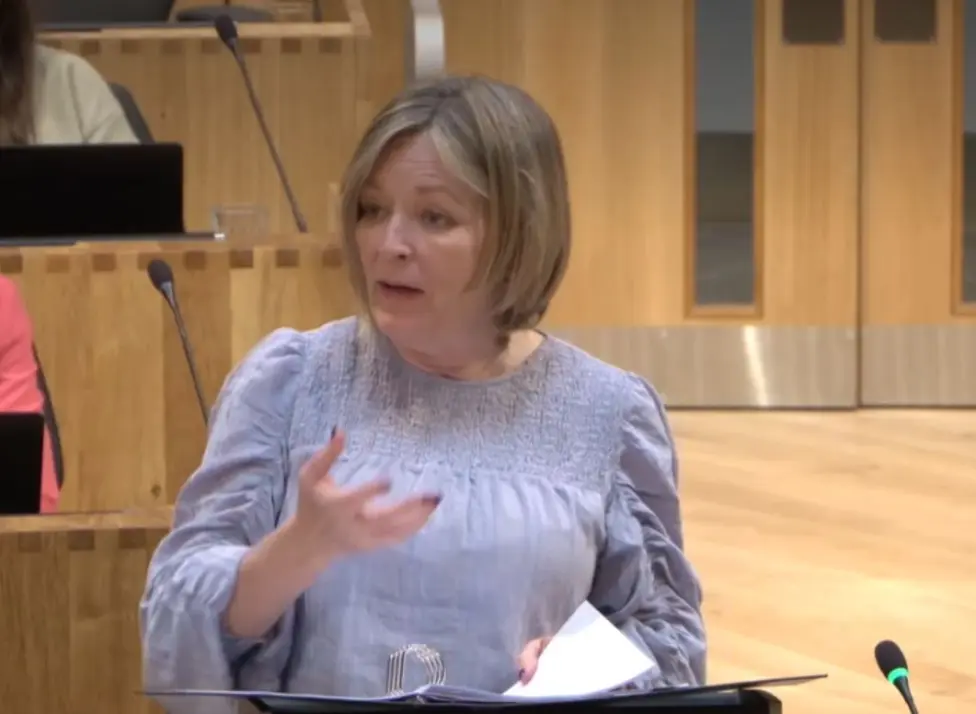
Education and Welsh language minister Anna Brychan told the Senedd on 7 July that “language does not live solely through policy, but through people and through use.”
Sharing how the language has influenced her life, Ms Brychan said: “My personal story is a bilingual one. My mother learned Welsh as an adult. Today, Welsh and English intertwine in my family at home in Grangetown, and several other languages can be heard around us, and that’s a good thing.”
Concluding her speech, Ms Brychan said: “This is our opportunity to ensure that our two languages drive our future – in the community, digitally, in education and in the economy, and with the Welsh language contributing to making a welcoming, confident bilingual and multilingual country for us all.”
Reform’s deputy leader in Wales, Helen Jenner, described her parents’ decision to send her to a Welsh-medium school as one of “the most precious gifts” they could have given her.
Ms Jenner shared the story of her grandfather, Silgwyn Weston, who didn’t speak any English until he was around eight years old.
She told the Siambr how having received advice from his sister, who attended university in London, her grandfather decided the best way to provide opportunities to his children was for them to speak English at home, meaning her mother did not have the chance to speak Welsh.
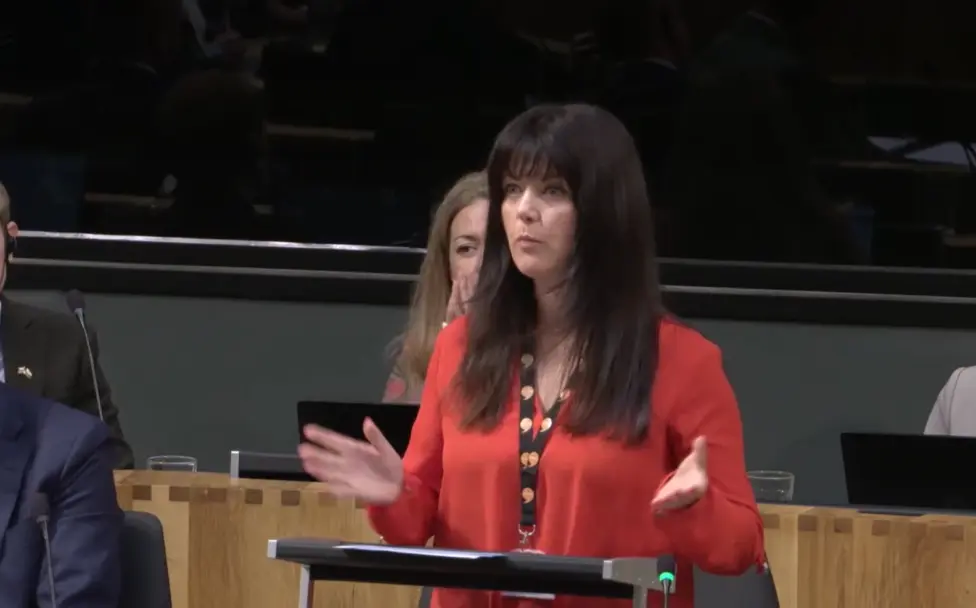
She said: “There was something very special between myself and my grandfather. We were the only two members of the family who could hold a natural conversation in Welsh.
“Silgwyn Weston was a very proud Welshman and in his final years, there was one constant – his hearing was somehow always better if the conversation was about rugby or if someone spoke Welsh to him.”
Reform’s deputy leader agreed with Ms Brychan that language sits at “the heart” of Welsh culture, but criticised the government’s plan to use legislation and targets to secure the language’s future.
She said: “We can’t force people to love a language. We can’t legislate for enthusiasm. We can’t create Welsh-speaking communities through targets alone. The Welsh language flourishes when people choose to use it at home, in the workplace, in the pub, on the rugby pitch and on the street.”
Ms Jenner also welcomed the minister’s commitment to strengthening the Welsh language in digital and AI, adding that if Welsh is not available in these technologies there is a risk of it being “left behind”.

She asked how the government will measure an increase in the daily use of the language and what practical steps will be taken to help learners use Welsh once they have left school.
Responding, Ms Brychan said: “People shouldn’t have to look for opportunities to use the Welsh language.”
She noted importance of including Welsh outside of education, in areas such as “technology, workplaces, sport, culture, planning, research, and leadership in our communities”.

Also sharing his experiences with the Welsh Language, Labour’s Huw Thomas told the Siambr that he himself “couldn’t speak a word of English” until he was around 7.
Discussing the Welsh Government’s target of a million Welsh speakers by 2050, former Cardiff Council leader Mr Thomas called for further details on how the Welsh language will be pushed through childcare and the education system.
He asked Ms Brychan how many Welsh-medium childcare settings will need to be developed to reach the target of free childcare from nine-months-old and how the Welsh Government plans to ensure Welsh-speaking staff will be available to meet demand.
Ms Brychan acknowledged the challenges in terms of developing the necessary workforce, but said there’s “a plan in place” to address this.
The Labour spokesperson for the Welsh language then noted the importance of Welsh in technology and the workforce.
He urged the minister to work with trade unions to promote the Twf Charter, which was developed to promote Welsh in the workplace.
Mr Thomas also questioned what measures the government will be taking to introduce more Welsh-medium apprenticeships.
Ms Brychan revealed she has numerous upcoming meetings on technology, and said the Welsh language is at the forefront of her discussions with such companies.
She also said she’s “always” willing to speak to unions to get their views and expertise.

Conservative Paul Davies voiced his and his party’s support for the Welsh Government’s target of one million Welsh speakers by 2050, but questioned Ms Brychan on Welsh-medium education and socialising through the Welsh language.
Mr Davies highlighted that currently only 21% of children are in Welsh-medium schools, according to the latest schools survey.
He suggested that work could be done in terms of learner travel to help reduce barriers to Welsh language education.
The Conservative spokesperson called on Ms Brychan to reveal whether she will review the Learner Travel (Wales) Measure 2008 to see if more “can be done” to allow children access to Welsh-medium education. However, Ms Brychan did not mention learner travel in her response.
Mr Davies also spoke of the importance of socialising in Welsh in cultural settings, referring to events such as Tafwyl, which took place in Cardiff last month.
He said: “These events and many other community events are held by organisations like the mentrau iaith and others, of course, that do so much in our communities with little resource.”
Mr Davies called on the Welsh Government to consider how it can support community organisations “more effectively” in the future.
Ms Brychan replied: “In terms of socialising through the medium of Welsh, that takes me back to the point that I was making that we need to create the environment where people don’t have to look for opportunities to use the Welsh language.
“As you mentioned, the opportunities provided through the mentrau iaith are key to ensure that those opportunities are available.”



Crime20 hours ago
Ann Widdecombe: Welsh politicians pay tribute as murder probe launched
Prime Minister Sir Keir Starmer has praised the former minister’s “conviction and dedication”, while political figures in Wales remembered her...


News24 hours ago
Solardo pulls out of Haverfordwest show as organisers offer full refunds
Headline act confirms non-appearance as Park House Series announces major event changes DANCE music duo Solardo will no longer perform...


Local Government1 day ago
Conservatives win Pembroke Dock seat as Reform stalls and Dowson polls just 11
Jamie Street takes Market ward with a 43-vote majority as Reform finishes fourth despite its major Senedd breakthrough two months...


Health1 day ago
Hospital ward closed after highly contagious scabies outbreak
Hywel Dda confirms wider rise in cases across Carmarthenshire, Pembrokeshire and Ceredigion as patients and staff are offered treatment A...


Crime2 days ago
Teacher stabbing trial: The first week of evidence
Jury hears accounts of alleged planned classroom attack, teacher’s fear she was dying, and boy’s words after leaving school A...


Community2 days ago
Haverfordwest Castle refurbishment reaches new heights as roof goes on
Major milestone reached in project to transform historic gaol building into flagship visitor attraction A MAJOR milestone has been reached...


Business3 days ago
Pembrokeshire lands £98m share of Wales marine energy boom
New industry report says county has received the second highest level of marine energy investment in Wales, supporting more than...
Crime3 days ago
First aider tells jury teacher was “crying, shaking” after classroom stabbing
A SCHOOL first aider has told a jury that teacher Vicki Williams was “crying, shaking” and in “complete shock” after...


Crime4 days ago
Teacher feared she was dying after Milford Haven classroom stabbing
A TEACHER allegedly stabbed in the head at Milford Haven Comprehensive School told a jury she feared she was dying...


News4 days ago
Farage to resign as MP and fight Clacton by-election amid finance row
NIGEL FARAGE has announced he will resign as MP for Clacton and stand again in the by-election he intends to...
-

 Farming4 days ago
Pembrokeshire slaughterhouse given urgent improvement rating after audit failure
-

 Entertainment3 days ago
Swing and big band classics heading to Torch Theatre
-

 News4 days ago
From boccia to boxing: ALN multisport events give youngsters chance to try activities
-

 News5 days ago
Large fire breaks out at Impala Terminal in Milford Haven
-

 Education5 days ago
Council failed Welsh language standards over school closure
-

 Community7 days ago
Milford Haven Carnival brings colour, music and crowds to the town
-
 Entertainment5 days ago
Crymych Arms to host weekend of local music, food and drink
-

 News4 days ago
Questions raised over Hamilton Accies finances after club’s Haverfordwest friendly