

News
First section of ‘Active Travel Route’ opens


THE FIRST phase of a scheme to link two Pembrokeshire towns with an ‘active travel route’ has opened.
The planned 17-kilometre route between Narberth and Haverfordwest will incorporate traffic-free sections and quiet roads and will follow existing highways, tracks, bridleways and public footpaths.
Wherever possible it will be multi-user – that is accessible to walkers, cyclists, the mobility impaired and equestrians. The first of the Pembrokeshire County Council three-phase project was opened recently by the Authority’s Cabinet Member for Planning and Infrastructure, Phil Baker.
A section between Eagle Lodge and Blackpool Mill was completed with Welsh Government funding. Work on phase two between Eagle Lodge and Narberth via Canaston Wood and Carding Mill Lane is scheduled to start later this year.
Councillor Baker: “Both Narberth and Haverfordwest are designated active travel settlements and the scheme will not only provide an important link between numerous communities but also provides opportunities for staff to access a number of employment sites by sustainable means.

“We have enjoyed working with our partners and look forward to completing the remainder of the project with them.”
Sustrans – the charity making it easier for people to walk and cycle – identified the link between the towns for inclusion in the National Cycling Network (NCN). It has been supporting the County Council to
develop the route by conducting studies and providing engineering and ecology expertise.
Elena Bianchi, network development manager at Sustrans Cymru said: “We are very happy to celebrate the opening of this section of the path. It shows how collaboration and engagement are key to making sure we create high quality traffic-free infrastructure suitable for all users.
“We consider this opening as a major achievement in the context of our Paths for Everyone Programme which aims at making the National Cycle Network safer and more accessible for everyone.
“During this process, we have learnt a lot and we will be happy to make this learning available for the future phases of the project and for other similar projects around the UK.”
For information on local cycle routes go to Cycle Pembrokeshire on the County Council’s website: www.pembrokeshire.gov.uk/cycle-pembrokeshire



POLICE have warned that Tenby’s Summer Spectacular has become “a disaster waiting to happen”, amid concerns about overcrowding, crowd surges and restricted access for emergency services.
A decision on the future of the event’s premises licence is expected within days after Dyfed-Powys Police asked Pembrokeshire County Council’s licensing sub-committee to revoke the existing licence, arguing that it is no longer fit for purpose.
The two harbour-based spectaculars planned for August have already been provisionally cancelled by organisers Tenby Round Table following difficulties agreeing crowd-control arrangements with the council.
The annual events, which feature food, drink, live music and a popular fireworks display, have been a highlight of Tenby’s summer calendar for many years.
However, police told the licensing hearing that the event had grown beyond what could safely be accommodated at its current location.
A police representative said the harbour area should have a maximum capacity of around 1,600 people, but estimated crowds of approximately 3,000 had attended previous events.
The committee heard concerns that overcrowding could lead to crowd surging, while the limited number of escape routes could create serious difficulties during an emergency.
Police stressed that they were not opposed to the event itself, but said it had “evolved from a family event to a large-scale drinking environment”.
Concerns were also raised by the Welsh Ambulance Services NHS Trust over emergency access, while Mid and West Wales Fire and Rescue Service highlighted wider public safety risks.
Pembrokeshire County Council’s lead licensing officer, Geraint Griffiths, described the current arrangements as “very dangerous” and warned that any significant movement or surge within the crowd could have devastating consequences.
The premises licence covers Tenby Harbour car park and extends to the top of Penniless Cove Hill. The site includes a stage, stalls, refreshment stands and a bar selling alcoholic and soft drinks in cans.
Alcohol is currently sold under a temporary event notice rather than as a licensed activity included within the premises licence.

The open-air event is not fenced or ticketed, with visitors invited to make a voluntary donation on entry. People are also able to access the area from the harbour beach, an issue described during the hearing as one of the main obstacles to safely controlling numbers.
Tenby Round Table disputed some of the figures presented by the emergency services, saying several incidents referred to had not been directly connected to the Summer Spectacular.
Members said they had spent much of the past year trying to resolve questions surrounding access and crowd control.
A Round Table representative told the committee: “This year’s event has been cancelled. It arose from the sheer volume of people visiting Tenby, creating a question we have tried to get answered for the best part of a year.
“Without a clear answer, we couldn’t finish our licensing plan and couldn’t responsibly hold our events.”
The organisers previously said negotiations with Pembrokeshire County Council’s public realm department had failed to produce a clear and workable agreement allowing temporary restrictions on pedestrian access to the harbour and beach.
Without those restrictions, they said it would not be possible to legally or safely control crowd numbers.
Committee member Cllr Mark Carter suggested the event may have become “too successful” and could have outgrown its current location.
He described unrestricted access from the nearby beach as “the elephant in the room” and said any future proposal would need to include a robust plan for controlling entry.
Tenby Round Table said moving the main event elsewhere while retaining the traditional harbour fireworks display would present significant logistical challenges.
Councillors were presented with four options, including revoking the licence or allowing it to continue with amended conditions.
Committee chairman Cllr Tim Evans said members would consider the evidence before issuing a written decision, which is expected within five working days.

FAMILIES are being invited to celebrate the start of the school holidays with a free outdoor screening of Disney-Pixar favourite Finding Nemo at Milford Waterfront.
The Torch Theatre will launch its 2026 Sunset Cinema season at Mackerel Quay on Friday, July 17, with the marina and Milford Haven Waterway providing the backdrop.
Sponsored by Milford Waterfront, the family screening will be shown on the Torch Theatre’s new outdoor LED cinema screen. Gates will open at 1pm, with the film beginning at 2.30pm.
Admission is free, although tickets should be booked in advance through the Torch Theatre.
The entertainment will continue into the evening with a screening of the 1980s classic Back to the Future at 7pm.
Tickets for the evening film can also be purchased through the Torch Theatre website. Audiences are encouraged to arrive from 6pm and bring their own chairs and blankets.
A selection of food and drink vendors will be available throughout the afternoon and evening.
Lucy Wonnacott, Head of Communications and Marketing at the Port of Milford Haven, said: “Summer starts here. We’re delighted to kick off the Torch Theatre’s 2026 Sunset Cinema season and the school holidays with a free waterside screening of Finding Nemo.
“Then, as the sun goes down, film fans can buy tickets to join us for the ultimate time-travelling adventure, Back to the Future.
“There’s something special about watching a great film by the water, and we’re looking forward to welcoming families, friends and visitors for a day of cinema, community and summer memories at Milford Waterfront.”
Chelsey Gillard, from the Torch Theatre, added: “We’re incredibly pleased to be partnering with Milford Waterfront to offer this special Sunset Cinema screening completely free for our community.
“Watching Finding Nemo on Mackerel Quay is going to be absolutely magical. Bring a deckchair, gather the family and join Nemo, Dory and Marlin for an unforgettable adventure on the big screen.

“Let’s just hope Bruce the shark doesn’t decide to make an appearance. What a fantastic way to celebrate the end of term and kick off the summer holidays.”
Tickets for both screenings should be booked in advance through the Torch Theatre booking office.
Further details about events taking place at Milford Waterfront this summer can be found on the Milford Waterfront website.
Photo caption: Families can enjoy a free outdoor screening of Finding Nemo at Milford Waterfront on Friday, July 17.

WALES has recorded the highest rate of self-medication for anxiety and stress of any UK region, according to a new healthcare survey.
The STADA Health Report 2026 found that 31 per cent of adults surveyed in Wales said they self-medicated to manage anxiety or stress.
That was almost six percentage points above the UK average of 25.2 per cent.
The report also found comparatively low levels of trust in artificial intelligence for healthcare, alongside concerns about access to services, ageing and the amount of health information people are expected to navigate.
Just 38.5 per cent of Welsh respondents said they would trust AI to make a health diagnosis, the lowest rate recorded among the UK regions surveyed and well below the national average of 52.3 per cent.
Fewer than half, 42.4 per cent, said they would consider having a health consultation using AI, compared with 49.5 per cent across the UK.
Satisfaction with the public healthcare system was also lower in Wales. Some 57.9 per cent of Welsh respondents said they were satisfied, compared with a UK average of 65.1 per cent.
The findings form part of an international study commissioned by pharmaceutical manufacturer STADA Thornton & Ross and carried out by market research company Human8 Consulting.
A total of 2,001 adults were surveyed in the UK during February and March 2026, as part of a wider study involving 19,514 respondents across 20 countries. The company has not stated in the press material how many of the UK participants were based in Wales.
Concerns about ageing and access to care
More than two-thirds of Welsh respondents, 66.8 per cent, said they feared becoming dependent on care as they grew older.
That compared with a UK average of 54.3 per cent.
More than half of those surveyed in Wales, 55.4 per cent, also said they felt overwhelmed by the amount of health information available, against 47.7 per cent nationally.

The report’s authors said the findings suggested that some people were increasingly relying on self-management when they felt unable to access timely professional support.
However, the term “self-medication” can cover a range of behaviours, including the use of non-prescription medicines, supplements or other substances without direct advice from a healthcare professional.
Craig Shaw, general manager for STADA UK, said: “When one in three adults say they are self-medicating for anxiety or stress, it suggests many people are looking for practical ways to manage their wellbeing, but may not always feel they have access to the support they need at the right time.
“While trust in AI health tools is lower in Wales than elsewhere in the UK, the data also reinforces the enduring importance of trusted, face-to-face healthcare.
“Community pharmacists are uniquely placed to provide accessible advice, reassurance and guidance, helping people make informed decisions about managing their health and knowing when additional support is needed.”
STADA Thornton & Ross manufactures healthcare products including Covonia, Cetraben, Hedrin, Savlon and Zoflora, as well as generic and specialist medicines.
Anyone experiencing anxiety or stress is advised to speak to a GP, pharmacist or another qualified healthcare professional before taking medication that has not been prescribed for them.



Community2 hours ago
Police warn Tenby Summer Spectacular is ‘a disaster waiting to happen’
POLICE have warned that Tenby’s Summer Spectacular has become “a disaster waiting to happen”, amid concerns about overcrowding, crowd surges...


Charity20 hours ago
RSPB secures ‘missing link’ to reconnect wildlife habitats in Carmarthenshire
RSPB CYMRU has purchased a 96-hectare upland site in Carmarthenshire, describing it as a vital step towards reconnecting one of...


Crime2 days ago
Ann Widdecombe: Welsh politicians pay tribute as murder probe launched
Prime Minister Sir Keir Starmer has praised the former minister’s “conviction and dedication”, while political figures in Wales remembered her...


News2 days ago
Solardo pulls out of Haverfordwest show as organisers offer full refunds
Headline act confirms non-appearance as Park House Series announces major event changes DANCE music duo Solardo will no longer perform...


Local Government2 days ago
Conservatives win Pembroke Dock seat as Reform stalls and Dowson polls just 11
Jamie Street takes Market ward with a 43-vote majority as Reform finishes fourth despite its major Senedd breakthrough two months...


Health2 days ago
Hospital ward closed after highly contagious scabies outbreak
Hywel Dda confirms wider rise in cases across Carmarthenshire, Pembrokeshire and Ceredigion as patients and staff are offered treatment A...


Crime3 days ago
Teacher stabbing trial: The first week of evidence
Jury hears accounts of alleged planned classroom attack, teacher’s fear she was dying, and boy’s words after leaving school A...


Community3 days ago
Haverfordwest Castle refurbishment reaches new heights as roof goes on
Major milestone reached in project to transform historic gaol building into flagship visitor attraction A MAJOR milestone has been reached...


Business4 days ago
Pembrokeshire lands £98m share of Wales marine energy boom
New industry report says county has received the second highest level of marine energy investment in Wales, supporting more than...
Crime4 days ago
First aider tells jury teacher was “crying, shaking” after classroom stabbing
A SCHOOL first aider has told a jury that teacher Vicki Williams was “crying, shaking” and in “complete shock” after...
-

 Farming5 days ago
Pembrokeshire slaughterhouse given urgent improvement rating after audit failure
-

 News5 days ago
From boccia to boxing: ALN multisport events give youngsters chance to try activities
-

 News6 days ago
Large fire breaks out at Impala Terminal in Milford Haven
-

 Entertainment4 days ago
Swing and big band classics heading to Torch Theatre
-

 News5 days ago
Questions raised over Hamilton Accies finances after club’s Haverfordwest friendly
-

 Education6 days ago
Council failed Welsh language standards over school closure
-
 Entertainment6 days ago
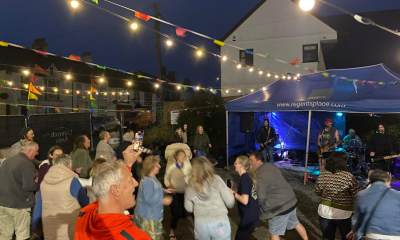
Crymych Arms to host weekend of local music, food and drink
-

 Farming3 days ago
Working Carmarthenshire farm opens gates to visitors with new holiday cottages