

News
Mental health charity founder awarded Welsh legend status

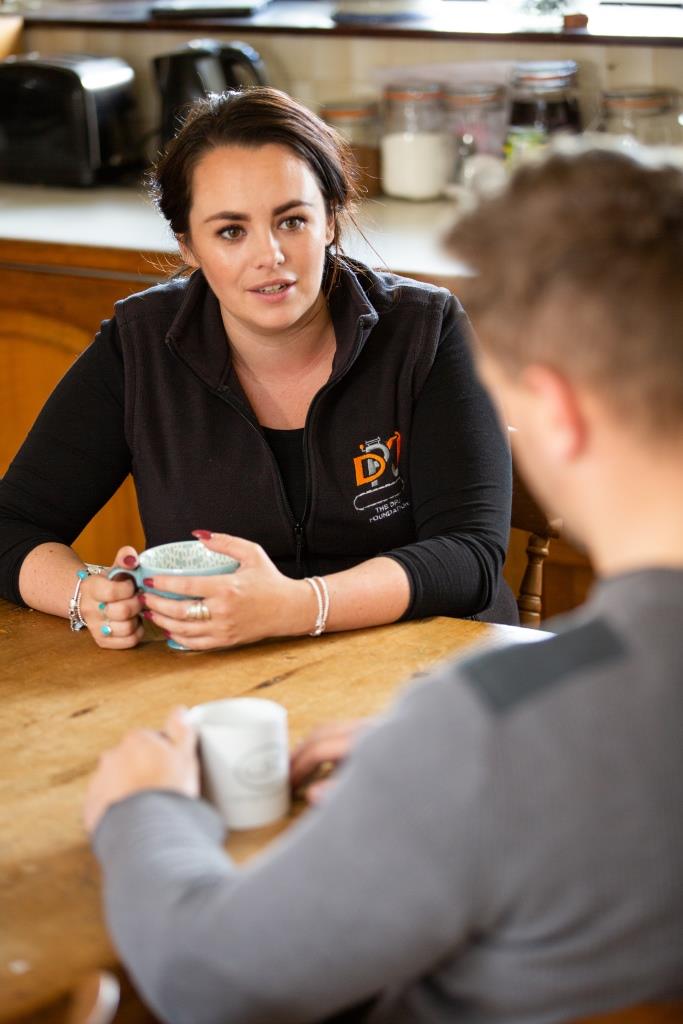
A PEMBROKESHIRE woman, who set up a mental health charity after her husband tragically took his own life, has received prestigious National Lottery Award for her work in supporting people in rural communities with poor mental health.
As part of the 25th Birthday National Lottery Awards, Emma Picton-Jones from Clarbeston near Haverfordwest has been awarded one of only 12 prestigious Local Legend Awards in the whole UK and is the only recipient from Wales.
To celebrate her accolade, 31-year-old Emma will join a host of stars from the world of stage and screen at the glittering 25th Birthday National Lottery Awards show which will be filmed for BBC One at BBC White City Studios in London later this month (Tuesday, Oct 15).
The 25th Birthday National Lottery Awards are the annual search for the UK’s favourite National Lottery funded people and projects and they celebrate the inspirational exploits of the ordinary people who do extraordinary things with National Lottery support.
Mother of three, Emma, has received the prestigious National Lottery Local Legend Award for her tireless work in supporting farmers and people in rural communities throughout the country with poor mental health. In July 2016, Emma’s 34-year-old husband, Daniel Picton-Jones, an agricultural contractor, tragically took his own life after battling with depression and anxiety.

In the wake of Daniel’s death, Emma, a farmer’s daughter, set up The DPJ Foundation – named after Daniel’s initials. The group encourages people in farming communities to open up about mental health, especially men working in the agricultural sector. Agriculture carries one of the highest rates of suicide and the foundation aims to break down the stigma that surrounds mental health and provide support services.

Two grants a mounting to £20,000 from the National Lottery over the last two years has enabled The DPJ foundation to launch and raise awareness of Share the Load – a 24/7 telephone and counselling service for people with mental health problems in rural communities.
“I was naive before Daniel’s death,” said Emma, who has raised around £150,000 to provide mental health training to farming industry professionals to help them identify symptoms in people and provide support.
“I didn’t realise the extent of the issues in our community. When I started talking to people, everyone knew someone who had died through suicide. I needed to do something positive. Farming is a traditional sector and people can be very isolated. Farmers also work long hours which can often take its toll on them and they are more likely to be resistant towards seeking support. I also think people tend not to talk about mental health and keep it to themselves a lot more in rural communities. Not everyone wants to admit to their neighbours that they’re suffering. All these barriers prevent people from talking about their mental health problems. That’s why I set up the charity and I wanted to use Daniel’s story to break down the stigma.”
Delighted to receive the National Lottery’s Local Legend Award, Emma said: “It’s nice to be recognised for the work we’re doing as a collective to raise awareness of and support people with mental health problems in rural communities. The National Lottery funding has enabled us to take what we’re doing throughout the whole country and reach more people with our support.”
Jonathan Tuchner, from the National Lottery, added: “It’s thanks to National Lottery players, who raise more than £30 million each week for good causes, that Local Legends like those awarded this year, can continue their work and inspire so many.
Emma Picton-Jones has done an incredible job in her local community of Pembrokeshire and beyond in raising awareness about mental health problems and tackling the stigma associated with mental health. The work she does is hugely impressive and vital for the people the foundation she set up has helped. They thoroughly deserve to be crowned a Local Legend in the 25th Birthday National Lottery Awards.”

The National Lottery Legend Award recognises a person that has made an outstanding contribution to their local area. They may have enhanced the local culture or quality of life by dedicating their skills, enthusiasm and energy to a diverse range of projects. The winners were selected by a panel made up of representatives from the National Lottery family.
Each Local Legend has been able to continue their amazing work with the help of National Lottery funding.
Since 1994, the National Lottery has made more than 5,500 millionaires but its primary purpose is all about giving to good causes. National Lottery players have raised more than £40 billion for good causes in the areas of arts, sport, heritage and community over the past 25 years. Over than 565,000 National Lottery grants have been awarded across the UK, the equivalent of around 200 life-changing projects in every UK postcode district helping to strengthen communities, deliver sporting success, protect the environment, unleash local creative talent and look after the elderly and those at risk.
The 25th Birthday National Lottery Awards will air on Thursday 19th November on BBC One- 25 years to the day the first National Lottery draw took place.



County ranks third in UK study thanks to low light pollution, dark-sky campsites and coastal landscapes
PEMBROKESHIRE has been named the third-best county in the UK for a summer stargazing and camping trip.
The county achieved an overall score of 8.1 out of 10 in research examining light pollution, summer weather, campsite availability and access to nearby walking routes.
Only Devon and Dorset ranked higher.
Pembrokeshire recorded a Bortle scale score of 3.91, indicating relatively low levels of light pollution and favourable conditions for seeing stars and, on clear nights, the Milky Way.
A lower Bortle score represents darker skies, with ratings of around 4.5 or below generally considered suitable for good stargazing.
The research found that Pembrokeshire has around 120 campsites, including seven identified as particularly suitable for observing the night sky.
The county also recorded an average summer temperature of 17.1°C, with clear or partly clear skies expected on around 52.8% of days during July and August.
Its average chance of precipitation during the same period was calculated at 28.4%.
The study highlighted the Pembrokeshire Coast National Park as one of the county’s strongest attractions for stargazers, with Bortle scale readings in some areas falling as low as 3.5.
The combination of remote coastal locations, limited artificial lighting and a wide choice of campsites was said to make Pembrokeshire one of the UK’s best destinations for spending a night under the stars.
Devon topped the rankings with a score of 8.5, followed closely by Dorset on 8.4.
Carmarthenshire was placed joint sixth with a score of 7.8, while Ceredigion ranked joint eighth on 7.7.

The research was commissioned by Admiral Casino and analysed 35 UK counties.
Researchers compared light pollution levels, summer temperatures, rainfall probabilities, cloud cover, the number of dark-sky campsites, nearby hiking trails and overall campsite availability.
Data was collected in June 2026.
Detectives say inquiry is moving “at a significant pace” after 26-year-old man arrested on suspicion of murder is ruled out
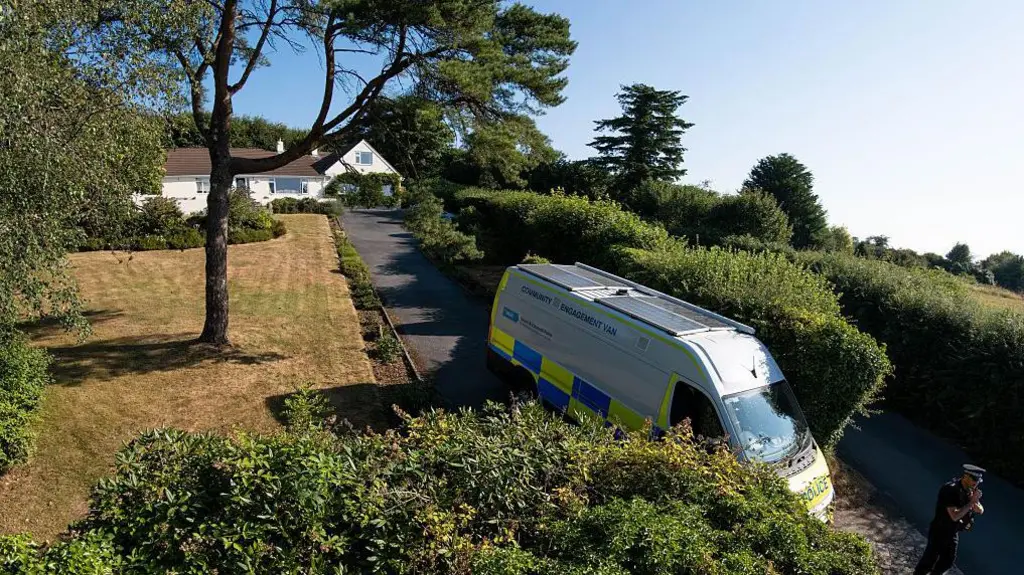
THE MURDER investigation into the death of former Conservative minister and Reform UK campaigner Ann Widdecombe has taken a dramatic new turn after the only suspect arrested in the case was released from custody and eliminated from police enquiries.
Devon and Cornwall Police confirmed early on Saturday morning (July 11) that the 26-year-old man arrested on suspicion of murder on Friday is “no longer part of the investigation”.
The development leaves detectives searching for the person responsible for the death of the 78-year-old former MP, who was found dead with serious injuries at her home on Dartmoor.
Assistant Chief Constable Matt Longman said detectives remained focused on identifying those responsible.
He said: “Our priority remains identifying those responsible and ensuring that all available evidence is thoroughly examined.
“Detectives continue to carry out numerous enquiries as part of the ongoing investigation and we remain committed to establishing the full circumstances surrounding the incident.”

Last known movements emerge
New details have also emerged about Widdecombe’s final known communications.
The former minister appeared on TalkTV on Wednesday morning, discussing Reform UK leader Nigel Farage.
Later that day she was reportedly due to take part in a video interview for a Channel 5 current affairs programme.
According to reports, a researcher exchanged messages with Widdecombe shortly after midday, with her final known response received at 12.19pm.
A further message sent shortly before a scheduled Zoom interview went unanswered.
Television presenter Dan Walker later revealed that concerns were raised after Widdecombe failed to join the programme and stopped responding to messages.
The information has since been passed to police as part of the investigation.
Found with serious injuries
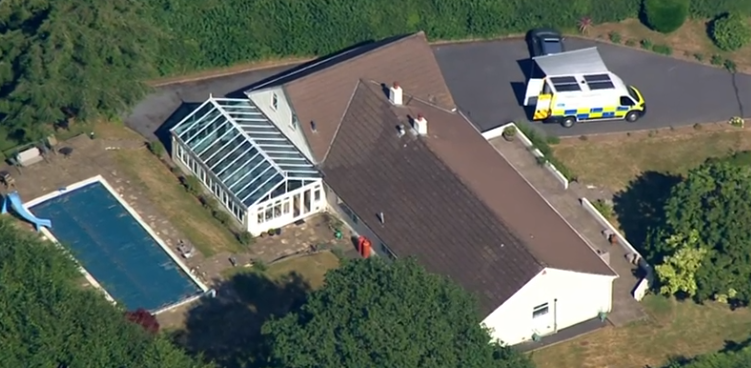
Police were called to Widdecombe’s home, known as Widdecombe’s Rest, in the village of Haytor on the edge of Dartmoor, at around 11.40am on Thursday after concerns were raised.
Officers attended alongside the ambulance service and discovered Widdecombe had suffered serious injuries and had died at the scene.
Her death was initially announced publicly on Friday morning by her management team, which at the time made no mention of suspicious circumstances.
However, just hours later, Devon and Cornwall Police confirmed that detectives from the Major Crime Investigation Team had launched a murder inquiry.
A 26-year-old man was arrested in Newton Abbot on Friday afternoon before being released overnight.
Police presence remains
A large police cordon remains in place around the property, with forensic officers continuing examinations throughout Saturday.
Road closures are still in force around the scene while officers carry out house-to-house enquiries and review CCTV and other evidence.
Police have stressed there is currently no indication the incident was politically motivated and it is not being treated as terrorism-related.
Mr Longman said the investigation was still in its early stages but was progressing rapidly.
“We are deploying all of the necessary resources to find out exactly what has happened,” he said.
Tributes continue
Tributes have continued to pour in from across the political spectrum.
Prime Minister Sir Keir Starmer described the death as “really shocking news” and said he had spoken with political leaders including Conservative leader Kemi Badenoch and Reform UK leader Nigel Farage.
Home Secretary Shabana Mahmood called the circumstances “extremely distressing” and urged the public to avoid speculation.
In Wales, Reform UK Wales described Widdecombe as “a true patriot and a fierce champion of Brexit”.
Senedd members Laura Anne Jones and Llŷr Powell also paid tribute, while former Welsh Conservative leader Andrew RT Davies said: “You always knew where you stood with Ann.”
Community in shock
Residents in Haytor have spoken of their disbelief at events in what is normally regarded as one of Devon’s safest rural communities.
Neighbour Christine Maloney said locals frequently left doors and cars unlocked.
“It’s very, very safe around here,” she said. “I leave my car open, I leave my front door open – not now.”
Another resident, Simon Gilbert, said: “She didn’t deserve to die like that.”
Widdecombe moved to the property in 2008 after retiring from Parliament, naming it Widdecombe’s Rest because, she said at the time, it would be “the rest of my life”.
Police have appealed for anyone with information, dashcam footage or CCTV from the Haytor area to contact officers immediately.
Anyone with information is asked to contact Devon and Cornwall Police quoting the incident.
Five people are now in custody following a collision involving a car and an off-road motorcycle
THREE more men have been arrested after an 18-year-old died following a collision between a car and an off-road motorcycle in Gorseinon.
South Wales Police were called to Pen Cae Crwn Road at around 12:58pm on Thursday, where the teenager, who is believed to have been from Swansea, was pronounced dead at the scene.
A second man, aged 19, was taken to hospital with injuries.
Two 18-year-old men were arrested on suspicion of murder on Thursday.
Police confirmed on Friday that a further three arrests had been made.
A 33-year-old man from Gorseinon was arrested on suspicion of murder.
A 38-year-old man from Gowerton and a 38-year-old man from Mount Pleasant were arrested on suspicion of assisting an offender.
The latest arrests bring the total number of people detained in connection with the investigation to five.
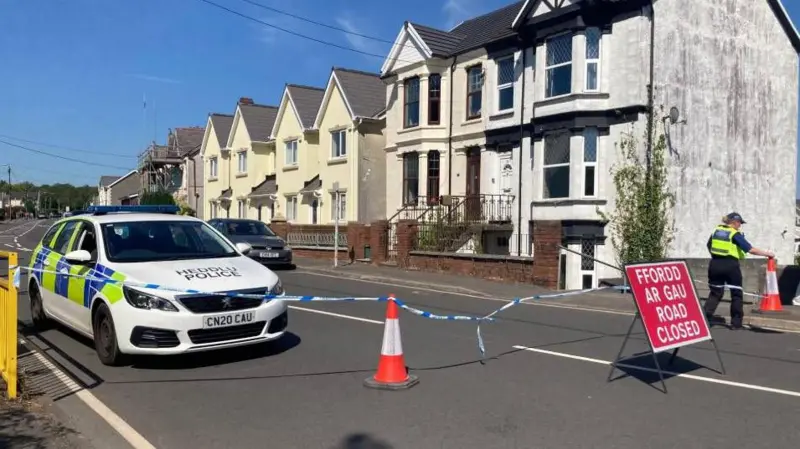
Several roads in the area remained closed on Friday morning while officers continued their investigation.
Cordons had been removed from some streets, although traffic cones, road signs and police tape remained at the roadside.
Gorseinon Rugby Club chairman Ian Murphy said the local community had been left in “deep shock”.
He said: “For youngsters to get involved in a tragedy like this is shocking and disturbing, very disturbing for us all.

“Everybody was talking about it. All the roads were closed by police and ambulances, so it took a while for it to sink in what was going on.
“We were aware that there might have been a chase involving a car and a motorbike, and the full tragedy unfolded from there.”
South Wales Police has not confirmed the circumstances leading up to the collision, and enquiries remain ongoing.



Crime21 hours ago
Ann Widdecombe: Welsh politicians pay tribute as murder probe launched
Prime Minister Sir Keir Starmer has praised the former minister’s “conviction and dedication”, while political figures in Wales remembered her...


News1 day ago
Solardo pulls out of Haverfordwest show as organisers offer full refunds
Headline act confirms non-appearance as Park House Series announces major event changes DANCE music duo Solardo will no longer perform...


Local Government1 day ago
Conservatives win Pembroke Dock seat as Reform stalls and Dowson polls just 11
Jamie Street takes Market ward with a 43-vote majority as Reform finishes fourth despite its major Senedd breakthrough two months...

Health1 day ago
Hospital ward closed after highly contagious scabies outbreak
Hywel Dda confirms wider rise in cases across Carmarthenshire, Pembrokeshire and Ceredigion as patients and staff are offered treatment A...


Crime2 days ago
Teacher stabbing trial: The first week of evidence
Jury hears accounts of alleged planned classroom attack, teacher’s fear she was dying, and boy’s words after leaving school A...


Community2 days ago
Haverfordwest Castle refurbishment reaches new heights as roof goes on
Major milestone reached in project to transform historic gaol building into flagship visitor attraction A MAJOR milestone has been reached...


Business3 days ago
Pembrokeshire lands £98m share of Wales marine energy boom
New industry report says county has received the second highest level of marine energy investment in Wales, supporting more than...
Crime3 days ago
First aider tells jury teacher was “crying, shaking” after classroom stabbing
A SCHOOL first aider has told a jury that teacher Vicki Williams was “crying, shaking” and in “complete shock” after...

Crime4 days ago
Teacher feared she was dying after Milford Haven classroom stabbing
A TEACHER allegedly stabbed in the head at Milford Haven Comprehensive School told a jury she feared she was dying...


News4 days ago
Farage to resign as MP and fight Clacton by-election amid finance row
NIGEL FARAGE has announced he will resign as MP for Clacton and stand again in the by-election he intends to...
-
 Farming4 days ago
Pembrokeshire slaughterhouse given urgent improvement rating after audit failure
-

 Entertainment3 days ago
Swing and big band classics heading to Torch Theatre
-
 News5 days ago
Large fire breaks out at Impala Terminal in Milford Haven
-

 News4 days ago
From boccia to boxing: ALN multisport events give youngsters chance to try activities
-
 Education5 days ago
Council failed Welsh language standards over school closure
-

 News4 days ago
Questions raised over Hamilton Accies finances after club’s Haverfordwest friendly
-

 Community7 days ago
Milford Haven Carnival brings colour, music and crowds to the town
-
 Entertainment5 days ago
Crymych Arms to host weekend of local music, food and drink