


News
Pervert pensioner from Pembrokeshire dodges prison over indecent images


A NARBERTH pensioner, who admitted to possessing extreme pornographic images, indecent images of children and images portraying bestiality, has avoided a custodial sentence.
Graham Leslie Evans, 72 of Cawdor Court, Narberth, pleaded guilty to all three charges when he appeared at Haverfordwest Magistrates Court on Wednesday, (Sept 30).
The court heard how between November 3, 2005 and August 13, 2018, Evans was found to have been in possession of extreme pornographic images which included indecent photographs of children.
During the same time period, Evans was also found to be in possession of 400 images which portrayed a person performing a sexual act with a live or dead animal.
Evans was also found to be in possession of 39 indecent images of children, of category C in nature.

Magistrates imposed a community order and fined him £293.
Evans was made the subject of the community order for a period of two years, for which he must complete a ten day rehabilitation course.
Magistrates also ordered that Evans must sign the sex offenders register for a period of five years, pay costs of £85 and a £85 victim surcharge.
Evans was also made the subject of a sexual harm prevention order, which prohibits him from accessing, owning or possessing any computer or electronic device capable of obtaining access to the internet.
A previous sentence imposed on September 21 was set aside by the court.


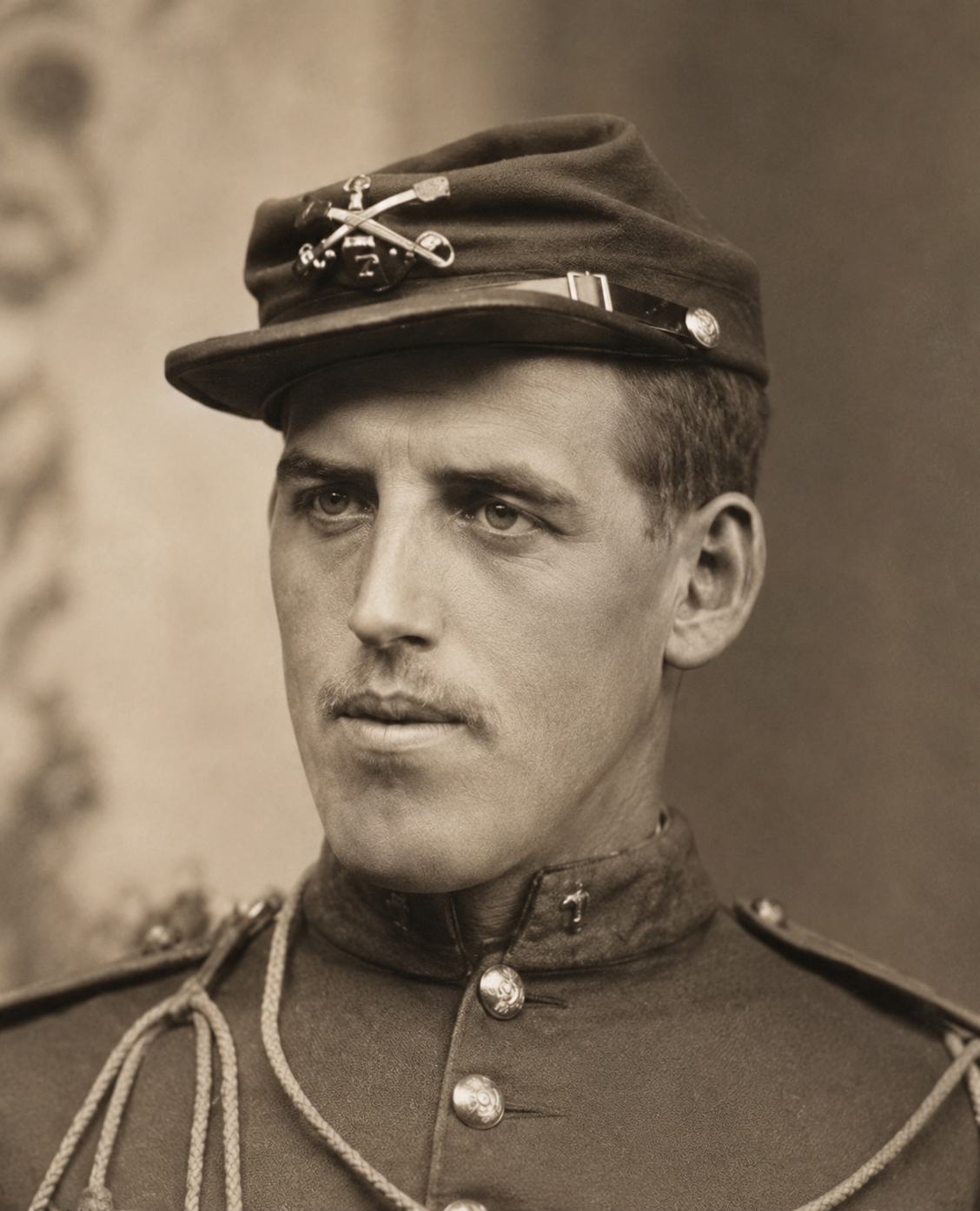
Dinas Cross-born soldier was among those killed at the Battle of the Little Bighorn 150 years ago this week
A YOUNG man from a remote Pembrokeshire farm found himself at the centre of one of the most famous battles in American history after leaving Wales in search of a new life across the Atlantic.
This week marks 150 years since Sgt William Batine James, originally from Pencnwc Farm near Dinas Cross, was killed alongside General George Armstrong Custer at the Battle of the Little Bighorn.
The battle, fought on June 25 and 26, 1876, became known around the world as “Custer’s Last Stand” after the defeat of the US Army’s 7th Cavalry by a coalition of Lakota Sioux, Northern Cheyenne and Arapaho warriors.

Among the dead was a 27-year-old Welshman whose remarkable journey had begun on the north Pembrokeshire coast.
Born on March 3, 1849, James grew up in rural Pembrokeshire before emigrating to North America as a young man. Records show he arrived in Toronto in 1871 before later crossing into the United States and joining the US Army.
He eventually became a sergeant in Company E of the famed 7th Cavalry Regiment.
Just five years after leaving Canada, James found himself riding with Custer into what would become one of the most studied and debated military engagements in American history.
The battle took place in present-day Montana during the Great Sioux War. Custer’s force was overwhelmed after encountering a much larger Native American force than expected.
Every member of Custer’s immediate command was killed.
For many years, James’s family back in Pembrokeshire had little idea what had become of him. Communication across the Atlantic was slow and unreliable, and news often took weeks or months to reach rural communities.
His story only gradually emerged through letters he had sent home, helping relatives piece together the fate of the young man who had travelled thousands of miles from Dinas Cross to the American frontier.
Today, historians of both Welsh emigration and the American West continue to document the lives of those who fought at the Little Bighorn. James remains one of Pembrokeshire’s most unusual historical figures – a local farm boy whose life became entwined with one of the defining moments of the American frontier era.

One hundred and fifty years after his death, Sgt William Batine James remains a reminder of how far Welsh emigrants travelled in the nineteenth century, and how people from even the smallest communities could find themselves caught up in events that would echo through history.

Giant puppet procession brings Welsh history and culture to the streets ahead of this summer’s National Eisteddfod
FISGHUARD and Goodwick joined the celebrations today as the spectacular Carreg Filltir Las procession brought the story of Lord Rhys to north Pembrokeshire.
Residents lined the streets as a giant puppet of the 12th-century Welsh prince, created by Small World Theatre, made its way through the community as part of the build-up to this summer’s National Eisteddfod.
The procession commemorates 850 years since Lord Rhys hosted what is widely regarded as the first Eisteddfod at Cardigan Castle in 1176.
Fishguard was one of the stops on the route, with families, local residents and Welsh language supporters turning out to welcome the larger-than-life figure as it passed through the town.
Organisers say the project aims to connect communities across the Eisteddfod area while celebrating Welsh language, culture and heritage.
The procession forms part of the build-up to Eisteddfod Genedlaethol y Garreg Las, which will be held in north Pembrokeshire from August 1 to 8.
The festival is expected to attract thousands of visitors and will showcase Welsh music, literature, performance, art and culture.
The Lord Rhys journey has already visited communities across west Wales and will culminate in Cardigan, the historic birthplace of the Eisteddfod tradition.
Photo caption:
Crowds gathered in Fishguard as the Lord Rhys procession passed through the town as part of the build-up to the 2026 National Eisteddfod.

PLAID CYMRU has renewed calls for the Crown Estate to be devolved to Wales after figures showed income linked to Wales rising from £8.7 million to £210 million in five years.
The party says the increase, described as a rise of around 2,300 per cent, shows that Welsh natural resources are generating huge sums while communities in Wales see little direct benefit.
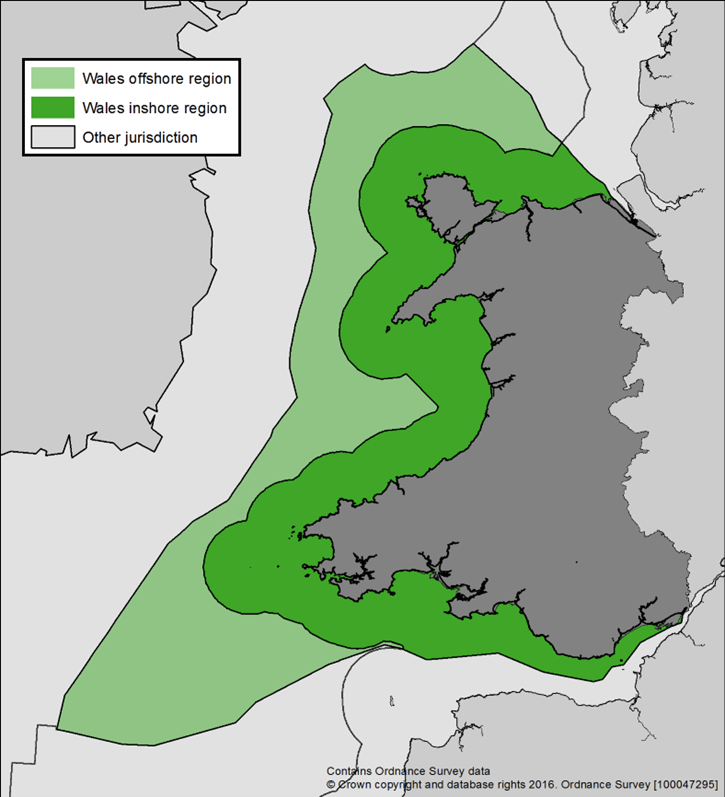
The Crown Estate manages much of the seabed around Wales, England and Northern Ireland, including areas leased for offshore wind developments. Its profits are paid to the UK Treasury, rather than being retained directly in Wales.
Plaid Cymru’s Ceredigion-Penfro branch said: “Crown Estate profits are up 2,300% but Welsh communities see no benefit.”
The issue has become increasingly topical as Pembrokeshire and the wider west Wales coast are being promoted as key locations for the next generation of floating offshore wind in the Celtic Sea.
Supporters of devolution argue that Wales should have control over the revenue generated from its coastline, seabed and natural resources, with profits reinvested in local infrastructure, ports, skills, transport and public services.
They also point to Scotland, where the Crown Estate has already been devolved. In Scotland, revenue from Crown Estate assets is managed north of the border and contributes to Scottish public finances.
Plaid Cymru says Wales should be treated in the same way.
The party argues that, as offshore wind expands, Wales risks seeing major energy infrastructure developed around its coastline while the financial rewards continue to flow to Westminster.
The Crown Estate has benefited significantly from offshore wind leasing in recent years. Across the UK, the estate has reported profits of more than £1 billion for a third consecutive year, with offshore wind continuing to play a major role in its income.
In Wales, the political argument is sharpened by the scale of potential development in the Celtic Sea.
Ports such as Milford Haven and Port Talbot are expected to play a major role in supporting floating offshore wind, with politicians and industry leaders saying the sector could bring thousands of jobs and major investment.

However, campaigners say Wales must secure more than construction work and supply-chain promises. They argue that long-term control of Crown Estate revenues would allow Wales to build a lasting national benefit from renewable energy.
The UK Government has previously resisted calls to devolve the Crown Estate in Wales. Ministers have argued that Crown Estate profits are returned to the Treasury and used for public spending across the UK.
Opponents of devolution also say Wales already receives funding through the wider UK funding settlement, and that changing the Crown Estate model could add complexity at a time when major energy projects need certainty.
But calls for change have continued to grow, particularly as the value of offshore wind leases has increased.
For Plaid Cymru, the issue is now being framed as a question of fairness.
The party says Wales is being asked to host nationally important renewable energy infrastructure while having limited control over the income generated from its own natural resources.
With the Senedd election approaching, the future of the Crown Estate is likely to remain a major political dividing line.
For campaigners, the argument is simple: if Welsh waters are helping to generate hundreds of millions of pounds, Welsh communities should see the benefit.
For the UK Government, the current system keeps Crown Estate revenue within the UK-wide public finances.
The debate now turns on whether Wales should continue under that arrangement, or follow Scotland in taking control of Crown Estate assets for itself.



Sport1 hour ago
Long Course Weekend gets underway in Tenby as thousands head for county
Three days of swimming, cycling and running begin with The Wales Swim at North Beach THOUSANDS of athletes and supporters...


Climate4 hours ago
Welsh waters, Westminster profits: Crown Estate row reignited in Wales
PLAID CYMRU has renewed calls for the Crown Estate to be devolved to Wales after figures showed income linked to...


Community7 hours ago
Working-class young people ‘shut out’ of marine conservation careers in Wales
New study says marine conservation is becoming a “functionally middle-class” profession as barriers to entry grow A NEW report has...

News10 hours ago
Reform MS: ‘I felt like shouting get out of the water’
Paul Marr says children playing in streams at Pembrokeshire beaches deserve better protection from pollution risks REFORM UK MS Paul...


Health1 day ago
Senedd backs call to rule out hospital downgrades after heated NHS debate
Reform UK amendment passes as West Wales hospital fears remain central political issue THE SENEDD has backed a call for...

News1 day ago
Coastguard callout payments axe sparks fears for coastal communities
VOLUNTEER coastguards across the UK are set to lose callout payments, prompting concern over the future resilience of emergency cover...


Farming2 days ago
Rural Wales ‘left out’ of net zero debate, warns carbon entrepreneur
A WELSH carbon entrepreneur has warned that rural Wales risks being left behind in the national conversation about net zero....


Local Government2 days ago
Tenby Spectacular row continues as organisers say key question remains unanswered
Round Table says legal clarity over pedestrian access is still holding up event plan TENBY ROUND TABLE has welcomed Pembrokeshire...


Community3 days ago
Manorbier fire scandal: Council’s payout just £63,777 after school destroyed
PEMBROKESHIRE COUNTY COUNCIL has accepted an insurance settlement which leaves it with just £63,777.07 after the catastrophic fire which destroyed...


News3 days ago
Bus overturns in major incident near Kidwelly
All passengers rescued as emergency services remain at scene A BUS overturned on the A484 between Kidwelly and Ferryside on...
-

 Health6 days ago
Woman jailed assaults on police, harassment and XL Bully possession
-

 Crime1 day ago
Police appeal after reported rape at Young Farmers rally
-

 Crime6 days ago
Milford Haven woman spared jail despite string of shop thefts
-

 Community5 days ago
The gentle giant behind the tattoos
-

 Crime6 days ago
Spittal man to stand trial accused of ABH
-

 Crime6 days ago
Carmarthenshire pensioner, 86, accused of causing prostitution for gain
-

 Entertainment5 days ago
Harbour Fest to bring music, food and maritime magic to Milford Waterfront
-

 Community7 days ago
Cabinet to review recent decision on crematorium services at special meeting