


News
CORONAVIRUS: It’s ‘crunch time’ for Pembrokeshire


PUBLIC service leaders in South West Wales have issued a stark warning to residents and communities in Pembrokeshire after new figures showed coronavirus cases are growing in the county.
Pembrokeshire County Council, Hywel Dda University Health Board and Dyfed-Powys Police are working closely with Public Health Wales and Welsh Government officials to respond to growing concerns about increased community spread of the virus.
They are urging people and businesses to take action now to avoid local restrictions being brought in that could affect people living in the county.
Numbers are now rising in Pembrokeshire with 37 new positive cases in the county in the seven days between the 3rd and 9th October.
Sadly, to date Public Health Wales have recorded 69 deaths in the Hywel Dda University Health Board area from people who caught the virus.
People are being asked to take the risk seriously and consider how their actions may impact on more vulnerable members of our communities.

Pembrokeshire County Council Leader, David Simpson, said: “I am imploring the people of Pembrokeshire – and visitors – to follow the advice from our health experts and to halt the spread of coronavirus in our county.
“This advice is based on scientific evidence and we must all play our part in reducing the spread of the virus.
“Make no mistake, failure to act now will impact on our daily lives and potential restrictions will be imposed on us
“This is crunch time. If we don’t follow the simple safety messages, we are increasing the risk of entering a lockdown situation again and nobody wants that to happen.

“So please, follow the precautions, look after one another and stay safe.”
Ros Jervis, Director of Public Health at Hywel Dda, added: “Coronavirus remains a very serious illness, especially for the elderly and those with existing risk factors.
“What’s most concerning about the spread of the virus in Pembrokeshire is that we have not yet been able to identify a common pattern of infection – it appears to be affecting people from a number of age groups, backgrounds and geographical locations.

“As we and our partners in Public Health Wales and local authorities deal with these clusters, it’s of paramount importance that we protect our essential services as much as possible.
“I would urge the public to remain vigilant and follow the rules, including wearing face coverings that cover the mouth and nose, keeping two metres away from others outside of their household bubble, as well as washing hands regularly, or using a hand sanitizer if hand washing is not possible.
“It’s also critically important that people self-isolate if you or anyone in your household develops Covid-19 symptoms and that you book a test, as there is plenty of capacity.”
Chief Constable of Dyfed-Powys Police, Mark Collins, said: “It is very concerning that we are seeing increased community spread of the virus in Pembrokeshire, and now is the time for each and every one of us to step up and be more vigilant in complying with the current necessary restrictions and behaviours.
“Please remember that in addition to the Wales-wide restrictions, Welsh Government can impose local restrictions for specified areas where there has been an increase in the number of cases of the virus.
“So, if we want to avoid these additional local restrictions, we must all act now and ensure that we support the current rules as far as possible.
“Our officers continue to be visible in our local communities, maintaining safe distances when we engage with residents, and will explain the circumstances and encourage people to do the right thing in complying with the restrictions.
“We know it’s tempting to gather with friends and family, but it’s vitally important that we stick to the rule of six indoors from an extended household only – including in pubs and restaurants, and outside only gatherings of up to 30 are permitted.
“Faced with non-compliance, and if considered necessary and proportionate to help stop the spread of the virus, we will take enforcement action against those flagrantly or persistently breaching the regulations.”
The key messages are simple:
• keep at least two metres distance from people not in your household
• wash your hands regularly
• wear a face covering in indoor public places, shops and on public transport
• do not meet with more than six people indoors from your extended household (not including children under 11)
• do not meet with more than 30 people outdoors.
The main symptoms of Covid-19 are:
• a high temperature: this means you feel hot to touch on your chest or back (you do not need to measure your temperature)
• a new, continuous cough: this means coughing a lot for more than an hour, or 3 or more coughing episodes in 24 hours (if you usually have a cough, it may be worse than usual)
• a loss or change to your sense of smell or taste: this means you’ve noticed you cannot smell or taste anything, or things smell or taste different to normal.
Anyone who develops any of these symptoms must follow self-isolation guidance and arrange a test as soon as possible, only leaving home to get tested.
If a Covid-19 test is required, this should be arranged via the UK Booking Portal: https://gov.wales/apply-coronavirus-test
or by ringing 119.










Valero donation helps secure historic ‘Memento Mori’ treasure found near Uzmaston
A RARE Tudor gold ring dating back more than four centuries has been added to the collection at Haverfordwest Town Museum, thanks to a donation from Valero Pembroke Refinery.
The 6.38-gram gold ring was discovered by a metal detectorist at Uzmaston and Boulston in 2021 and has since been formally declared treasure.
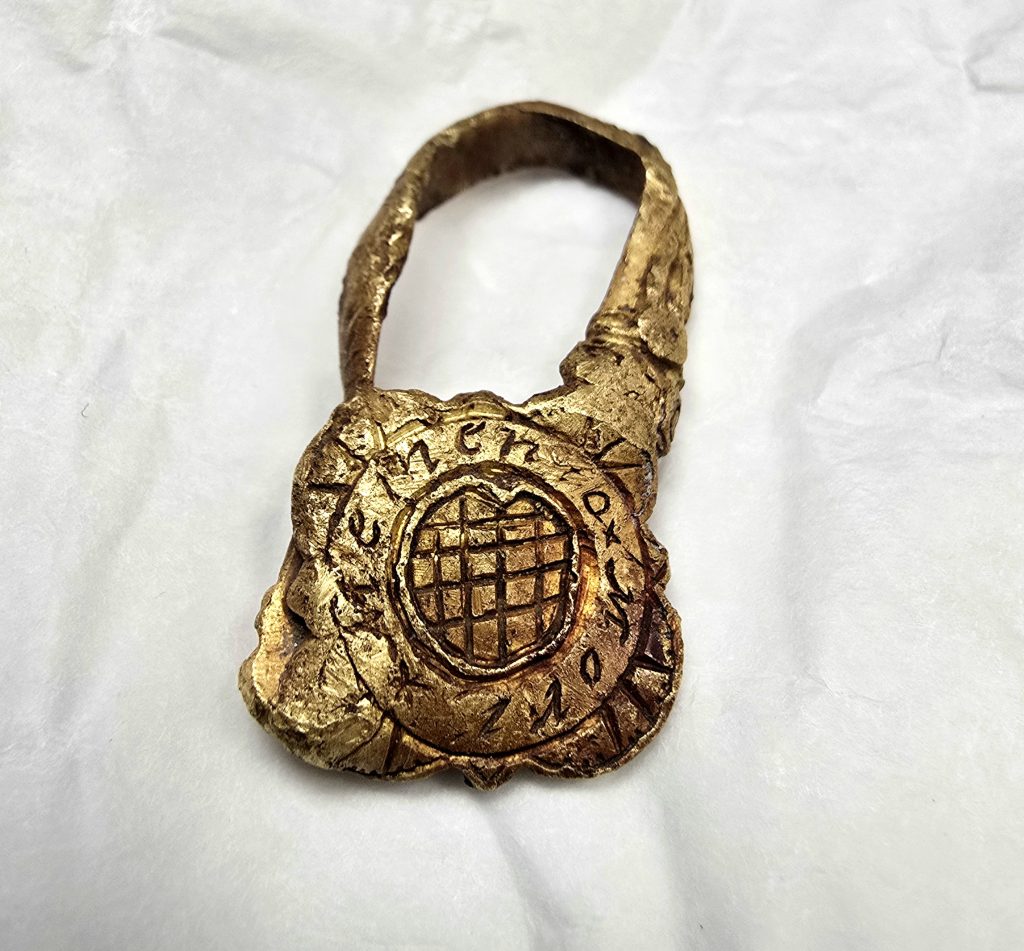
Stylistically dated to between 1550 and 1650, the ring bears the inscription ‘Memento Mori’ – the Latin phrase meaning ‘Remember you must die’ – alongside a small skull motif filled with cross-hatched detailing. Such rings were commonly worn during the Tudor and early Stuart periods as a symbolic reminder of the brevity of life.
Museum curator Dr Simon Hancock said the piece offers a rare and personal glimpse into the beliefs of the period.
He explained: “Such rings, worn by a merchant or member of the gentry, reminded the wearer of the shortness of life. This was a very popular theme during the sixteenth and seventeenth centuries.
“The ring was declared treasure and we are very grateful to Valero for providing a grant towards the treasure valuation, allowing us to secure it for the museum and the people of Pembrokeshire.”
The acquisition ensures the artefact will remain in the county where it was found and will go on public display as part of the museum’s growing local history collection.
Pictured are Ted Sangster, chair of Haverfordwest Castle CIO; Lesley Turner, museum treasurer; Tim Evans, chair of trustees; Stephen Thornton of Valero; Dr Simon Hancock, curator; and Bethany Hope, museum volunteer and social media manager.
Welsh arrests now deemed unlawful as judges rule proscription breached human rights
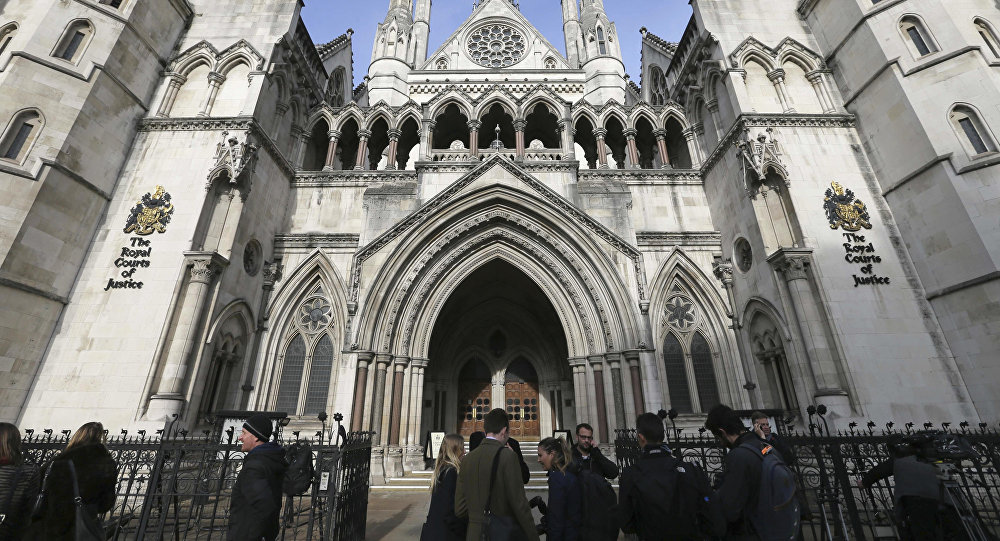
THE High Court has ruled that the UK Government acted unlawfully when it branded protest group Palestine Action a terrorist organisation – a decision that directly affects dozens of arrests made in Wales.
In a landmark judgement delivered on Thursday (Feb 13) at the Royal Courts of Justice in London, judges said the ban represented a disproportionate attack on the rights to free speech and peaceful assembly.
The ruling means arrests made under the proscription since last summer could now be unlawful.
Campaigners say at least 34 people were detained in Wales alone.
Palestine Action had been banned under the Terrorism Act 2000 in July 2025, making it a criminal offence to show support for the group. The move marked the first time a non-violent civil disobedience organisation focused on property damage – rather than violence against people – had been classified alongside terrorist groups.


Welsh protesters affected
Demonstrations took place across Wales as part of the nationwide “Lift the Ban” campaign organised by Defend Our Juries.
Silent vigils and placard protests were held in both Cardiff and Swansea.
Campaign figures show:
• 13 arrests outside BBC Wales headquarters last July
• 12 more during November protests in Cardiff
• Nine detained on the steps of the Senedd Cymru
Across the UK, nearly 3,000 people were arrested, including clergy, teachers and pensioners.
Court criticism of Home Office
The case was brought by Palestine Action co-founder Huda Ammori.
After a three-day judicial review, judges Dame Victoria Sharp, Jonathan Swift and Karen Steyn found the Home Office had failed to properly consult the group and had not followed its own proportionality rules.
They ruled the ban breached Articles 10 and 11 of the European Convention on Human Rights – protections covering freedom of expression and assembly.
In a statement, Ammori said:
“This is a monumental victory both for our fundamental freedoms here in Britain and for the Palestinian people.”
A Defend Our Juries spokesperson added:
“Branding peaceful protest as terrorism is something you expect from dictatorships, not democracies.”
Border links to Wales
The issue has particular relevance locally.
Palestine Action has frequently targeted sites near the Welsh border, including facilities run by Elbit Systems at Filton and Aztec West, less than thirty miles from Cardiff.
Activists allege the company supplies drones and equipment used in Gaza.
Six protesters were recently acquitted by a jury following damage at the Filton site, arguing their actions were intended to prevent greater harm overseas.
That proximity has drawn many Welsh campaigners into demonstrations, with protests spilling into Wales amid wider concerns over UK arms exports.
Appeal pending
The Government has been granted time to appeal.
Home Secretary Yvette Cooper said ministers were “disappointed” and would challenge the decision at the Court of Appeal.
The quashing of the ban has therefore been temporarily paused.
Legal experts warn that while the judgement casts doubt on earlier arrests, individuals may still need separate legal action to clear records or seek compensation.
Wider implications
Civil liberties groups including Amnesty International had warned the proscription risked setting a precedent for using anti-terror laws against non-violent movements such as climate activists.
For many in Wales, the ruling is seen as a reaffirmation of the right to protest.
One Cardiff campaigner said:
“This was never about supporting violence. It was about the right to stand up and speak out.”
With tensions over Gaza continuing and further demonstrations planned, Thursday’s decision is likely to reignite debate over the limits of protest — and how far the state can go to suppress dissent.
For now, however, activists say the High Court has drawn a clear line.
Peaceful protest, judges ruled, is not terrorism.


Milford Haven tug master’s son recalls chaos, courage and family legacy thirty years on
THE EDITOR of The Pembrokeshire Herald has spoken on BBC Radio Wales Breakfast about his family’s connection to the Sea Empress disaster, thirty years after the tanker ran aground off Milford Haven.
Tom Sinclair appeared on the morning programme between 8:00am and 9:00am, reflecting on how the 1996 oil spill unfolded both as a major national story and as something happening outside his own front door.
Sinclair told listeners how he first learned of the grounding while on a school trip abroad, switching on the television in a hotel room to see Milford Haven dominating international news coverage.
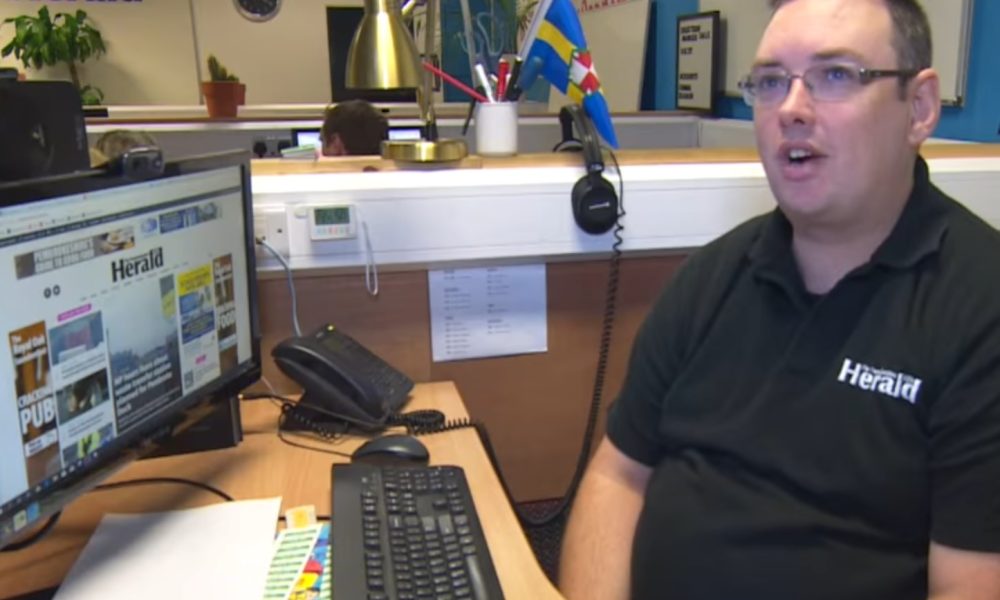
He also described how his late father, Thomas Sinclair, was directly involved in the response.
At the time, Mr Sinclair was a senior tug master with Cory Towage and remained at sea to assist with the salvage operation alongside other local crews.
Speaking after the programme, Sinclair said the disaster had always felt “very personal”.
“Our house overlooked the Haven, so everything was happening right in front of us,” he said. “Dad was out there working on the tugs while we were watching it on the news at home.”
He recalls aircraft flying low over the water to spray dispersants and the constant anxiety ashore as storms battered the stranded tanker.
As a teenager, he also helped his father prepare documents relating to escort towing procedures in the aftermath of the incident, typing reports on a home computer in the family attic.
“It was strange talking about it on the radio,” he added. “Dad can’t be here to tell those stories himself now, so it felt like an honour to share some of those memories.”
The Sea Empress spill, which released tens of thousands of tonnes of crude oil, remains one of the worst environmental disasters in British waters and had a lasting impact on Pembrokeshire’s coastline and maritime operations.



News3 hours ago
Three climbers rescued after fall at St Govan’s Head
THREE climbers have been rescued after falling into the sea at St Govan’s Head, following a major multi-agency emergency response...


Community4 hours ago
Lifeboat to find new home at Pembroke Dock museum after historic handover ceremony
A HISTORIC lifeboat which saved forty lives around the British coastline is set to begin a new chapter in Pembroke...


Crime1 day ago
Pendine man jailed for abducting and drugging teenage girl
Offender had 1,101 unlawful images of children stored on his devices, including 122 Category A images – the most serious...


Crime2 days ago
Publican admits supplying cocaine and cannabis at Crown Court
Admits cocaine and cannabis supply but denies intent and cash allegations A MILFORD HAVEN pub landlord has admitted supplying cocaine...


Local Government2 days ago
Plaid win in Fishguard North East by-election
PLAID CYMRU has taken the Fishguard North East seat on Pembrokeshire County Council following this week’s by-election. Billy Shaw was...


News3 days ago
Man to return to court over alleged harbour collision
Three charges relate to navigation of vessel in Milford Haven A NEWPORT man is due to return to court later...


Business4 days ago
Computer Solutions Wales under fire from customers
Claims of unreturned devices, unpaid refunds and small claims court cases as company blames landlord dispute CUSTOMERS across west Wales...


News4 days ago
Starmer under fire as aides quit and Scottish Labour leader calls on him to resign
Two senior Downing Street exits in 24 hours as Anas Sarwar breaks ranks, but ministers insist the Prime Minister is...


News4 days ago
Fresh concerns over £60m A40 scheme after resurfacing works just months after opening
QUESTIONS are being asked about the condition of the newly-opened A40 Llanddewi Velfrey to Redstone Cross carriageway after sections of...

Charity4 days ago
RSPCA looks back at the Sea Empress oil tanker disaster 30 years on
Charity reflects on one of the biggest environmental disasters to hit UK IN just a few days time it will...
-

 Health2 days ago
Health Board to decide future of nine key services at two-day meeting
-
Business4 days ago
Computer Solutions Wales under fire from customers
-

 Business7 days ago
Six-figure negligence victory leaves retired builder trapped in divorce limbo
-

 Business6 days ago
Minimum alcohol price to rise by 30 per cent as retailers warn of border impact
-

 Education7 days ago
Second west Wales school placed in lockdown within days
-

 Community3 days ago
Facebook ‘news’ site targeting Herald editor collapses after community backlash
-

 Charity4 days ago
Welsh patient voices help shape new UK-wide online kidney forum
-

 Crime5 days ago
Pembroke Dock man admits threatening to hack woman’s head off with sword