


News
‘Nothing to apologise for’ over Wales Covid rules says Mark Drakeford


FIRST MINISTER Mark Drakeford has rejected Conservative calls for him to apologise to pubs and restaurants for the impact of Wales’ coronavirus restrictions.
During the weekly First Minister’s Questions, Tory leader Andrew RT Davies accused Mark Drakeford of keeping tighter restrictions in place than were in force in England during the outbreak of the omicron variant.
Welsh Conservative leader Andrew RT Davies MS called on Mark Drakeford to apologise to business owners across the country and increase financial support to help them survive and thrive.
But during today’s First Minister’s Questions, Drakeford insisted he had “absolutely nothing to apologise for” and refused to make more cash available for businesses.
The Tories say that many business owners are anxious that the money set aside by Labour ministers won’t even scratch the surface when it comes to recouping losses over the festive period and covering staffing costs.

Davies also pressed the First Minister to reveal what metrics will be used to judge when restrictions such as vaccine passports and masks to be removed in Wales.
However, Drakeford swerved the question, failing to outline criteria that would have to be met.
Commenting after the FMQ exchange, Welsh Conservative leader Andrew RT Davies MS, said: “The First Minister’s refusal to apologise for the damage his overzealous restrictions have done to companies across Wales will feel like a massive slap in the face for business owners.
“Traders have been shouting from the rooftops that the current financial package isn’t enough and it’s clear they need more, but as well as refusing to say sorry, the First Minister is also refusing to provide them any additional support to compensate for the lost trade.

“It was also disappointing that the First Minister couldn’t give the Senedd a full and frank answer about what criteria has to be met before the use of COVID passports and other anti-business restrictions are dropped in Wales.
“Welsh residents and businesses deserve answers and clarity so they can start planning for a time when they can trade and live their lives as normal again, but Labour ministers are leaving the country in limbo.”
In response the First Minister said he had “absolutely nothing to apologise for.”

He said: “The Conservative Party in Wales has a great deal to apologise for, in the way that it has time after time, sought to deny people in Wales and businesses as well the protections that are needed from a global pandemic.
“We put in measures that were designed to make sure that lives were saved in Wales, and that businesses could go on trading and there’s absolutely nothing to apologise for in doing that, because those measures were necessary, and those measures have been effective.”


Reliance on US interceptors leaves gaps as Iran’s reach grows
BRITAIN would struggle to defend itself against a long-range ballistic missile attack and would instead rely heavily on American systems based in Eastern Europe and at sea — with no guarantee of success.
That is the stark reality emerging after Iran’s attempted strike on a UK–US base at Diego Garcia on Saturday (March 21), a move that caught many world leaders off guard and marked a significant escalation in capability.

Concerns are further heightened by Iran’s development of larger space launch vehicles, including the Simorgh, Zuljanah, Ghaem-100 and Qased systems, which on paper demonstrate ranges of between 2,200 km and up to 6,000 km, with payload capacities of up to 1,000 kg. While these rockets are officially designed to place satellites into orbit rather than deliver warheads, they use the same multi-stage technology and propulsion systems found in long-range ballistic missiles. Defence analysts have long warned that such programmes provide a clear pathway to intercontinental strike capability, raising the prospect that parts of Europe — and potentially even the UK — could fall within reach if these technologies are adapted for military use.
No UK shield over Britain
The UK has no dedicated system to shoot down long-range ballistic missiles over its own territory.
While RAF Fylingdales provides early warning and tracking, it cannot intercept incoming threats. Britain’s air defence network — including RAF jets and ground systems — is designed for aircraft, drones and cruise missiles, not high-speed ballistic weapons.

In simple terms, if a missile were heading toward a target such as Milford Haven’s energy facilities, there is no British-operated system that could reliably stop it at the last moment.
America would have to act
Instead, any interception attempt would fall to the United States.
Key assets include:
- Aegis Ashore missile defence bases in Romania and Poland
- US Navy warships equipped with SM-3 interceptors
- Wider NATO tracking and coordination systems
These systems are capable of striking a missile in space during its midcourse phase, long before it reaches the UK.

But there is a crucial limitation: they can only engage if the missile passes within range of those systems.
If the trajectory falls outside that envelope — or if no US ship is positioned correctly — there may be no interception at all.
A probability, not protection
Even when an intercept is attempted, success is far from certain.

Testing data for the SM-3 system suggests success rates of roughly 50 to 80 per cent per engagement, depending on conditions. In practice, multiple interceptors are often fired at a single target to improve the odds.
That still leaves a significant margin for failure.
In a real-world scenario involving countermeasures, technical faults or multiple missiles, the chances of at least one getting through rise sharply.
Gaps in coverage
The NATO missile defence network is not a continuous shield.
It is a patchwork of coverage zones tied to specific systems:
- Romania and Poland provide fixed land-based interception capability
- US warships offer flexible but limited coverage depending on deployment
There is no permanent protective umbrella over the UK itself.
If a missile does not pass through one of those defended zones, Britain would effectively be relying on luck and geometry.
Deterrence, not defence
Ultimately, the UK’s primary protection is not interception — it is deterrence.
Any successful strike on British soil would almost certainly trigger a major NATO response, making such an attack extraordinarily risky for any adversary.
But deterrence does not equal defence.
A growing concern
Iran’s attempted long-range strike on Diego Garcia has shifted the debate sharply.
The use of a missile capable of travelling thousands of kilometres surprised many Western leaders, who had not expected Tehran to demonstrate that level of reach in the current crisis. Although one missile failed and another was intercepted, the incident has raised fresh questions about how far Iran’s capabilities have advanced.
For years, the idea of a missile threat to Europe — let alone Britain — was largely theoretical. Now, defence analysts are treating it as a credible future risk, even if capability remains limited today.
The bottom line
The UK can detect a missile, track it, and coordinate a response — but when it comes to actually stopping it, the country would be dependent on American systems operating at distance, with no certainty of success.
If a missile ever did get through, there would be little standing between it and its target.
And that is the uncomfortable truth behind the headlines.

Colourful parade, towering creations and Victorian flair bring town centre to life
TENBY was transformed into a vibrant Victorian fantasy on Saturday (Mar 21) as hundreds of visitors descended on the town for the annual Steampunk Festival.
The highlight of the day came with the much-anticipated Peacock Parade, which saw elaborately dressed participants wind their way through Tenby’s narrow streets, drawing large crowds of spectators.

Residents and visitors lined the route, many stopping to take photos as performers in eye-catching costumes passed by. From brass goggles and top hats to military-inspired uniforms and elegant gowns, the outfits on display reflected the creativity and theatrical spirit of the steampunk scene.
Among the most striking sights were the towering pink flamingo creations, which rose high above the crowds and became an instant talking point. Musicians in period costume added to the atmosphere, playing lively tunes as they marched through the town.

Families were out in force, with children and adults alike enjoying the spectacle. Many visitors had travelled from across Wales and beyond to attend the event, which has grown in popularity in recent years and is now firmly established as a key date in Tenby’s events calendar.
The Herald understands that local businesses also benefited from the influx of visitors, with cafés, pubs and shops seeing a steady flow of customers throughout the day.
In addition to the parade, a range of activities were taking place across the town, including markets, performances and themed entertainment centred around the De Valence Pavilion.
Organisers have worked to create an inclusive and welcoming event, with many people choosing to dress up while others simply come along to enjoy the unique atmosphere.
The festival continues on Sunday, with further events planned as Tenby remains firmly in the grip of steampunk fever for the weekend.

Photos: Colourful characters take part in the Peacock Parade through Tenby on Saturday (Pic: Gareth Davies).
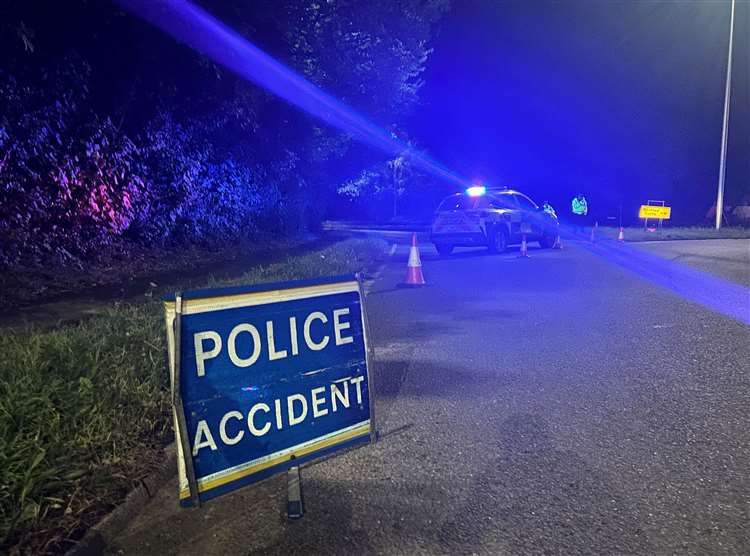
More than 1,200 lives lost each year as charity warns of growing public health crisis
ACCIDENTAL deaths in Wales have risen by 43% over the past decade, with more than 1,200 people now dying each year, prompting calls for urgent action from the next Welsh Government.
New figures released by the Royal Society for the Prevention of Accidents (RoSPA) show that Wales now has a death rate 22% higher than the UK average, with preventable harm placing increasing pressure on the NHS and disproportionately affecting poorer communities.
Falls remain the leading cause of accidental death, accounting for nearly half of all fatalities. People in Wales are around 24% more likely to die from a fall than those elsewhere in the UK.
RoSPA has warned that the situation represents a growing public health crisis, as it launches its Stronger, Safer Wales manifesto ahead of the next Senedd election.
The charity is urging ministers to treat accident prevention as a national priority, arguing that many deaths could be avoided through relatively simple and low-cost interventions.
Accidental harm is also linked to a range of other risks, including rural road collisions, accidental poisonings, machinery incidents, and dog-related injuries.
The wider impact is significant, with preventable accidents costing the NHS billions, reducing workforce participation, and deepening inequality across Wales.
RoSPA is calling for a range of measures, including improved home safety standards, compulsory water safety education in schools, and stronger road safety interventions.
Among its proposals are mandatory eyesight tests for drivers every three years, better road markings to protect motorcyclists, and tighter regulation of unsafe or counterfeit products sold online.
The charity also wants to see national home safety programmes introduced to support vulnerable households, along with clearer responsibilities for local authorities in managing water safety risks.
Becky Hickman, Chief Executive of RoSPA, said the figures should act as a wake-up call for policymakers.
She said: “Wales is facing a clear and escalating crisis of accidental deaths, and the evidence shows the situation is worsening year on year.

“Behind every statistic is a life that could have been saved with practical, proven interventions.
“We are calling on the next Welsh Government to make accident prevention a national priority, because coordinated action will save lives, reduce inequalities and relieve pressure on the NHS.”
She added: “Accidents are not inevitable. With strong leadership and consistent standards across Wales, we can significantly reduce preventable harm.”
RoSPA says tackling the issue will require coordinated action across government, emergency services, local authorities and industry, but insists that the solutions are both achievable and cost-effective.
The charity’s manifesto is intended to shape future policy in Wales, with a focus on reducing avoidable deaths while easing pressure on overstretched public services.



Entertainment6 hours ago
Tenby steams up in spectacular style as crowds flock to festival
Colourful parade, towering creations and Victorian flair bring town centre to life TENBY was transformed into a vibrant Victorian fantasy...


Crime1 day ago
Publican jailed for six years for supplying cocaine and cannabis
Milford Haven man sentenced at Swansea Crown Court following drug dealing operation A MILFORD HAVEN publican has been jailed for...


Local Government1 day ago
Poverty summit highlights support efforts across Pembrokeshire
A SUMMIT bringing together key organisations from across Pembrokeshire has highlighted both the scale of local poverty and the work...


Education2 days ago
Milford Haven school plans unveiled but funding not yet secured
PLANS for a new £100 million school in Milford Haven have been unveiled, but the project has not yet secured...


News2 days ago
Council unveils plans for new state-of-the-art secondary school in Milford Haven
PEMBROKESHIRE COUNTY COUNCIL has revealed plans for a new state-of-the-art school in Milford Haven, promising modern, inspiring learning spaces for...


Health2 days ago
NHS waiting list falls — but cancer delays and diagnostic backlog worsen
Record progress claimed by Welsh Government as critics warn key targets are still being missed THE NHS in Wales has...


Crime3 days ago
Rapist jailed after ‘abhorrent’ attacks on woman and children
Haverfordwest man told police “women won’t have sex without force” A HAVERFORDWEST man who raped a woman and a young...


News3 days ago
Reform secures first Pembrokeshire councillor in Hakin by-election win
Late Reform candidate takes seat as independent surge and Labour withdrawal shape contest REFORM UK candidate Scott Thorley has won...


News4 days ago
Scott Thorley elected as Pembrokeshire’s first Reform councillor
REFORM UK candidate Scott Thorley has won the Hakin by-election after securing 179 votes. The full result is as follows:...


News4 days ago
Police confirm man has died after being recovered from River Cleddau
Major emergency response in town centre after concerns raised for man in water A MAN has died after being recovered...
-

 News6 days ago
Fishguard linked to allegations in Many Tears Animal Rescue investigation
-

 News4 days ago
Emergency services flood Haverfordwest after reports of person in river
-

 Crime3 days ago
Mother given community order after admitting child cruelty offence
-
Health2 days ago
NHS waiting list falls — but cancer delays and diagnostic backlog worsen
-

 Crime6 days ago
Man cleared of sexual assault allegation after magistrates rule no case to answer
-

 international news6 days ago
UK considers military options as pressure grows to secure Strait of Hormuz
-
 News4 days ago
Senedd votes to ban Greyhound racing in Wales to protect animal welfare
-

 News4 days ago
Senedd vote to ban greyhound racing hailed as ‘landmark moment’ by charities