


News
Climate change to blame for ‘science fiction’ temperatures, says weather expert


CLIMATE change is to blame for the current high temperatures in the UK, according to a leading weather expert.
On fears climate change is to blame for the current heatwave, Phil Morrish told GB News:
“Absolutely it is. This weather is actually coming from the Sahara Desert.
“It has come up all the way from the Sahara, is coming through France and Spain and is a really, really hot air mass and these temperatures are absolutely incredible…
“These are science fiction temperatures. These are things on the charts that we thought wouldn’t come until 2050, that shows you it’s global warming.

“This incredible heat is going to become very, very established across the country with the red warnings in the south-east England, Midlands up into Manchester, so it’s very widespread indeed.”
“This is air which is really, really hot and very, very hot air indeed.
“And this has come up all the way from the Sahara and is the hottest air that we’ve ever had.
“Now, the forecast on this has been incredible. Up to seventeen days ago, what we call the global forecasting system first said that we’re going to get these really hot temperatures arriving.
“We couldn’t believe them at first and all the other weather models have come into line. And so we’ve got a really hot couple of days ahead.”
Asked about how people can hope in the heatwave, Mr Morrish told GB News:
“You’re being put under tremendous stress and you have temperatures of 35 and above, actually your body temperature is 37 degrees almost as hot or hotter than your blood.

“These are incredibly high temperatures and with humidity too, it is dangerous to be out for very long under these temperatures.
“None of our schools have got air conditioning. They are all in hot stuffy classrooms, with 30 children is extremely unpleasant indeed and it’s the last week of term for a lot of schools.
“I’m sure not too much is going on in many of them, but it’s really, really hot indeed. It’s very unpleasant and very, very hot indeed, so yes, it’s something to be aware of today.”

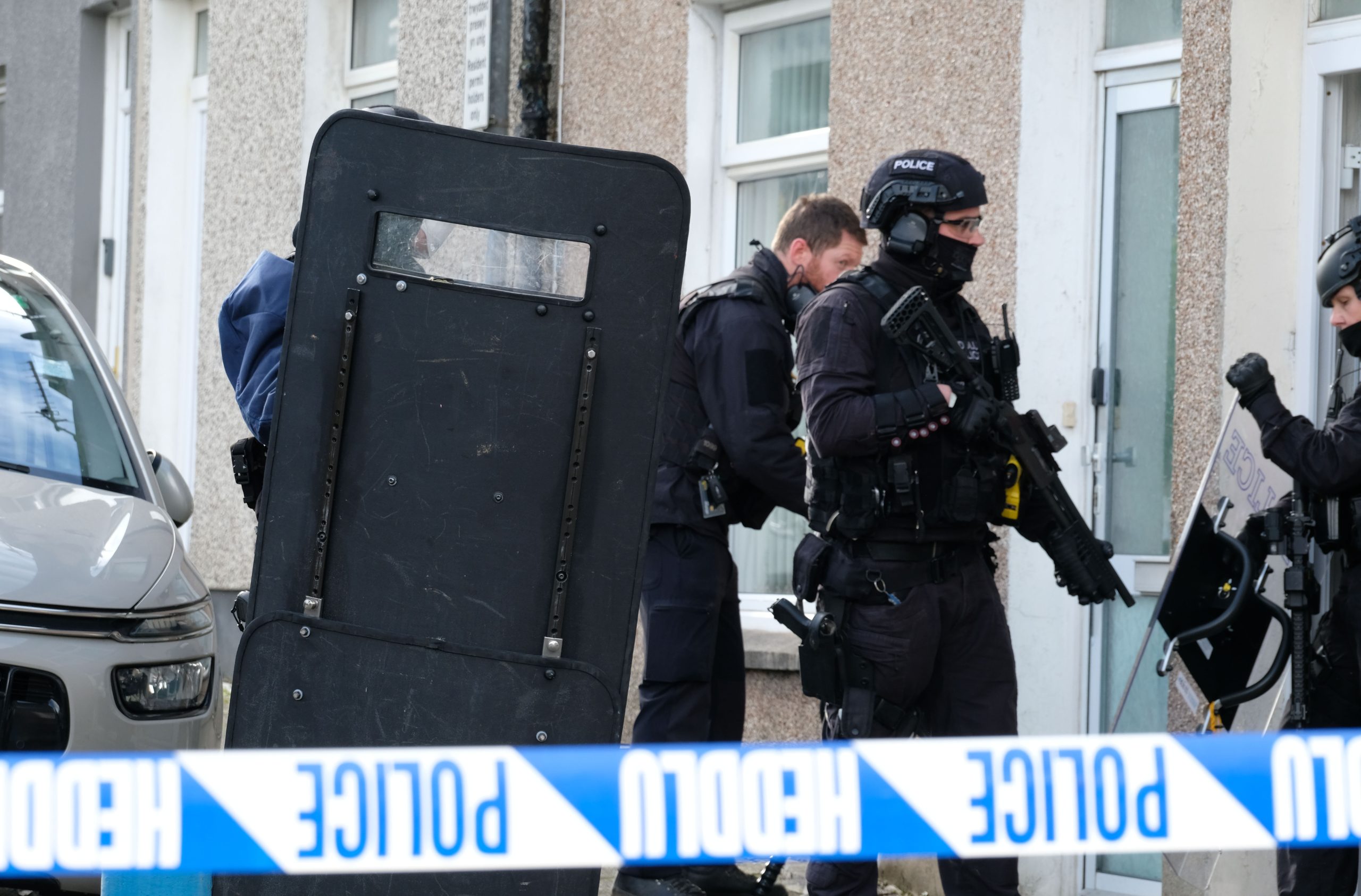
Firearms officers, dog units and roadblocks deployed on Gordon Street as Dyfed-Powys Police investigate
ARMED officers sealed off part of Pembroke Dock this afternoon (Friday, Feb 13) after a large-scale police operation in Gordon Street.
Heavily equipped firearms officers from Dyfed-Powys Police were seen wearing helmets and body armour and carrying carbines and ballistic shields as they surrounded a terraced property.
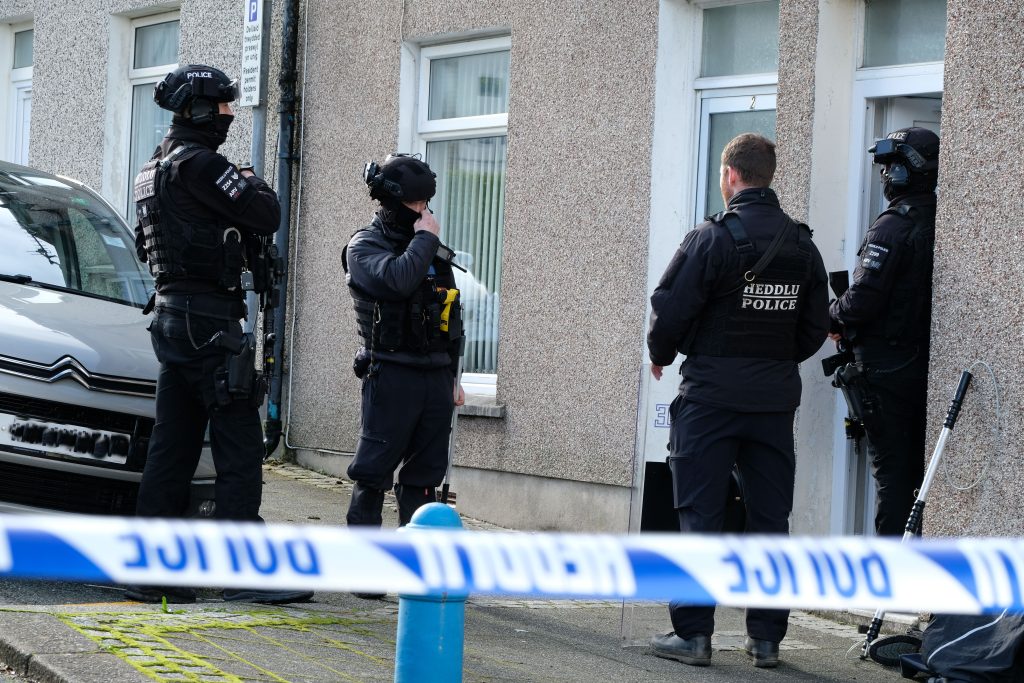
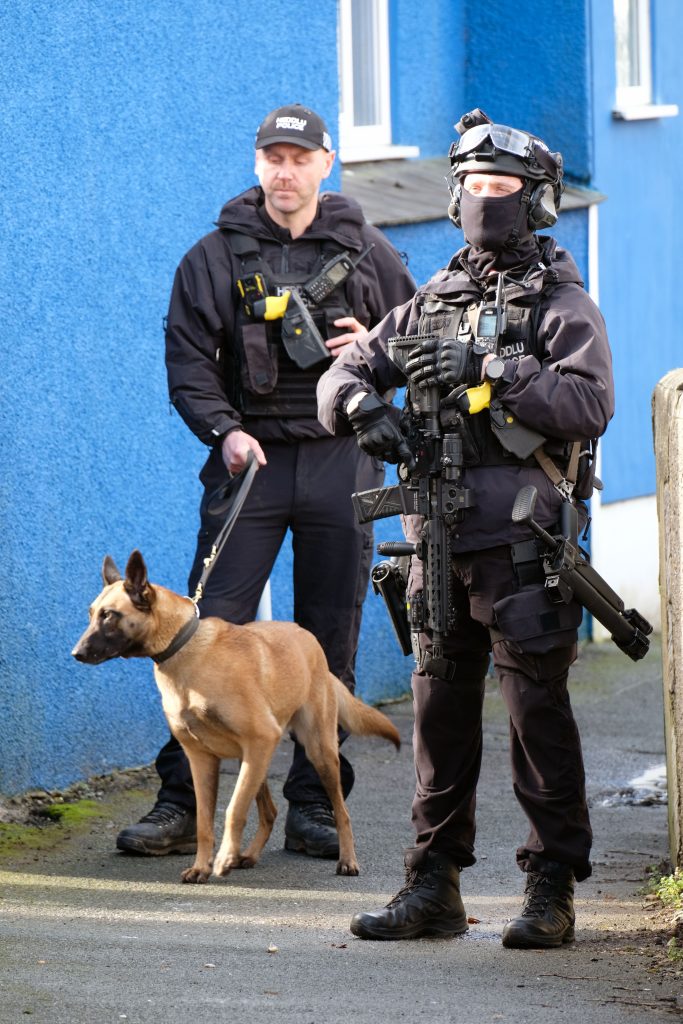
Multiple marked vehicles blocked both ends of the road while specialist teams moved in on foot. Two police dog units were also deployed to search the area.
Photographs from the scene show officers establishing a cordon with police tape across the street and positioning themselves at the doorway of a flat.
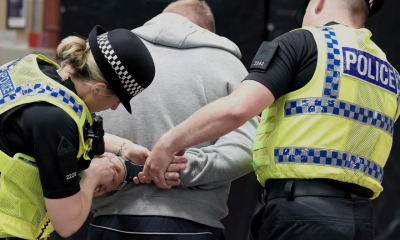
The Herald understands that at least one man was detained and led away in handcuffs. Witnesses reported several people being stopped during the operation.
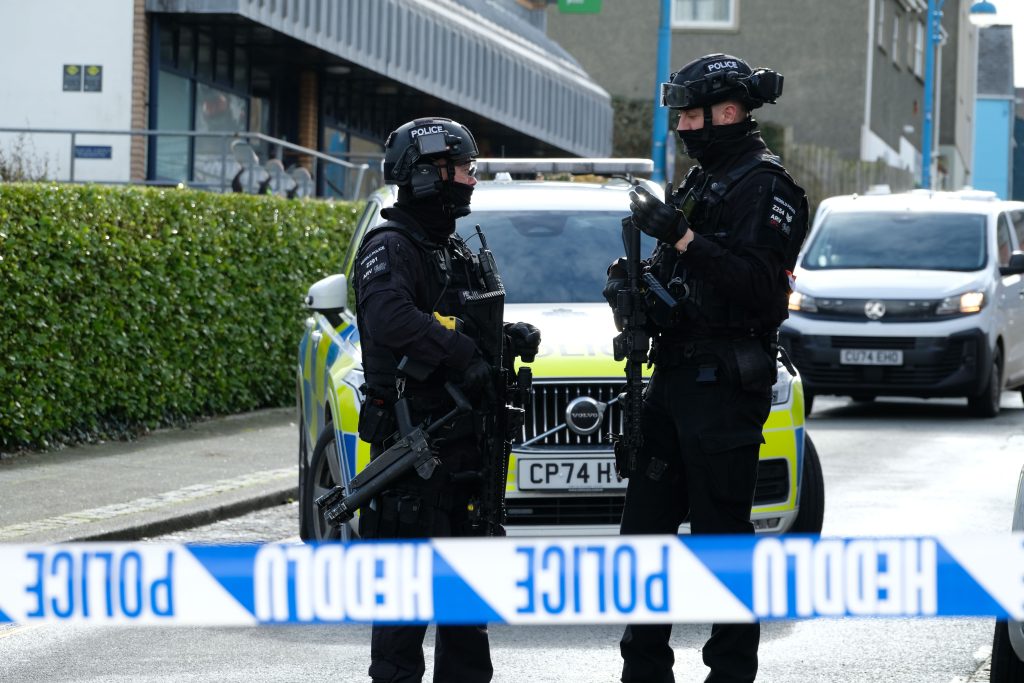
One nearby resident said the response was swift and highly visible. “They blocked the street straight away. There were armed officers everywhere and dogs searching around,” they said.
Police have not yet confirmed the nature of the incident or how many arrests have been made.
Dyfed-Powys Police has been approached for further information.
More to follow as we receive it.


Valero donation helps secure historic ‘Memento Mori’ treasure found near Uzmaston
A RARE Tudor gold ring dating back more than four centuries has been added to the collection at Haverfordwest Town Museum, thanks to a donation from Valero Pembroke Refinery.
The 6.38-gram gold ring was discovered by a metal detectorist at Uzmaston and Boulston in 2021 and has since been formally declared treasure.
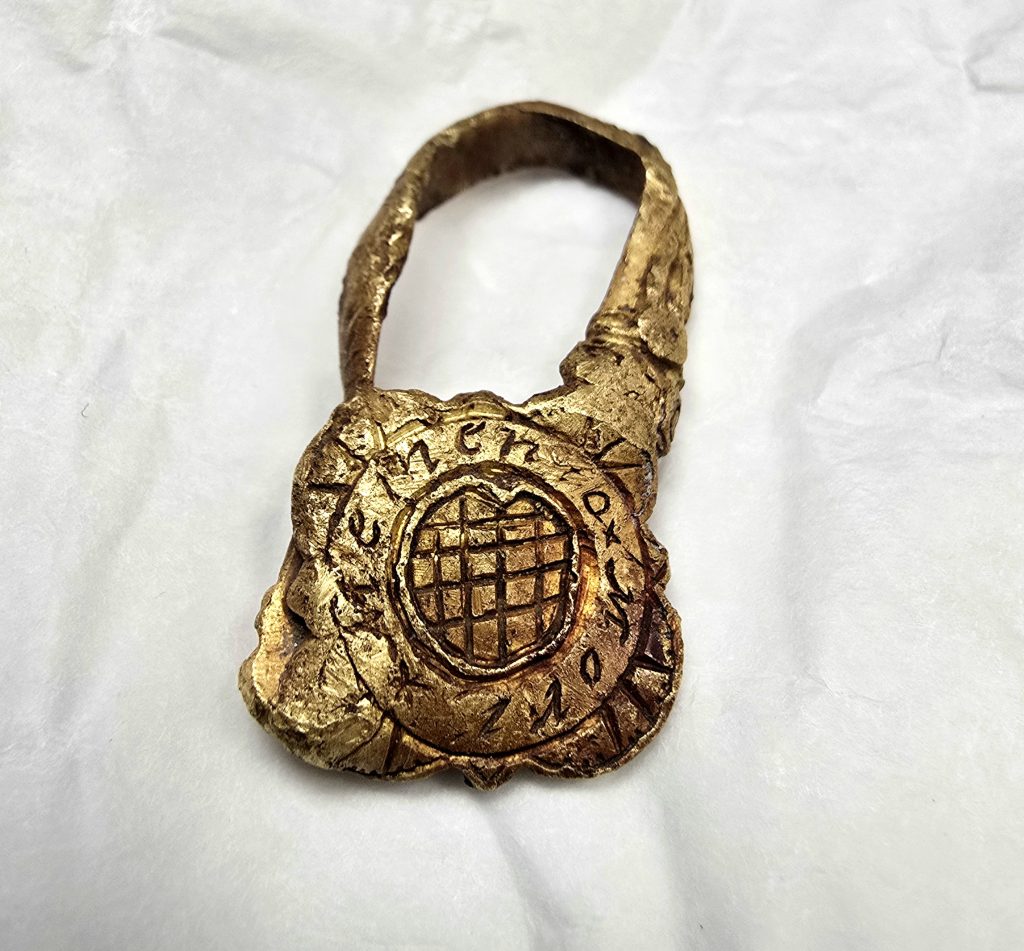
Stylistically dated to between 1550 and 1650, the ring bears the inscription ‘Memento Mori’ – the Latin phrase meaning ‘Remember you must die’ – alongside a small skull motif filled with cross-hatched detailing. Such rings were commonly worn during the Tudor and early Stuart periods as a symbolic reminder of the brevity of life.
Museum curator Dr Simon Hancock said the piece offers a rare and personal glimpse into the beliefs of the period.
He explained: “Such rings, worn by a merchant or member of the gentry, reminded the wearer of the shortness of life. This was a very popular theme during the sixteenth and seventeenth centuries.
“The ring was declared treasure and we are very grateful to Valero for providing a grant towards the treasure valuation, allowing us to secure it for the museum and the people of Pembrokeshire.”
The acquisition ensures the artefact will remain in the county where it was found and will go on public display as part of the museum’s growing local history collection.
Pictured are Ted Sangster, chair of Haverfordwest Castle CIO; Lesley Turner, museum treasurer; Tim Evans, chair of trustees; Stephen Thornton of Valero; Dr Simon Hancock, curator; and Bethany Hope, museum volunteer and social media manager.
Welsh arrests now deemed unlawful as judges rule proscription breached human rights
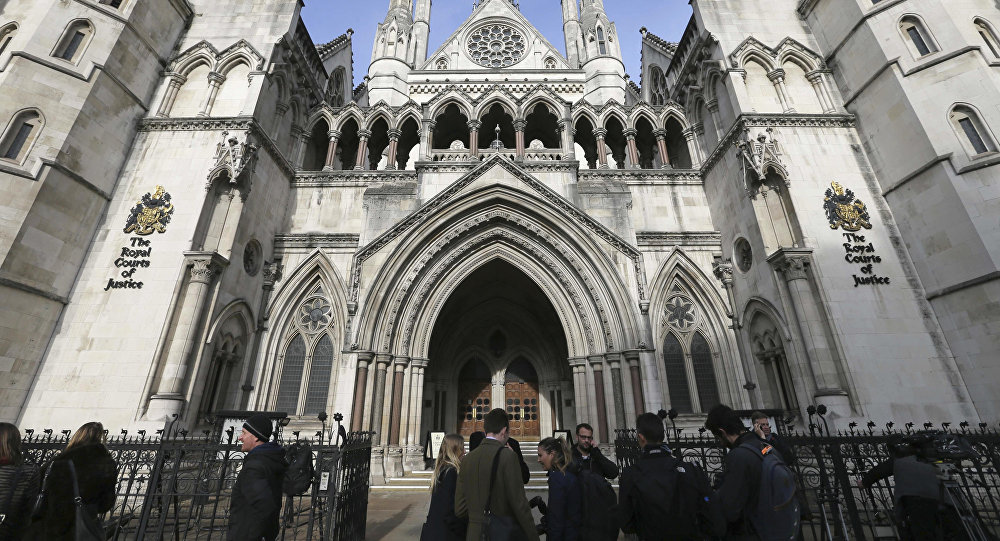
THE High Court has ruled that the UK Government acted unlawfully when it branded protest group Palestine Action a terrorist organisation – a decision that directly affects dozens of arrests made in Wales.
In a landmark judgement delivered on Thursday (Feb 13) at the Royal Courts of Justice in London, judges said the ban represented a disproportionate attack on the rights to free speech and peaceful assembly.
The ruling means arrests made under the proscription since last summer could now be unlawful.
Campaigners say at least 34 people were detained in Wales alone.
Palestine Action had been banned under the Terrorism Act 2000 in July 2025, making it a criminal offence to show support for the group. The move marked the first time a non-violent civil disobedience organisation focused on property damage – rather than violence against people – had been classified alongside terrorist groups.
Welsh protesters affected
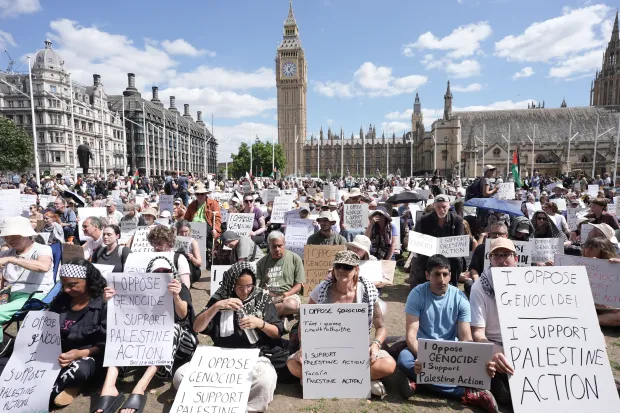
Demonstrations took place across Wales as part of the nationwide “Lift the Ban” campaign organised by Defend Our Juries.
Silent vigils and placard protests were held in both Cardiff and Swansea.
Campaign figures show:
• 13 arrests outside BBC Wales headquarters last July
• 12 more during November protests in Cardiff
• Nine detained on the steps of the Senedd Cymru
Across the UK, nearly 3,000 people were arrested, including clergy, teachers and pensioners.
Court criticism of Home Office
The case was brought by Palestine Action co-founder Huda Ammori.
After a three-day judicial review, judges Dame Victoria Sharp, Jonathan Swift and Karen Steyn found the Home Office had failed to properly consult the group and had not followed its own proportionality rules.
They ruled the ban breached Articles 10 and 11 of the European Convention on Human Rights – protections covering freedom of expression and assembly.
In a statement, Ammori said:
“This is a monumental victory both for our fundamental freedoms here in Britain and for the Palestinian people.”
A Defend Our Juries spokesperson added:
“Branding peaceful protest as terrorism is something you expect from dictatorships, not democracies.”
Border links to Wales
The issue has particular relevance locally.
Palestine Action has frequently targeted sites near the Welsh border, including facilities run by Elbit Systems at Filton and Aztec West, less than thirty miles from Cardiff.
Activists allege the company supplies drones and equipment used in Gaza.
Six protesters were recently acquitted by a jury following damage at the Filton site, arguing their actions were intended to prevent greater harm overseas.
That proximity has drawn many Welsh campaigners into demonstrations, with protests spilling into Wales amid wider concerns over UK arms exports.
Appeal pending
The Government has been granted time to appeal.
Home Secretary Yvette Cooper said ministers were “disappointed” and would challenge the decision at the Court of Appeal.
The quashing of the ban has therefore been temporarily paused.
Legal experts warn that while the judgement casts doubt on earlier arrests, individuals may still need separate legal action to clear records or seek compensation.
Wider implications
Civil liberties groups including Amnesty International had warned the proscription risked setting a precedent for using anti-terror laws against non-violent movements such as climate activists.
For many in Wales, the ruling is seen as a reaffirmation of the right to protest.
One Cardiff campaigner said:
“This was never about supporting violence. It was about the right to stand up and speak out.”
With tensions over Gaza continuing and further demonstrations planned, Thursday’s decision is likely to reignite debate over the limits of protest — and how far the state can go to suppress dissent.
For now, however, activists say the High Court has drawn a clear line.
Peaceful protest, judges ruled, is not terrorism.


Crime1 hour ago
Armed police arrest man after major operation in Pembroke Dock
Firearms officers, dog units and roadblocks deployed on Gordon Street as Dyfed-Powys Police investigate ARMED officers sealed off part of...


News5 hours ago
Three climbers rescued after fall at St Govan’s Head
THREE climbers have been rescued after falling into the sea at St Govan’s Head, following a major multi-agency emergency response...


Community5 hours ago
Lifeboat to find new home at Pembroke Dock museum after historic handover ceremony
A HISTORIC lifeboat which saved forty lives around the British coastline is set to begin a new chapter in Pembroke...


Crime1 day ago
Pendine man jailed for abducting and drugging teenage girl
Offender had 1,101 unlawful images of children stored on his devices, including 122 Category A images – the most serious...


Crime2 days ago
Publican admits supplying cocaine and cannabis at Crown Court
Admits cocaine and cannabis supply but denies intent and cash allegations A MILFORD HAVEN pub landlord has admitted supplying cocaine...


Local Government2 days ago
Plaid win in Fishguard North East by-election
PLAID CYMRU has taken the Fishguard North East seat on Pembrokeshire County Council following this week’s by-election. Billy Shaw was...


News3 days ago
Man to return to court over alleged harbour collision
Three charges relate to navigation of vessel in Milford Haven A NEWPORT man is due to return to court later...


Business4 days ago
Computer Solutions Wales under fire from customers
Claims of unreturned devices, unpaid refunds and small claims court cases as company blames landlord dispute CUSTOMERS across west Wales...


News4 days ago
Starmer under fire as aides quit and Scottish Labour leader calls on him to resign
Two senior Downing Street exits in 24 hours as Anas Sarwar breaks ranks, but ministers insist the Prime Minister is...


News4 days ago
Fresh concerns over £60m A40 scheme after resurfacing works just months after opening
QUESTIONS are being asked about the condition of the newly-opened A40 Llanddewi Velfrey to Redstone Cross carriageway after sections of...
-

 Health2 days ago
Health Board to decide future of nine key services at two-day meeting
-
Business4 days ago
Computer Solutions Wales under fire from customers
-

 Business7 days ago
Six-figure negligence victory leaves retired builder trapped in divorce limbo
-

 Business6 days ago
Minimum alcohol price to rise by 30 per cent as retailers warn of border impact
-

 Education7 days ago
Second west Wales school placed in lockdown within days
-

 Community3 days ago
Facebook ‘news’ site targeting Herald editor collapses after community backlash
-

 Charity4 days ago
Welsh patient voices help shape new UK-wide online kidney forum
-
 Crime6 days ago
Pembroke Dock man admits threatening to hack woman’s head off with sword